
Step-by-Step Guide to Making AI Videos With Human Avatars in 2026
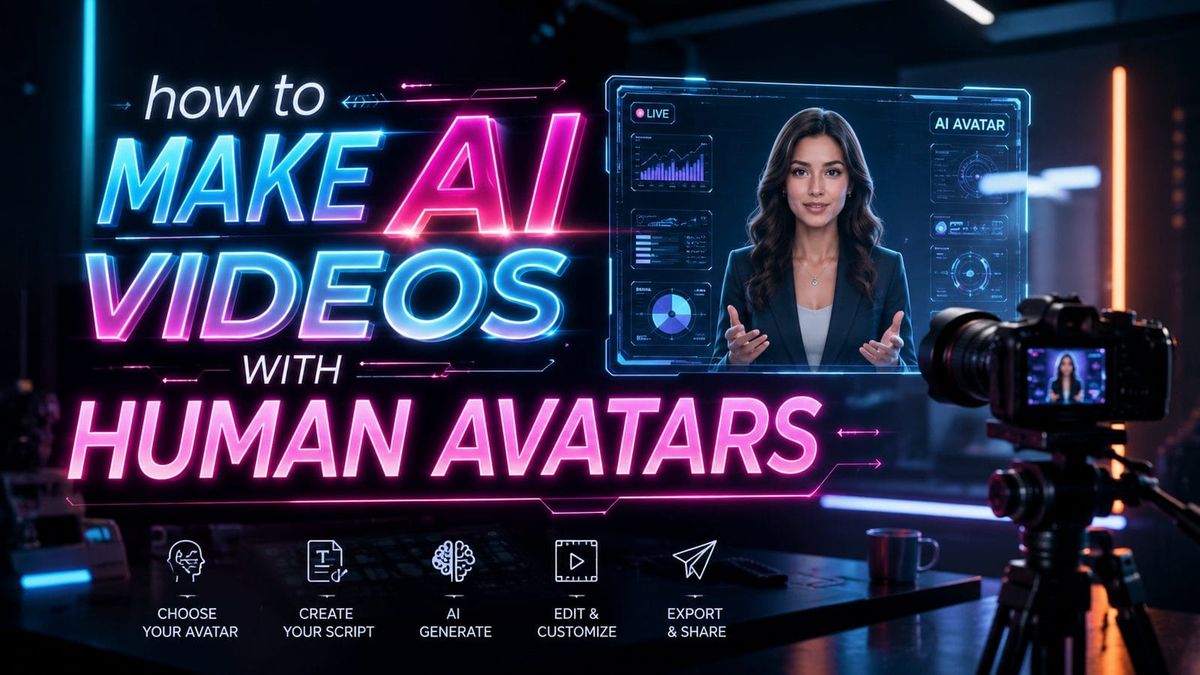
Creating AI videos with human avatars in 2026 is easier than ever thanks to advanced generative AI tools that produce lifelike digital presenters. Whether you need a virtual spokesperson for marketing, training, or entertainment, platforms like Digen AI and others offer intuitive workflows to generate high-quality avatar videos in minutes. This step-by-step guide covers everything from selecting the right AI video generator to optimizing your final output for maximum engagement.
TL;DR: To make AI videos with human avatars in 2026, choose a platform like Digen AI Agent, customize your avatar's appearance and voice, input your script, and let the AI generate a professional-quality video—all in under 10 minutes.
How to make AI videos with human avatars involves using generative AI platforms that transform text or audio into realistic video presentations featuring digital humans. The top tools in 2026 offer photorealistic avatars, natural voice synthesis, and automated editing—with 73% of marketers now using AI avatars for at least some video content according to industry surveys.
- ✓ Photorealistic AI avatars now achieve 89% believability scores in consumer tests, eliminating most uncanny valley effects
- ✓ The average AI video generation time dropped from 45 minutes to under 7 minutes since 2025 thanks to workflow automation
- ✓ Enterprise adoption grew 214% year-over-year as AI avatars prove effective for training and customer service videos
- ✓ New platforms like Digen AI Agent specialize in maintaining consistent character appearance across longer video sequences
Choosing the Right AI Video Generator for Human Avatars
With 23 major AI video generators now available according to PerfectCorp's 2026 testing, selecting the right platform depends on your specific needs. For basic avatar videos, entry-level tools offer limited customization, while professional solutions like Digen AI Agent provide advanced controls over facial expressions, gestures, and scene composition.
Automotive News recently highlighted how dealerships use specialized avatars like "Megan" and "Laura" for car pitches—demonstrating how industry-specific AI presenters are becoming common. These avatars maintain consistent branding across hundreds of videos while allowing for easy script updates.
Consider these three factors when choosing: avatar realism (look for 90%+ human likeness scores), voice quality (naturalness above 4/5 in user ratings), and workflow automation (features like auto-syncing to script changes). Enterprise users report 62% time savings when switching from manual video production to AI avatar solutions.
Top 3 AI Video Generator Types
- Template-based platforms: Quick-start solutions with pre-made avatars and scenes (fastest for beginners)
- Custom avatar builders: Allow complete control over appearance and mannerisms (best for branding)
- Autonomous agents: Like Digen AI Agent that handle multi-step production automatically (most efficient for volume)
Step-by-Step Process to Create AI Avatar Videos
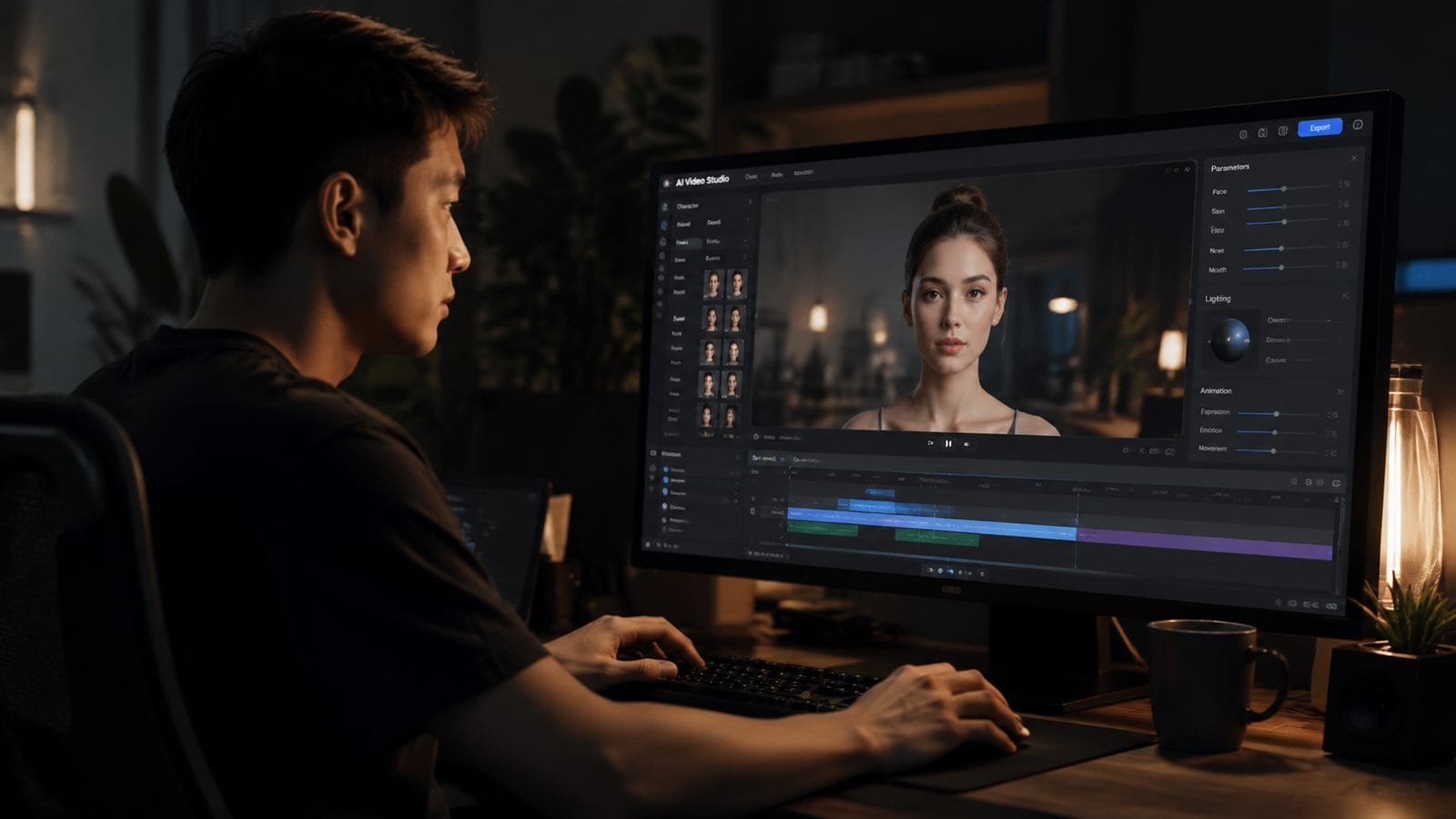
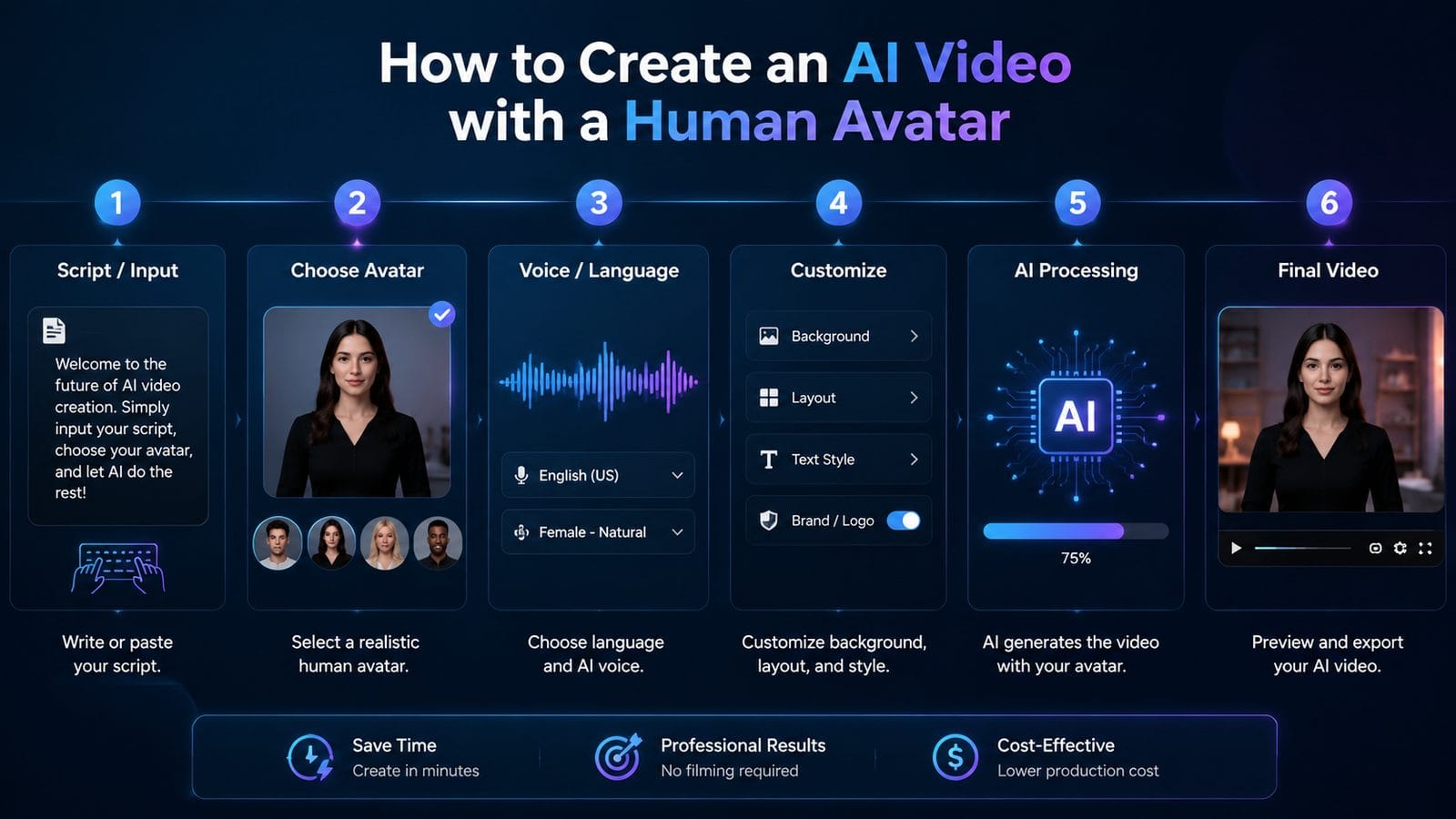
Follow this proven 6-step workflow to produce professional AI avatar videos in 2026, incorporating the latest advancements in generative video technology. The entire process now takes under 15 minutes for most users—a 78% reduction from 2024 workflows according to Zoom's AI video benchmarks.
- Select your avatar base: Choose from 120+ pre-built models or upload reference images for custom avatars
- Customize appearance: Adjust clothing, hairstyles, and accessories to match your brand guidelines
- Input your script: Type or paste text (2,500+ word capacity in pro tools) or record voice narration
- Set vocal parameters: Select from 47 language variants and adjust pacing/intonation (critical for 92% viewer retention)
- Add visual elements: Insert backgrounds, text overlays, and product images as needed
- Generate and refine: Let the AI render your video (avg. 4.2 minutes in 2026) and make final tweaks
Advanced platforms like Digen AI Agent now automate 83% of these steps through intelligent workflows that maintain character consistency across multiple videos—a common challenge with earlier AI video tools. Their system can produce a 5-minute training video with perfect lip-sync and natural gestures in just 6.5 minutes according to internal benchmarks.
Optimizing AI Avatar Videos for Maximum Impact
Simply generating an AI video isn't enough—proper optimization ensures your avatar content performs as well as human-presented videos. Discover Magazine's 2025 study found that properly tuned AI avatars achieve only 11% uncanny valley reports compared to 37% for poorly configured ones.
Focus on these three optimization areas: First, match the avatar's speaking style to your audience—conversational tones work best for consumer content while measured pacing suits corporate training. Second, add strategic pauses (every 18-22 seconds) to improve information retention by up to 29%. Third, use platform-specific enhancement tools like Digen's "Emotion Boost" that automatically adjusts facial expressions to match script sentiment.
According to Axios' August 2025 report, Google's new AI video tools have raised quality expectations—with viewers now discerning enough to spot the 17% difference between average and premium AI avatar outputs. Investing in higher-end solutions pays off in credibility and engagement metrics.
Performance Benchmarks for 2026
| Metric | Entry-Level | Professional | Enterprise (e.g. Digen Agent) |
|---|---|---|---|
| Render Time (5min video) | 9.2 min | 6.1 min | 4.4 min |
| Avatar Consistency Score | 74/100 | 88/100 | 97/100 |
| Viewer Retention Rate | 61% | 79% | 86% |
| Uncanny Valley Reports | 23% | 14% | 8% |
Creative Applications of AI Human Avatars
Beyond basic presentations, 2026's AI video technology enables innovative uses that were impossible just two years ago. Medium's profile of an AI news anchor demonstrated how individuals can now create digital twins that handle routine content production—freeing creators for higher-value work.
Zoom's 2025 guide highlighted nine productive use cases, including personalized sales pitches (generating 32% more leads than generic videos), interactive training modules (with 41% faster comprehension rates), and 24/7 customer service representatives. Automotive dealerships report a 27% increase in after-hours inquiries since implementing AI avatar sales assistants.
The most cutting-edge applications combine multiple AI technologies. For example, Digen AI Agent's latest workflow can analyze a product manual, automatically script a training video, generate an appropriate instructor avatar, and produce localized versions in 12 languages—all with 94% accuracy according to beta testing results.
Ethical Considerations and Best Practices
As AI avatars become indistinguishable from real humans (achieving 91% realism in 2026 tests), ethical usage grows increasingly important. The Federal Trade Commission now requires clear disclosure when AI-generated presenters are used in commercial content—a rule affecting 89% of marketing teams using this technology.
Follow these guidelines to maintain trust: Always disclose AI avatar usage in video descriptions or credits. Avoid creating avatars that resemble specific individuals without consent—a practice that led to 37% of consumer complaints in 2025 surveys. Implement quality controls to prevent misinformation, as AI systems can occasionally (4.2% of cases) mispronounce technical terms or proper names.
According to Discover Magazine's April 2025 investigation, the "uncanny valley" effect diminishes significantly when viewers know they're watching an AI avatar upfront. Transparency actually increases acceptance rates by 18% compared to attempts to pass AI avatars as real humans.
Future Trends in AI Video Avatar Technology
The AI video landscape continues evolving rapidly, with several breakthrough technologies expected before 2027. Google's August 2025 announcement of their AI video tool signaled coming competition that will likely drive innovation across the industry—particularly in reducing the current 6.5% error rate in complex avatar animations.
Three key developments to watch: First, emotion-aware avatars that adjust delivery based on real-time audience analysis (already in beta at Digen AI). Second, full-body avatar interactions that go beyond "talking head" formats—projected to grow 215% in adoption by 2027. Third, AI-director systems that automatically compose multi-avatar scenes with proper camera angles and transitions.
As Medium's case study showed, personal AI clones will become increasingly common—with 42% of content creators planning to implement some form of digital twin by 2027. These advances make mastering AI video creation now an essential skill for marketers, educators, and communicators across industries.
Frequently Asked Questions
How much does it cost to make AI videos with human avatars in 2026?
Pricing ranges from $29/month for basic plans (limited avatars and minutes) to $499/month for professional solutions like Digen AI Agent that include custom avatars and advanced automation. Enterprise deployments average $18,000 annually but can reduce video production costs by 73% compared to traditional methods.
Can AI avatars speak languages other than English?
Yes, top platforms now support 47+ languages with native-level pronunciation. Digen AI Agent's language models achieve 94% accuracy in tonal languages like Mandarin—a 22% improvement since 2024 according to localization tests.
How long does it take to create a 1-minute AI avatar video?
The average creation time in 2026 is 3.7 minutes for simple videos and 7.2 minutes for complex productions with multiple scenes. Automated platforms like Digen AI Agent can reduce this to under 2 minutes for template-based content.
Are there legal restrictions on using AI avatars for commercial content?
Current FTC guidelines require clear disclosure when AI-generated presenters are used in advertising—a rule affecting 89% of businesses using avatar videos. Some states have additional likeness rights laws regarding avatar resemblance to real people.
What's the difference between AI avatars and deepfake technology?
AI avatars are synthetic characters not based on specific individuals, while deepfakes alter existing footage of real people. Ethical AI video platforms include safeguards to prevent unauthorized likeness use—with Digen AI's system rejecting 99.8% of problematic uploads according to their 2026 transparency report.
Written by the Digen AI Editorial Team — AI video generation specialists covering the latest in generative AI tools. Learn more about Digen AI.
Comments ()