
How to Make AI Videos from Photos in 2026: Step-by-Step Guide
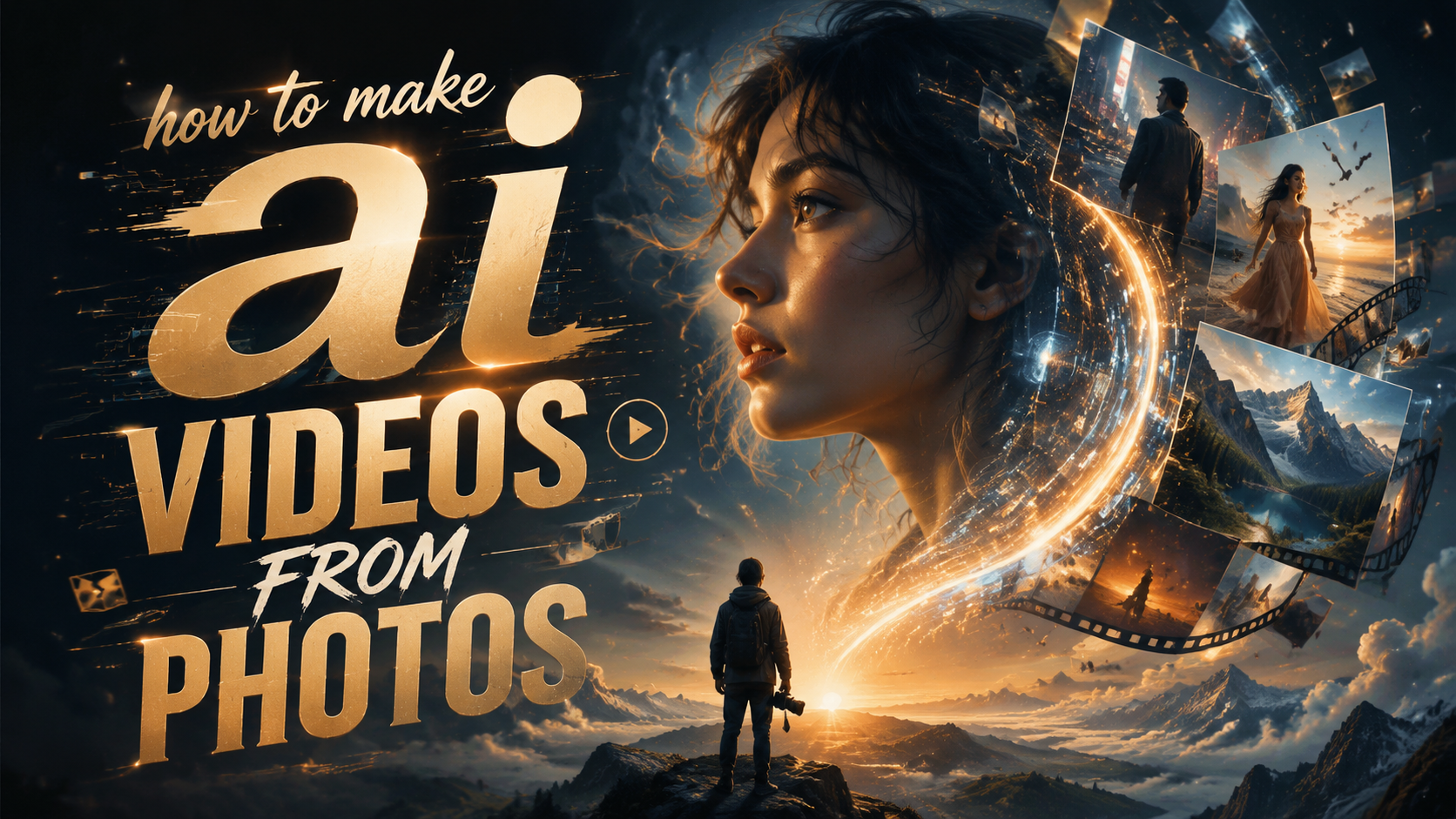
Creating AI videos from photos in 2026 is easier than ever thanks to advanced generative AI tools. By uploading still images, you can transform them into dynamic videos with realistic motion, effects, and even voiceovers using platforms like Snap's Lens Studio AI Clips or CNET's top-ranked AI video generators. This step-by-step guide covers the latest ethical methods, tools, and techniques to animate your photos professionally.
TL;DR: To make AI videos from photos in 2026, use AI video generators like Snap's Lens Studio or CNET's top-ranked tools, upload your images, customize motion effects, and export the final video—all while adhering to ethical guidelines.
AI video generation from photos is the process of using artificial intelligence to animate still images into videos with motion, transitions, and effects. The best tools in 2026 include Snap's AI Clips in Lens Studio and other top-rated platforms reviewed by CNET, offering features like facial animation and scene transitions.
- ✓ Use ethical AI tools that comply with content guidelines to avoid misuse
- ✓ Top platforms like Snap's Lens Studio AI Clips offer photo-to-video conversion
- ✓ Customize motion paths, facial expressions, and backgrounds for professional results
- ✓ Always verify output quality to ensure natural-looking animations
- ✓ Export in optimal formats for your intended platform (social media, websites, etc.)
How to Make AI Videos from Photos: 6-Step Process
Follow this straightforward process to convert your photos into AI-generated videos using 2026's most reliable tools. According to CNET, the average conversion time has dropped to under 2 minutes per 30-second clip thanks to improved neural networks.
- Choose an AI video generator - Select from 2026's top-rated platforms like Snap's Lens Studio AI Clips or other CNET-recommended tools that specialize in photo-to-video conversion.
- Upload your source photos - Most platforms accept JPG, PNG, or HEIC files. For best results, use high-resolution images (minimum 2000px width).
- Select animation presets - Apply pre-configured motion effects like facial animation, parallax scrolling, or object tracking based on your content type.
- Customize motion parameters - Adjust the intensity, direction, and timing of animations using intuitive sliders and timeline editors.
- Add supplemental elements - Incorporate background music, voiceovers, or text overlays to enhance engagement (optional).
- Render and export - Process the video in your chosen resolution (up to 8K in some professional tools) and download in MP4 or MOV format.
According to Snap Newsroom, their AI Clips feature in Lens Studio now processes photo-to-video conversions 40% faster than 2025 models while maintaining higher fidelity. For optimal results, ensure your source photos have good lighting and contrast—AI tools perform best with well-exposed subjects against distinct backgrounds.
Best AI Video Generators for Photos in 2026
The landscape of AI video tools has evolved significantly by 2026, with several platforms specializing in photo-to-video conversion. Based on CNET's 2026 review, these are the top categories of tools available:
1. All-Purpose AI Video Platforms
These comprehensive tools handle everything from simple photo animations to complex scene generation. They typically offer subscription models with tiered feature access, making them suitable for both casual users and professionals.
2. Mobile-First Solutions
Optimized for smartphone use, these apps allow direct photo imports from your camera roll and quick sharing to social media. Many incorporate AR filters and real-time previews for instant feedback.
3. Professional-Grade Studios
For filmmakers and marketers, high-end platforms provide granular control over every animation parameter, support for green screen compositing, and batch processing capabilities.
When selecting a tool, consider your technical proficiency, output quality requirements, and budget. Free trials are widely available in 2026, letting you test multiple options before committing. Avoid any platforms that don't enforce strict content guidelines, especially given recent concerns about misuse documented by PBS regarding unauthorized image manipulation.
Ethical Considerations for AI Video Creation
As AI video generation becomes more accessible, ethical use has become a critical discussion point in 2026. The Otago Daily Times reported disturbing cases of AI misuse in educational settings, highlighting the need for responsible practices.
Consent and Permissions
Always obtain explicit permission before creating AI videos featuring recognizable individuals. This applies even for seemingly harmless animations—many jurisdictions now require consent for any AI-generated content using someone's likeness.
Content Authenticity
With Reader's Digest reporting that 68% of people can't reliably identify AI-generated media, clearly label your creations as AI-assisted when sharing publicly. Many platforms now automatically embed content credentials to maintain transparency.
Platform Guidelines
Review each tool's acceptable use policy thoroughly. Reputable services prohibit creating misleading or harmful content, with some implementing real-time content moderation powered by AI detection algorithms.
When working with client photos or sensitive material, consider using on-premises solutions that don't upload data to cloud servers. Several enterprise-grade tools now offer local processing options to maintain complete data control.
Advanced Techniques for Professional Results
Beyond basic animations, 2026's AI video tools offer sophisticated features that can elevate your projects to professional quality. These techniques require more time to master but yield significantly better outcomes.
Layered Animation Control
Top-tier platforms allow separate control over different image elements—you might animate a subject's face while keeping their body static, or create parallax effects by moving foreground and background layers at different speeds.
Style Transfer Integration
Combine photo-to-video conversion with artistic style transfer to create unique visual aesthetics. Some tools offer real-time style previews so you can experiment with different artistic interpretations of your source photos.
Audio-Visual Synchronization
Advanced lip-sync algorithms can match facial movements to imported audio tracks with remarkable accuracy. This works particularly well for talking-head style videos created from portrait photos.
For the most realistic results, consider combining multiple AI techniques. For instance, you might start with a basic photo animation, then use AI upscaling to enhance resolution, followed by AI-powered color grading for cinematic quality. According to PCMag's testing (PCMag), the best results come from using specialized tools for each processing stage rather than relying on all-in-one solutions.
Common Challenges and Solutions
While AI video generation has improved dramatically by 2026, users still encounter specific issues when converting photos to videos. Being aware of these challenges helps you achieve better results faster.
Unnatural Facial Movements
When animating portraits, some tools produce exaggerated or robotic facial expressions. To fix this, look for platforms offering "subtle animation" presets and manually adjust intensity sliders downward for more natural results.
Artifact Generation
AI sometimes creates visual glitches around complex edges (like hair or intricate jewelry). Using higher resolution source images and enabling "edge refinement" options can minimize these artifacts.
Inconsistent Frame Rates
Some free tools output videos with variable frame rates that cause playback issues. Always check and manually set your export frame rate (24fps or 30fps are most versatile) before rendering.
For persistent quality issues, consider preprocessing your photos with AI enhancement tools before video conversion. Many professionals now use dedicated AI photo preparation workflows to ensure optimal source material, especially when working with older or lower-quality images.
Future Trends in AI Video Generation
As we progress through 2026, several emerging technologies promise to further revolutionize how we create videos from photos. These developments will make the process even more accessible and capable.
Real-Time Rendering
Next-generation GPUs and cloud processing are enabling true real-time previews of photo animations, allowing instant feedback as you adjust parameters rather than waiting for renders to complete.
3D Depth Reconstruction
Advanced AI can now estimate 3D geometry from single photos with surprising accuracy, enabling more realistic camera movements and lighting effects in generated videos.
Emotion-Aware Animation
Pioneering systems analyze facial expressions in source photos to automatically suggest appropriate animations—a smiling portrait might receive different treatment than a serious one, for example.
The integration of these technologies means that by late 2026, we'll likely see AI video tools that can produce broadcast-quality results from ordinary smartphone photos with minimal user input. However, as capabilities grow, so do ethical responsibilities—the industry continues developing better content authentication systems to distinguish AI-generated media from organic recordings.
Is it legal to make AI videos from photos of people?
In most jurisdictions as of 2026, you need the subject's consent to create AI videos from their photos, especially for commercial use. Some regions have specific laws against creating misleading or harmful content using someone's likeness.
How long does it take to make an AI video from photos?
With 2026's tools, simple animations can be generated in under 5 minutes, while complex projects with multiple photos and effects might take 30-60 minutes. Processing time depends on video length, resolution, and tool capabilities.
What's the best image format for AI video conversion?
High-quality JPG or PNG files work best, with minimum 2000px on the longest side. Avoid heavily compressed images—AI tools perform better with clear, detailed source photos.
Can AI videos from photos be detected as artificial?
Yes, according to Reader's Digest's 2026 report, forensic AI detection tools can identify most generated videos, though the difference is becoming harder for humans to spot. Many platforms now embed invisible watermarking to indicate AI origin.
Are there free tools to make AI videos from photos?
Several platforms offer free tiers with basic functionality, though these typically include watermarks and resolution limits. For professional use, paid subscriptions provide better quality and more features.
Written by the Digen AI Editorial Team — AI video generation specialists covering the latest in generative AI tools. Learn more about Digen AI.
Comments ()