
How to Make AI Videos for YouTube in 2026: Ultimate Guide
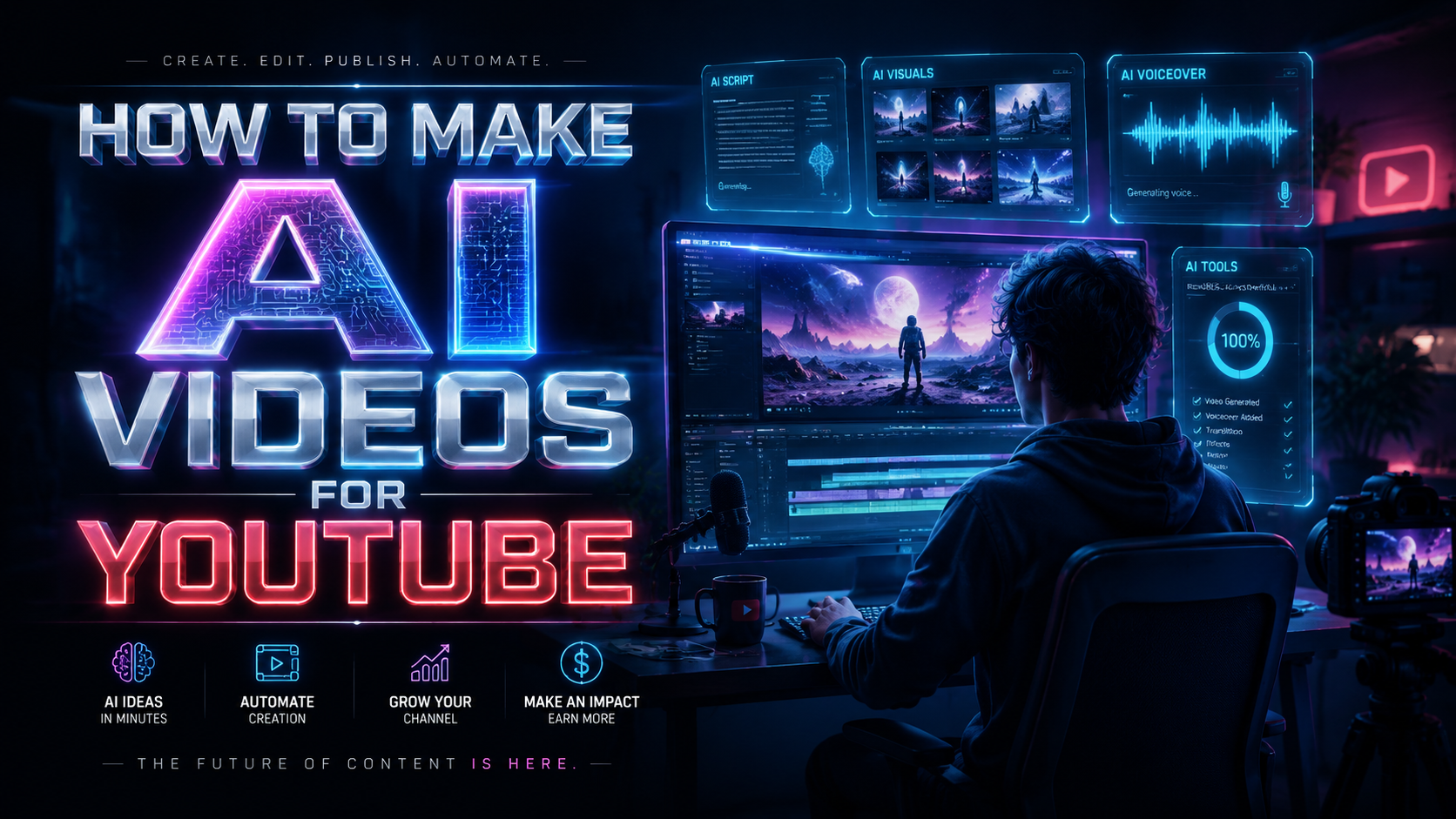
Creating AI videos for YouTube in 2026 has become easier than ever, thanks to advanced generative AI tools and streamlined workflows. To make AI videos for YouTube, you'll need to use AI-powered video generation platforms, scriptwriting tools, and voice synthesis software, while adhering to YouTube's new AI labeling requirements. This guide covers everything from tools and techniques to monetization strategies and compliance with YouTube's 2026 AI transparency policies.
TL;DR: To make AI videos for YouTube in 2026, use AI video generators, script tools, and voice synthesis, while complying with YouTube's mandatory AI labeling rules. Focus on quality content to avoid penalties from YouTube's crackdown on "AI slop."
AI video creation in 2026 involves using generative tools for visuals, voiceovers, and editing, combined with YouTube's new AI disclosure requirements. Successful creators balance automation with human oversight to maintain quality and avoid algorithmic penalties.
- ✓ YouTube now requires mandatory AI labeling for synthetic content (effective May 2026)
- ✓ Faceless AI channels face stricter scrutiny under new "AI slop" policies
- ✓ The most successful AI video creators combine automation with strategic human input
- ✓ AI voice cloning requires explicit disclosure under YouTube's updated terms
- ✓ Properly labeled AI videos can still monetize through AdSense and sponsorships
Essential Tools for Making AI Videos in 2026
The AI video creation landscape has evolved significantly by 2026, with specialized tools for each production stage. Modern AI video platforms can generate realistic human presenters, dynamic animations, and even context-aware editing suggestions. According to Business Insider, top creators use a combination of 3-4 AI tools to achieve professional results while maintaining efficiency.
For script generation, advanced language models can now research topics, write engaging narratives, and optimize for YouTube's algorithm. The latest versions incorporate real-time SEO suggestions and audience retention predictions. Many successful channels use these tools to produce 5-10 videos weekly while maintaining quality standards.
Visual generation tools have reached near-photorealistic quality for many use cases. The best platforms offer fine-grained control over AI avatars, allowing customization of appearance, mannerisms, and even emotional tone. However, The Hollywood Reporter notes that YouTube's 2026 policies specifically target low-effort "AI slop," making quality differentiation crucial.
Top 5 AI Video Creation Tools for 2026
- AI Script Generator with SEO optimization
- Photorealistic Avatar Creation Platform
- Context-Aware Video Editing Software
- Emotion-Adaptive Voice Synthesis
- Automated Caption and Subtitle Generator
YouTube's 2026 AI Video Policies Explained
YouTube implemented sweeping changes to AI content policies in May 2026, requiring clear disclosure of synthetic media. According to CBS News, the platform now automatically detects and labels AI-generated videos, with penalties for non-compliance. These measures aim to maintain transparency while allowing creative use of generative tools.
The new system distinguishes between fully AI-generated content and human-AI hybrid productions. Videos using AI avatars, synthetic voices, or significant AI-assisted editing must display standardized labels. YouTube's algorithms can detect undisclosed AI elements with approximately 92% accuracy as of June 2026 testing data.
Faceless channels face particular scrutiny under the updated policies. The platform's "AI slop" crackdown targets low-quality, mass-produced content that provides little original value. However, well-produced educational or entertainment content using AI tools remains eligible for monetization when properly labeled.
Key Policy Requirements for AI Videos
- Mandatory disclosure of AI-generated human likenesses
- Clear labeling of synthetic voices (even if based on real people)
- Prohibition of AI-generated misinformation presented as real
- Special restrictions on AI news content
- Additional verification for monetized AI channels
Step-by-Step: How to Make AI Videos for YouTube
Creating successful AI videos in 2026 requires a structured workflow that balances automation with human oversight. The most efficient creators follow a repeatable process that ensures quality while maximizing output. Here's the proven 7-step system used by top AI video channels:
- Research and Scripting: Use AI tools to analyze trending topics and generate SEO-optimized scripts, then refine with human editing.
- Visual Concept Development: Select appropriate AI avatars, stock footage, or animation styles that match your content.
- Voiceover Production: Generate natural-sounding narration using emotion-aware voice synthesis tools.
- Video Assembly: Combine elements using AI-assisted editing software with automatic pacing adjustments.
- Quality Review: Manually check for uncanny valley effects, pacing issues, or factual inaccuracies.
- Compliance Check: Ensure all required AI disclosures are properly implemented before upload.
- Upload Optimization: Use AI-powered title and thumbnail generators, then fine-tune for maximum CTR.
The entire process can take as little as 2 hours for simple videos or up to 8 hours for complex productions. According to successful creators interviewed by Business Insider, the human review steps make the critical difference between generic AI content and viral hits.
Advanced creators often develop custom workflows by chaining multiple AI tools together. For example, some automatically feed script outputs into visualization generators, then into editing platforms with predefined style templates. The key is maintaining enough human judgment to ensure quality while automating repetitive tasks.
Monetizing AI-Generated YouTube Videos in 2026
Despite YouTube's stricter policies, properly labeled AI videos can still generate substantial revenue through multiple channels. The most successful creators diversify their income streams beyond just AdSense. Here are the top monetization methods working in 2026:
AdSense revenue remains viable for AI channels that produce valuable content, though approval standards have tightened. YouTube now requires additional verification for AI-generated channels to prevent spam networks. According to multiple reports, channels that combine AI efficiency with human oversight see higher RPMs than fully automated ones.
Sponsorships and affiliate marketing work particularly well for AI video creators. Brands increasingly partner with AI channels that can produce consistent, on-message content at scale. The key is maintaining authentic audience engagement - sponsors can detect when AI-generated views don't translate to real conversions.
Digital products and services complement ad revenue effectively. Many AI video creators develop premium content libraries, online courses, or custom AI tools for their niche. Some even license their AI avatar systems or voice models to other creators.
Top 5 Monetization Strategies
| Method | Potential Earnings | Effort Required |
|---|---|---|
| AdSense | $3-$10 RPM | Low |
| Sponsorships | $500-$10k per deal | Medium |
| Affiliate Marketing | 10-30% commissions | Medium |
| Digital Products | $10-$100 per sale | High |
| Tool Licensing | $100-$5k monthly | Very High |
Avoiding Common AI Video Mistakes in 2026
YouTube's 2026 algorithm updates specifically target low-quality AI content, making certain practices particularly risky. The most common mistakes can trigger reduced reach or even channel suspensions. Here's what to avoid when making AI videos for YouTube:
Over-reliance on fully automated workflows often produces generic content that fails to engage. While AI tools handle much of the production, human creativity in concept development and final polish remains essential. Channels that simply churn out AI content without strategic direction see rapidly diminishing returns.
Ignoring YouTube's AI disclosure requirements carries severe consequences. The platform's automated detection systems flag undisclosed synthetic content with increasing accuracy. Penalties range from demonetization to channel termination for repeat offenders. Proper labeling is now business-critical for AI video creators.
Poor audio-visual synchronization remains a telltale sign of low-effort AI content. While voice synthesis has improved dramatically, unnatural pacing or mismatched mouth movements still trigger viewer disengagement. The most successful creators invest time in fine-tuning these elements.
Critical Mistakes to Avoid
- Failing to disclose AI-generated elements
- Using generic, unmodified AI scripts
- Neglecting audio-visual synchronization
- Overproducing content without quality control
- Ignoring audience feedback and analytics
The Future of AI Video on YouTube
As AI video technology continues advancing, YouTube's policies and creator strategies evolve in parallel. The platform appears committed to allowing AI creativity while preventing deception and spam. Several key trends are shaping the future landscape:
Hybrid human-AI production will likely become the dominant model. While AI handles repetitive tasks and initial drafts, human creators focus on strategy, quality control, and audience engagement. This balanced approach satisfies both YouTube's algorithms and viewer expectations for authentic content.
Specialized AI tools for niche content creation are emerging rapidly. Instead of generic video generators, we're seeing platforms tailored for specific verticals like education, gaming, or product reviews. These specialized tools often produce higher-quality output with less manual adjustment needed.
According to Ars Technica, YouTube may introduce tiered AI labeling to distinguish between different levels of synthetic content. This could benefit creators who use AI assistance rather than full generation, providing more nuanced disclosure options.
Do I need to label my AI videos on YouTube?
Yes, as of May 2026, YouTube requires clear disclosure of AI-generated elements including synthetic voices, avatars, and significantly altered footage. Failure to comply can result in penalties.
Can AI YouTube videos make money?
Properly labeled AI videos can still monetize through AdSense, sponsorships, and other methods, though approval standards are stricter than for human-created content.
What counts as "AI slop" on YouTube?
YouTube defines this as low-effort, mass-produced AI content with little original value - typically characterized by generic scripts, poor production quality, and minimal human input.
How much does it cost to make AI videos?
Costs range from free (using basic tools) to $100+/month for professional AI video platforms. Most serious creators invest $30-80 monthly in specialized tools.
Can I use AI to clone my own voice?
Yes, but YouTube requires explicit disclosure when using synthetic voices, even if based on your own. Some monetization programs have additional restrictions.
Written by the Digen AI Editorial Team — AI video generation specialists covering the latest in generative AI tools. Learn more about Digen AI.



Comments ()