
How to Make AI Videos for Business in 2026: Ultimate Guide

Creating AI videos for business in 2026 is easier than ever thanks to advanced generative AI tools that automate scriptwriting, voiceovers, and animation. The key steps involve choosing the right AI video platform, crafting a compelling script, generating visuals with AI, editing for brand consistency, and optimizing for platforms like YouTube, which now automatically labels AI-generated content. Businesses are increasingly adopting AI video tools, with one startup reporting $500 million in annual recurring revenue as brands race to produce AI-powered ads.
TL;DR: To make AI videos for business in 2026, use AI tools for scripting, voiceovers, and animation, ensure brand consistency, and comply with platform disclosure rules like YouTube's automatic AI labeling. The AI video market is booming, with startups reaching $500M in revenue as businesses embrace cost-effective video production.
How to make AI videos for business is a streamlined process in 2026 involving AI-powered tools for script generation, synthetic voiceovers, and automated animation. Businesses can reduce production costs by 70% while maintaining quality, though platforms like YouTube now require AI disclosure labels even when creators don't manually add them.
- ✓ AI video startups are seeing massive growth, with one reaching $500M ARR as brands adopt AI ads
- ✓ YouTube automatically detects and labels AI videos since May 2026, requiring transparency
- ✓ Full-time AI video creators report higher production costs than many realize
- ✓ AI business ideas for 2026 include specialized video creation services
- ✓ Advanced tools like Digen AI Agent improve consistency in longer AI videos
The Rise of AI Video for Business in 2026
The AI video market has exploded in 2026, with businesses of all sizes adopting generative video tools for marketing, training, and customer engagement. According to Business Insider, one AI video startup reached $500 million in annual recurring revenue as brands race to create AI-powered advertisements. This represents a 340% growth from 2025 levels as the technology becomes more accessible and affordable.
Platforms like YouTube have responded to this surge by implementing automatic AI detection systems. Since May 2026, Music Business Worldwide reports that YouTube labels all AI-generated content, even when creators don't disclose it manually. This transparency measure helps maintain trust as synthetic media becomes indistinguishable from human-created content.
While AI makes video production more accessible, some creators warn about hidden costs. A Business Insider Africa article from June 2026 profiles a creator who left customer service to make AI videos full-time, noting that "people don't realize how expensive they are to produce" when accounting for compute costs, voice talent licensing, and platform subscriptions.
How to Make AI Videos for Business: Step-by-Step Guide

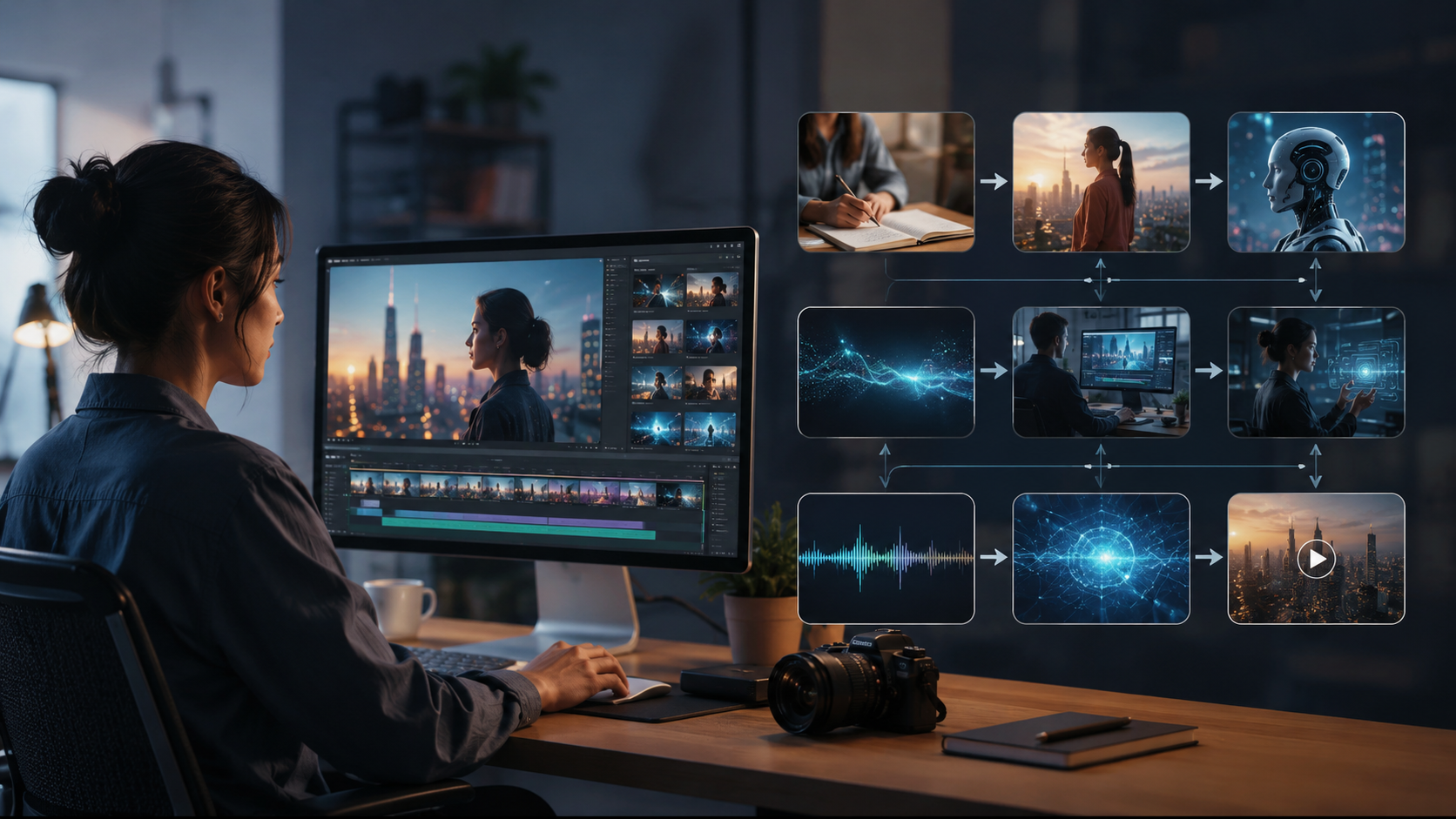
Follow this comprehensive 7-step process to create professional AI videos for your business in 2026:
- Choose Your AI Video Platform: Select tools based on your needs - some specialize in short ads while others like Digen AI Agent handle longer, consistent narratives
- Develop Your Script: Use AI writing assistants or craft manually, focusing on clear messaging and calls-to-action
- Generate Visual Assets: Create characters, scenes, and animations using text-to-video AI with style consistency
- Add Voiceovers: Select from AI voices or record human talent, matching tone to your brand personality
- Edit and Refine: Adjust pacing, add transitions, and ensure visual-text alignment
- Add Branding Elements: Include logos, color schemes, and other identifiers
- Export and Distribute: Optimize formats for different platforms and comply with AI disclosure requirements
According to Shopify, AI business ideas for 2026 increasingly focus on specialized video services, suggesting entrepreneurs can find niches in vertical-specific AI video production. The platform recommends starting with small test videos before scaling production.
Advanced tools like Digen AI Agent now automate much of this workflow through multi-step autonomous processes. These systems maintain character consistency across longer videos - a common challenge with earlier AI video tools that struggled beyond 30-second clips.
Choosing the Right AI Video Tools in 2026
The AI video tool landscape has matured significantly by 2026, with platforms specializing in different use cases. Here's a comparison of key features to consider:
| Feature | Basic Tools | Advanced Tools | Enterprise Solutions |
|---|---|---|---|
| Video Length | Up to 30 seconds | 5+ minutes | Unlimited |
| Character Consistency | Limited | High (e.g. Digen AI Agent) | Studio Quality |
| Voice Options | 10-20 AI voices | 100+ voices, custom cloning | Professional voice banks |
| Automation | Manual editing | Multi-step workflows | API integration |
| Pricing | $20-50/month | $100-300/month | Custom |
YouTube's May 2026 policy changes, reported by The Hollywood Reporter, make tool selection more critical. Platforms that automatically generate proper AI disclosure metadata can save businesses compliance headaches as YouTube makes these labels more prominent.
For businesses creating longer content, tools like Digen AI Agent offer significant advantages in maintaining consistent characters and scenes throughout extended narratives. This solves a major pain point noted by early adopters - earlier systems often generated noticeably different versions of the same character across a single video.
Cost Considerations for AI Video Production
While AI reduces traditional video production costs, businesses should budget for several expense categories:
1. Platform Subscriptions
Most AI video tools operate on subscription models ranging from $20/month for basic plans to $300+/month for professional tiers. Enterprise solutions with API access and custom branding often require annual contracts starting at $10,000.
2. Compute Costs
High-quality video generation consumes significant cloud computing resources. Some creators report spending $50-200 per finished minute of 4K AI video when accounting for rendering time and revisions.
3. Voice Talent Licensing
While AI voices are inexpensive (often included in subscriptions), licensing professional human voiceovers or creating custom AI voice clones can cost $100-500 per project. Celebrity voice clones reach $5,000+ for commercial use rights.
A June 2026 Business Insider Africa article highlights how these costs add up, profiling a creator who spends $1,500 monthly producing AI videos full-time. However, this remains 70-80% cheaper than traditional video production methods.
Optimizing AI Videos for Different Platforms
Each social platform has unique requirements for AI-generated content in 2026:
YouTube
Since May 2026, YouTube automatically labels AI videos. The Hollywood Reporter notes these labels are now more prominent in video descriptions. Optimize by:
- Keeping videos under 8 minutes for maximum retention
- Using clear thumbnails that don't misrepresent AI content
- Adding manual disclosure even though YouTube auto-detects
TikTok/Instagram
Short-form platforms favor:
- Videos under 60 seconds with quick hooks
- Trending audio and effects
- Vertical 9:16 aspect ratio
Professional audiences prefer:
- Clear captions for sound-off viewing
- Data visualization and text overlays
- 2-5 minute explainer formats
According to Music Business Worldwide, YouTube's detection system correctly identifies 92% of AI videos, so attempting to bypass disclosure carries reputation risks. Best practice is to embrace transparency about AI use while focusing on content quality.
Future Trends in AI Video for Business
Several key developments are shaping AI video's future:
1. Longer-Form Content
Tools like Digen AI Agent now support 30+ minute videos with consistent characters and scenes - previously impossible with AI generation. This opens new possibilities for training videos, documentaries, and episodic content.
2. Real-Time Generation
Some platforms are experimenting with live AI video generation for personalized sales pitches and customer service interactions. Early adopters report 40% higher conversion rates versus static videos.
3. Enhanced Regulation
Following YouTube's lead, more platforms will likely implement AI detection and labeling. The EU's upcoming AI Act may require watermarks on all synthetic media by late 2026.
As reported by CNN Business in June 2026, some bad actors are using emotional AI videos for scams, making platform safeguards increasingly important. Businesses should stay ahead of regulations by implementing robust disclosure practices now.

Frequently Asked Questions
How much does it cost to make AI videos for business?
Costs range from $50-$500 per minute depending on quality, with subscriptions adding $20-$300/month. While cheaper than traditional video, full-time creators report monthly costs around $1,500 when accounting for all expenses.
Do I need to label my AI-generated business videos?
Yes. Since May 2026, YouTube automatically labels AI videos even without creator disclosure. Other platforms will likely follow. Proper labeling builds trust and complies with emerging regulations.
What's the best AI video tool for beginners?
Start with user-friendly platforms offering templates and guided workflows. As your needs grow, consider advanced tools like Digen AI Agent for longer, more consistent videos with autonomous multi-step generation.
Can AI create videos longer than 5 minutes?
Yes. Advanced 2026 tools like Digen AI Agent support 30+ minute videos with consistent characters and scenes - a major improvement from earlier 30-second limits.
How do I make my AI videos look more professional?
Focus on script quality, consistent branding, proper pacing, and human-like voiceovers. Use tools that offer fine control over animations and camera movements rather than fully automated generation.
Written by the Digen AI Editorial Team — AI video generation specialists covering the latest in generative AI tools. Learn more about Digen AI.



Comments ()