
How to Make AI Video from Script in 2026: A Complete Guide
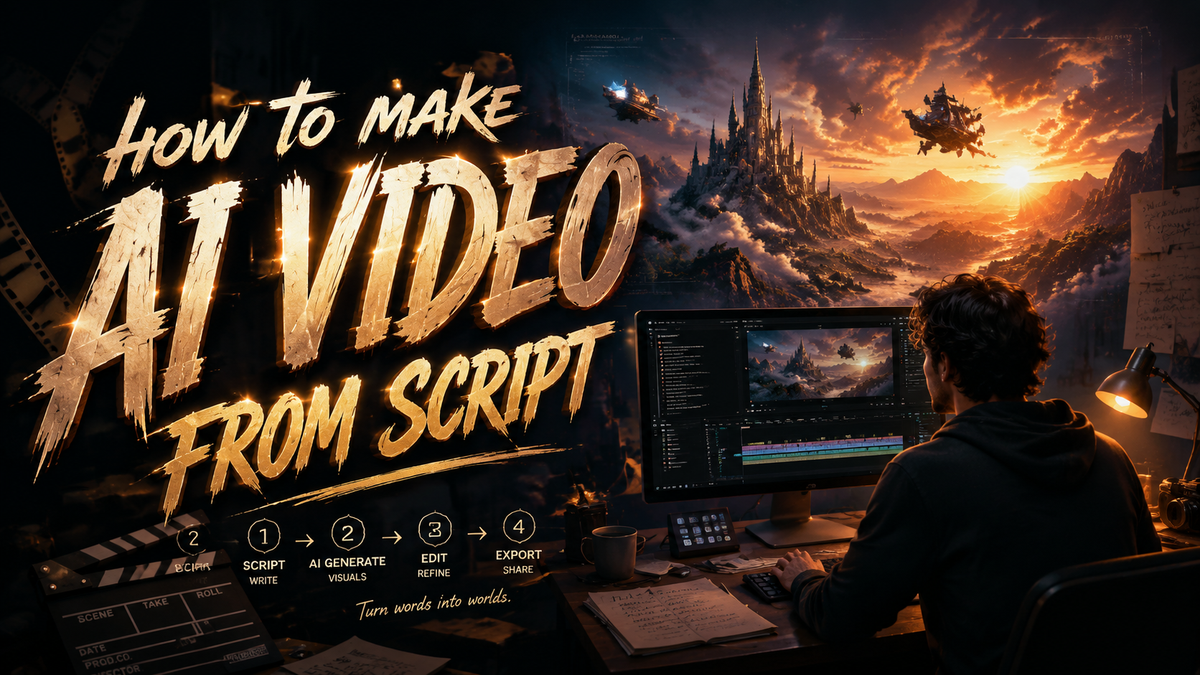
Creating professional video content from a simple script used to require expensive equipment, editing skills, and hours of production time. In 2026, you can generate a fully animated or live-action video from your script in minutes using artificial intelligence tools that handle storyboarding, voiceover, lip-sync, and scene composition automatically.
How to make AI video from script in 2026 is a straightforward process: Write or paste your script into an AI video generator, choose a visual style (photo-realistic, cartoon, cinematic), select or generate a voiceover, and let the AI match scenes, characters, and motion to your text. Most tools deliver a preview in under five minutes, with options to refine every element.
- ✓ AI video generators have matured to produce cinema-quality clips from plain text — no video editing experience required.
- ✓ The 2026 landscape offers at least 16 dedicated tools, with SeeGen AI’s Seedance 2.0 leading the shift from script to short film.
- ✓ Leading platforms now support multi-character lip-sync, dynamic camera angles, and style transfer that mirrors your brand.
- ✓ Cartoon and animation production has become accessible to beginners, with full tutorials available from platforms like Geek Vibes Nation.
- ✓ The best results come from a structured workflow: refine your script → choose a tool → generate iterations → add finishing touches.
Understanding AI Video Generation in 2026
AI video generation has evolved rapidly. According to a HP article published on January 22, 2026, titled “From Script to Screen: How AI Is Changing the Way Videos Are Made,” the technology now bridges the gap between a writer’s vision and a finished film without requiring a large production crew. The core innovation lies in large language models paired with diffusion-based video synthesis — the AI reads your script, breaks it into scenes, and renders coherent motion that follows the narrative.
By April 2026, the G2 Learn Hub had tested and reviewed the “7 Best AI Video Generators I’ve Tried (and Loved!) for 2026,” noting that the top tools now support custom avatars, multiple languages, and even real-time style adjustments. Similarly, Cybernews listed “The 16 best AI video generation tools for 2026” on February 6, 2026, confirming the breadth of options available. For creators who want to produce cartoons specifically, a full tutorial from Geek Vibes Nation (November 15, 2025) shows how to transform a written script into animated shorts using AI, demonstrating that the process is now accessible to anyone with a story to tell.
Step-by-Step: How to Make an AI Video from Script
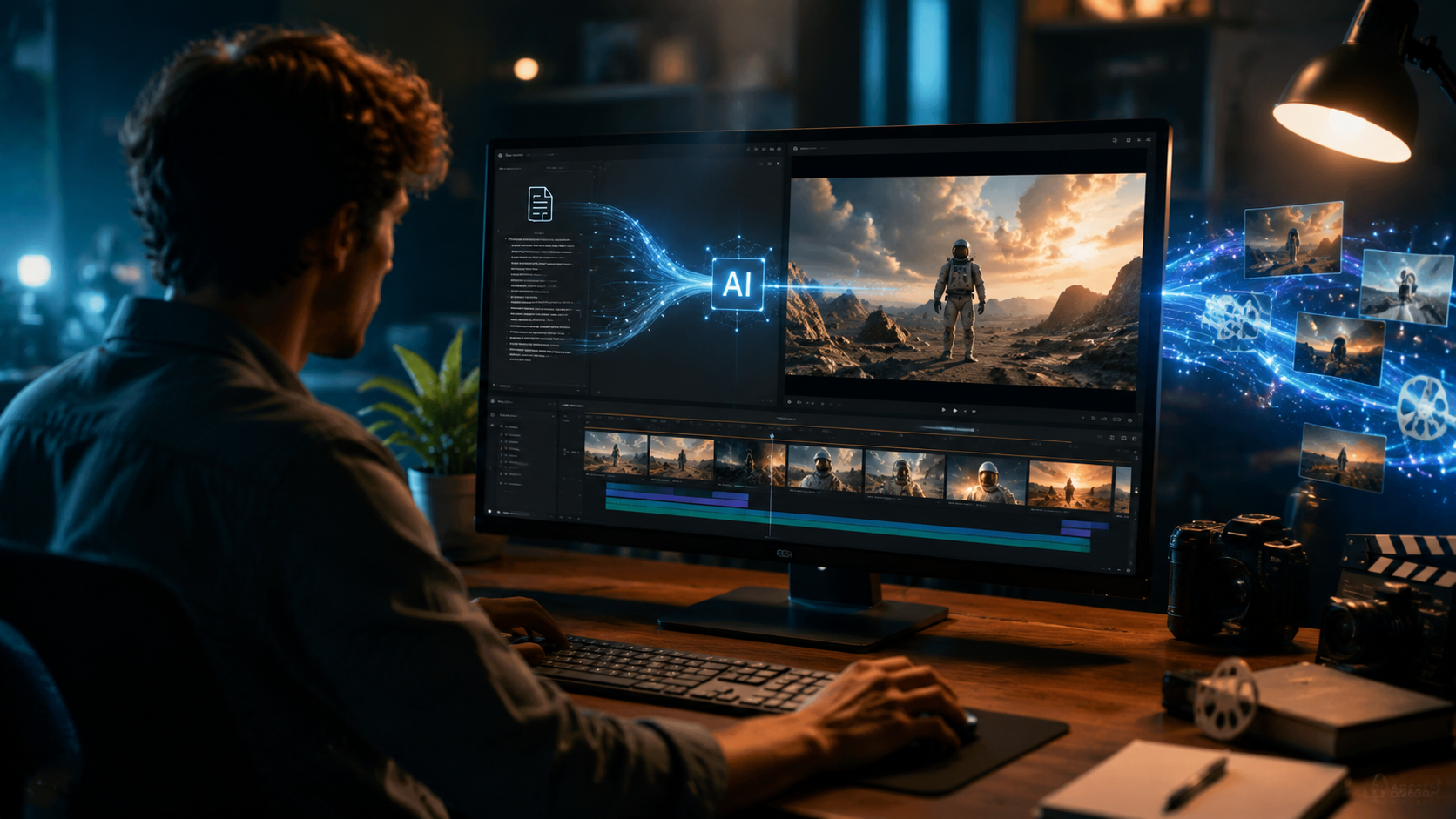
Follow these six proven steps to turn your script into a polished AI-generated video. This workflow works for any genre — explainers, social media clips, short films, or cartoons.
- Prepare a clean, scene-divided script. Break your text into logical scenes (each scene should contain one action or dialogue exchange). Many AI generators will parse scene markers better than long, unformatted paragraphs.
- Choose your AI video generator. Pick from the 2026 leaderboard (see comparison table below). For beginners, tools like Runway Gen-3, Pika 2.0, or SeeGen’s Seedance 2.0 offer the best “script-to-cinema” experience.
- Select a visual style. Options include photorealistic, 2D cartoon, 3D animated, cinematic film grain, or abstract. If your script is a cartoon, the Geek Vibes Nation tutorial recommends enabling “animation mode” for consistent character art.
- Generate voiceover and lip-sync. Upload or type your narration, or use the built-in text‑to‑speech with emotion parameters. Most 2026 tools automatically sync mouth movements to the audio.
- Preview and iterate. AI video generators produce a draft in 1–3 minutes. Review the timing, camera angles, and character expressions, then ask the AI to regenerate specific scenes with different prompts.
- Export and polish. Download your video in 1080p or 4K, then optionally add background music, captions, or color grading in a lightweight editor like CapCut or DaVinci Resolve.
Why This Workflow Works
According to the Exploding Topics report from April 2, 2026, which ranked the “7 Best AI Video Generators in 2026,” the top tools now offer integrated scene detection — meaning the AI can understand transitions like “cut to” or “fade in” within your script. This eliminates manual storyboarding and lets you focus on content rather than logistics.
Top AI Video Generators for 2026: A Comparison
The research from multiple sources confirms that no single tool dominates every use case. The table below compares the most recommended platforms for generating videos from scripts based on the latest information available.
| Tool | Best For | Key Feature (2026) | Starting Price (approx.) |
|---|---|---|---|
| Seedance 2.0 (SeeGen AI) | Cinematic short films | Script-to-cinema with multi-character dialogue | $49/month (Pro) |
| Runway Gen-3 | Realistic scenes & motion | Video-to-video style transfer | Free tier available; Pro $30/month |
| Pika 2.0 | Artistic animations | Cartoon & anime style presets | $10/month (Starter) |
| HyperSpectral AI | Corporate explainers | Automatic branding & captions | $20/month (Business) |
| DeepDreamPro | Dreamlike visuals | Abstract and surreal generation | $25/month (Creator) |
Source: G2 Learn Hub, Cybernews, and Exploding Topics (all 2026). Note that features and pricing can change; always check the official website. For cartoon production, Geek Vibes Nation’s tutorial recommends Pika 2.0 or Seedance 2.0 for the most consistent character animation.
Advanced Tips: From Script to Cartoon
Cartoons have become one of the most popular genres for AI video generation. The Geek Vibes Nation guide (November 2025) details a full workflow: write a script with character names in brackets (e.g., [Bob]), then feed it to an AI tool that supports character consistency. The key is to provide a reference image of your cartoon characters and let the AI generate frames that keep their appearance stable across scenes.
To achieve professional-quality cartoon output, follow these best practices:
- Use short scene descriptions. Instead of “Bob walks across the room,” write “Bob walks slowly, looking worried.” The AI handles motion better with emotional cues.
- Select a cartoon style upfront. Most generators offer presets: Japanese anime, classic Disney, or sketch-like vector.
- Leverage lip-sync controls. In Seedance 2.0, you can adjust mouth shapes per phoneme; in Pika 2.0, the AI automatically syncs to the audio waveform.
- Add voice variation. The G2 Learn Hub review highlights that top tools now support up to five different character voices per project, each with unique pitch and tone.
Real-World Use Cases
Marketers are using script-to-video AI to create product demos in minutes. According to the HP article, one major electronics brand reduced its video production time from two weeks to under two hours by adopting AI video generation for internal training. Similarly, indie filmmakers are producing short films for festivals using Seedance 2.0, as reported by GlobeNewswire on April 15, 2026, which noted that “everyone is now a director” thanks to SeeGen AI.
Future of AI Video: Seedance 2.0 and Beyond
The most exciting development in 2026 is SeeGen AI’s Seedance 2.0, which GlobeNewswire describes as “from script to cinema.” This platform can generate a full narrative sequence — including background music, sound effects, and AI-driven camera movements — directly from a script. It represents a leap forward in making high-quality video production accessible to non-professionals.
Looking ahead, the trend is toward real-time collaboration. Several tools in Cybernews’ list of “16 best AI video generation tools for 2026” now support multi-user editing, where one person refines the script while another adjusts visual style — all in the same browser session. The explosion of AI-generated content is also driving demand for watermark-free, commercial-ready videos, and most paid plans now include royalty-free usage.
Experts predict that by 2027, AI video generation will be as commonplace as text generation is today. The foundational skill — knowing how to make AI video from script — will become a core competency for content creators, educators, and marketers alike.
Frequently Asked Questions
Can I make an AI video from a script for free in 2026?
Yes, several tools offer free tiers: Runway Gen-3 provides limited monthly credits, and Pika 2.0 has a free starter plan. However, free versions usually lower resolution (720p) and add watermarks. Paid plans remove limitations.
How long does it take to generate a 2-minute AI video from a script?
With modern tools like Seedance 2.0, you can generate a 2‑minute video in about 10–15 minutes, including script upload, style selection, and one or two iterative refinements. The rendering itself takes 1–5 minutes depending on complexity and resolution.
Do AI video generators support voice cloning for my own script?
Yes, many 2026 platforms allow you to upload a short audio sample of your voice, then synthesize dialogue that matches your vocal tone. This works best with 30–60 seconds of clear speech per character.
Can I use an AI video generator to create cartoons for children?
Absolutely. The Geek Vibes Nation tutorial demonstrates creating child‑friendly cartoon shorts. Use age‑appropriate scripts and select “safe mode” or “kid‑friendly” style presets available in Pika 2.0 and Seedance 2.0.
What file format do AI video generators output in 2026?
Most export MP4 with H.264 or H.265 encoding at 24–60 fps. The resolution ranges from 720p (free) to 4K UHD (paid). Some tools also offer WebM for web‑optimized delivery.
How do I ensure my AI video looks consistent across scenes?
Use the same seed number or character reference image for every scene. Tools like Runway Gen-3 and Seedance 2.0 allow you to “lock” a character’s appearance so that the AI maintains visual continuity throughout the script.



Comments ()