
How to Make AI Generated Movies: 2026 Filmmaking Guide
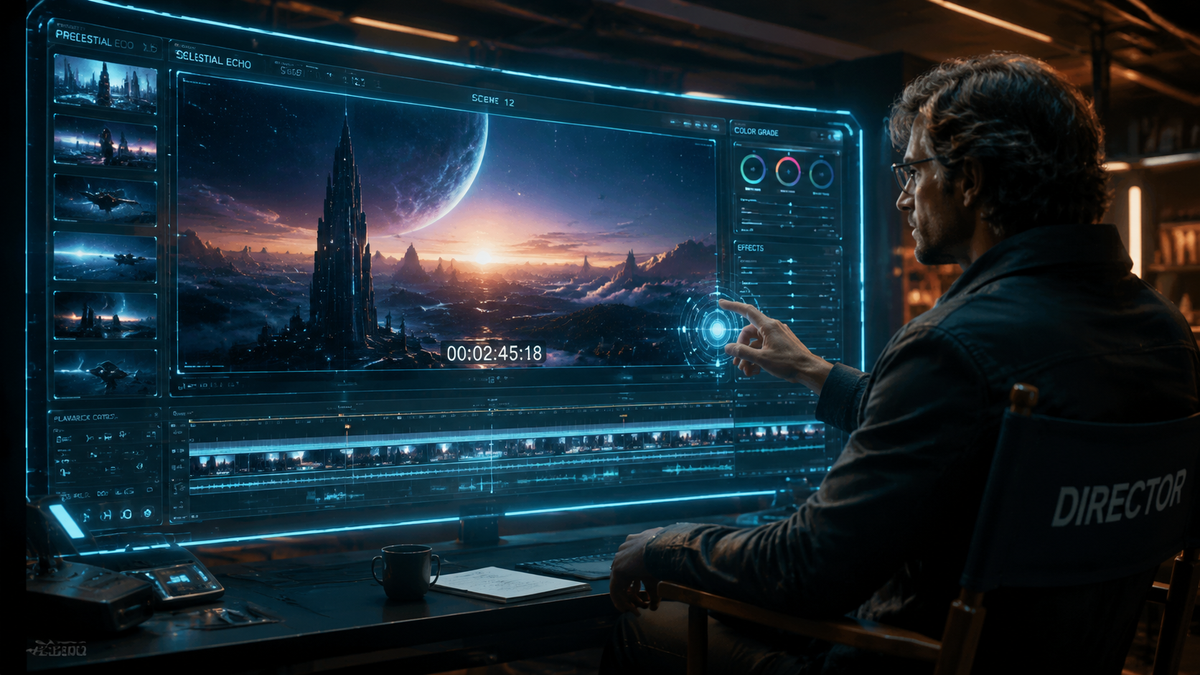
To learn how to make ai generated movies in 2026, you must integrate generative video models, AI-assisted scriptwriting, and neural audio synthesis into a unified production pipeline. The process involves prompting a video foundation model to generate cinematic sequences, refining those clips with spatial consistency tools, and layering AI-generated dialogue and orchestral scores to create a cohesive feature-length film.
AI movie making is the process of using artificial intelligence to automate scriptwriting, visual effects, and cinematography, allowing a single creator to produce high-fidelity cinematic content. By leveraging 2026-era multimodal models, filmmakers can now generate consistent characters and environments across multiple scenes, effectively bypassing traditional physical production constraints and massive studio overheads.
- ✓ Use multimodal AI models to maintain character and environmental consistency across scenes.
- ✓ Leverage real-time neural rendering to bridge the gap between AI generation and professional post-production.
- ✓ Integrate AI-generated scores and voice synthesis for a complete "text-to-film" workflow.
- ✓ Follow ethical guidelines and disclosure standards as AI-generated content becomes mainstream in 2026.
The Step-by-Step Guide on How to Make AI Generated Movies
In 2026, the barrier to entry for cinematic storytelling has collapsed. While "Avengers" director Joe Russo predicted three years ago in 2023 that we would see a fully AI-generated movie within two years, the reality of 2026 has surpassed even those bold expectations. Today, independent creators are securing significant venture capital—such as the $12 million recently raised by a leading AI film startup from Khosla Ventures and Jeffrey Katzenberg—to build the next generation of digital studios.
Creating a high-quality AI film requires a disciplined approach that mirrors traditional filmmaking but replaces physical cameras with "latent space" navigation. Follow this essential workflow to master the art of synthetic cinema.
- Conceptualization and Scripting: Use a Large Language Model (LLM) to draft a screenplay. Ensure you include detailed visual descriptions for every shot, as these will serve as your primary prompts for the video generation phase.
- Character and World Building: Utilize "Character Consistency" features in your AI video tool to create a visual seed. This ensures your protagonist looks the same in every shot, a major breakthrough achieved in late 2025.
- Scene Generation: Input your prompts into a video foundation model. Focus on generating short, 5-10 second clips that can be stitched together. Use "motion brushes" to control specific movements within the frame.
- Audio and Dialogue Synthesis: Generate voiceovers using high-fidelity neural cloning. For the soundtrack, use AI music generators that can match the emotional tempo of your edited scenes.
- Upscaling and Post-Production: Run your raw AI clips through a neural upscaler to reach 4K or 8K resolution. Use traditional editing software to color grade and finalize the pacing of your movie.
The Evolution of AI Filmmaking in 2026

The landscape of cinema has shifted dramatically. According to a report by Reuters in April 2026, AI is currently rewiring the world’s most prolific film industries, moving from experimental shorts to full-scale commercial productions. This shift isn't just about efficiency; it's about the democratization of visual effects that previously cost hundreds of millions of dollars. Small teams can now produce "hit" movies that compete with major studio releases on streaming platforms.
However, the rapid rise of these tools hasn't been without controversy. While some see a golden age of creativity, others warn of a "hollow" future for cinema. A 2025 WIRED report noted that some early AI films felt "empty" due to a lack of human-centric nuance. In 2026, successful filmmakers are those who use AI as a brush, not as a replacement for the artist's intent. The goal of learning how to make ai generated movies is to enhance the human narrative with the infinite scale of machine intelligence.
Comparing 2026 AI Movie Technologies
Choosing the right tech stack is essential for professional results. The following table compares the primary methods used by modern AI filmmakers to achieve cinematic quality.
| Technology Type | Primary Use Case | Key Advantage in 2026 | Complexity Level |
|---|---|---|---|
| Diffusion Video Models | Visual Scene Generation | Photorealistic textures and lighting | Medium |
| Neural Rendering (NeRF/GS) | 3D Environment Mapping | Total camera control in virtual space | High |
| Multimodal LLMs | Scripting & Storyboarding | Contextual awareness of plot arcs | Low |
| Latent Consistency Models | Real-time Pre-visualization | Instant feedback for directors | Medium |
Mastering Character Consistency in AI Cinema
The biggest hurdle in the early days of AI video was "flicker" and character drifting. When learning how to make ai generated movies, you must master the art of the "Seed ID." By locking the noise seed and using LoRA (Low-Rank Adaptation) weights, you can ensure that your lead actor maintains the same facial structure, hair color, and clothing throughout the entire film. This allows for traditional continuity, which is vital for audience immersion.
Furthermore, the integration of spatial consistency tools allows filmmakers to place these consistent characters in 360-degree environments. According to industry analysis from Spyglass.org in January 2026, the "horror story" of AI-generated hit movies often involves creators losing control of their characters' likenesses mid-production. To avoid this, modern creators use dedicated "Digital Twin" platforms that store character data as a reusable asset across different AI engines.
The Role of Prompt Engineering in Cinematography
In 2026, the "Director of Photography" has become a "Director of Prompts." You are no longer worrying about lens flares and f-stops in the physical world; instead, you are describing them in the latent space. A prompt like "Cinematic close-up, 35mm lens, anamorphic bokeh, high-contrast chiaroscuro lighting" now yields results that are indistinguishable from high-end Hollywood cameras.
AI Audio: Dialogue and Orchestral Scores
A movie is nothing without its soundscape. The 2026 workflow for AI filmmaking involves sophisticated voice cloning that captures the emotional "breath" of a performance. Rather than robotic monologues, AI voices now utilize "Emotion Tags" to whisper, shout, or cry with convincing realism. This technology has been particularly transformative for international cinema, allowing for seamless "AI Dubbing" where the characters' lip movements are automatically synced to any language.
On the musical front, generative AI has moved beyond simple loops. Modern AI composers can analyze the visual data of your movie and generate a dynamic score that swells and fades in perfect synchronization with the on-screen action. This level of integration was a pipe dream just a few years ago but is now a standard feature in most AI movie-making suites.
The Impact of AI Movies on Society and Industry
As we navigate 2026, the societal impact of AI-generated video is becoming a central topic of debate. The New York Times reported in February 2026 that AI-generated videos are significantly distorting digital feeds, particularly for younger audiences. This highlights the importance of transparency. When you learn how to make ai generated movies, you also inherit the responsibility of ethical labeling. Most major platforms now require an "AI-Generated" watermark to maintain trust with the viewer.
Despite these challenges, the investment landscape remains bullish. The $12 million investment from Khosla Ventures and Jeffrey Katzenberg in mid-2026 signals that the titans of old Hollywood are betting big on the synthetic future. This capital is being used to develop "Creative Copilots" that allow human directors to manipulate AI outputs with the precision of a surgeon, ensuring that the final product reflects a specific artistic vision rather than a randomized machine output.
Future Trends: Interactive and Personalized Cinema
Looking toward the end of 2026 and into 2027, the trend is shifting toward "Interactive Cinema." Imagine a movie where the viewer can choose the ending, and the AI generates the remaining 20 minutes of the film in real-time. We are currently seeing the first prototypes of these "Generative Films" in high-end VR headsets. The mastery of AI filmmaking today is the foundation for the immersive, personalized entertainment of tomorrow.
Is it legal to sell an AI-generated movie in 2026?
Yes, but copyright laws in 2026 vary by jurisdiction. Generally, you must prove significant human creative input and use AI models trained on licensed or public domain data to secure full commercial protection for your film.
Do I need a powerful computer to make AI movies?
No, most professional AI filmmaking tools in 2026 are cloud-based. You can direct and render high-quality cinematic sequences from a standard laptop or even a tablet, as the heavy processing is handled by remote GPU clusters.
Can I use the likeness of famous actors in my AI film?
Using an actor's likeness without permission is illegal under the 2026 "Digital Persona Rights Act." You should use "Synthetic Actors"—entirely original faces generated by AI—to avoid legal disputes and ethical concerns.
How long does it take to generate a 90-minute AI movie?
While the actual generation of clips can take a few days, the entire process—including script refining, character consistency checks, and editing—typically takes 4 to 8 weeks for a solo creator in 2026.
What is the best software for how to make ai generated movies?
There is no single "best" tool, but a professional 2026 workflow usually combines a video foundation model (like those funded by Khosla Ventures), a dedicated AI audio workstation, and a traditional NLE (Non-Linear Editor) for final assembly.
Comments ()