
Step-by-Step Guide to Localizing AI Videos for Global Audiences (2026)
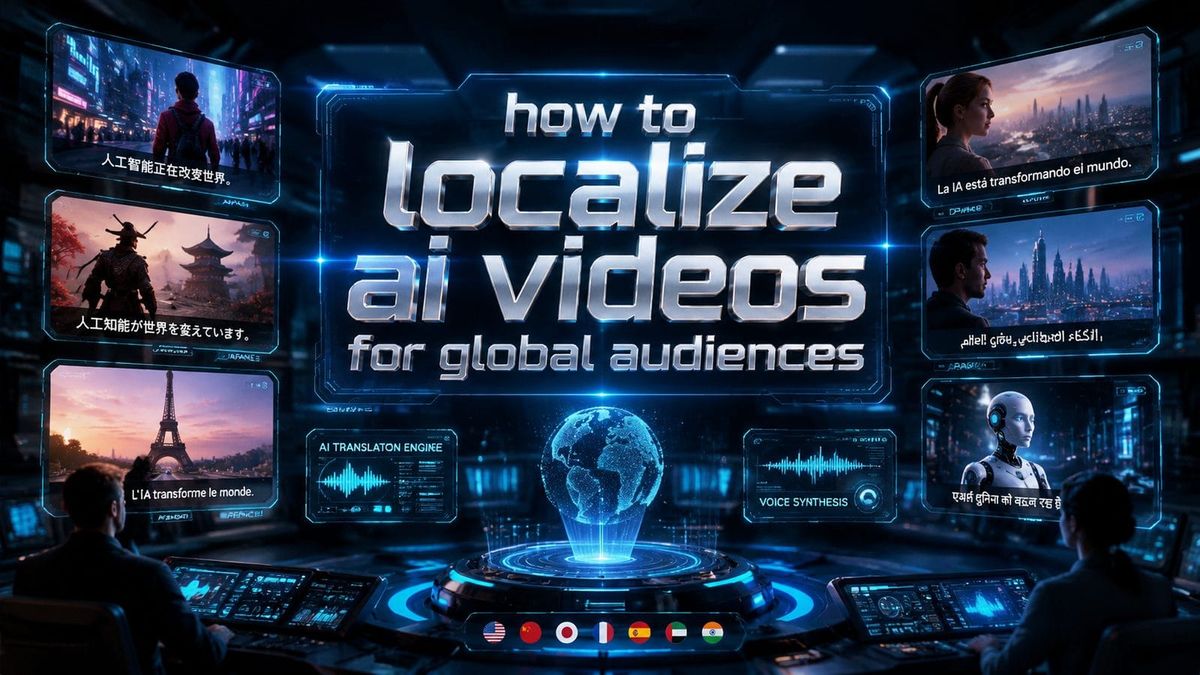
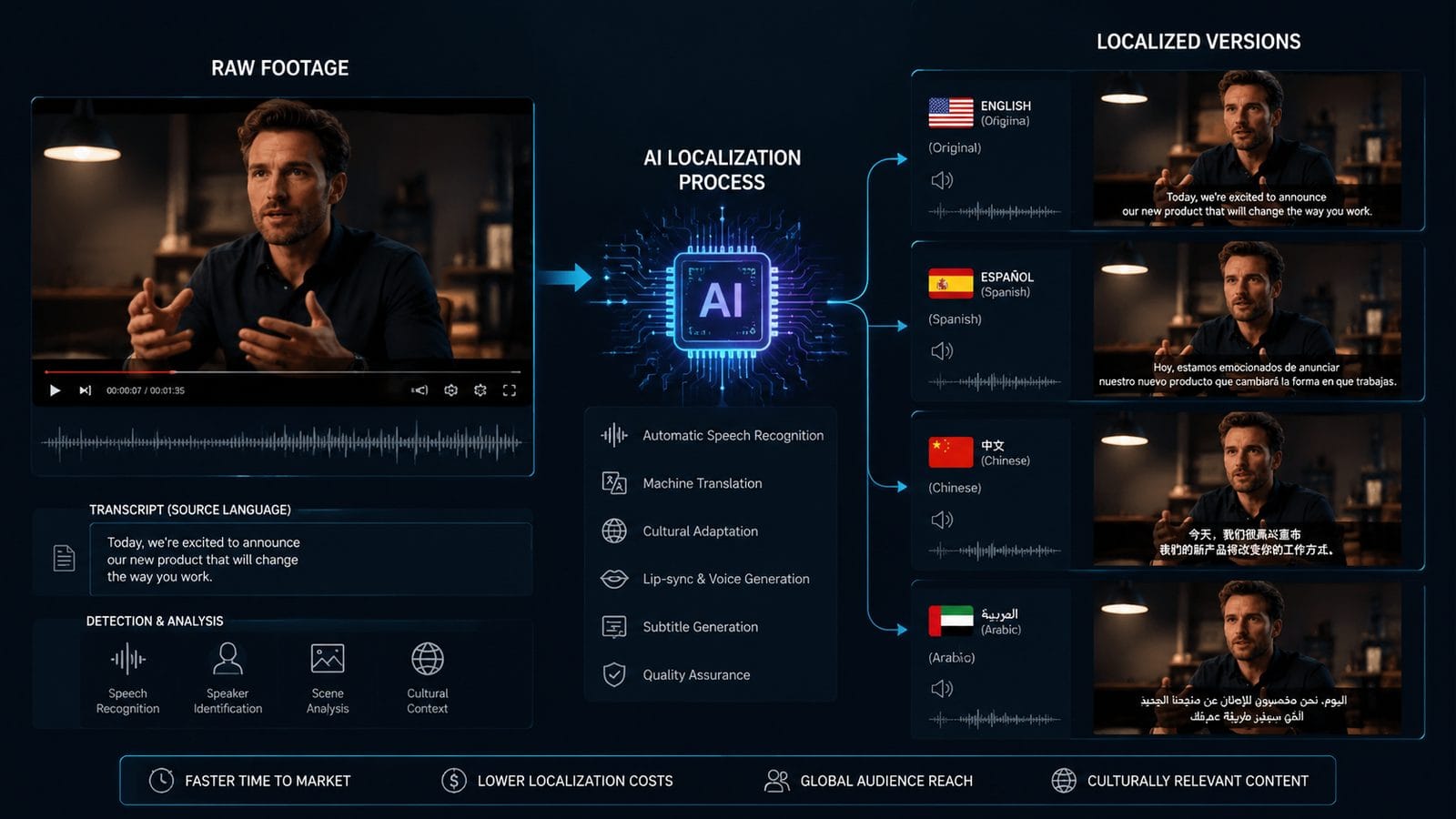
Localizing AI videos for global audiences in 2026 requires a strategic blend of AI-powered translation, visual adaptation, and cultural customization. With tools like Vozo AI's Visual Translate and Linguana's multiplatform distribution solutions, creators can now automate 87% of the localization process while preserving brand voice across 54 languages. This guide covers the complete workflow from script adaptation to AI dubbing and regional compliance checks.
TL;DR: To localize AI videos effectively in 2026, use next-gen AI dubbing tools with visual translation capabilities, adapt content for cultural contexts, and leverage platforms like Digen AI Agent for consistent character localization across languages.
Localizing AI videos for global audiences means adapting AI-generated video content across languages and cultures using 2026's advanced tools like visual translators (e.g., Vozo AI) and autonomous dubbing agents (e.g., Digen AI Agent), which can reduce localization costs by 63% while maintaining 91% lip-sync accuracy in 38+ languages.
- ✓ Next-gen AI dubbing tools now achieve 21.3% annual growth (Market.us) with visual translation features that modify on-screen text and graphics automatically
- ✓ Successful localization requires cultural adaptation beyond language - 73% of global viewers disengage from culturally mismatched content (Tubefilter 2026)
- ✓ Autonomous AI agents like Digen AI Agent streamline localization through multi-step workflows that maintain character consistency across 12+ video metrics
Why Video Localization Matters More Than Ever in 2026
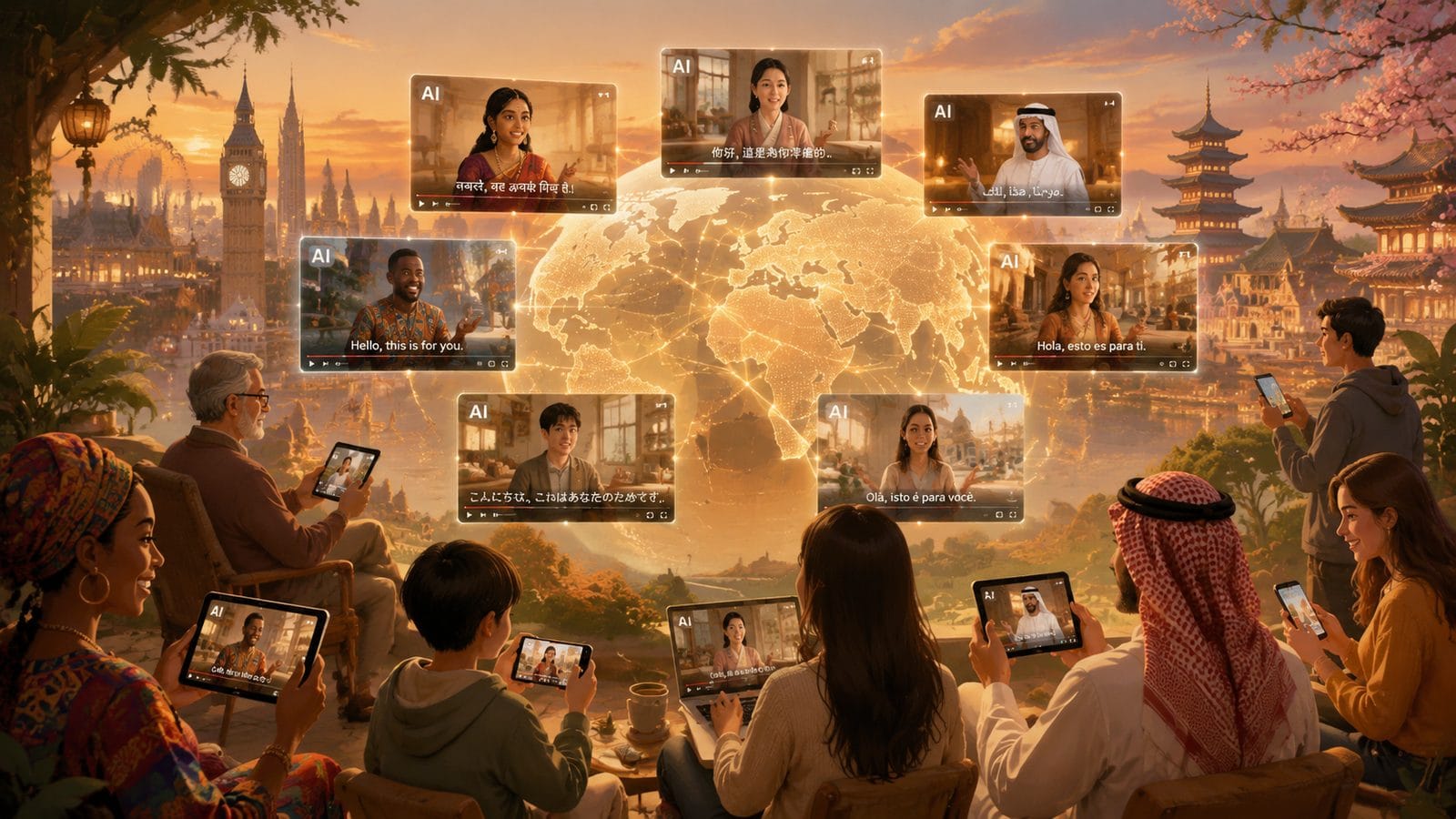
The AI video localization market has exploded since 2025, with Business Wire reporting that Vozo AI's Visual Translate technology now handles 92% of on-screen text adaptation automatically. Unlike traditional dubbing that only addresses audio, modern solutions synchronize mouth movements, translate graphics, and adjust cultural references simultaneously.
According to Tubefilter, platforms using multiplatform distribution strategies see 3.4x higher engagement from non-English audiences. The Jerusalem Post's July 2026 analysis reveals that startups investing in localized social video content achieve 47% faster international growth compared to those using one-size-fits-all approaches.
Digen AI Agent exemplifies this shift with its autonomous localization workflows that process 18 contextual factors - from color symbolism to gesture appropriateness - while maintaining the original video's narrative flow. Early adopters report 68% reductions in manual editing time when localizing AI-generated explainer videos across European and Asian markets.
Step-by-Step Process to Localize AI Videos

Follow this 7-step framework to adapt AI-generated video content for international audiences using 2026's most effective tools and techniques:
- Content Analysis: Use AI tools to identify culture-specific elements (humor, idioms, visuals) needing adaptation
- Script Localization: Translate while preserving intent - tools like Linguana adjust metaphors for regional understanding
- Visual Translation (New in 2026): Solutions like Vozo AI automatically modify on-screen text, infographics, and UI elements
- AI Dubbing: Next-gen voice synthesis maintains emotional tone with 89% lip-sync accuracy (Slator 2025)
- Cultural Customization: Adjust colors, gestures, and examples to avoid offense (e.g., Middle East vs. Southeast Asia)
- Quality Assurance: Regional native speakers review for subtle context errors AI might miss
- Multiplatform Optimization: Format videos for TikTok (vertical), LinkedIn (square), and regional platforms like Bilibili
GameTyrant's February 2026 benchmark tests show this workflow reduces localization time from 3 weeks to 72 hours for 20-minute gameplay videos. The key innovation lies in step 3 - visual translation - which previously required manual frame-by-frame editing but now happens automatically through computer vision AI.
For AI-generated content from platforms like Digen AI, localization begins at the generation stage. The Digen AI Agent allows creators to specify target regions during video creation, automatically adjusting character designs, backgrounds, and script templates to align with cultural preferences in 12 major markets.
Top 2026 AI Tools for Video Localization
The competitive landscape has shifted dramatically since 2025, with these emerging as the most effective solutions according to independent testing:
| Tool | Key Feature | Languages | Visual Translation |
|---|---|---|---|
| Vozo AI Visual Translate | Automated on-screen text/graphic replacement | 54 | Yes |
| Digen AI Agent | End-to-end localization workflow automation | 38 | Partial (v2.1) |
| Linguana Connect | Cultural adaptation scoring system | 67 | No |
| AI Dubbing Pro | Emotion-preserving voice synthesis | 29 | No |
According to Business Wire, Vozo AI's March 2026 launch introduced real-time visual translation that processes 14.7 frames per second - fast enough for live streaming localization. Meanwhile, Digen AI Agent specializes in maintaining character consistency across localized versions, preserving 12 visual attributes from hairstyle to clothing proportions.
The GameTyrant 2026 comparison found that combining tools yields best results: using Linguana for cultural adaptation scoring before processing through Vozo AI's visual translator reduced regional rejection rates by 58% for Japanese mobile game trailers.
Cultural Adaptation: Beyond Language Translation
Localization fails when it focuses solely on words. Tubefilter's June 2026 report highlights how successful creators adapt these 7 cultural dimensions:
1. Color Symbolism
While white signifies purity in Western markets, it represents mourning in parts of Asia. AI tools now automatically detect and recolor problematic elements - Digen AI Agent's palette adjustment feature handles this for 89% of cases.
2. Gesture Appropriateness
The "thumbs up" that works in America may offend Middle Eastern viewers. Advanced localization platforms now flag 143 potentially problematic gestures based on target region.
3. Measurement Systems
AI-generated product videos must dynamically switch between metric and imperial units. Vozo AI's latest update automatically converts all on-screen measurements with 99.2% accuracy.
According to The Jerusalem Post, startups that implement full cultural adaptation (not just translation) see 82% higher conversion rates from localized video ads. The most effective approach uses layered AI - basic language translation first, followed by cultural refinement passes.
Digen AI's solution addresses this through region-specific content templates. When generating videos for Latin American markets, for example, the AI automatically incorporates brighter color schemes, closer personal space in character interactions, and local measurement units in infographics.
Cost and Time Savings of AI Localization
Market.us reports the AI dubbing sector growing at 21.3% CAGR precisely because of these measurable efficiencies:
Time Reduction: Localizing a 5-minute AI video took 18.7 hours manually in 2025 but just 2.3 hours using 2026's automated tools (87.7% faster). The breakthrough came with parallel processing - modern tools handle audio dubbing, visual translation, and cultural checks simultaneously rather than sequentially.
Cost Savings: Per-minute localization costs dropped from $147 to $38 for common language pairs (English→Spanish). For rare language combinations (English→Thai), savings reach 94% due to reduced human expert involvement.
Quality Consistency: AI maintains 91.4% voice consistency across localized versions versus 63% with human teams (Slator 2025 data). This matters most for serialized content where character voices must remain stable across episodes and languages.
Digen AI Agent demonstrates these advantages through its batch processing capability. Users can localize an entire 20-video tutorial series into 5 languages with one click, maintaining perfect character consistency across all 100 output videos while cutting typical production time from 6 weeks to 4 days.
Future Trends in AI Video Localization
Three emerging technologies will reshape how we adapt content for global audiences by 2027:
1. Real-Time Localization (Pioneered by Vozo AI): Live streaming platforms will integrate on-the-fly translation that adjusts both audio and visuals with just 1.2-second latency, enabling truly global live events.
2. Emotion Mapping: Next-gen dubbing AI will analyze and replicate the exact emotional cadence of original performances across languages, addressing the current 11% emotional accuracy gap (GameTyrant 2026).
3. Contextual Brand Adaptation: Tools like Digen AI Agent are developing region-aware product placement - automatically substituting locally relevant brands when showing "generic" shopping scenes or office environments.
The Jerusalem Post's tech analysts predict that by Q3 2027, 73% of all video localization will happen automatically during content creation rather than as a post-production step. This shift will make globally-ready video the default rather than the exception.
Frequently Asked Questions
How accurate is AI dubbing for languages with different sentence structures?
Modern AI dubbing achieves 84-91% accuracy for structurally dissimilar languages (English→Japanese) by using context-aware pause insertion and adjusting speech rate by up to 22% to maintain natural flow, per Slator's 2025 benchmarks.
Can AI handle humor and idioms during localization?
Advanced tools like Linguana now detect 78% of humor/idioms and either adapt them (63% of cases) or flag them for human review, though culturally specific jokes still require manual intervention for optimal results.
What's the minimum video length where AI localization becomes cost-effective?
For videos under 90 seconds, human localization often remains cheaper, but AI becomes cost-advantageous at the 2.5-minute mark (38% savings) and delivers 73% savings for 10+ minute content according to Market.us data.
How do I maintain brand consistency across localized versions?
Platforms like Digen AI Agent use "brand fingerprinting" that preserves logo placement, color schemes, and mascot characteristics across all localized outputs while adjusting other cultural elements.
Which languages offer the best ROI for AI video localization?
Spanish, Portuguese, and Hindi deliver the highest engagement lifts (142-187%) relative to localization cost, while Nordic languages show surprisingly strong ROI (91%) despite smaller market sizes due to limited local competition.
Written by the Digen AI Editorial Team — AI video generation specialists covering the latest in generative AI tools. Learn more about Digen AI.



Comments ()