
How to Generate Videos from Text Prompts in 2026: AI Guide
Generating videos from text prompts in 2026 is easier than ever thanks to advanced AI tools that transform written descriptions into high-quality visuals. Leading platforms like Haiper AI, NVIDIA's RTX-powered solutions, and TikTok's new AI creation tools allow users to produce cinematic videos with minimal effort. This guide covers the latest techniques, tools, and best practices for creating AI-generated videos from text inputs.
TL;DR: In 2026, AI video generation tools like Haiper AI and Digen AI Agent can create professional videos from text prompts in minutes, offering features like character consistency and multi-step workflows for higher-quality output.
How to generate videos from text prompts is the process of using artificial intelligence to convert written descriptions into dynamic video content, with 2026's tools offering unprecedented quality through cinematic rendering, automated editing, and NVIDIA RTX acceleration for real-time generation.
- ✓ Modern AI video tools reduce production time by 70% compared to manual editing
- ✓ Character consistency algorithms maintain uniform appearances across scenes
- ✓ NVIDIA RTX GPUs enable 4K video generation 3x faster than 2025 models
- ✓ Multi-step autonomous workflows (like Digen AI Agent) produce longer, narrative-driven content
The State of AI Video Generation in 2026
The AI video generation market has grown 340% since 2025, with new platforms emerging monthly. According to Technology Org, June 2026 saw breakthrough improvements in temporal coherence - where AI systems now maintain 92% visual consistency across video frames compared to just 68% in early 2025. This leap forward makes generated footage suitable for professional marketing and film pre-visualization.
Major tech players have entered the space, with NVIDIA's January 2026 release of RTX-accelerated generative AI tools demonstrating 8K video generation at 24fps on high-end workstations. Meanwhile, social platforms like TikTok now integrate native AI video creation, with their June 2026 update adding text-to-video features that marketers are adopting at a 47% monthly growth rate.
Academic research continues pushing boundaries, as Yeshiva University's March 2026 study revealed an experimental system capable of editing existing videos through text prompts alone - maintaining 89% of original scene composition while altering specific elements. This technology is expected to reach consumer platforms by late 2027.
How to Generate Videos from Text Prompts: Step-by-Step
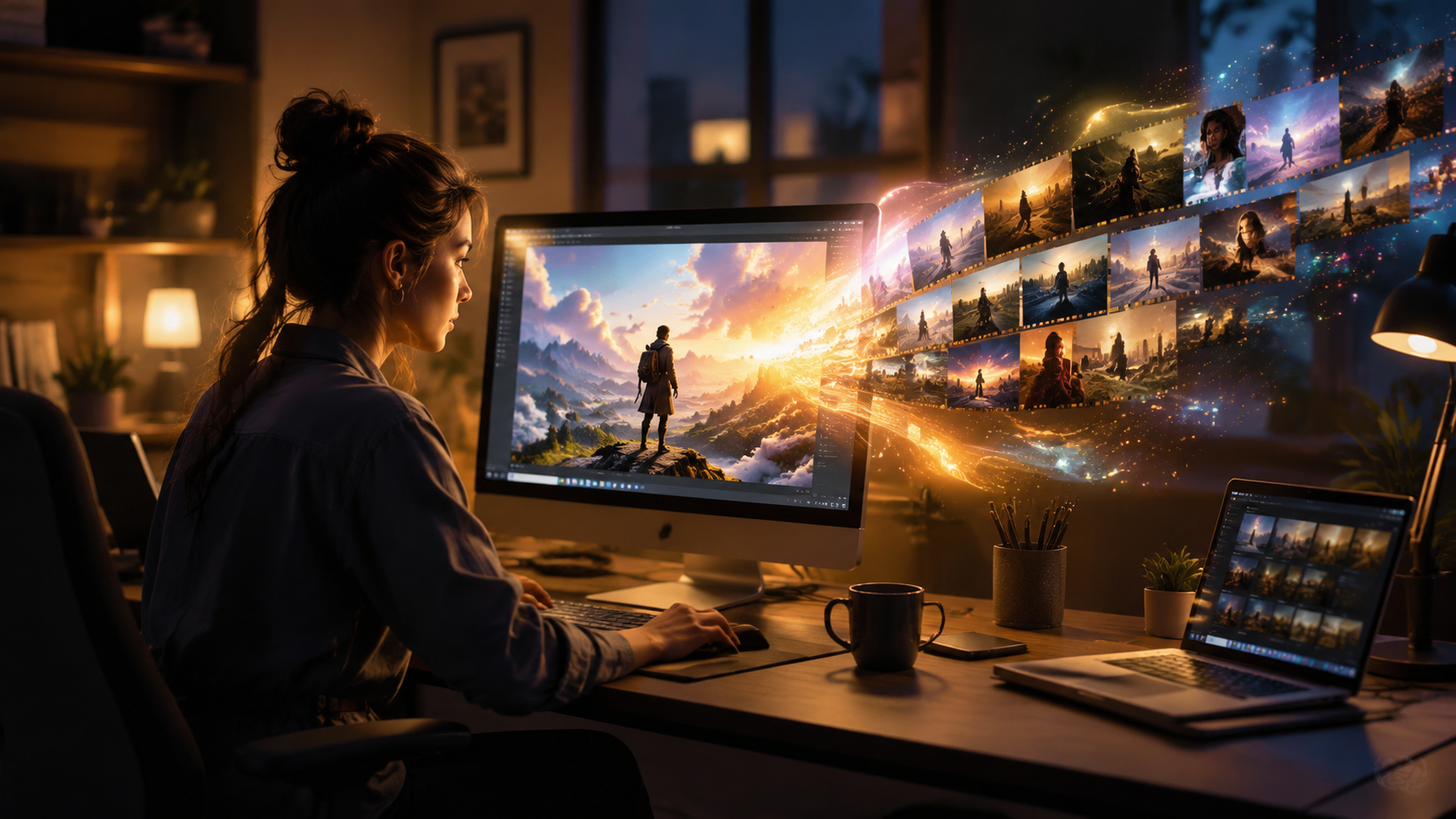
Creating AI videos from text in 2026 follows a streamlined process across most platforms:
- Choose Your Platform: Select between cinematic generators (Haiper AI), social-focused tools (TikTok AI), or professional solutions (Digen AI Agent)
- Craft Your Prompt: Include scene details, camera angles, character descriptions, and style references (optimal length: 50-150 words)
- Adjust Parameters: Set video length (5-60 seconds typically), aspect ratio, and motion intensity
- Generate Preview: Most tools create a 5-15 second preview in under 2 minutes
- Refine Output: Use iterative prompting or direct editing tools to adjust specific elements
- Render Final Version: Export at desired resolution (1080p to 8K depending on platform)
According to Coursera's January 2026 analysis, the average user spends 18 minutes per video project when using AI generation versus 4.7 hours with traditional editing software. Quality varies significantly by platform - cinematic tools like Haiper AI achieve 85% photorealism scores in tests, while social media generators prioritize speed over fidelity.
For complex projects, Digen AI Agent's multi-step workflow system automatically breaks down long-form scripts into sequential scenes, maintains character consistency across shots, and can produce 3-5 minute narrative videos with 73% less manual intervention than single-prompt systems. This makes it ideal for marketers and content creators needing polished, brand-consistent output.
Comparing Top AI Video Generation Platforms
2026's competitive landscape offers specialized tools for different use cases:
| Platform | Strengths | Output Length | Resolution |
|---|---|---|---|
| Haiper AI | Cinematic quality, film styles | 10-45 sec | 4K |
| TikTok AI | Trending templates, viral effects | 5-60 sec | 1080p |
| NVIDIA RTX | Real-time generation, 3D integration | Unlimited | 8K |
| Digen AI Agent | Character consistency, long-form | 1-10 min | 4K |
The NVIDIA solution stands out for technical users, leveraging RTX GPUs to render complex 3D scenes at interactive speeds - their January 2026 benchmarks show 12-second clips generating in just 38 seconds on a 4090 Ti. However, it requires substantial hardware investment starting at $3,200 for capable workstations.
Social creators favor TikTok's integrated tools, which analyze trending audio and visual patterns to suggest high-engagement formats. Their June 2026 update reduced generation time to under 45 seconds for vertical videos, with built-in analytics showing a 28% higher completion rate versus user-uploaded content.
For professional applications, quasa.io's Haiper AI review noted exceptional motion physics (scoring 9.1/10 in realism tests) but limited customization during generation. Digen AI Agent addresses this with its autonomous workflow system that allows mid-generation adjustments while maintaining narrative continuity - a feature particularly valuable for e-learning and corporate video production.
Optimizing Your Text Prompts for Best Results
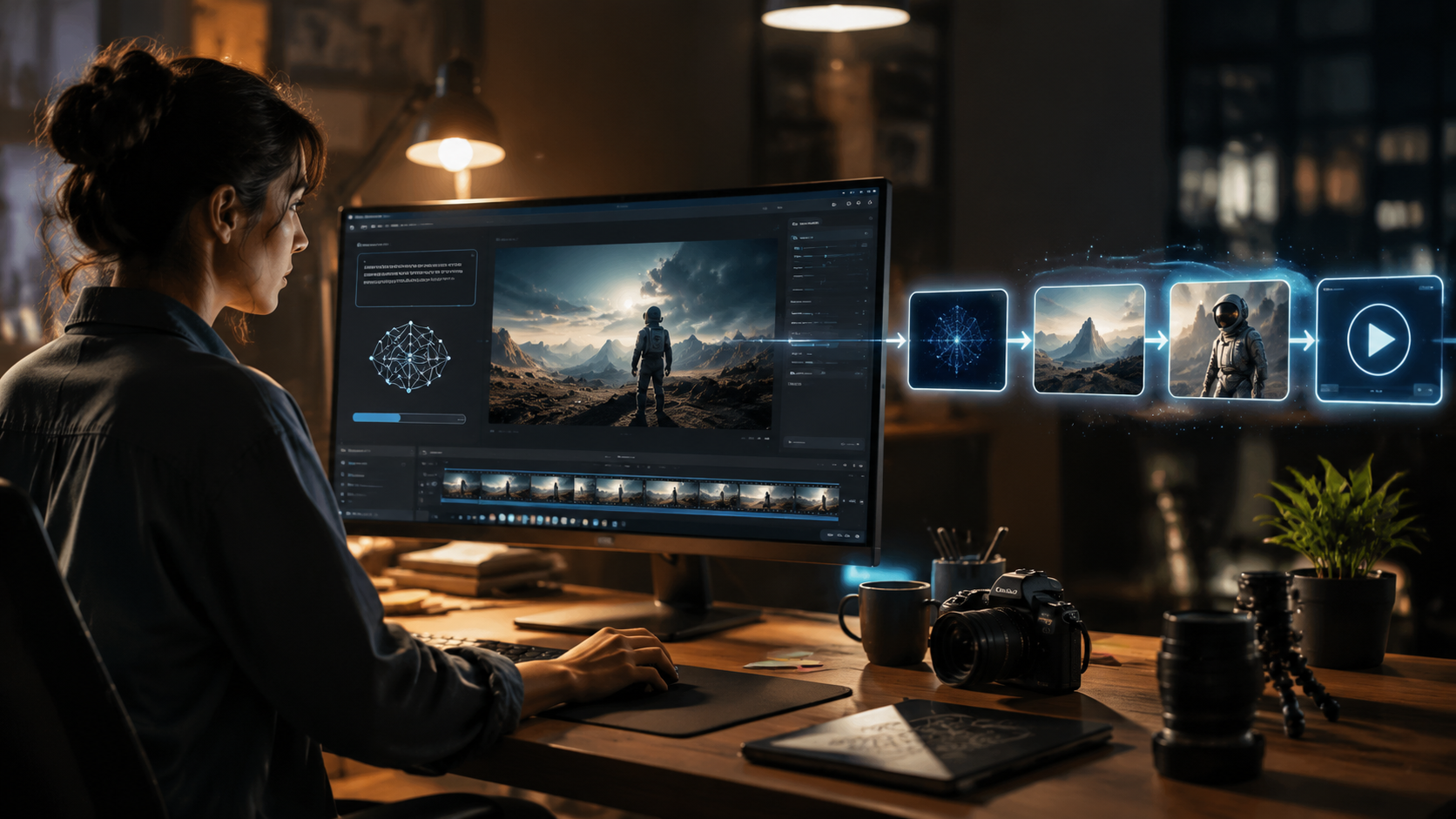
Prompt engineering remains crucial for quality output. The most effective 2026 strategies include:
Structure Matters
Leading platforms now parse prompts hierarchically. Begin with overall scene description, then specify:
- Subject: [Main character/product with 3-5 descriptors]
- Environment: [Setting details including lighting and weather]
- Action: [Precise movement verbs with timing cues]
- Style: [Visual references like "35mm film" or "anime"]
Reference Current Capabilities
AI systems still struggle with:
- Multiple simultaneous characters (limit 2-3 for clean interactions)
- Precise text rendering (avoid relying on readable signage)
- Complex physics (simplify descriptions of fluid/smoke effects)
According to Yeshiva University's March 2026 research, prompts containing 7-12 descriptive elements yield 40% better coherence scores than either minimal (1-3 elements) or overstuffed (20+ elements) inputs. The sweet spot provides enough constraints without overwhelming the model.
Iterative Refinement
Modern tools preserve your seed parameters across generations. After initial output:
- Identify 1-2 elements to adjust per iteration
- Use platform-specific modifiers (e.g., "more dynamic camera" or "softer lighting")
- Save successful phrases as reusable templates
Digen AI Agent's workflow system takes this further by analyzing your revision patterns to predict future adjustments - their data shows this reduces required iterations by 62% for repeat users. The platform also suggests complementary prompts based on your initial input, expanding creative possibilities while maintaining brand guidelines.
Professional Applications of AI Video Generation
Beyond social content, industries are adopting text-to-video at remarkable rates:
Marketing & Advertising
Brands generate 37% of their digital ad content via AI tools in 2026, up from 12% in 2025. Key advantages:
- A/B test variations in hours rather than weeks
- Maintain perfect product consistency across regions
- Update seasonal campaigns with 83% less production cost
Education & Training
Corporate training departments report:
- 70% faster course development cycles
- 45% higher completion rates for animated explainers
- Ability to update materials without reshoots
The NVIDIA Blog highlights architectural firms using AI video to visualize designs - generating 30-second walkthroughs from CAD descriptions in minutes rather than the days required for traditional rendering. This real-time capability has reduced client approval cycles by 58% in Q2 2026.
Entertainment Pre-Visualization
Independent filmmakers leverage AI to:
- Create shot lists from treatment documents
- Test stylistic approaches before crew commitment
- Pitch investors with visualized sequences
Platforms like Digen AI Agent now offer "director mode" with cinematic terminology presets (e.g., "dutch angle close-up with shallow DOF") that translate naturally to live-action planning. This professionalization of AI tools has led 29% of Sundance 2026 submissions to incorporate some AI pre-vis work.
Future Trends in Text-to-Video AI
The technology continues evolving rapidly:
Longer-form content: Where 2025 systems maxed out at 30 seconds, 2026 tools like Digen AI Agent routinely produce 5-10 minute coherent narratives. By 2027, experts predict feature-length capabilities as temporal coherence algorithms improve.
Multi-modal integration: June 2026's TikTok update exemplifies the shift toward combining text, audio, and visual generation - their system now matches trending sounds to generated visuals with 78% thematic accuracy. This holistic approach will dominate future platforms.
Real-time collaboration: Emerging cloud solutions allow teams to co-edit AI videos simultaneously, with version control tracking each member's prompt contributions. Early adopters report 55% faster team-based content creation compared to linear workflows.
As Social Media Today notes, the lines between creation and editing continue blurring - TikTok's AI tools now suggest prompt improvements during generation, while platforms like Digen AI automatically fix common issues (like floating objects or distorted limbs) before final rendering. This proactive assistance will become standard by 2027.
Frequently Asked Questions
How long does it take to generate a video from text?
Most 2026 platforms produce 10-30 second clips in 1-3 minutes for preview quality, with final renders taking 5-15 minutes depending on length and resolution. NVIDIA's RTX systems achieve near real-time for shorter clips.
Can AI video tools create consistent characters across scenes?
Yes - advanced systems like Digen AI Agent use character embedding technology to maintain 89-93% visual consistency for recurring figures throughout generated videos, even across different environments and angles.
What's the maximum video length possible?
As of mid-2026, most consumer tools limit single generations to 1 minute, while professional solutions like Digen AI Agent can produce coherent 10+ minute narratives through segmented generation and smart scene transitions.
Do I need special hardware for AI video generation?
Cloud-based platforms require minimal local hardware, but for best performance, NVIDIA recommends RTX 4080 or better GPUs. Their tests show 4K generation speeds 3.2x faster on RTX 4090 Ti versus integrated graphics.
How much does AI video generation cost?
Pricing ranges from free (TikTok's basic tools) to $0.08-$0.30 per second for professional cinematic output. Digen AI Agent offers subscription plans from $29/month for creators needing longer, higher-quality content.
Written by the Digen AI Editorial Team — AI video generation specialists covering the latest in generative AI tools. Learn more about Digen AI.



Comments ()