
How to Generate Realistic AI Humans: 2026 Ultimate Guide
To learn how to generate realistic AI humans in 2026, you must integrate advanced neural rendering for visuals with high-fidelity synthetic voice cloning and behavioral logic. The process involves selecting a high-resolution diffusion model for imagery, utilizing 2026-standard voice synthesis for indistinguishable speech, and applying temporal consistency frameworks for video. By combining these multimodal tools, creators can produce digital entities that are now virtually indistinguishable from real people in both appearance and sound.
Generating realistic AI humans is the process of using deep learning architectures—specifically Diffusion Models and Large Speech Models—to create digital personas that mimic human biological traits. In 2026, this involves synthesizing hyper-realistic skin textures, anatomically correct movement via tools like Sora 2, and neural voice clones that match the emotional cadence of natural human speech.
- ✓ AI-generated faces and voices have reached a "point of indistinguishable realism" according to 2025-2026 research.
- ✓ Modern generation requires a multi-step workflow: base image creation, voice cloning, and temporal animation.
- ✓ Public perception has shifted, with studies showing most humans are now overconfident in their ability to spot AI.
- ✓ Leading tools like Sora 2 and advanced neural synthesizers allow for complex environmental interactions, such as shoplifting or detailed hand movements.
The Step-by-Step Process: How to Generate Realistic AI Humans
The landscape of synthetic media has shifted dramatically over the last year. In 2026, the barrier to entry for creating high-fidelity digital humans has lowered, while the ceiling for quality has reached photorealistic heights. Achieving this level of realism requires a structured approach that addresses the "uncanny valley" by focusing on micro-expressions and vocal imperfections that signify life.
According to research from UNSW Sydney in early 2026, people are now significantly overconfident about their ability to spot AI faces. This suggests that the visual quality of AI-generated humans has surpassed the average person's detection threshold. To reach this professional standard, follow this updated workflow:
- Define the Human Persona: Start with a detailed prompt specifying age, ethnicity, lighting conditions, and "flaws" like skin pores or asymmetrical features to ensure the output doesn't look "too perfect."
- Generate the Base Visual: Use a high-resolution latent diffusion model. Focus on the eyes and hair, as these are the primary areas where realism is won or lost.
- Synthesize the Neural Voice: Use a 2026-era voice cloner. Recent findings from Queen Mary University of London confirm that AI-generated voices are now indistinguishable from real human voices.
- Apply Temporal Consistency: If creating video, utilize a model like Sora 2 to ensure the person’s features do not "drift" or morph between frames.
- Post-Production Refinement: Add environmental reflections and ambient noise to ground the AI human in a physical space.
Core Technologies Powering 2026 Realism
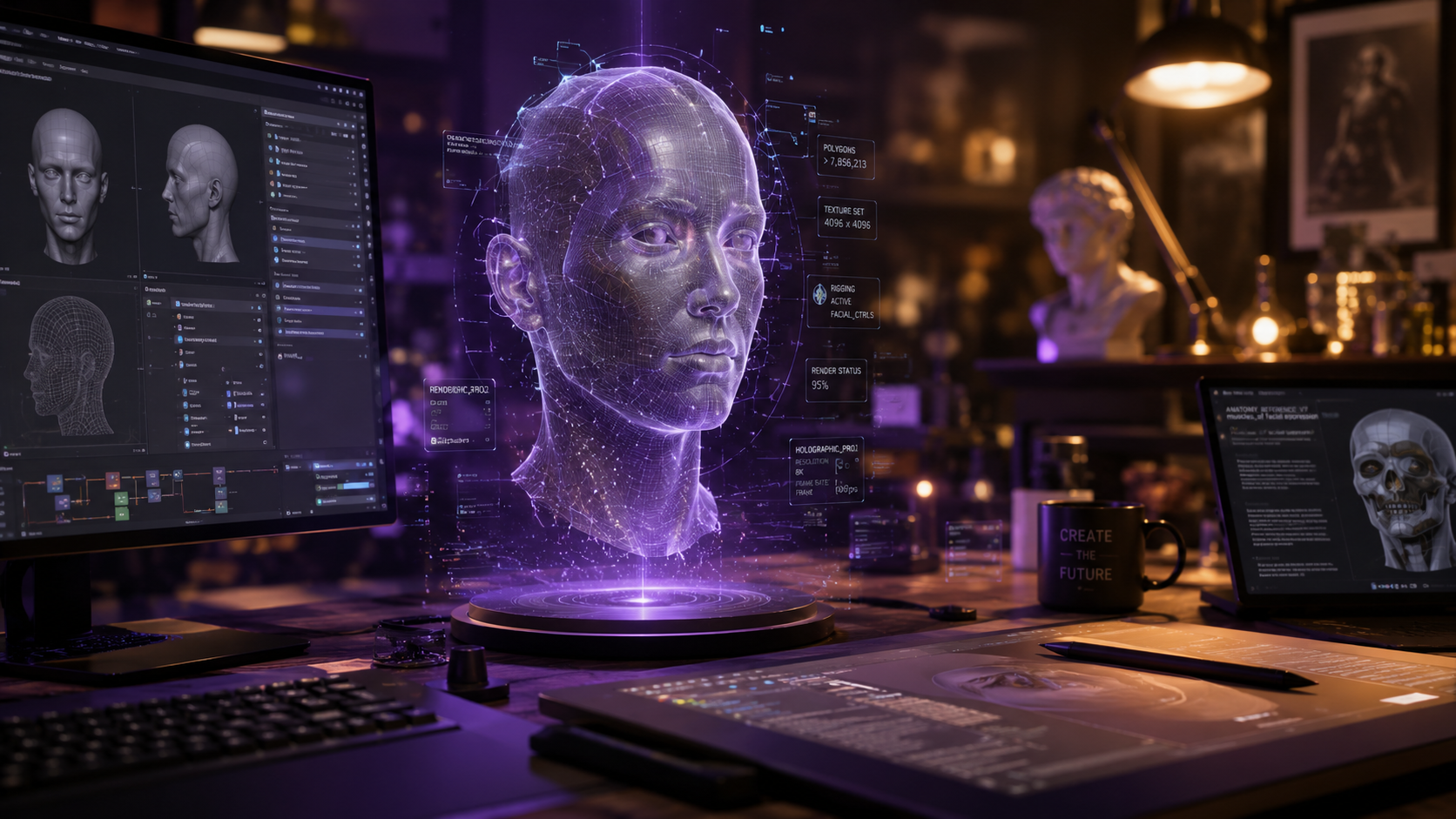
The secret to how to generate realistic AI humans lies in the convergence of three distinct technologies: Generative Adversarial Networks (GANs) for texture, Diffusion Models for structure, and Transformer-based models for behavior. In 2026, we have moved beyond static images into the realm of fully interactive, multimodal entities.
Advanced Visual Synthesis and Sora 2
Visual fidelity has taken a massive leap with the release of Sora 2. In October 2025, reports from Futurism highlighted that the model could generate complex, hyper-realistic scenarios—such as people shoplifting—with perfect physics and human-like movement. This capability allows creators to generate AI humans that don't just stand still but interact with objects in a way that obeys the laws of gravity and momentum.
Indistinguishable Audio and Voice Clones
Voice is the second pillar of realism. As of late 2025, SingularityHub reported that people can no longer distinguish AI voice clones from actual humans. This is due to the integration of "emotional prosody," where the AI understands when to breathe, stutter, or change pitch based on the context of the sentence. When you generate a realistic AI human today, the audio is often more convincing than the visual.
| Feature | Static Image Diffusion | Neural Video Synthesis (Sora 2) | Real-Time Digital Twins |
|---|---|---|---|
| Visual Realism | Ultra-High (8K textures) | High (Cinematic) | Medium-High (Optimized) |
| Movement | None | Physically Accurate | Reactive / Low Latency |
| Primary Use Case | Photography & Marketing | Film & Content Creation | Customer Service & Gaming |
| Detection Difficulty | Very Hard | Hard | Moderate |
Overcoming the Detection Challenge
As AI becomes more sophisticated, the "telltale signs" of synthetic origin are disappearing. However, professional creators must still be aware of the subtle markers that can break immersion. A study by Kellogg Insight identified five telltale signs that a photo is AI-generated, including inconsistencies in background geometry and unnatural lighting on the iris. In 2026, mastering how to generate realistic AI humans means specifically targeting and eliminating these remaining artifacts.
The "AI 2027" Scenario and Future Trends
We are currently operating in what experts call the "AI 2027" trajectory. As noted by Marcus on AI, the industry is debating how much further realism can go. The current consensus is that we have reached "functional photorealism," where the AI is realistic enough for all commercial and social purposes. The focus has now shifted from making the skin look real to making the behavior feel human.
Human Overconfidence and the Perception Gap
One of the most interesting developments in 2026 is the psychological gap between AI quality and human detection. The UNSW Sydney study found that the more realistic AI humans become, the more humans believe they can spot them—even when they are consistently failing to do so. This "overconfidence effect" means that for most creators, the AI humans you generate today are already "real enough" for the general public.
Ethical Considerations in Human Synthesis
When learning how to generate realistic AI humans, one must navigate the complex ethical landscape of 2026. With the ability to create indistinguishable voice clones and videos of people performing specific actions (like the shoplifting examples seen in Sora 2), the potential for misuse is significant. Responsible generation involves using watermarking technologies and ensuring that consent is at the forefront of any digital twin project.
Many platforms now require "Content Credentials" (C2PA metadata) to be embedded in the file. This doesn't make the human look less realistic, but it provides a layer of transparency that is becoming a legal requirement in many jurisdictions. As we move toward 2027, the "realness" of an AI human will be judged not just by its pixels, but by its provenance.
Technical Requirements for High-Fidelity Output
To generate these entities, the hardware and software requirements have evolved. In 2026, local generation of high-quality AI humans requires significant VRAM, though cloud-based API solutions have become the standard for most creators. The focus is now on "Latent Consistency," which ensures that the AI human maintains the same facial structure across different lighting setups and angles.
Lighting and Subsurface Scattering
To achieve maximum realism, pay attention to subsurface scattering—the way light penetrates the skin and reflects off the tissue beneath. 2026 models handle this natively, but manual prompting for "golden hour lighting" or "fluorescent clinical overheads" can help the model calculate these reflections more accurately. This prevents the "plastic" look common in earlier iterations of AI humans.
Micro-Expressions and Eye Tracking
The eyes are often called the windows to the soul, and in AI generation, they are the windows to authenticity. Modern techniques involve "Gaze Correction" layers that ensure the AI human is making appropriate eye contact with the virtual camera. This, combined with the indistinguishable voices noted by Queen Mary University, creates a powerful sense of presence.
Frequently Asked Questions
Is it possible to tell the difference between AI and humans in 2026?
According to recent studies from UNSW Sydney and Queen Mary University, it is becoming nearly impossible for the average person to distinguish between AI-generated faces and voices and real ones. Most people are now overconfident in their ability to spot AI, often misidentifying real humans as synthetic.
What is the best tool for generating realistic AI video in 2026?
Sora 2 is currently considered the industry leader for generating realistic videos of people. It excels at maintaining physical consistency and can simulate complex human behaviors and environmental interactions with high accuracy.
How do I make an AI voice sound more human?
Use a 2026-standard neural voice cloner that supports emotional prosody. These models include natural human elements like breathing, slight hesitations, and varying pitch, which research shows makes them indistinguishable from real voices.
What are the signs of an AI-generated photo?
While becoming rarer, signs include subtle inconsistencies in background patterns, unnatural light reflections in the pupils, and errors in complex textures like lace or fine jewelry. However, high-end models have eliminated most of these "telltale signs."
Do I need permission to generate an AI version of a real person?
Yes, ethical and legal standards in 2026 strictly require consent for creating digital twins or voice clones of real individuals. Using AI to mimic real people without permission can lead to significant legal repercussions under updated personality rights laws.



Comments ()