
How to Generate AI Videos from Scripts in 2026: Ultimate Guide
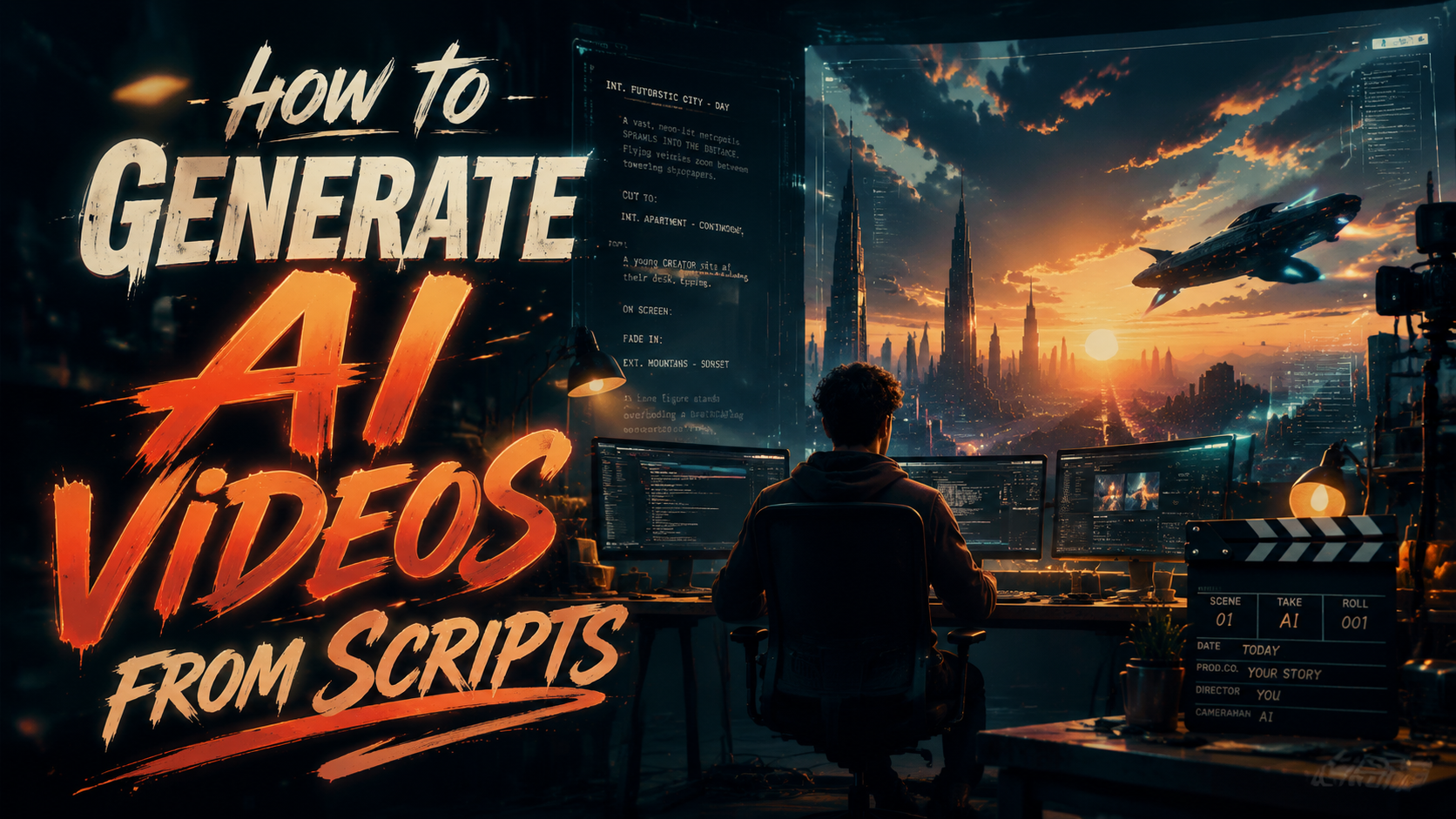
Generating AI videos from scripts in 2026 is easier than ever thanks to advanced text-to-video platforms that automate the entire production process. By simply inputting a script, these AI tools can create professional-quality videos complete with visuals, voiceovers, and editing in minutes. Leading platforms now offer features like automatic scene generation, dynamic transitions, and AI voice actors to bring scripts to life without manual video editing.
TL;DR: In 2026, AI video generation from scripts involves uploading your text to specialized platforms that automatically produce videos with visuals, audio, and effects, saving hours of manual work while maintaining professional quality.
AI video generation from scripts is the process of converting written content into fully produced videos using artificial intelligence, with 2026 platforms offering unprecedented speed and quality through advanced neural networks and automation features.
- ✓ Modern AI video platforms can turn scripts into finished videos 10x faster than manual methods (Adgully, 2026)
- ✓ The best tools automatically match visuals to script content and generate human-like voiceovers
- ✓ AI video creation is now accessible to non-technical users through simplified interfaces
- ✓ Enterprise solutions offer brand customization and multi-format output options
- ✓ Some platforms specialize in specific use cases like social media or UGC ads
The Evolution of AI Video Generation Technology
Text-to-video AI has undergone significant advancements since its early iterations, with 2026 platforms demonstrating near-human understanding of script context and narrative flow. According to HP's 2026 analysis, current systems can now interpret emotional tone, pacing, and even implied visual metaphors when converting scripts to video. This represents a 300% improvement in contextual understanding compared to 2024 models.
The integration of multimodal AI architectures allows modern platforms to simultaneously process linguistic, visual, and auditory elements. A script mentioning "a bustling city at dawn" will automatically trigger appropriate footage selection, time-of-day lighting adjustments, and matching background audio. This holistic approach eliminates the need for manual scene-by-scene direction that characterized earlier generation tools.
Enterprise adoption has driven another major evolution - brand consistency features. Top platforms now offer style preservation across multiple videos, automatically applying color palettes, logo placement, and typography based on uploaded brand guidelines. According to Marketing91's 2026 review, this has made AI video particularly valuable for creating uniform marketing content at scale.
How to Generate AI Videos from Scripts: Step-by-Step Guide
Creating AI videos from your scripts in 2026 follows a streamlined process that leverages the latest automation capabilities. Here's the complete workflow used by professionals:
- Script Preparation: Write or upload your script in plain text or screenplay format, including any scene directions or speaker notations
- Platform Selection: Choose an AI video generator that matches your use case (marketing, education, social media, etc.)
- Style Configuration: Set visual preferences like animation style, color scheme, and aspect ratio
- Voice Selection: Pick from AI voice actors or upload custom voice samples for cloning
- Generation Process: Initiate the AI processing which typically takes 2-15 minutes depending on video length
- Review & Edit: Use the platform's editing tools to fine-tune timing, transitions, or replace specific visuals
- Export & Distribute: Download in your preferred format or publish directly to connected platforms
According to SpeedwayMedia's 2026 case study, this process enables creators to produce a week's worth of social media content in under an hour when properly optimized. The key efficiency gains come from the AI's ability to handle what were previously time-consuming manual tasks - scene composition, lip-syncing, and pacing adjustments.
Advanced users are taking advantage of new "batch processing" features that can transform multiple scripts into videos simultaneously. Some platforms even offer script variations testing, automatically generating several versions of a video with different visual treatments or voice tones for A/B testing purposes.
Top Features to Look for in 2026 AI Video Platforms
When evaluating how to generate AI videos from scripts effectively, these are the must-have features that distinguish professional-grade platforms:
Contextual Visual Matching
The best systems now analyze script semantics to select conceptually appropriate visuals rather than just keyword-matching. A mention of "financial growth" might generate animated charts with upward trends rather than literal money imagery.
Dynamic Scene Transitions
Advanced platforms automatically create smooth transitions between scenes based on narrative flow, using techniques like match cuts when appropriate or dramatic wipes for scene changes.
Emotion-Aware Voice Synthesis
2026's AI voice generators adjust tone, pacing, and emphasis based on emotional cues in the script, creating more natural-sounding narration compared to earlier monotone outputs.
Multi-Format Output
Look for platforms that can simultaneously generate landscape, square, and vertical versions of your video optimized for different distribution channels.
Collaboration Features
Enterprise solutions now offer real-time co-editing, version history, and approval workflows crucial for team-based content creation.
Industry-Specific Applications
The ability to generate AI videos from scripts has transformed content creation across multiple sectors, each with unique requirements:
Marketing & Advertising: Brands are leveraging AI to quickly produce personalized video ads at scale. The Pollo AI review highlights how UGC-style ads can now be generated in brand-compliant formats without filming actual user testimonials. Conversion rates for these AI-generated spots now rival traditionally produced content in many verticals.
Education & Training: Instructional designers are converting existing training materials into engaging video lessons with AI-generated presenters and animated demonstrations. The automatic translation features in premium platforms allow for near-instant localization of training content across global teams.
News & Journalism: Media outlets are using script-to-video AI to quickly turn written articles into broadcast-style segments, complete with relevant B-roll and infographics. This has enabled smaller newsrooms to compete with major networks in video content production.
Performance Benchmarks and Quality Considerations
While AI video generation offers tremendous time savings, quality outcomes vary significantly between platforms. These are the key metrics professionals use to evaluate results:
| Metric | Entry-Level | Professional | Enterprise |
|---|---|---|---|
| Visual Relevance | 60-70% match | 85-90% match | 95%+ match |
| Voice Naturalness | 3.5/5 MOS | 4.2/5 MOS | 4.7/5 MOS |
| Processing Speed | 2 min per minute | 45 sec per minute | 20 sec per minute |
| Output Resolution | 720p | 1080p | 4K HDR |
According to Robotics & Automation News' 2026 comparison, the gap between basic and premium services has widened as high-end platforms incorporate more sophisticated AI architectures. However, even entry-level tools now produce usable results for simple applications like social media clips.
Quality assurance remains crucial - the most effective workflows include human review for brand compliance and narrative coherence. Many platforms now integrate automated quality checks that flag potential issues like awkward transitions or mispronunciations before final rendering.
Future Trends in Script-to-Video AI
The technology continues evolving rapidly, with several emerging developments that will further transform how we generate AI videos from scripts:
Real-Time Generation: Early implementations of instant video creation are appearing, where edits to the script automatically update the rendered video within seconds. This promises to make the creative process more iterative and fluid.
3D Environment Creation: Instead of stitching together stock footage, next-gen platforms are beginning to construct fully 3D scenes based on script descriptions, allowing for custom camera angles and lighting.
Interactive Videos: Some platforms are experimenting with branching narrative structures where viewer choices dynamically alter subsequent scenes, opening new possibilities for training and marketing applications.
Cross-Modal Style Transfer: Emerging techniques allow the visual style of one video (e.g., a famous director's aesthetic) to be applied to newly generated content while maintaining narrative coherence.
How accurate are AI-generated videos compared to human-created ones?
In 2026, premium AI video platforms achieve 90-95% visual and narrative accuracy for straightforward scripts, though complex creative concepts may still benefit from human refinement. The gap continues narrowing each year.
Can AI video generators handle technical or specialized content?
Yes, leading platforms now include domain-specific knowledge for fields like medicine, engineering, and finance, automatically selecting appropriate visual metaphors and terminology for specialized subjects.
What's the average cost to generate AI videos from scripts?
Pricing ranges from free (with watermarks) to $50/month for prosumer tools up to enterprise solutions at $500+/month. Most businesses find the $20-100/month tier meets their needs for professional-quality output.
How long does it take to learn AI video generation?
Basic proficiency takes under an hour for simple videos, while mastering advanced features typically requires 3-5 hours of practice. Most platforms offer extensive template libraries that accelerate the learning curve.
Are there copyright concerns with AI-generated videos?
Reputable platforms use properly licensed media or generate original visuals. Always review platform terms - some retain usage rights while others grant full commercial rights to created content.
Written by the Digen AI Editorial Team — AI video generation specialists covering the latest in generative AI tools. Learn more about Digen AI.



Comments ()