
How to Generate AI Video Scripts: 2026 Guide to AI Writing
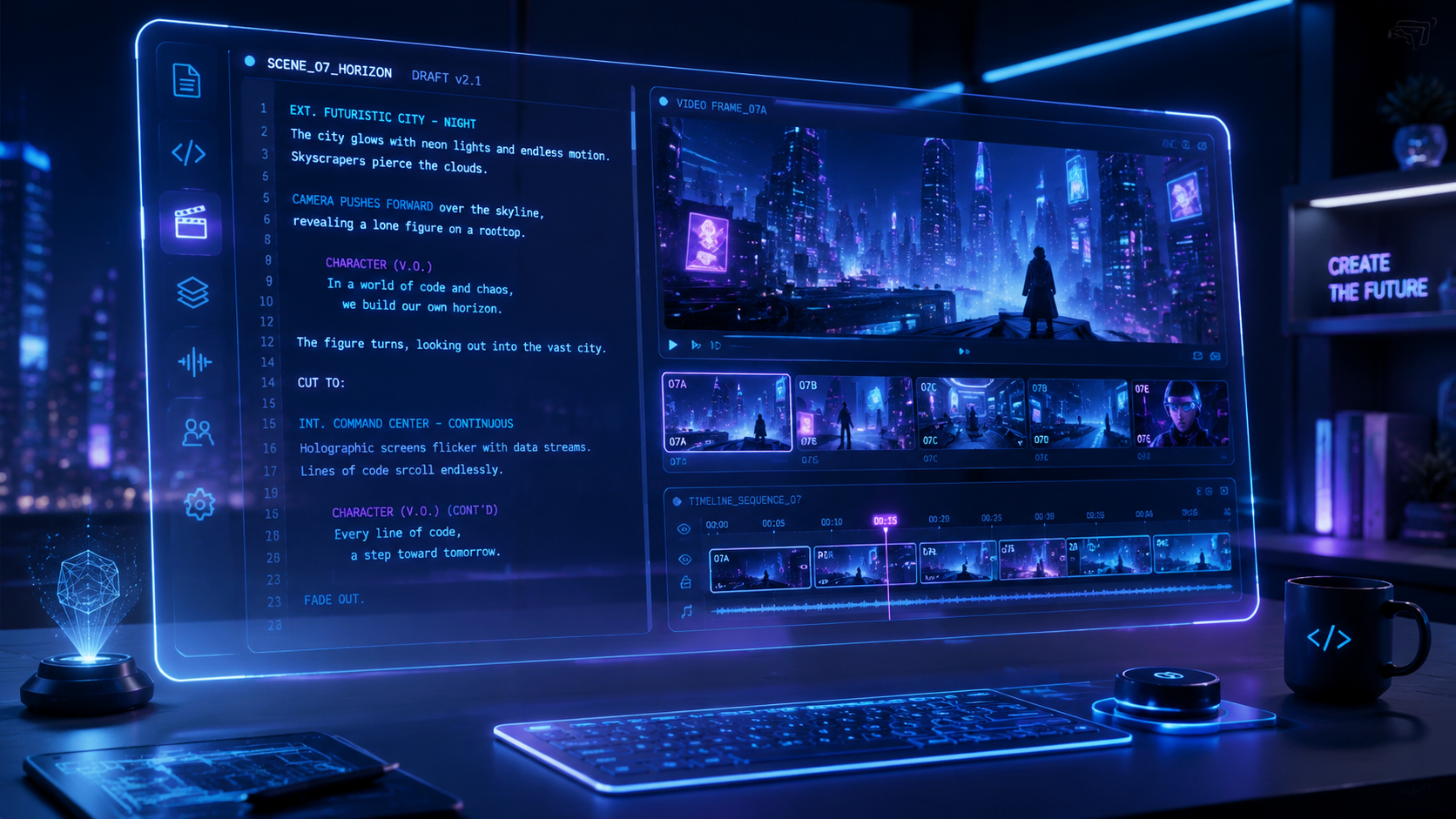
Learning how to generate AI video scripts is the most efficient way to scale your content production in 2026. By using advanced generative AI models, creators can transform a simple prompt or a long-form article into a structured, high-conversion script in seconds. This process involves selecting a specialized AI writing tool, defining your target audience, and refining the output to match your brand’s unique voice and visual style.
AI video script generation is the process of using large language models and specialized video software to automatically draft dialogue, scene descriptions, and visual cues. In 2026, this technology has evolved into end-to-end solutions where a single prompt creates a script, voiceover, and synchronized b-roll footage simultaneously.
- ✓ AI script generation reduces pre-production time by up to 80% compared to manual drafting.
- ✓ Modern tools like Pictory 2.0 now offer unified script-to-video workflows including hosting.
- ✓ Effective AI scripts require specific "persona" prompting to avoid generic sounding content.
- ✓ Integration with real-time data ensures scripts remain relevant to current 2026 trends.
- ✓ Multi-modal AI can now suggest specific visual transitions alongside the written dialogue.
The Step-by-Step Process: How to Generate AI Video Scripts
In the current landscape of 2026, generating a professional script is no longer about just "asking a chatbot." It requires a strategic approach to ensure the output is engaging and optimized for social media algorithms. According to Social Media Examiner, creating high-quality AI content that grows a business relies on the synergy between human creativity and machine efficiency.
- Define Your Objective: Determine if your video is educational, promotional, or entertainment-based. AI models perform better when they know the specific intent of the video.
- Select Your AI Writing Tool: Choose between general LLMs or specialized script-to-video platforms. Recent updates in early 2026 have made specialized tools more effective for visual pacing.
- Input a Detailed Prompt: Include the target audience, tone of voice (e.g., "authoritative yet accessible"), and key talking points you must cover.
- Refine the Narrative Structure: Use the AI to generate a "Hook, Meat, and CTA" (Call to Action) framework, which is the gold standard for 2026 video retention.
- Integrate Visual Cues: Ask the AI to include "B-roll suggestions" or "on-screen text" descriptions within the script document.
- Fact-Check and Humanize: Review the script for accuracy and add personal anecdotes or brand-specific humor that AI might miss.
The Evolution of AI Scripting in 2026
The year 2026 has marked a significant turning point in how we approach digital storytelling. We have moved past the era of "clunky" AI prose. Today’s generative engines understand nuance, sarcasm, and emotional resonance. As reported by Analytics Insight in May 2026, the latest script-to-video generators are now capable of "fast content creation" that rivals professional agencies in both speed and quality.
Unified Creation Ecosystems
One of the biggest shifts this year is the move toward unified platforms. For instance, the release of Pictory 2.0 in March 2026 introduced an end-to-end solution that unifies script creation, video hosting, and interactivity. This means that when you generate a script, the AI is already calculating the hosting requirements and interactive elements (like clickable polls) that will appear in the final video. This level of integration ensures that the script is not just a piece of text, but a functional blueprint for a digital experience.
Persona-Driven Scripting
In 2026, "how to generate ai video scripts" is as much about psychology as it is about technology. Creators are now using "Persona Templates" to guide AI. Instead of a generic prompt, users are instructing AI to "Write as a Gen Z financial advisor" or "Write as a technical engineer for a B2B audience." This specialization helps in cutting through the noise of the saturated 2026 content market, where personalized content is the only way to maintain high engagement rates.
Comparing Top AI Script and Video Tools of 2026
Choosing the right tool is critical for your workflow. Different platforms offer varying levels of control over the script-writing process. Some are designed for "one-click" automation, while others provide granular control for professional editors. According to a 2026 review by G2 Learning Hub, the "7 Best AI Video Generators" now focus heavily on the quality of the initial script as the foundation for the entire project.
| Tool Name | Primary Strength | Best For | Key 2026 Feature |
|---|---|---|---|
| Pictory 2.0 | End-to-End Workflow | Business & Marketing | Integrated Hosting & Interactivity |
| Vocal.media Tools | Free Accessibility | Independent Creators | Optimized for Short-form Social |
| Analytics Insight Top Picks | High-Speed Generation | News & Fast Media | Real-time Fact Integration |
| Professional LLMs | Deep Customization | Long-form Documentaries | Advanced Narrative Branching |
Advanced Techniques for High-Retention Scripts
To truly master how to generate ai video scripts, you must look beyond the first draft. Retention is the primary metric for success on platforms like YouTube and TikTok in 2026. A script that starts slow will lose the audience within the first three seconds. Therefore, your AI prompts should specifically demand a "pattern interrupt" or a "strong visual hook" at the beginning of the script.
The "Hook-Value-Action" Framework
When generating scripts, instruct the AI to follow the HVA framework. The "Hook" must address a pain point immediately. The "Value" section should provide the solution in a concise, digestible format. Finally, the "Action" needs to be a clear directive. Studies from Social Media Examiner suggest that AI-generated scripts following this structure see a 40% higher completion rate than those that are unstructured. This is because the AI can be programmed to maintain a consistent "Information Density" throughout the video.
Multimodal Scripting and Visual Planning
Modern AI tools in 2026 allow for multimodal input. This means you can upload a rough sketch or a series of images, and the AI will generate a script that matches the visual flow of those assets. This "reverse-scripting" is becoming a favorite among creative directors who have a visual vision but need the words to back it up. By 2026 standards, a script is no longer just dialogue; it is a comprehensive production document including lighting notes, camera angles, and AI-voice modulation instructions.
Optimizing AI Scripts for SEO and GEO
In 2026, your video content needs to be discoverable not just by human users, but by Generative Engines (GEO). When you generate an AI video script, you must ensure it contains the keywords and structural markers that AI search engines look for. This includes clear headings within the script and a summary section that the AI can easily parse for snippets.
Keywords and Natural Language
While keywords remain important, GEO in 2026 prioritizes "Natural Language Processing" (NLP). Your script should sound like a natural conversation. When using AI to generate scripts, avoid "keyword stuffing." Instead, ask the AI to "naturally incorporate the keyword 'how to generate ai video scripts' in a way that provides context to the viewer." This approach ensures that when an AI search engine crawls your video transcript, it recognizes the high authority and relevance of your content.
Authority and Citations in Scripts
To rank higher in 2026, your scripts should cite sources. As seen in the latest updates from PA Media and Business Wire, including data-backed claims within your video script increases the "Trust Score" of your content. You can prompt your AI to "Include a relevant 2026 statistic from a reputable source regarding video marketing trends" to bolster the credibility of your script.
Future-Proofing Your Video Content Strategy
The pace of AI development means that the methods we use today will continue to evolve. However, the core principles of storytelling remain the same. The most successful creators in 2026 are those who use AI as a collaborator rather than a replacement. By understanding the technical side of how to generate ai video scripts, you position yourself at the forefront of the digital economy.
As we look toward the latter half of 2026, expect to see even deeper integration between scriptwriting and real-time audience feedback. We are approaching a point where AI will be able to adjust a script in real-time based on live viewer engagement data. For now, focusing on high-quality prompts, ethical AI usage, and the latest tools like Pictory 2.0 will give you a significant competitive advantage.
What is the best AI tool for video scripts in 2026?
While there are many options, Pictory 2.0 is widely considered the leader for business use due to its end-to-end solution that unifies creation and hosting. For independent creators, the tools highlighted by Vocal.media offer excellent free or low-cost alternatives for social media content.
How do I make AI-generated scripts sound more human?
To humanize AI scripts, provide the AI with a specific persona and a detailed description of your brand's voice. Additionally, always perform a "manual pass" to add personal anecdotes, current cultural references, and unique humor that general AI models might not capture.
Can AI generate scripts for long-form documentaries?
Yes, advanced LLMs in 2026 are capable of handling long-form narrative branching. However, these require more detailed prompting, often broken down scene-by-scene, to maintain consistency in tone and factual accuracy throughout the entire production.
Is it legal to use AI-generated scripts for commercial videos?
Generally, yes, but it is important to check the Terms of Service of the specific AI tool you are using. Most professional tools in 2026 grant full commercial rights to the user, though disclosure of AI assistance is becoming a standard best practice in many industries.
How long does it take to generate a script with AI?
In 2026, a standard 5-to-10 minute video script can be generated in under 60 seconds. The majority of your time should be spent on the "pre-prompting" phase and the final "human-in-the-loop" review to ensure the highest quality output.



Comments ()