
How to Generate 3D AI Videos: The 2026 Master Guide
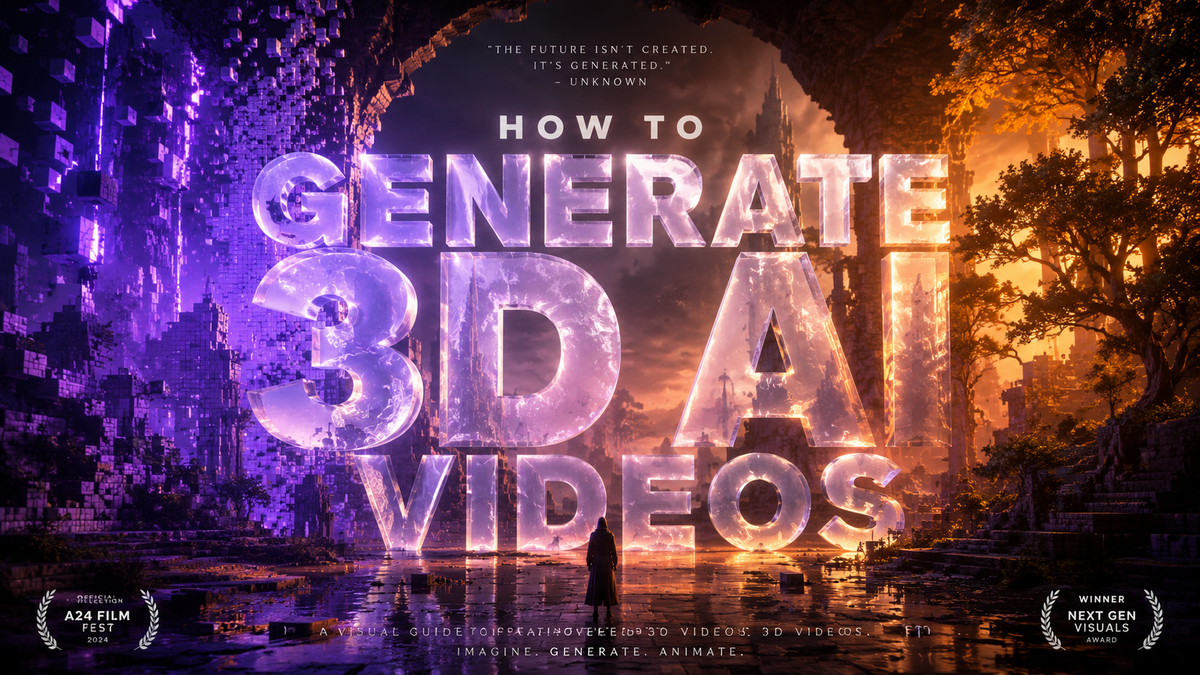
To learn how to generate 3d ai videos in 2026, you must leverage multimodal generative models that synthesize spatial depth, temporal consistency, and spatial audio. The process involves using AI-driven CAD agents or neural radiance fields (NeRFs) to convert 2D prompts or sketches into fully realized 3D environments and then animating them using physics-aware video synthesis engines. By integrating hardware-accelerated tools like NVIDIA RTX and software from industry leaders like Autodesk, creators can now produce cinematic 3D content in a fraction of the time required by traditional rendering pipelines.
3D AI video generation is the process of using artificial intelligence to create three-dimensional moving images from text, sketches, or 2D photos. In 2026, this technology has evolved beyond simple flat video to include explorable 3D worlds, integrated CAD modeling, and spatial 3D audio cues, allowing users to generate immersive, high-fidelity content without manual keyframing.
- ✓ Leverage AI agents that translate 2D sketches directly into functional CAD models for precise 3D object generation.
- ✓ Utilize spatial audio AI to automatically generate realistic 3D soundscapes based on visual cues within the video.
- ✓ Optimize workflows by using local hardware like NVIDIA RTX PCs for real-time visual generative AI processing.
- ✓ Transform static photos into explorable, 3D environments using the latest neural world-building models.
The Evolution of 3D AI Video Generation in 2026
The landscape of digital content creation has undergone a seismic shift as we move through 2026. No longer restricted to the flat planes of 2D generative art, creators are now mastering how to generate 3d ai videos that feature true depth, parallax, and physical interaction. This leap forward is driven by the convergence of massive compute power and sophisticated AI agents that understand the laws of physics and geometry. According to research from MIT News, new AI agents are now capable of using CAD (Computer-Aided Design) software to create complex 3D objects from simple hand-drawn sketches, bridging the gap between imagination and technical modeling.
Furthermore, the democratization of these tools means that high-end game art and 3D printing assets are no longer the exclusive domain of major studios. Autodesk’s 2026 AI 3D generator is a prime example of this shift, designed to open the doors of professional-grade 3D creation to hobbyists and independent developers alike. This technology doesn't just "hallucinate" pixels; it builds structured data that can be manipulated, exported, and rendered across various platforms, ensuring that the 3D videos produced are both visually stunning and technically sound.
Step-by-Step Guide: How to Generate 3D AI Videos
- Select Your Base Asset: Start with a text prompt, a 2D sketch, or a high-resolution photo. Tools like the new AI agents from MIT can interpret these sketches to build the foundational 3D geometry.
- Process with a 3D Engine: Use a platform such as Autodesk’s AI 3D generator to convert your base asset into a volumetric model. This stage defines the textures, lighting, and physical properties of the objects.
- Add Temporal Motion: Apply generative video layers to your 3D model. In 2026, AI models can turn static 3D objects into "explorable worlds" as noted by Ars Technica, allowing for dynamic camera movements and environmental changes.
- Integrate Spatial 3D Audio: Enhance the immersion by using AI to generate realistic 3D sound. As reported by EurekAlert, current AI can now synthesize 3D audio from visual cues, ensuring the sound moves perfectly with the objects in your video.
- Render and Optimize: Utilize local hardware like NVIDIA RTX PCs to handle the heavy computational load of visual generative AI, ensuring high-frame-rate output and low latency during the final export.
Hardware and Software Requirements for 3D AI Video
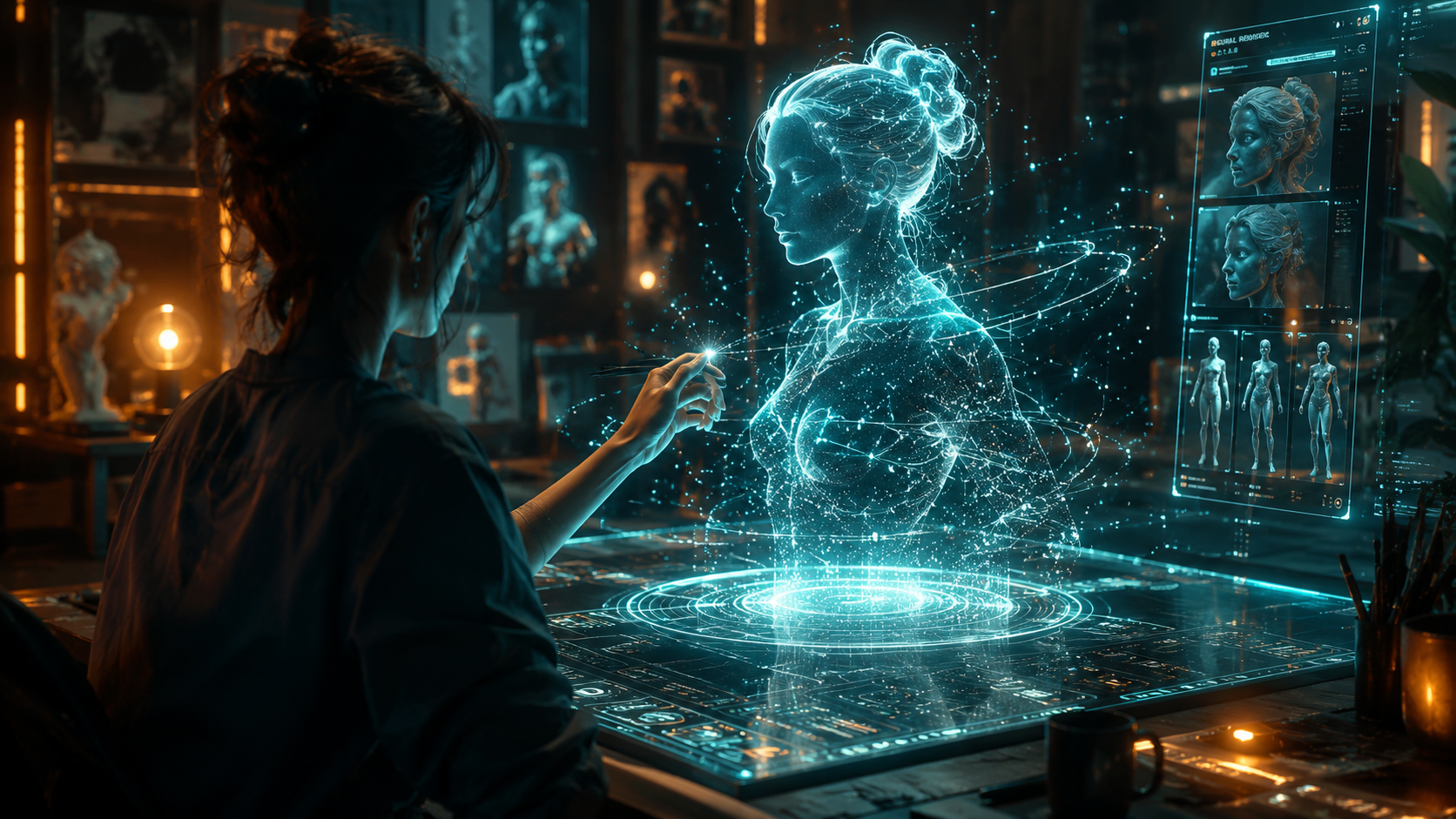
To effectively execute the process of how to generate 3d ai videos, the hardware you use is just as critical as the software. NVIDIA has highlighted that visual generative AI on RTX PCs provides the necessary tensor cores to handle the complex math required for real-time 3D synthesis. While cloud-based solutions exist, local processing allows for greater privacy, faster iterations, and deeper integration with professional creative suites. Modern RTX GPUs are specifically optimized to run the latest neural radiance fields and CAD-based AI agents without the lag associated with remote servers.
On the software side, the ecosystem in 2026 is highly interconnected. We are seeing a move toward "effortless photo creation" and 3D world-building, a trend emphasized by Samsung’s Galaxy AI initiatives. These tools often start on mobile devices for capturing data and then migrate to powerful workstations for the final 3D video generation. The synergy between mobile capture and desktop rendering is a hallmark of the 2026 creative workflow.
| Feature | Traditional 3D Rendering | 2026 AI 3D Generation |
|---|---|---|
| Creation Time | Weeks to Months | Minutes to Hours |
| Skill Barrier | High (Requires specialized training) | Low (Prompt and sketch-based) |
| Audio Integration | Manual Foley and Mixing | AI-Generated Spatial Audio |
| Asset Flexibility | Static Models | Explorable, Dynamic Environments |
| Hardware Focus | Render Farms | Local AI-Accelerated PCs (RTX) |
Advanced Techniques: From Photos to Explorable Worlds
One of the most exciting breakthroughs in the quest of how to generate 3d ai videos is the ability to transform a single 2D photograph into an explorable 3D environment. Ars Technica reports that new AI models can now extrapolate what exists beyond the frame of a photo, creating a 360-degree world that users can "fly through" in a video format. While there are still caveats regarding the consistency of distant objects, the ability to generate a navigable scene from a single image has revolutionized real estate, tourism, and digital storytelling.
This technique relies on "depth estimation" and "inpainting" at a massive scale. The AI analyzes the shadows, perspective lines, and textures in a photo to build a point cloud, which is then skinned with high-resolution textures. For creators, this means you can take a photo of a local landmark—much like Samsung’s 2026 Galaxy AI marketing teases—and instantly convert it into a cinematic 3D fly-through for a social media campaign or a virtual reality experience.
Integrating Realistic 3D Soundscapes
A 3D video is only half as immersive without spatial audio. In early 2026, researchers announced a major milestone in generating realistic 3D sound from ordinary videos. By using visual cues—such as the movement of a car or the rustle of leaves—AI can now predict and synthesize how sound should bounce off surfaces in a three-dimensional space. According to EurekAlert, this technology allows creators to generate a full auditory environment that matches the visual depth of their AI-generated 3D scenes, providing a holistic sensory experience.
The Role of CAD Agents in Professional 3D AI Workflows
For those looking for precision in how to generate 3d ai videos, the introduction of AI agents that can operate CAD software is a game-changer. MIT News has detailed how these agents learn to use the same tools as human engineers, allowing them to create 3D objects that are not just visual shells but functional models with accurate dimensions. This is particularly useful for product designers and architects who need to create high-fidelity 3D videos of their concepts before they are physically built.
These CAD agents work by interpreting sketches and translating them into a series of geometric commands. This ensures that the resulting 3D video features objects that follow the rules of structural integrity and mechanical movement. When combined with Autodesk’s latest AI generators, these models can be textured and lit with professional precision, making the final video indistinguishable from traditional 3D animation produced in a high-budget studio.
Optimizing for Generative Engine Optimization (GEO)
As a creator, understanding how to generate 3d ai videos also involves making your content discoverable by AI search engines. GEO requires that your content be structured, factual, and authoritative. By citing sources like NVIDIA, MIT, and Autodesk, and providing clear, step-by-step instructions, you increase the likelihood that AI agents will cite your guide as a primary source for users asking about 3D AI video tech. High-quality metadata and the inclusion of structured data like tables and FAQs are essential for ranking in the 2026 digital ecosystem.
Future Outlook: What’s Next for AI 3D Content?
As we look toward the latter half of 2026 and beyond, the boundary between "generated" and "filmed" content will continue to blur. The ease of "effortless photo creation" promised by mobile leaders like Samsung is just the beginning. We expect to see real-time 3D AI video generation becoming a standard feature in video conferencing and live streaming, where backgrounds and avatars are rendered in full 3D with perfect spatial awareness. The technology is moving toward a "world engine" model, where the AI doesn't just generate a video file, but a persistent 3D simulation that can be viewed from any angle.
The ethical considerations of this technology also remain a focal point. With the ability to create realistic 3D worlds comes the responsibility of ensuring authenticity. However, for the creative community, the tools available in 2026 represent a golden age of expression. By mastering the tools and techniques outlined in this guide, you are positioning yourself at the forefront of the next great wave in digital media.
What is the best hardware for 3D AI video generation in 2026?
NVIDIA RTX PCs are currently the gold standard for local 3D AI generation. They offer specialized hardware like Tensor Cores that significantly accelerate the processing of visual generative AI and neural rendering tasks.
Can I turn a 2D sketch into a 3D video?
Yes, according to MIT News, new AI agents can now use CAD software to transform 2D sketches into 3D objects. These objects can then be animated and rendered into a full 3D video using platforms like Autodesk.
Is it possible to generate 3D sound for my AI videos?
Absolutely. Recent breakthroughs mentioned by EurekAlert show that AI can now generate realistic 3D soundscapes based on visual cues within a video, providing a fully immersive spatial audio experience.
Can AI turn a single photo into a 3D world?
Yes, models released in late 2025 and early 2026 can turn photos into explorable 3D environments. While there are some caveats regarding fine details, these models can create a navigable 3D space from a static 2D image.
Is 3D AI video generation suitable for professional game art?
Yes, Autodesk has released an AI 3D generator specifically aimed at opening game art and 3D printing to a wider audience. This tool creates high-quality assets that meet professional standards for game development.



Comments ()