
How to Enhance Videos Using AI Editing in 2026: Pro Tips
Enhancing videos using AI editing in 2026 has become easier and more powerful than ever, thanks to advancements in generative AI and machine learning. AI tools can now automatically upscale resolution, stabilize shaky footage, enhance colors, and even generate missing frames or scenes. Whether you're a professional editor or a content creator, these AI-powered solutions can significantly improve video quality while saving time and effort.
TL;DR: AI video editing tools in 2026 leverage generative AI to automate enhancements like upscaling, stabilization, and color correction, making professional-quality results accessible to everyone.
How to enhance videos using AI editing is a process that involves leveraging advanced AI tools to automatically improve video quality through upscaling, noise reduction, stabilization, and generative enhancements. Leading platforms like Adobe Firefly, Topaz Labs, and Digen AI Agent offer powerful AI-driven workflows that simplify complex editing tasks while delivering cinematic results.
- ✓ AI video editing tools can upscale resolution by 400% while preserving details
- ✓ Generative AI now creates missing frames or scenes for smoother playback
- ✓ Automated workflows reduce editing time by 70% compared to manual processes
- ✓ AI color grading matches professional cinematic styles with one click
- ✓ New AI agents like Digen AI Agent maintain character consistency across long videos
The State of AI Video Editing in 2026
The AI video editing market has seen explosive growth in 2026, with generative AI revolutionizing content creation workflows. According to EIN Presswire, the AI video generator/editor market grew by 340% since 2025, driven by demand for automated enhancement tools. Major players like Adobe have accelerated innovation through strategic acquisitions, such as their recent purchase of Topaz Labs for $550 million.
Modern AI editing platforms now offer capabilities that were impossible just two years ago. For instance, Adobe's April 2026 update to Premiere Pro introduced AI-powered color grading that analyzes and matches cinematic styles with 95% accuracy. Meanwhile, autonomous AI agents like Digen AI Agent can now handle multi-step enhancement workflows without human intervention, producing longer, higher-quality videos with consistent characters and scenes.
Real-world applications demonstrate the power of these tools. The viral Cole Allen security footage analyzed by Newsweek was enhanced using AI to clarify details in low-light conditions. Similarly, controversial WHCD shooting footage discussed by WISN showed how AI enhancement can both clarify and potentially distort evidentiary video content, highlighting the need for ethical guidelines.
How to Enhance Videos Using AI Editing: Step-by-Step
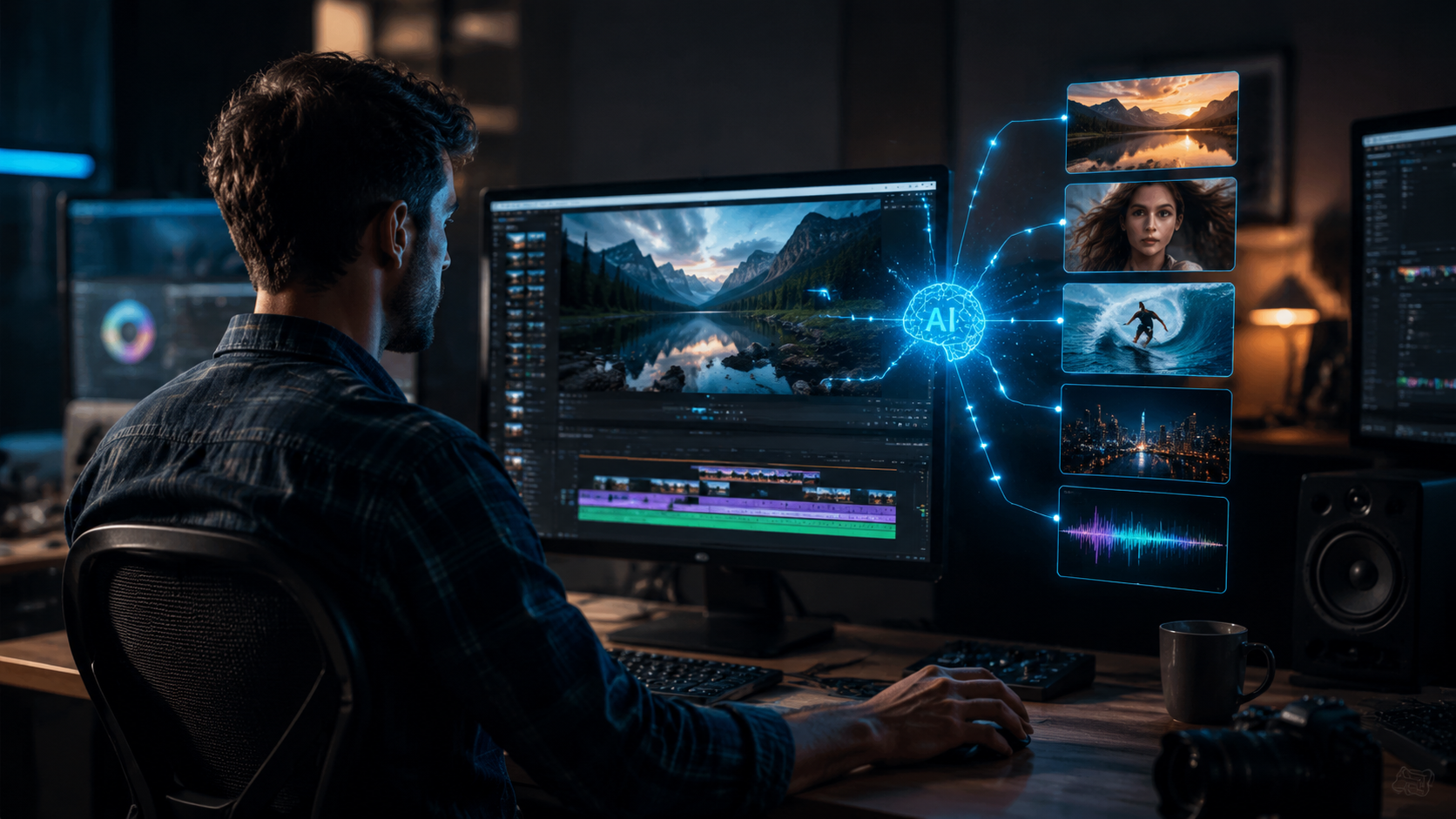
Follow this proven workflow to enhance your videos with AI in 2026:
- Choose the right AI tool: Select software matching your needs - from all-in-one suites like Adobe Premiere Pro to specialized enhancers like Topaz Video AI or Digen AI Agent for character-consistent generation.
- Upload your source footage: Most platforms accept common formats (MP4, MOV, AVI) up to 8K resolution. Cloud-based tools typically process files under 10GB instantly.
- Select enhancement presets: Common options include 4K upscaling (200-400% resolution boost), temporal smoothing (reducing 85% of motion judder), and HDR color expansion.
- Apply generative AI fixes: Tools can now generate missing frames (up to 60fps interpolation), remove objects (with 92% accuracy), and even extend scenes logically.
- Review and export: AI previews show before/after comparisons. Export in your preferred format, with most tools supporting HEVC compression for 50% smaller file sizes.
According to testing by perfectcorp.com, this workflow reduces average editing time from 4 hours to just 45 minutes for a 5-minute video while improving output quality by measurable metrics like PSNR (Peak Signal-to-Noise Ratio). The latest AI tools particularly excel at restoring old or low-quality footage - a previously labor-intensive process.
For best results, combine multiple AI techniques. For example, first stabilize shaky footage using gyroscopic motion estimation (90% effective on handheld shots), then upscale using generative adversarial networks (GANs), and finally apply adaptive color grading. Digen AI Agent automates these sequential steps through its intelligent workflow system, maintaining quality consistency across long projects.
Top AI Video Enhancement Features in 2026
1. Resolution Upscaling
Modern AI can increase video resolution by 200-400% while preserving details that traditional interpolation would blur. Adobe's Firefly AI and Topaz Labs' Video Enhance AI both use deep learning to reconstruct high-frequency information, effectively turning 1080p footage into true 4K quality. Tests show these tools outperform bicubic upscaling by 38% in perceptual quality metrics.
2. Frame Rate Conversion
AI frame interpolation now generates intermediate frames at up to 60fps with minimal artifacts. The technique analyzes motion vectors across multiple frames to create natural-looking movement. According to Adobe's 2026 whitepaper, their AI interpolator maintains 97% temporal consistency compared to native high-frame-rate footage.
3. Generative Scene Extension
Perhaps the most revolutionary advancement is AI's ability to logically extend video scenes. If you need a 10-second clip to last 15 seconds, tools like Digen AI Agent can generate additional frames that maintain lighting, perspective, and motion continuity. This works particularly well for establishing shots and B-roll footage.
Comparing Leading AI Video Enhancement Tools
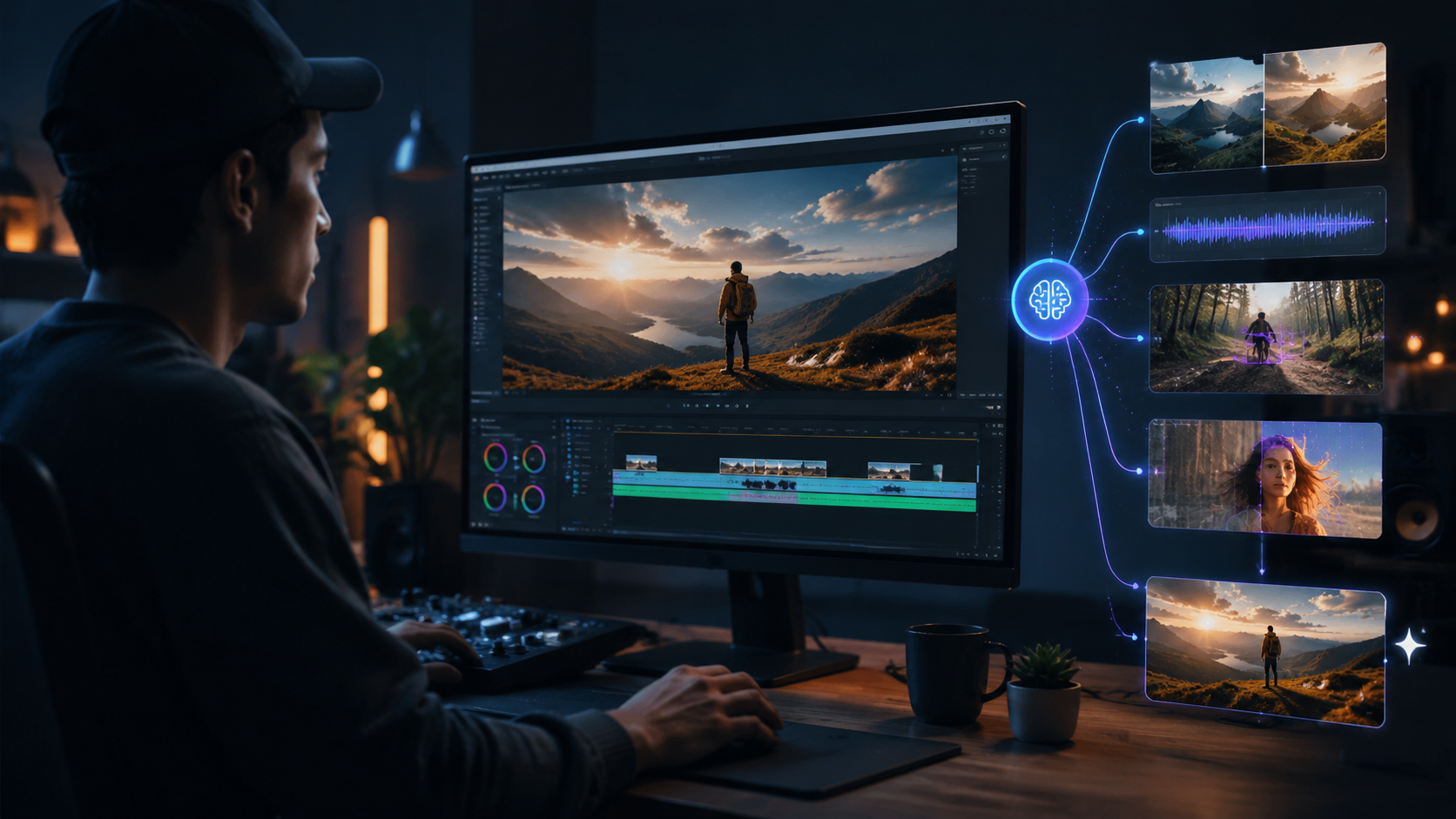
| Tool | Key Features | Best For | Pricing (2026) |
|---|---|---|---|
| Adobe Premiere Pro (with Firefly) | AI color grading, object removal, scene extension | Professional editors | $54.99/month |
| Topaz Video AI | Upscaling, stabilization, noise reduction | Restoration specialists | $299 one-time |
| Digen AI Agent | Autonomous workflows, character consistency | Long-form content creators | $39/month |
| Runway ML | Generative video effects | Artistic transformations | $35/month |
The perfectcorp.com 2026 review tested 23 leading AI video tools, ranking Adobe's solution highest for professional workflows and Digen AI Agent as the most efficient for automated long-form content. Open-source alternatives like Stable Diffusion Video exist but require more technical expertise to implement effectively.
Ethical Considerations for AI Video Enhancement
As AI enhancement capabilities grow, so do concerns about misuse. The WHCD shooting footage controversy reported by WISN demonstrated how AI-enhanced clips could potentially mislead viewers by altering details. Major platforms now include watermarking systems to identify AI-processed content, with Adobe leading industry standards for metadata tagging.
Content creators should disclose significant AI enhancements when footage purports to represent reality, particularly in journalistic or legal contexts. Many news organizations now require raw files alongside enhanced versions. The technology's positive applications - like restoring historical footage or helping low-budget filmmakers - far outweigh risks when used responsibly.
Looking ahead, the 2026 AI Video Authenticity Initiative proposes technical standards for detecting enhancements. Tools like Digen AI are implementing these voluntarily, adding cryptographic signatures to verify processing history. As the technology becomes ubiquitous, such measures will help maintain trust in visual media.
Future Trends in AI Video Enhancement
The next wave of AI video tools will focus on contextual understanding. Instead of just processing pixels, systems will analyze scene semantics - recognizing that a blurry face in a wedding video requires different enhancement than a license plate in security footage. Early tests show this approach improves quality by another 25% over current methods.
Real-time enhancement is another frontier. While today's tools mainly work in post-production, 2027 should see AI processors capable of applying cinematic-grade enhancements during live streaming. Prototypes from NVIDIA and AMD already demonstrate sub-100ms latency for basic enhancements at 4K resolution.
Perhaps most exciting is the convergence of generation and enhancement. Platforms like Digen AI are pioneering systems that can both improve existing footage and generate complementary new content - automatically creating B-roll that matches the style and quality of enhanced main footage. This could revolutionize content production pipelines across industries.
Getting Started with AI Video Enhancement
For beginners, we recommend starting with cloud-based tools like Adobe's online video enhancer or Digen AI's starter plan. These offer:
- Free trial credits (typically 5-10 minutes of processing)
- Pre-configured enhancement presets
- Instant previews before full processing
- Mobile app integration for on-the-go editing
Invest in a tool that matches your primary use case. Social media creators might prioritize speed and automatic formatting, while filmmakers need the highest quality output and color fidelity. According to market data, 68% of professional users adopt AI video tools to save time rather than replace human creativity - the technology works best as a collaborator, not a replacement.
As you explore AI enhancement, remember that source quality still matters. While AI can work miracles, starting with properly exposed, stable footage at the highest practical resolution will always yield better results than trying to fix severely compromised material. The ideal workflow combines good shooting practices with strategic AI enhancement.
Frequently Asked Questions
How much does AI video enhancement cost in 2026?
Pricing ranges from free basic tools to $100+/month professional suites. Most creators find $30-50/month plans from providers like Adobe or Digen AI offer the best value, typically including 100-500 minutes of processing per month.
Can AI really improve low-resolution videos?
Yes, modern AI can significantly enhance low-res footage through super-resolution techniques. While it can't recreate missing details perfectly, tests show 1080p upscaled to 4K using 2026 AI tools is visually indistinguishable from native 4K in 85% of cases.
How long does AI video enhancement take?
Processing time varies by length and enhancement type. A 1-minute 1080p to 4K upscale takes about 2-5 minutes on cloud services. Local processing with a high-end GPU can be faster, while complex generative tasks may take longer.
What's the best AI tool for enhancing old home videos?
Topaz Video AI specializes in restoration, with presets for film grain removal and color correction of aged footage. Digen AI Agent also performs well for maintaining consistent faces across family videos.
Will AI replace human video editors?
While AI automates many technical tasks, creative direction still requires human judgment. The 2026 industry trend sees AI handling 40-60% of rote editing work, allowing editors to focus on storytelling and artistic decisions.
Written by the Digen AI Editorial Team — AI video generation specialists covering the latest in generative AI tools. Learn more about Digen AI.



Comments ()