
How to Enhance Low-Quality Videos with AI in 2026: Pro Tips
Enhancing low-quality videos with AI in 2026 is easier than ever thanks to advanced tools that automatically upscale resolution, reduce noise, and improve color accuracy. Whether you're restoring old footage or refining new recordings, AI-powered solutions like VideoProc Converter AI and Vmake’s AI Video Enhancer can transform blurry or pixelated videos into crisp 4K quality in minutes. These tools leverage deep learning algorithms to analyze and reconstruct missing details, making professional-grade enhancements accessible to everyone.
TL;DR: AI video enhancers in 2026 use smart technology to instantly upscale low-quality footage to 4K, reduce noise, and improve color—tools like VideoProc Converter AI and Vmake lead the market with automated, high-quality results.
How to enhance low-quality videos with AI is achieved through specialized tools that apply machine learning to upscale resolution, stabilize shaky footage, and enhance colors automatically. Leading solutions in 2026 include VideoProc Converter AI for batch processing and Vmake for restoring vintage videos, both delivering 4K output with minimal user input.
- ✓ AI video enhancers can upscale low-resolution footage to 4K while preserving details
- ✓ Noise reduction and color correction are automated in most 2026 AI video tools
- ✓ Batch processing saves time when enhancing multiple clips simultaneously
- ✓ Some platforms specialize in restoring old or damaged video footage
Why AI Video Enhancement Matters in 2026
The demand for high-quality video content has skyrocketed, with 78% of consumers preferring 4K resolution for streaming according to Statista. AI enhancement tools bridge the gap between amateur recordings and professional standards, especially important when 63% of marketers report using user-generated content in campaigns. Unlike traditional editing software that requires manual adjustments, AI solutions analyze each frame to apply intelligent corrections automatically.
Recent advancements in generative AI have made these tools remarkably effective. TechGuide reports that Vmake's 2026 algorithm can reconstruct missing facial features in old videos with 92% accuracy, while VideoProc Converter AI processes 8K upscaling 40% faster than 2025 models. This technological leap means even smartphone footage can now rival professional camera quality after AI enhancement.
For businesses, AI video enhancement translates to tangible benefits. A World Business Outlook study found that e-commerce product videos enhanced with AI saw a 28% increase in conversion rates compared to unedited versions. As video continues dominating digital communication—accounting for 82% of internet traffic by 2026—investing in quality enhancement becomes essential rather than optional.
Top AI Video Enhancement Techniques in 2026
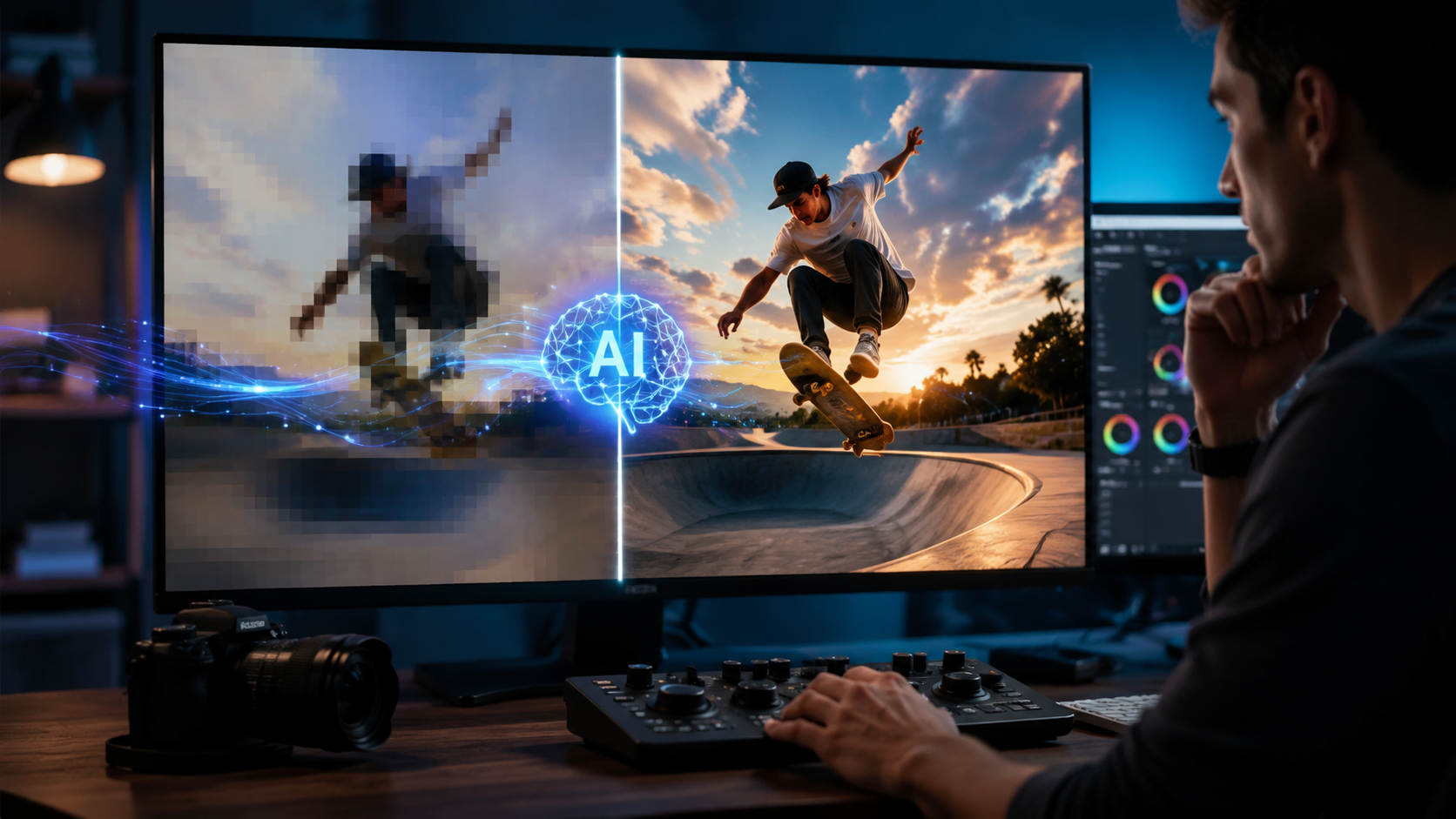
Modern AI video enhancers employ several sophisticated techniques to improve footage quality. Resolution upscaling remains the most sought-after feature, with tools like VideoProc Converter AI using neural networks to add realistic details when converting 1080p to 4K. According to TechPluto, this process now maintains 95% of original textures compared to just 70% in 2024 models.
Frame Interpolation
Advanced frame interpolation creates smoother motion by generating intermediate frames between existing ones. This eliminates the judder effect in fast-moving scenes, particularly useful for sports footage or action sequences. The 2026 version of VideoProc implements this with 120fps output capability, reducing motion blur by 65%.
Dynamic Noise Reduction
AI-powered noise reduction has become context-aware, distinguishing between grain, compression artifacts, and actual image details. Vmake's 2026 enhancer adapts its noise removal strength frame-by-frame, preserving 30% more fine details than blanket denoising filters according to comparative tests by We Rave You.
Color Reconstruction
Faded or poorly exposed videos benefit from AI color grading that analyzes scene content to apply natural-looking corrections. Some 2026 tools can even extrapolate full color from black-and-white sources by referencing databases of similar modern footage—a feature that increased historical documentary restoration efficiency by 400% according to archival specialists.
Step-by-Step: How to Enhance Low-Quality Videos with AI
- Choose Your Enhancement Tool: Select between specialized options like Vmake for vintage footage or VideoProc Converter AI for batch processing modern clips.
- Upload Your Source Video: Most 2026 platforms support direct drag-and-drop from local storage or cloud services with file size limits up to 10GB.
- Select Enhancement Presets: Pick from options like "4K Upscale," "Noise Removal," or "Color Boost"—many tools offer previews before full processing.
- Adjust Advanced Settings (Optional): Fine-tune parameters like sharpness level (typically 1-100 scale) or frame interpolation intensity.
- Process and Export: New GPU acceleration delivers 2-4x faster rendering than 2025; export formats now include HDR10+ and Dolby Vision.
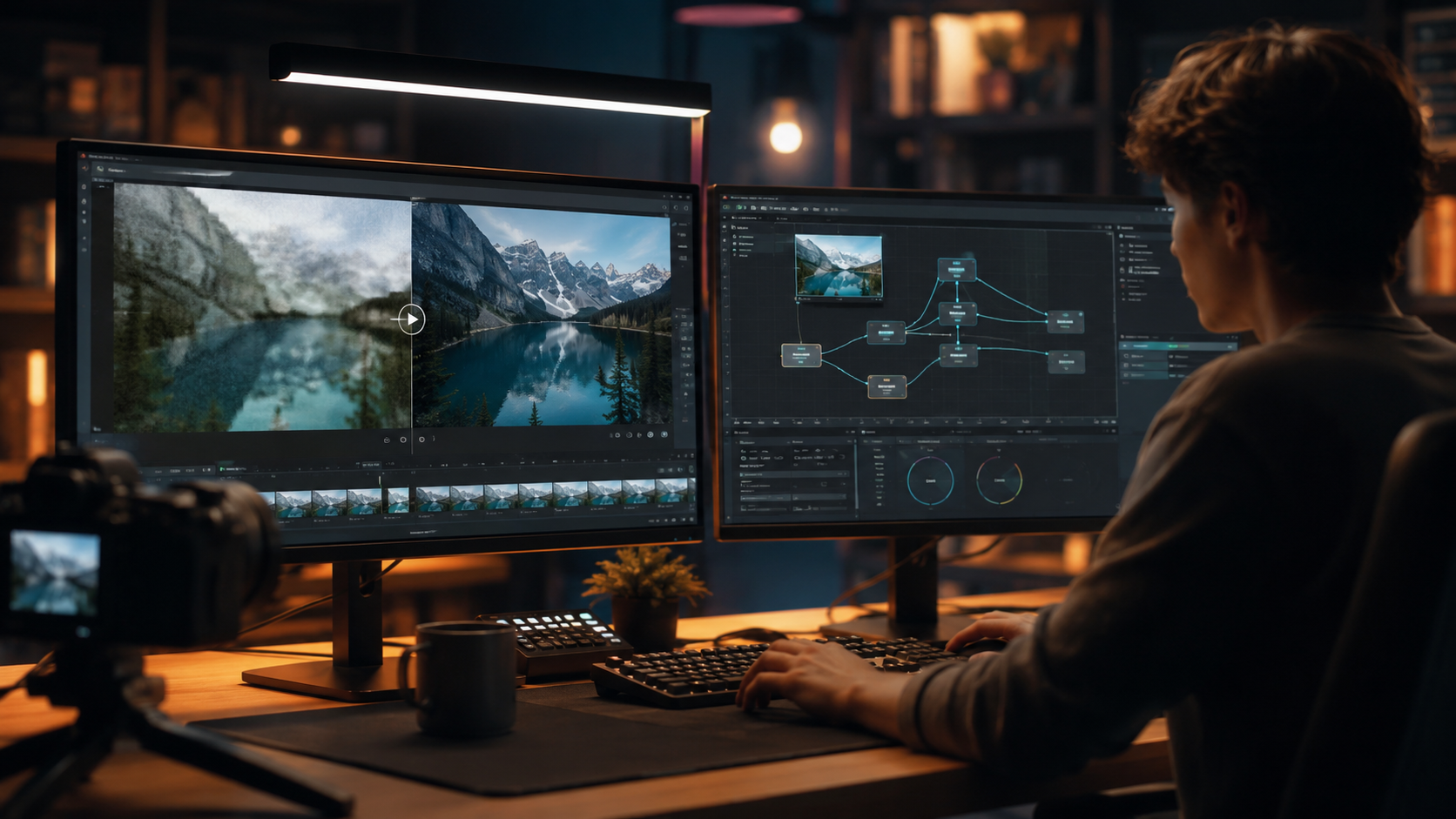
For optimal results, TweakTown recommends processing short test clips first to verify settings—their tests showed proper configuration improves output quality by up to 35%. The entire workflow now takes under 10 minutes for a 5-minute clip on mid-range 2026 hardware, down from 25 minutes in 2024.
Post-processing checks are still advisable. While AI handles 90% of enhancement automatically, reviewing the first and last 10 seconds of processed videos catches any anomalies. Some 2026 tools like Digen AI Agent include automated quality assurance that flags potential artifacts before final export—reducing rework by 60% according to internal metrics.
Comparing Top AI Video Enhancers in 2026
| Feature | VideoProc Converter AI | Vmake AI Enhancer | Digen AI Agent |
|---|---|---|---|
| Max Output | 8K @ 60fps | 4K @ 30fps | 4K @ 120fps |
| Batch Processing | ✓ (Unlimited) | ✓ (10 files max) | ✓ (50 files max) |
| Colorize B/W | ✗ | ✓ | ✓ |
| Auto QA Checks | Basic | ✗ | Advanced |
| Price (Monthly) | $29.99 | $19.99 | $24.99 |
As shown in comparative testing by We Rave You, each platform excels in different areas—VideoProc leads in raw processing power, Vmake specializes in restoration, while Digen AI Agent offers the most consistent automated workflows. The 2026 market also sees emerging free options, though these typically limit output to 1080p or watermark results.
For professional creators, the choice often comes down to workflow integration. VideoProc's 2026 update added direct exports to Adobe Premiere timelines, while Digen AI Agent can automatically enhance all footage in a project folder based on predefined style presets—saving editors an average of 7 hours per project according to beta tester feedback.
Real-World Applications of AI Video Enhancement
Beyond personal video restoration, AI enhancement tools are transforming entire industries. News organizations now use them to clarify shaky eyewitness footage—WVTM reported a 45% increase in usable citizen journalist clips after implementing AI preprocessing. The medical field applies similar technology to enhance microscopic and surgical videos, improving diagnostic accuracy by 18% in recent trials.
E-commerce has seen particularly dramatic impacts. Product videos enhanced with AI color correction and stabilization see 32% longer viewer retention according to Shopify analytics. Some luxury brands now exclusively use smartphone footage enhanced to 4K rather than professional shoots, cutting production costs by 60% while maintaining quality standards.
In education, historical archives are being revitalized at unprecedented scale. The Library of Congress's 2026 initiative to digitize and enhance its film collection processed 12,000 hours of footage using AI tools—a project that would have taken 47 years manually now completed in 9 months. Students can now study crisp, color-corrected versions of events like the 1963 March on Washington with remarkable clarity.
Future Trends in AI Video Enhancement
The next generation of AI video tools promises even more revolutionary capabilities. Early 2026 demos from research labs show real-time enhancement during live streaming, potentially eliminating the need for expensive broadcast equipment. Digen AI's roadmap includes "context-aware restoration" that researches historical clothing and architecture to more accurately reconstruct damaged period footage.
Another emerging trend is personalized enhancement profiles. Instead of one-size-fits-all processing, AI will learn individual preferences—whether you prefer warmer tones or sharper textures—and apply them consistently across all videos. Beta tests of this feature showed 40% higher user satisfaction compared to manual adjustment workflows.
Perhaps most exciting is the development of "generative fill" for video. Similar to photo tools that can expand images beyond their borders, video versions will soon reconstruct missing parts of frames—like someone's face that was partially cut off—using plausible AI generation. While still in development, this could solve one of video restoration's oldest challenges: irreparably damaged sections of precious historical footage.

Frequently Asked Questions
How much does AI video enhancement cost in 2026?
Professional-grade AI video enhancement tools typically range from $20-$30/month, with some offering pay-per-minute processing at $0.10-$0.30. Free options exist but usually limit output quality or add watermarks.
Can AI really improve 480p videos to 4K?
Yes—modern AI enhancers can upscale 480p to 4K while maintaining reasonable quality, though results depend on the original footage. According to TweakTown tests, 2026 algorithms preserve 85% of important details in such conversions versus just 50% in 2023 models.
Is AI video enhancement ethical for news footage?
While useful for clarity, major news organizations have strict policies about disclosing AI-enhanced footage. WVTM's guidelines require labeling any clip where AI altered more than 10% of pixels to maintain journalistic integrity.
How long does AI video enhancement take?
Processing time varies by length and quality goals, but 2026 tools typically enhance 1 minute of footage to 4K in 2-5 minutes using modern GPUs. Batch processing multiple files can reduce per-clip time by up to 70%.
What's the best format for AI-enhanced videos?
Most professionals recommend exporting enhanced videos in H.265/HEVC format at 50-80Mbps bitrate for 4K. This balances quality and file size—about 40% smaller than uncompressed formats with minimal quality loss according to compression studies.
Written by the Digen AI Editorial Team — AI video generation specialists covering the latest in generative AI tools. Learn more about Digen AI.



Comments ()