
How to Edit Video Using AI Tools: Complete Guide for 2026
If you want to know how to edit video using AI tools in 2026, the process has never been more accessible or powerful: you can now automate trimming, color grading, audio cleanup, and even generate new footage from text prompts using tools like DaVinci Resolve 21, Adobe Premiere Pro with Firefly, and Google’s Gemini Omni. This complete guide walks you through the essential steps, from selecting the right AI editor to applying advanced generative techniques, all while keeping your workflow efficient and your content original.
AI video editing is the use of machine learning algorithms to automate and enhance tasks such as scene detection, color correction, audio synchronization, and visual effects. In 2026, leading tools like DaVinci Resolve 21, Adobe Premiere Pro (with Firefly), Vmake, and Gemini Omni enable creators to cut editing time by up to 70% while achieving professional-grade results.
- ✓ DaVinci Resolve 21 (released June 2026) adds photo editing and new AI tools, making it a one-stop solution for video and image workflows.
- ✓ Adobe’s Firefly integration in Premiere Pro now offers AI-powered text-to-video, automatic color matching, and intelligent audio repair.
- ✓ Google’s Gemini Omni (announced May 2026) introduces video-cloning capabilities that allow you to generate realistic presenter clips from a single image.
- ✓ Vmake provides accessible AI editing for social media creators, with automatic captions, background removal, and style transfer.
- ✓ Always verify AI-generated content for accuracy and ethical use, especially when cloning or modifying human likenesses.
Getting Started: A Step-by-Step Guide to AI Video Editing
To answer the core question of how to edit video using AI tools, follow this numbered workflow that applies to most modern AI editors:
- Choose your AI video editor – Based on your needs: DaVinci Resolve 21 for professional color grading and photo editing, Adobe Premiere Pro for integrated generative AI, Vmake for quick social clips, or Gemini Omni for cloning and virtual presenters.
- Import your footage – Drag and drop raw clips into the timeline. Most AI tools automatically analyze the content and suggest edits.
- Let AI detect scenes and trims – Use the “Smart Scene Detection” or “AI Trim” feature to remove silences, jump cuts, and repetitive sections. DaVinci Resolve 21’s new AI cut tool can reduce a 30-minute raw file to a 5-minute highlight reel.
- Apply AI color grading – Tools like Adobe Premiere Pro’s “Auto Color” (powered by Firefly) or DaVinci Resolve’s “Color Match AI” analyze reference frames and apply consistent looks across your project.
- Enhance audio with AI – Remove background noise, normalize levels, and even generate voiceovers using text-to-speech. Vmake offers one-click audio cleanup.
- Add AI-generated elements – Use text-to-video (Adobe Firefly) to create B-roll, or clone yourself with Gemini Omni for a professional presenter without a studio.
- Export and optimize – Let AI suggest the best export settings for your platform (YouTube, TikTok, etc.) and automatically generate captions and thumbnails.
Top AI Video Editing Tools in 2026
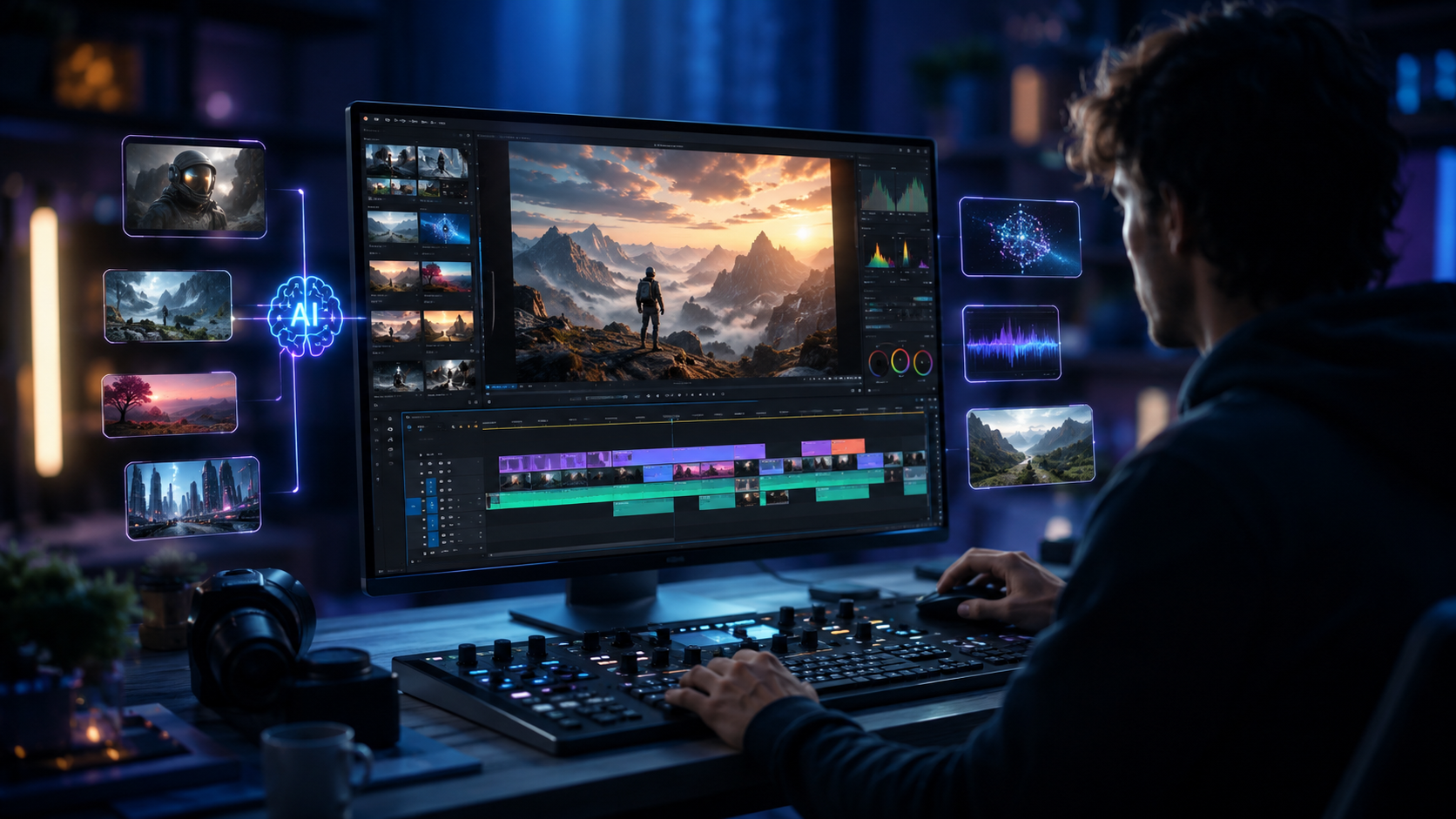
The landscape of AI video editors has expanded dramatically this year. Below are the most notable releases and updates based on recent industry news.
DaVinci Resolve 21 – The All-in-One Powerhouse
According to PetaPixel (June 3, 2026), DaVinci Resolve 21 has been officially released with a suite of new AI tools and, for the first time, photo editing capabilities. This update positions Resolve as a complete media production platform. The AI tools include intelligent object tracking, automatic subtitle generation, and a “Neural Engine” for upscaling low-resolution footage. For editors asking how to edit video using AI tools without leaving a single application, DaVinci Resolve 21 is a top contender.
Adobe Premiere Pro + Firefly – Generative AI Integration
Adobe announced in April 2026 an extension of its leadership in video with new AI-powered creation in Firefly. Premiere Pro now features text-to-video generation, allowing editors to type “sunset over a mountain lake” and get a usable clip. The update also reinvents color for editors with AI-driven palette suggestions and automatic skin-tone correction. Adobe’s approach is to keep the editor in control while automating repetitive tasks.
Google Gemini Omni – Video Cloning and Virtual Presenters
Google introduced Gemini Omni on May 29, 2026, a model capable of cloning a person’s appearance and voice from a single photo. As highlighted by ZDNET (May 26, 2026), this raises both creative possibilities and ethical questions. For video editors, Gemini Omni can generate realistic talking-head clips without the need for a camera or actor, making it ideal for training videos, vlogs, and corporate communications. However, the same article urges careful consideration of consent and misuse.
Vmake – AI Editing for Modern Creators
Vmake, reviewed by Concept Phones (May 31, 2026), focuses on ease of use for social media creators. Its AI tools include automatic background removal, caption generation, and style transfer that mimics popular video aesthetics. Vmake is particularly strong for short-form content and requires no prior editing experience.
Advanced Techniques with AI Video Generators
Beyond basic editing, 2026’s AI tools allow creators to push boundaries. TechBuzzIreland (June 1, 2026) outlines five advanced ways to use AI video generators, including:
- Scene expansion – Using AI to extend the background of a shot beyond the original frame.
- Dynamic storyboarding – Generating rough animated sequences from a script to plan a video.
- Multilingual dubbing – Automatically lip-syncing and translating dialogue into multiple languages.
- AI-driven pacing – Letting the algorithm adjust the rhythm of cuts based on emotional analysis of the audio.
- Generative B-roll – Creating custom footage from text prompts to fill gaps in narrative.
These techniques demonstrate that how to edit video using AI tools is no longer just about saving time—it’s about unlocking creative possibilities that were previously impossible or prohibitively expensive.
Comparison of Leading AI Video Editing Tools
To help you choose the right tool, the table below compares key features across the major platforms mentioned in our research.
| Feature | DaVinci Resolve 21 | Adobe Premiere Pro + Firefly | Vmake | Gemini Omni |
|---|---|---|---|---|
| AI Scene Detection | Yes (new in v21) | Yes | Yes | No (not a full editor) |
| Text-to-Video | No (third-party plugins) | Yes (Firefly) | No | Generates presenter clips |
| Color Grading AI | Neural Color Match | Auto Color (Firefly) | Basic presets | N/A |
| Audio Cleanup | Fairlight AI tools | Essential Sound AI | One-click cleanup | Voice cloning only |
| Photo Editing | Yes (new) | No (separate app) | No | No |
| Video Cloning | No | No | No | Yes (from one photo) |
| Pricing Model | Free (Studio $295) | Subscription ($54.99/mo) | Freemium ($9.99/mo pro) | API-based (pay per use) |
| Best For | Professionals, colorists | Creative teams, generative effects | Social media creators | Virtual presenters, training |
Ethical Considerations and Best Practices
While learning how to edit video using AI tools is exciting, the power of generative AI comes with responsibility. Google’s Gemini Omni, for instance, can clone a person’s likeness with just one image. ZDNET’s coverage (May 26, 2026) warns that such technology could be used for deepfakes or misinformation if not regulated. Adobe and Blackmagic Design have implemented content credentials and watermarking to help trace AI-generated elements.
Always obtain explicit consent before cloning anyone’s image or voice. For commercial projects, review the terms of service of each tool—some prohibit using generated content for political ads or adult material. Additionally, rely on AI suggestions as a starting point, not a final product; human oversight ensures your video maintains authenticity and meets ethical standards.
Frequently Asked Questions
What is the best AI video editing tool for beginners in 2026?
Vmake is the most beginner-friendly option, offering one-click AI features like background removal, captions, and style transfer. It requires no prior editing experience and works directly in your browser.
Can I edit video using AI tools for free?
Yes. DaVinci Resolve 21 offers a robust free version with most AI tools included. Vmake also has a free tier with limited exports. For advanced generative features like text-to-video, you may need a subscription to Adobe Premiere Pro.
How does AI color grading differ from manual grading?
AI color grading analyzes your footage and applies a balanced look automatically, often matching a reference clip. While it saves time, manual grading gives you finer control over mood and style. DaVinci Resolve 21’s Neural Color Match is a good hybrid approach.
Is it safe to use AI video cloning tools like Gemini Omni?
When used ethically and with proper consent, yes. Google has built-in safeguards to prevent misuse, but creators should always disclose when a video features a cloned presenter. Avoid using such tools without the subject’s permission.
Will AI replace human video editors?
No. AI excels at repetitive tasks (trimming, color matching, captioning) but lacks creative intuition, storytelling ability, and ethical judgment. The role of the editor shifts from manual labor to creative direction, making AI a powerful assistant rather than a replacement.
How do I add AI-generated B-roll to my project?
In Adobe Premiere Pro with Firefly, you can type a description (e.g., “close-up of a coffee machine”) and the AI generates a short clip that you can drag directly into your timeline. DaVinci Resolve 21 does not have native text-to-video, but you can use third-party integrations.
What hardware do I need for AI video editing in 2026?
Most AI tools work on modern laptops with at least 16GB RAM and a dedicated GPU. For heavy generative tasks (text-to-video, upscaling), a GPU with 8GB+ VRAM is recommended. Cloud-based options like Vmake reduce hardware requirements.
By following this guide on how to edit video using AI tools, you can transform your workflow, reduce editing time, and produce professional-quality content. Start with the tool that matches your skill level and project type, experiment with advanced features like generative B-roll and video cloning, and always keep ethical considerations front and center. The future of video editing is here—and it’s powered by AI.



Comments ()