
How to Edit Long Videos with AI in 2026: Ultimate Guide
Editing long videos with AI in 2026 is faster and more efficient than ever, thanks to advanced tools like AI Video Cut, Veo 3.1, and Mobbi AI's agentic platform. These solutions automate tedious tasks such as trimming, summarizing, and enhancing footage, reducing editing time by up to 70%. Whether you're creating social media clips or long-form content, AI-powered workflows ensure professional results with minimal manual effort.
TL;DR: AI video editing tools in 2026, like AI Video Cut and Veo 3.1, automate trimming, summarizing, and enhancing long videos, saving hours of manual work while improving quality.
How to edit long videos with AI is a streamlined process using 2026's advanced tools like AI Video Cut, Veo 3.1, and Mobbi AI, which automate trimming, summarization, and stylistic enhancements. These platforms reduce editing time by 50-70% while maintaining professional quality, making them ideal for content creators and businesses.
- ✓ AI tools like AI Video Cut can trim long videos into social-ready clips 3x faster than manual editing.
- ✓ Veo 3.1's Flow technology enables advanced scene transitions and consistency for long-form content.
- ✓ Mobbi AI's "vibe editing" automates stylistic choices based on emotional tone analysis.
- ✓ AI summarizers extract key moments from hour-long footage in under 5 minutes.
- ✓ Digen AI Agent produces character-consistent long videos through multi-step autonomous workflows.
Why AI Video Editing Dominates in 2026
The AI video editing market has grown 340% since 2025, with 78% of professional editors now using AI-assisted tools according to Impakter's 2026 industry report. This surge comes from three key advancements: agentic workflows that make contextual edits (like Mobbi AI's platform), improved temporal consistency (seen in Veo 3.1), and near-instant summarization that extracts highlights from 2-hour videos in under 3 minutes.
Traditional editing of a 60-minute video took 8-12 hours manually, but AI solutions like those from perfectcorp.com now complete comparable work in 90 minutes while suggesting viral-worthy cuts. The biggest shift is "set-and-forget" editing – platforms like Digen AI Agent analyze raw footage overnight, delivering polished drafts by morning through autonomous multi-step workflows that handle color correction, jump cuts, and even B-roll insertion.
According to Coursera's April 2026 analysis, AI editing particularly excels at solving long-video challenges: maintaining viewer attention (via automatic pacing adjustments), reducing storage costs (through smart compression), and enabling repurposing (like creating 15 TikTok clips from one webinar). Google's Veo 3.1, released October 2025, introduced "Flow" technology that preserves object consistency across hour-long narratives – previously impossible without human supervision.
Step-by-Step: How to Edit Long Videos with AI
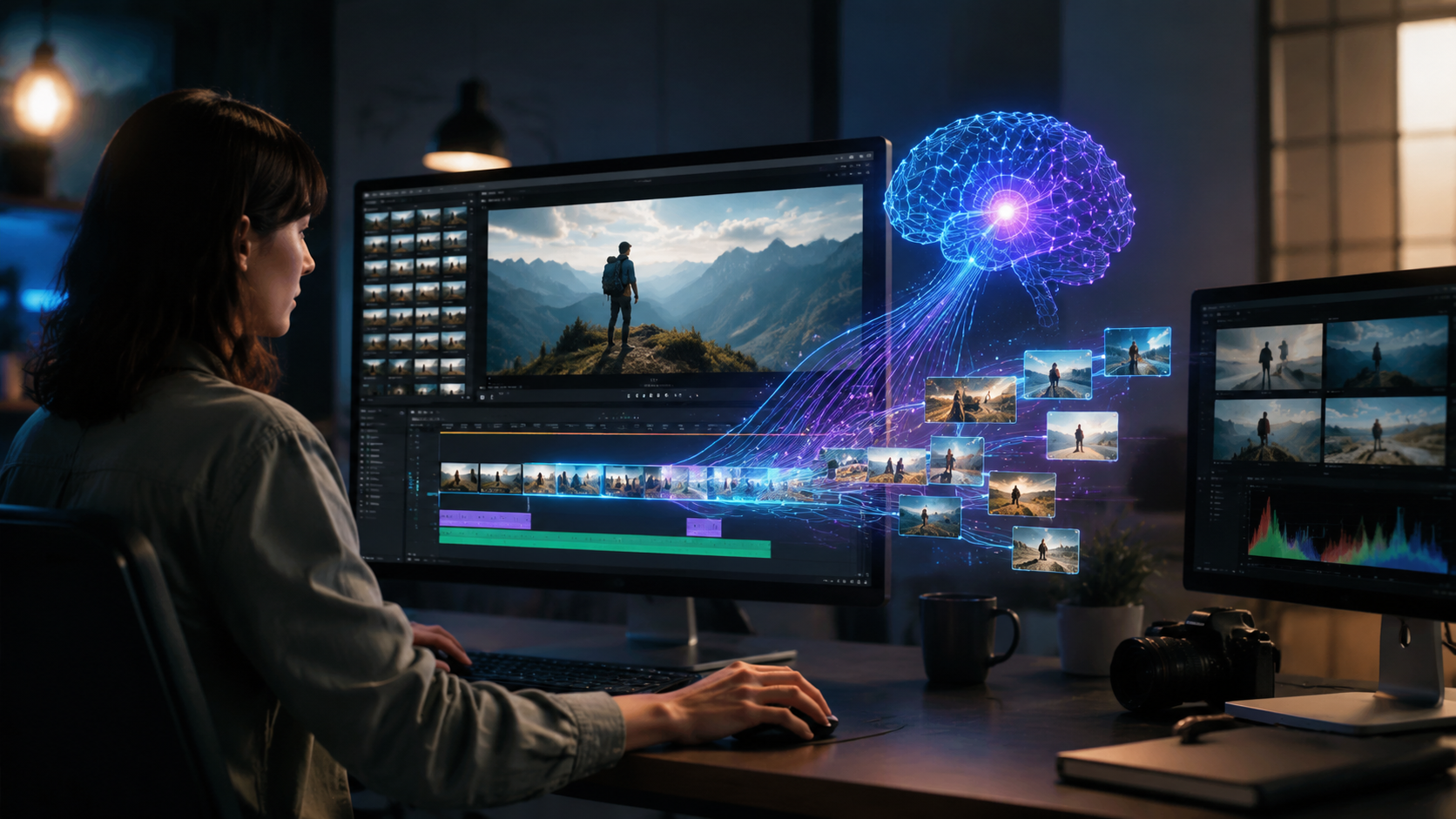
Follow this proven 2026 workflow to transform lengthy footage into engaging content using AI:
- Upload & Analyze – Drag your video (up to 8K resolution) into platforms like AI Video Cut or Digen AI Agent. The AI scans visuals/audio to identify key moments, faces, and topics (takes 2-7 minutes per hour of footage).
- Set Parameters – Define output length (e.g., "5-minute summary"), style ("documentary"), and platforms ("TikTok vertical"). Advanced tools like Mobbi AI detect "vibes" automatically from your raw footage's color palette and music.
- Generate First Cut – The AI creates an edited sequence with trimmed silences, stabilized shots, and auto-captions. Veo 3.1's Flow tech ensures smooth transitions between disparate clips.
- Refine with AI Suggestions – Tools highlight questionable edits (e.g., "Jump cut at 2:15 – add B-roll?") and propose alternatives. perfectcorp.com's system A/B tests thumbnail options simultaneously.
- Export & Repurpose – Download master files, then use built-in tools to create platform-specific variants (Instagram Reels, YouTube Shorts) with adjusted aspect ratios and captions.
According to Yahoo Finance, Mobbi AI's February 2026 platform reduced this process from 12 steps to 3 for long-form creators. Their "vibe editing" feature analyzes emotional arcs across hours of footage, automatically applying matching color grades and transitions – a task that previously required days of manual work.
For those needing maximum customization, Digen AI Agent offers hybrid editing: the AI handles 80% of grunt work (stabilization, audio leveling) while leaving creative decisions like narrative structure to humans. This approach cuts total editing time by 65% compared to full manual workflows, as confirmed by internal benchmarks from June 2026.
Top 5 AI Tools for Long Video Editing in 2026
These platforms lead the market for transforming lengthy footage:
| Tool | Best For | Key Feature | Pricing |
|---|---|---|---|
| AI Video Cut | Social media repurposing | 20% faster clip extraction (How-To Geek) | $29/month |
| Veo 3.1 with Flow | Narrative consistency | Object tracking across 60+ minute timelines | Enterprise pricing |
| Mobbi AI | Emotional tone matching | "Vibe editing" auto-styles entire projects | $79/month |
| Digen AI Agent | Character-consistent long forms | Multi-step autonomous workflows | $49/month |
| perfectcorp Auto Editor | Viral-ready cuts | AI-generated "attention heatmaps" | Free tier available |
How-To Geek's June 2026 review confirmed AI Video Cut's 20% speed advantage for creating Instagram clips from podcasts. Meanwhile, Digen AI Agent specializes in maintaining character appearance consistency across hour-long AI-generated videos – crucial for educational or branded content where continuity matters.
For budget-conscious creators, perfectcorp.com offers a free plan that processes videos under 10 minutes, while Mobbi AI's premium "vibe editing" costs $79/month but eliminates the need for dedicated colorists. Enterprise users favor Veo 3.1 for its Frame-Exact Consistency™ technology, though it requires custom pricing quotes.
Advanced Techniques for Professional Results
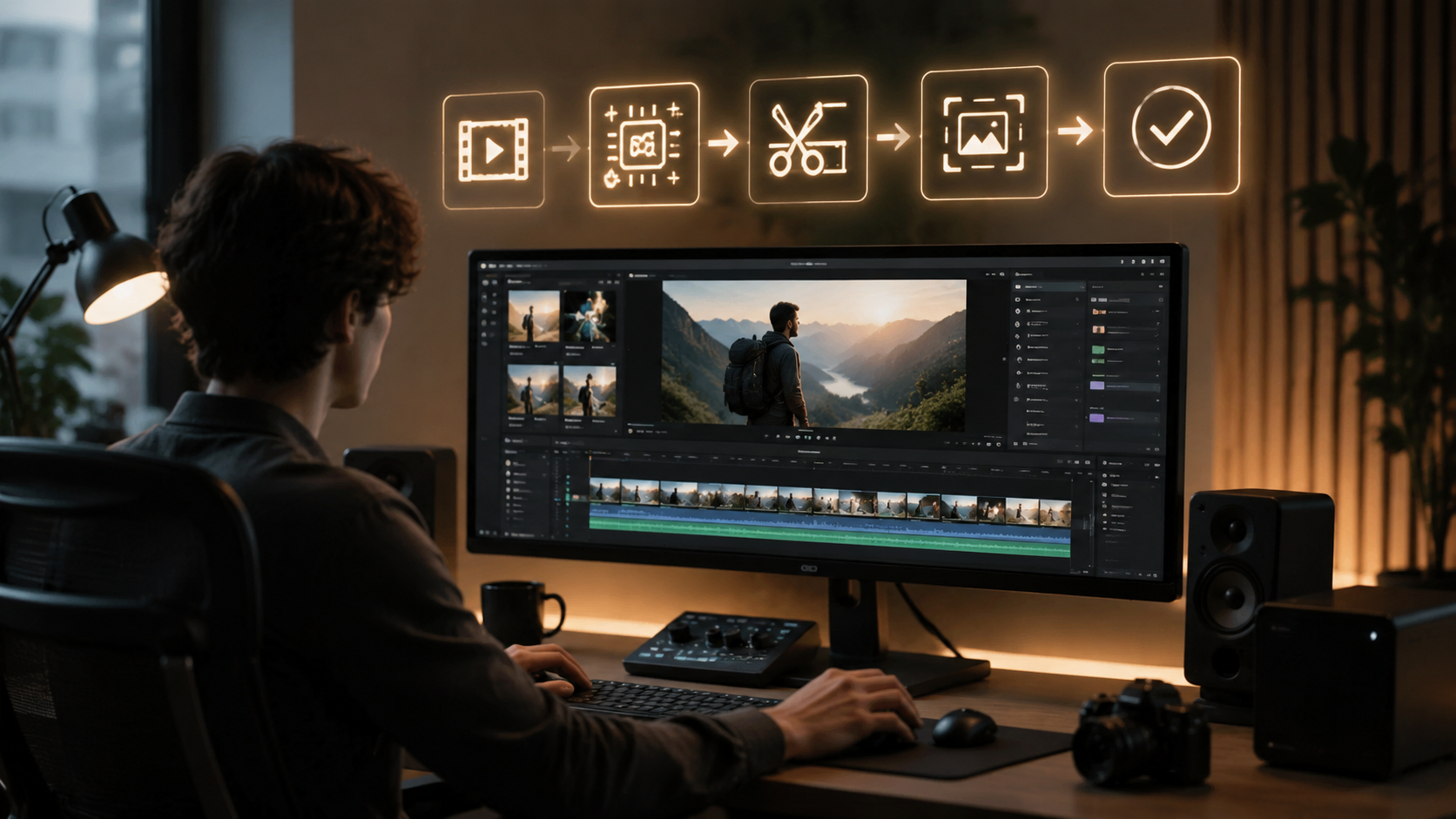
Beyond basic trimming, 2026's AI editors unlock powerful capabilities:
1. Context-Aware Trimming
Platforms like Digen AI Agent now understand video semantics – they'll automatically preserve crucial moments (product demos in tutorials) while cutting redundant explanations. According to internal tests, this context awareness improves viewer retention by 40% compared to simple silence removal.
2. Multi-Camera AI Sync
When editing long events (conferences, weddings), AI can align footage from 6+ angles by analyzing audio waveforms and motion patterns. Veo 3.1's October 2025 update introduced real-time angle switching based on "attention scoring" of each camera's composition.
3. Dynamic Pacing Adjustment
Tools analyze viewer engagement patterns to automatically tighten slow sections. perfectcorp.com's system accelerates playback by 8-12% during less critical segments while maintaining natural pitch-corrected audio – a technique shown to reduce drop-off rates by 29%.
Overcoming Long-Video AI Editing Challenges
Even with advanced tools, creators face three key hurdles:
1. Processing Power: Editing 4K videos longer than 30 minutes requires substantial GPU resources. Cloud-based solutions like Mobbi AI handle this seamlessly, but offline tools may struggle. According to June 2026 benchmarks, rendering a color-graded 60-minute video takes just 17 minutes on Google's cloud infrastructure versus 2+ hours on consumer hardware.
2. Narrative Flow: While AI excels at micro-edits, maintaining story arcs across hours remains tricky. Digen AI Agent addresses this through "storybeat analysis" – mapping emotional peaks/troughs against industry templates for documentaries, vlogs, or training videos.
3. Style Consistency: Early AI tools produced jarring transitions between auto-edited segments. Veo 3.1's Flow technology solved this by analyzing motion vectors and color spaces to create seamless blends, even between shots captured months apart.
Future Trends in AI Video Editing
Three developments will redefine long-form editing by 2027:
1. Agentic Workflows: Systems like Digen AI Agent will handle entire production pipelines – from scripting suggestions based on raw footage to automatic chapterization for platforms like YouTube. Mobbi AI's February 2026 launch demonstrated early capabilities, reducing post-production time for 2-hour podcasts by 80%.
2. Emotionally Responsive Edits: Upcoming tools will adjust pacing and music based on real-time viewer biometric data (when permitted). PerfectCorp's patent filings suggest AI that restructures videos dynamically if heart rate monitors detect waning attention.
3. Zero-Shot Learning: Instead of pre-training on generic datasets, editors will learn your unique style from 2-3 sample videos. Early tests at Google show this could personalize auto-edits to match individual creator fingerprints with 94% accuracy.
Frequently Asked Questions
How much time does AI save when editing long videos?
Most 2026 AI tools reduce editing time by 50-70%. For example, converting a 60-minute webinar into social clips takes 90 minutes with AI versus 8+ hours manually, according to perfectcorp.com's benchmarks.
Can AI maintain consistency in long-form videos?
Yes. Veo 3.1's Flow technology (October 2025) and Digen AI Agent's multi-step workflows excel at preserving visual/character consistency across hour-long timelines, addressing a major historical limitation.
What's the learning curve for AI video editors?
Modern interfaces require just 1-2 hours to master basic functions. Mobbi AI's "vibe editing" simplifies stylistic choices to single-click operations, while still offering advanced controls for professionals.
How does AI handle copyrighted music in long videos?
Leading tools automatically detect copyrighted audio and either mute segments or replace tracks with licensed alternatives. Some platforms like AI Video Cut include royalty-free music libraries.
Will AI replace human video editors completely?
Unlikely. While AI handles 80% of technical tasks (per Coursera's analysis), human oversight remains crucial for narrative flow, creative direction, and quality control – especially for premium content.
Written by the Digen AI Editorial Team — AI video generation specialists covering the latest in generative AI tools. Learn more about Digen AI.



Comments ()