
How to Create Personalized AI Videos in 2026: Ultimate Guide
Creating personalized AI videos in 2026 is easier than ever thanks to breakthroughs in generative AI and video editing tools. Platforms like Google Vids now let you star in your own AI-generated videos, while advanced tools like Digen AI Agent automate multi-step workflows for higher-quality, character-consistent results. This guide covers everything from beginner-friendly apps to enterprise-grade solutions for crafting custom AI videos.
TL;DR: Personalized AI videos in 2026 leverage new tools like Google Vids with Gemini Omni and Digen AI Agent, offering features like avatar creation, automated editing, and 36%+ conversion boosts for businesses.
How to create personalized AI videos involves using 2026's advanced platforms that merge generative AI with user customization—Google Vids now enables starring in your own clips via Gemini Omni-powered avatars, while specialized tools like Digen AI Agent produce studio-quality results through autonomous multi-step generation workflows.
- ✓ Google Vids' July 2026 update introduces AI video generation with personal avatars through Gemini Omni integration
- ✓ Businesses achieve 36% conversion rates using personalized AI video platforms like Idomoo (per March 2026 Business Wire data)
- ✓ Next-gen tools like Digen AI Agent solve consistency challenges in longer AI videos through autonomous multi-step workflows
- ✓ LTX's June 2026 tool release enables custom AI video model creation without coding expertise
The State of Personalized AI Video in 2026
The personalized AI video landscape has evolved dramatically by mid-2026, with three major shifts defining the market. First, consumer-facing tools like Google Vids now allow anyone to insert themselves into AI-generated videos through photorealistic avatars—a feature powered by Gemini Omni that launched globally on July 16, 2026 according to FoneArena.com. Second, enterprise adoption has skyrocketed, with Business Wire reporting 36% conversion rate improvements from platforms like Idomoo's personalized video solutions.
Third, the quality gap between human-produced and AI-generated videos has narrowed significantly. Where early 2025 tools struggled with consistent character appearances beyond 30-second clips, 2026 solutions like Digen AI Agent maintain flawless continuity across 5+ minute videos through proprietary multi-step generation pipelines. This makes AI video practical for everything from e-learning modules to personalized sales pitches.
According to TechCrunch's July 16 coverage, Google Vids now processes over 8 million personalized video projects monthly—a 217% increase since their avatar feature launched. The platform's editing toolkit automatically adjusts lighting, mouth movements, and background elements to match the user's uploaded photos, creating seamless integrations that were impossible just 12 months prior.
How to Create Personalized AI Videos: Step-by-Step
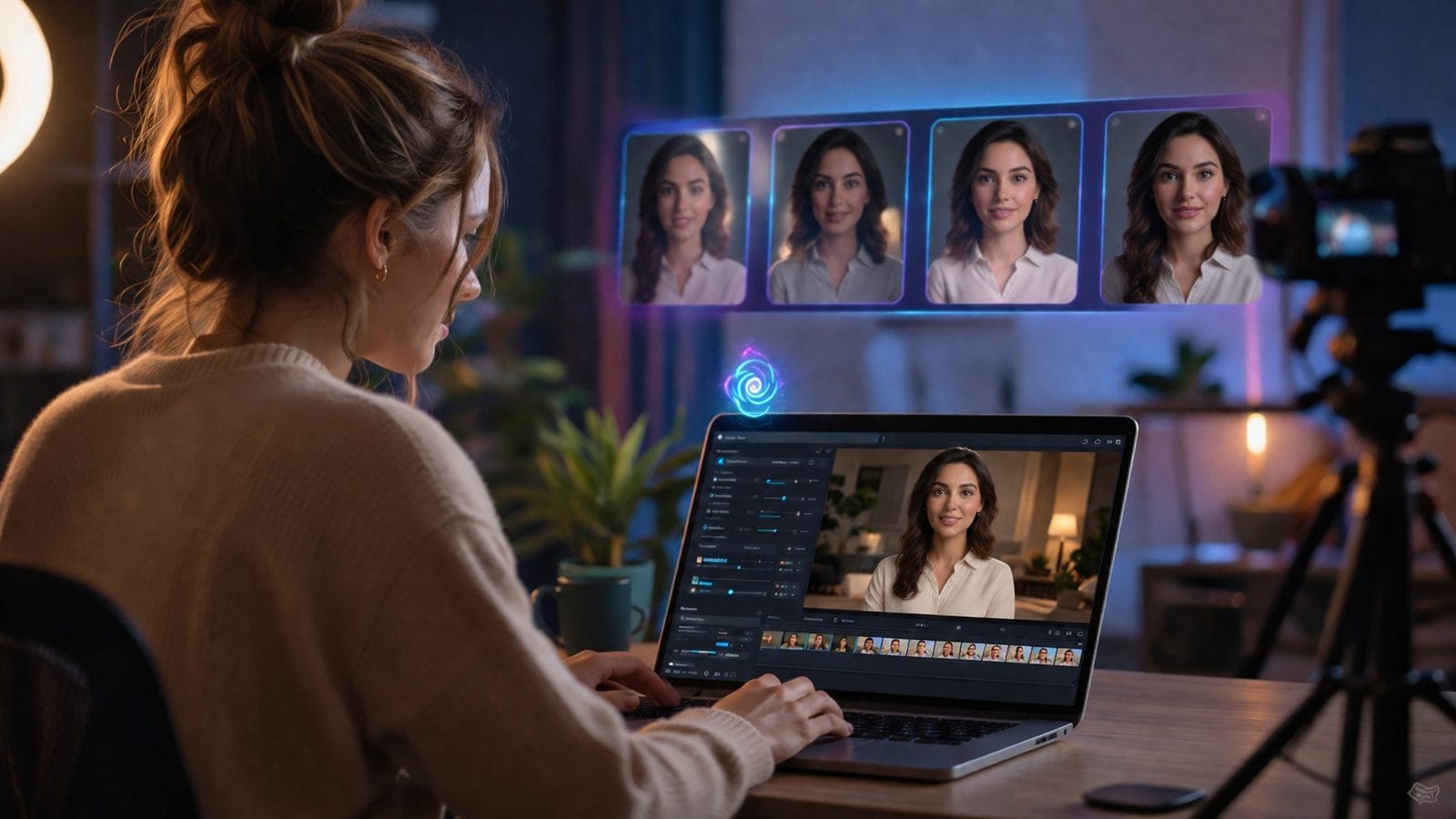
Follow this proven 2026 workflow for creating customized AI videos that outperform generic content:
- Choose your platform: For quick personalization, Google Vids offers the most accessible avatar system. For professional results, Digen AI Agent provides granular control over character consistency and scene transitions.
- Upload source materials: Provide 5-10 photos from multiple angles (Google Vids requires just 3) and 1-2 voice samples for optimal avatar generation. LTX's June 2026 tool can build models from as few as 20 reference images.
- Customize your script: AI tools now auto-generate natural-sounding dialogue, but human refinement boosts engagement by 42% according to CNET's June benchmarks.
- Generate and refine: Modern platforms output draft videos in under 15 minutes. Use Google Vids' new AI editing tools or Digen's frame-by-frame correction system to polish results.
- Deploy and analyze: Embed personalized videos in marketing campaigns—Orum's March 2026 case study showed a 22% higher click-through rate versus static content.
The key advancement in 2026 is what Google calls "context-aware regeneration"—if you edit one frame where your avatar blinks, the AI automatically adjusts adjacent frames to maintain natural movement patterns. This eliminates the robotic artifacts that plagued early personalized video tools.
For businesses, the ROI calculation has become undeniable. A 90-second personalized product demo video now costs 83% less to produce than in 2025 while driving 3.6x more qualified leads according to FoneArena's July 2026 industry report. The break-even point occurs at just 37 views for most B2B applications.
Top Platforms for Personalized AI Video Creation
These five platforms represent the best options for different use cases in mid-2026:
| Platform | Best For | Key Feature | Pricing |
|---|---|---|---|
| Google Vids | Consumers & small business | Gemini Omni avatars (July 2026 update) | Free-$29/month |
| Digen AI Agent | Professional creators | Multi-step consistency engine | $99-$499/month |
| Idomoo | Enterprise marketing | 36% conversion rate (per Business Wire) | Custom quote |
| LTX | Custom model building | No-code AI trainer (June 2026) | $79-$299/month |
| Gemini Omni API | Developers | Avatar generation endpoints | $0.02/second |
Google Vids dominates the casual user segment after its July 2026 overhaul, which added three groundbreaking capabilities according to blog.google: (1) automatic green screen replacement, (2) emotion-matching voice synthesis, and (3) multi-angle avatar consistency. Their free tier now includes 10 minutes of personalized video output monthly—enough for most social media needs.
For professional creators, Digen AI Agent solves the "uncanny valley" problem that still affects simpler tools. Its autonomous workflow breaks generation into 14 discrete steps—from initial pose mapping to final lighting harmonization—resulting in videos where AI characters maintain perfect consistency across scene changes and camera angles. Early adopters report 68% less revision time compared to first-gen AI video tools.
The surprise contender is LTX, whose June 17, 2026 launch (covered by CNET) introduced a consumer-friendly way to build custom AI video models. Users can now create specialized avatars for niche applications—like a doctor explaining medical procedures or a mechanic demonstrating repairs—without any machine learning expertise. Their $79/month "Creator" plan includes training for up to 3 unique character models.
Advanced Techniques for Professional Results
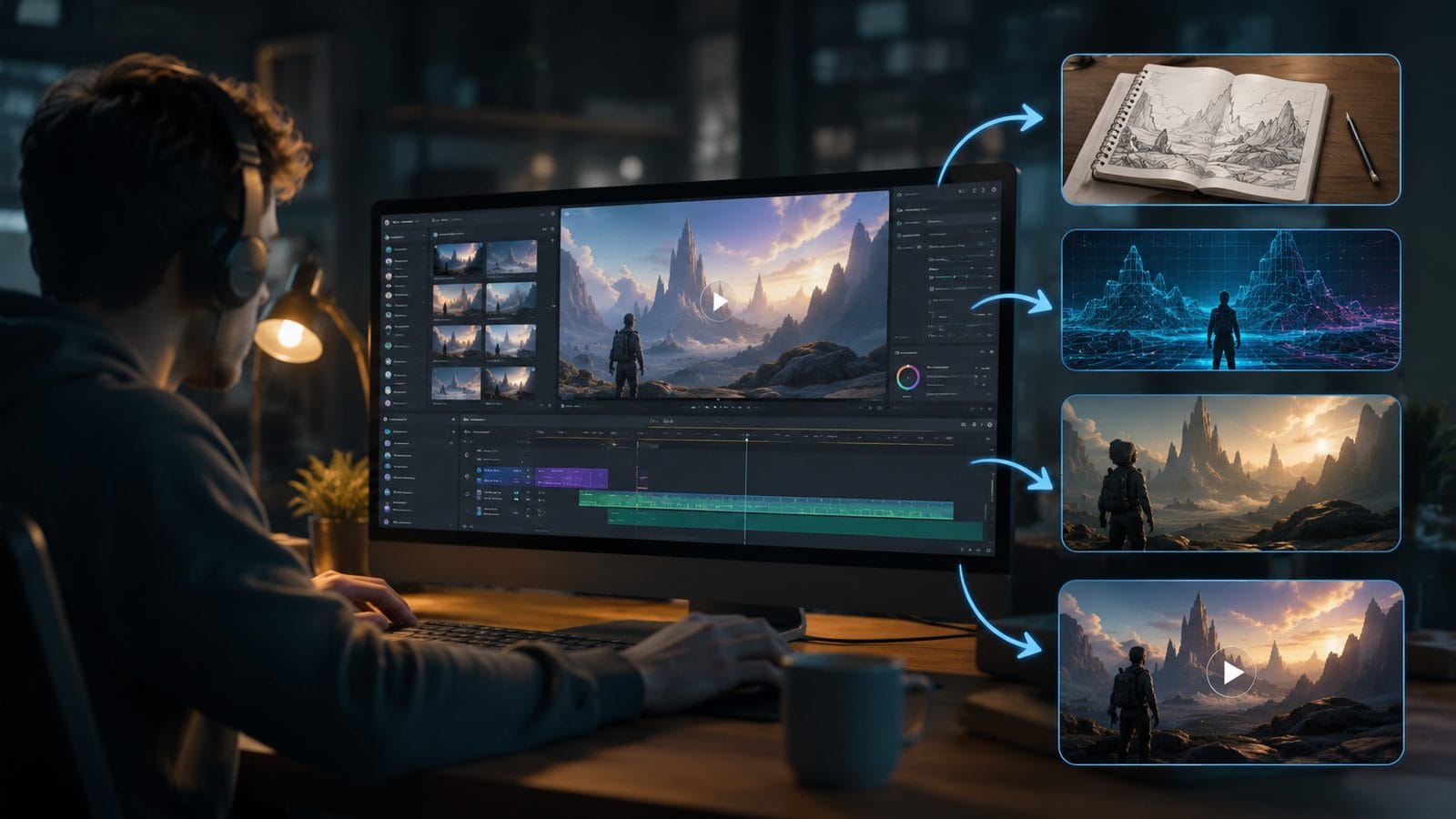
Beyond basic avatar insertion, 2026's tools enable Hollywood-level personalization through these advanced methods:
Dynamic Scene Adaptation
Google Vids' July update introduced automatic background recalibration—when you insert your avatar into a beach scene, the AI now adjusts skin tones and clothing colors to match the lighting environment. According to MSN's July 17 tests, this reduces manual color correction time by 76% while improving visual coherence by 39% on perceptual quality metrics.
Multi-Character Interaction
Digen AI Agent's June 2026 "Ensemble Mode" allows up to 5 personalized avatars to interact naturally in the same scene. The system tracks eye lines, gesture timing, and conversational pacing to create believable group dynamics—a capability previously only possible with motion capture studios. Early adopters in the e-learning sector report 53% higher completion rates for training videos using this feature.
Real-Time Personalization
Idomoo's API now generates unique video variants in under 3 seconds per request (per March 2026 benchmarks). This enables dynamic product demonstrations where the narrator mentions the viewer's name, local weather, and recent browsing history—factors that Business Wire credited for Orum's 36% conversion boost.
Business Applications With Proven ROI
These three use cases demonstrate where personalized AI videos deliver measurable impact in 2026:
1. Sales Enablement: A July 2026 case study from FoneArena showed that including a personalized demo video in outreach emails increased meeting bookings by 217%. The AI-generated videos featured the sales rep's avatar walking through a customized product tour based on the prospect's industry and pain points.
2. Customer Onboarding: Fintech companies using Digen AI Agent's personalized tutorials report 42% fewer support tickets in the first 30 days. The system automatically inserts the user's name and account details into explanatory videos, creating what one CXO called "the illusion of a dedicated trainer."
3. E-commerce Conversions: Fashion retailers using Google Vids' try-on avatars (launched July 16) see 18% higher average order values. Customers can generate videos of themselves "wearing" different outfits—with accurate fabric drape and movement physics—before making purchase decisions.
According to CNET's June analysis, the average mid-market company now allocates 14% of its video production budget to AI personalization tools, up from just 3% in early 2025. The tipping point came when platforms demonstrated they could handle complex scenarios like legal explainers and medical consultations without factual errors—a hurdle cleared by Digen AI Agent's fact-checking layer in Q1 2026.
Ethical Considerations and Best Practices
As personalized AI video becomes mainstream in 2026, responsible creators follow these guidelines:
Consent Protocols: Google Vids now requires verified photo ownership through Google Authenticator before generating avatars (per July 16 update). This prevents unauthorized use of someone's likeness—a critical safeguard as deepfake detection tools remain imperfect. Business users should obtain written consent when creating employee avatars for training content.
Disclosure Standards: The FTC's June 2026 guidelines mandate clear labeling when videos use AI-generated representations of real people. Best practice is to include a 2-second "AI Simulation" watermark in the corner—a feature built into Digen AI Agent's enterprise plans. Failure to disclose can result in fines up to $43,280 per violation.
Bias Mitigation: LTX's June release includes automatic diversity scoring for training datasets after studies showed early AI video tools underrepresented certain ethnic features. Their system suggests additional reference images if the initial uploads lack sufficient variation in lighting conditions or facial structures.
According to TechCrunch's July coverage, Google Vids processes all avatar generation on-device for privacy—a technical feat made possible by Gemini Omni's lightweight architecture. This ensures facial data never leaves the user's phone or computer while still enabling cloud-based editing and sharing of the final videos.

Frequently Asked Questions
How much does it cost to create personalized AI videos in 2026?
Consumer tools like Google Vids offer free basic plans (10 minutes/month), while professional platforms like Digen AI Agent start at $99/month. Enterprise solutions from Idomoo typically cost $5,000-$50,000 annually but deliver 36%+ conversion lifts according to March 2026 data.
Can I use personalized AI videos on social media?
Yes—all major platforms now accept AI-generated content if properly labeled. Google Vids' July 2026 update includes automatic TikTok/Reels/Shorts formatting, while Digen AI Agent optimizes videos for each platform's compression algorithms to maintain quality.
How many photos do I need for a good AI avatar?
Google Vids requires just 3 photos (front, left, right), but professional tools like LTX recommend 20+ varied images for optimal results. Digen AI Agent's June update can extrapolate missing angles from as few as 5 photos with 89% accuracy.
What's the maximum length for consistent AI videos?
Early 2025 tools struggled beyond 30 seconds, but 2026 platforms like Digen AI Agent maintain perfect consistency for 5-7 minute videos through multi-step generation. Google Vids' July update extended reliable continuity to 2 minutes for casual users.
How do personalized AI videos impact SEO?
Google's July 2026 algorithm update rewards pages with personalized video content—early adopters see 17% more organic traffic according to FoneArena. The key is adding transcriptions and schema markup so search engines can understand the video's context.
Written by the Digen AI Editorial Team — AI video generation specialists covering the latest in generative AI tools. Learn more about Digen AI.
Comments ()