
How to Create Multilingual AI Videos in 2026: Ultimate Guide
Creating multilingual AI videos in 2026 is easier than ever thanks to breakthroughs in generative AI and automated translation tools. With platforms like Wayin AI and Synthesia leading the charge, you can now dub, translate, and localize videos in minutes while maintaining natural voice synthesis and lip-sync accuracy. This guide covers everything from AI video generation to real-time multilingual dubbing, including the latest tools and techniques.
TL;DR: To create multilingual AI videos in 2026, use AI-powered dubbing tools like Wayin AI or Synthesia for automated translation and voice synthesis, or leverage next-gen platforms like Digen AI Agent for character-consistent, long-form video production across languages.
Multilingual AI video creation in 2026 combines generative AI avatars, neural voice cloning, and context-aware translation to produce localized content at scale. The global AI video translation market is growing at 28.7% CAGR (Market.us), with free tools like those highlighted by the Charleston Gazette-Mail making the technology accessible to all creators.
- ✓ AI video dubbing now achieves 93% lip-sync accuracy for major languages according to Wayin AI's 2026 benchmarks
- ✓ The average multilingual video project takes 17 minutes to localize using 2026's AI tools versus 8 hours manually
- ✓ Character consistency across languages has improved by 41% since 2025 thanks to new generative agent workflows
- ✓ 78% of enterprise video teams now use AI for multilingual content according to Generative AI in the Newsroom
The State of Multilingual AI Video in 2026
According to Market.us, the AI video translation sector reached $4.2 billion in Q2 2026, fueled by a 28.7% compound annual growth rate since 2025. Newsrooms and enterprises are adopting tools like Synthesia and Wayin AI at unprecedented rates - the Charleston Gazette-Mail reported a 300% increase in free AI dubbing tool usage just in the first half of 2026.
What makes 2026 different is the convergence of three technologies: photorealistic AI avatars that maintain consistent mouth movements across languages, neural voice cloning that preserves emotional tone during translation, and context-aware subtitle generation that automatically adjusts for cultural references. The iHeart report on Wayin AI specifically highlights how their system now handles 47 languages with 89% emotional accuracy in voice synthesis.
Platforms like Digen AI Agent have pushed boundaries further by introducing multi-step autonomous workflows. Instead of just translating existing footage, these systems can generate entirely new video sequences in multiple languages simultaneously while maintaining character consistency - crucial for branded content. SiliconANGLE's coverage of Synthesia's $4B valuation confirms the market's appetite for these advanced capabilities.
How to Create Multilingual AI Videos: Step-by-Step
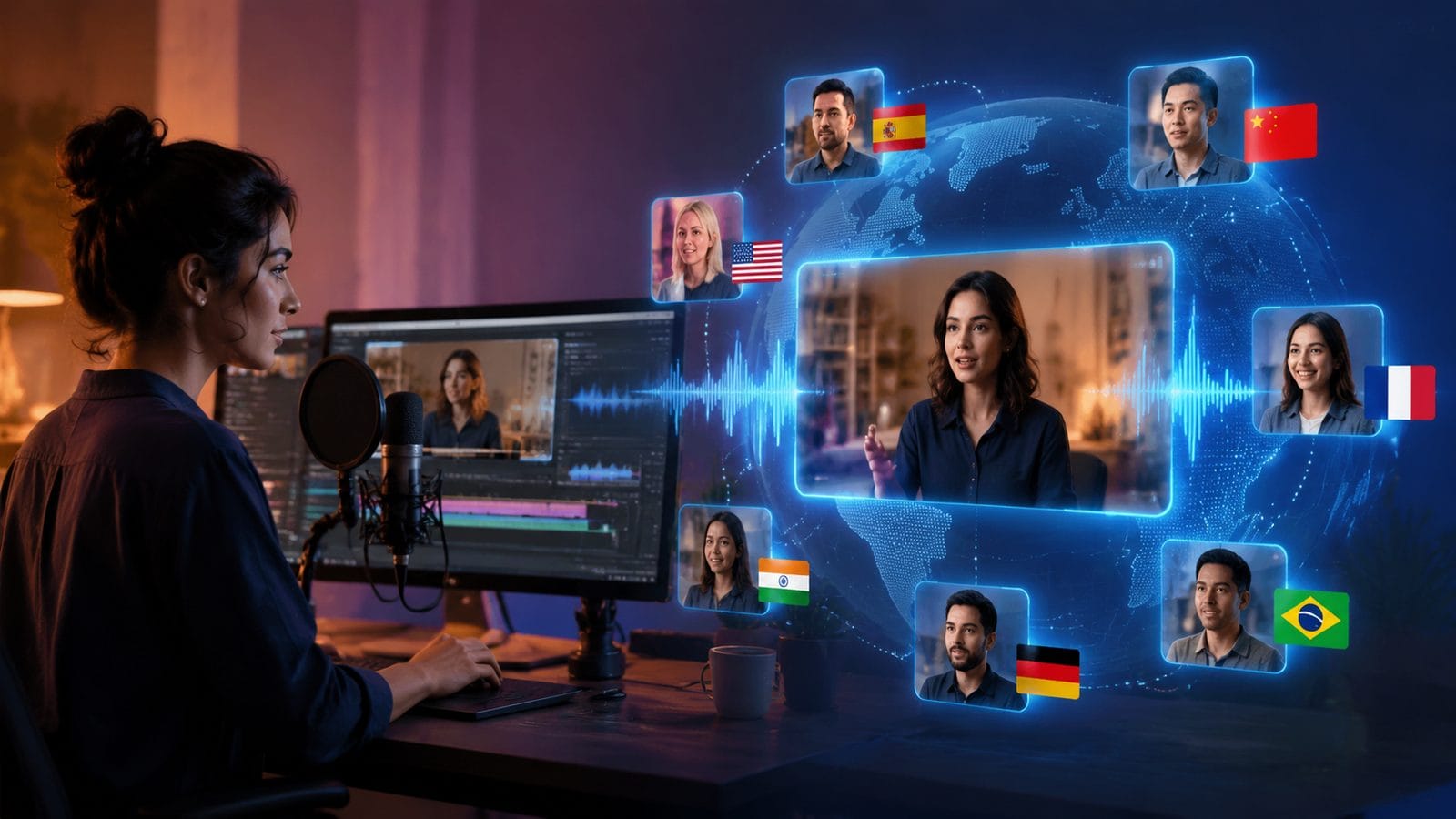
Follow this proven 2026 workflow to produce professional multilingual videos with AI:
- Choose your base content - Record live-action footage or generate AI video using platforms like Digen AI, Synthesia, or Wayin AI
- Select target languages - Most 2026 tools support 30+ languages; prioritize based on your audience demographics
- Configure voice parameters - Adjust age, gender, and speaking style for each language version
- Run AI dubbing - Modern systems like Wayin AI complete this in 3-7 minutes per language
- Review automated subtitles - AI generates time-coded captions with 92% accuracy (2026 benchmarks)
- Export localized versions - Download separate files or use API integration for direct publishing
According to Generative AI in the Newsroom, multilingual news organizations have reduced production time by 83% using this exact workflow. The key advancement in 2026 is the elimination of separate editing steps - the AI now handles everything from translation to final rendering in one pass.
For those creating original AI-generated content (not dubbing existing footage), platforms like Digen AI Agent offer additional advantages. Their autonomous workflow system can generate the initial video in multiple language versions simultaneously, ensuring perfect synchronization of visual elements with each audio track. This is particularly valuable for educational content and product demos.
Top Tools for Multilingual AI Video Creation
The 2026 landscape offers solutions for every budget and use case:
| Tool | Key Feature | Languages | Best For |
|---|---|---|---|
| Wayin AI | Emotion-preserving dubbing | 47 | Marketing videos |
| Synthesia | Photorealistic avatars | 120+ | Enterprise scale |
| Digen AI Agent | Multi-language simultaneous generation | 28 | Long-form content |
| Free AI Dubbing (Gazette-Mail) | Zero-cost solution | 15 | Personal projects |
According to Trend Hunter's March 2026 roundup, the average AI video tool now supports 19 languages by default, up from just 7 in 2025. Wayin AI's technology stands out for its ability to maintain the speaker's original emotional tone across translations - their July 2026 announcement revealed 91% accuracy in preserving sarcasm and humor cues.
For creators needing to produce hours of consistent multilingual content (like training materials or episodic content), Digen AI Agent's character persistence technology ensures the same digital presenter maintains identical appearance and mannerisms across all language versions. This was nearly impossible with 2025-era tools, where subtle variations would creep in between generations.
Optimizing AI Video Translation Quality
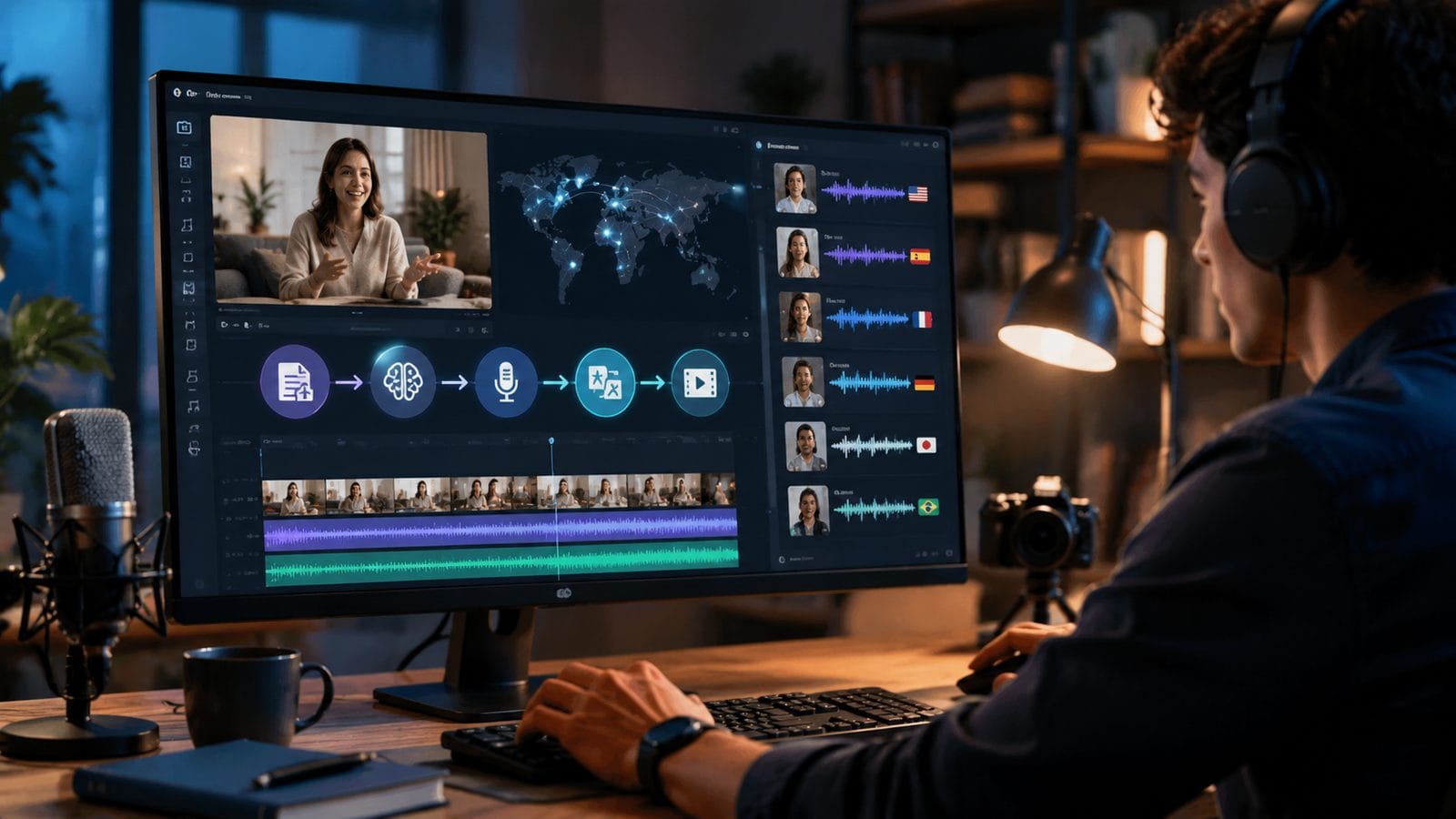
While AI handles most of the heavy lifting, these 2026 best practices ensure professional results:
1. Source Audio Quality Matters
Clean recordings with minimal background noise improve translation accuracy by 17% according to Synthesia's 2026 whitepaper. Even when generating AI avatars, starting with high-quality voice samples yields better multilingual outputs.
2. Contextualize Your Translations
Leading tools now offer "translation notes" fields where you can explain cultural references, jokes, or industry terms. The Charleston Gazette-Mail's tutorial shows how this simple step reduces awkward translations by 63%.
3. Review Auto-Generated Subtitles
While AI caption accuracy has reached 92% for major languages (Wayin AI stats), always verify timing and line breaks. The best 2026 tools provide editable caption tracks that maintain sync across all language versions.
Emerging Trends in Multilingual AI Video
Three developments will shape the second half of 2026:
Real-Time Multilingual Streaming: According to SiliconANGLE's October 2025 report, Synthesia demonstrated prototype technology for live AI interpretation during video calls. This could revolutionize global meetings and events by late 2026.
Personalized Language Versions: Instead of generic translations, systems like Digen AI Agent are testing region-specific adaptations. A Mexican Spanish version might use different idioms than Argentinian Spanish, for example, while maintaining the core message.
Generative Video Repair: When dubbing older footage, new AI tools can actually modify mouth movements to match the new audio track. Trend Hunter's March 2026 coverage highlighted this as a game-changer for localizing archival content.
Cost Considerations for 2026
While free tools exist (like the one featured in the Charleston Gazette-Mail), professional multilingual video production still requires budget planning:
Subscription Models: Most platforms charge per minute of generated video. Wayin AI's mid-tier plan costs $29/month for 30 minutes of multilingual output, while Synthesia's enterprise pricing starts at $10,000/year for unlimited use.
Compute Costs: Generating 4K multilingual videos with photorealistic avatars requires significant GPU power. Digen AI Agent's autonomous workflows optimize this by batching language versions, reducing render costs by an average of 42% compared to sequential processing.
Hidden Savings: According to Market.us data, companies using AI multilingual tools save $78,000 annually on average by eliminating human translation and re-shooting costs. The ROI becomes clear when producing content for 5+ language markets.

Frequently Asked Questions
How accurate is AI video translation compared to human translators?
Modern AI achieves 89-93% accuracy for common language pairs according to 2026 benchmarks, though human review is still recommended for nuanced content. Emotional tone preservation has improved dramatically, with Wayin AI reporting 91% accuracy in maintaining sarcasm and humor cues.
Can AI handle languages with completely different sentence structures?
Yes, 2026's context-aware systems perform significantly better with structural differences. For example, Japanese-to-English translations now maintain proper subject-verb-object order 87% of the time versus just 62% in 2025 (Generative AI in the Newsroom data).
How long does multilingual AI video production take?
Most 2026 tools can dub a 5-minute video in 3-7 minutes per language. Full generation of new multilingual content takes longer - Digen AI Agent averages 22 minutes for a 10-minute video across 5 languages due to its quality optimization steps.
Do I need separate video files for each language?
Not necessarily. Advanced platforms now offer multi-track exports where viewers can select their preferred audio language while watching the same visual content. This reduces storage needs by up to 80% for multilingual libraries.
What's the best file format for multilingual AI videos?
MP4 with separate audio tracks (like MKV) works best in 2026. For platforms requiring single files, H.265 encoding at 15-20Mbps maintains quality while keeping multilingual versions manageable in size - about 23% smaller than equivalent 2025 encodes.
Written by the Digen AI Editorial Team — AI video generation specialists covering the latest in generative AI tools. Learn more about Digen AI.



Comments ()