
How to Create Cinematic AI Videos in 2026: Ultimate Guide
Creating cinematic AI videos in 2026 is more accessible than ever, thanks to a new wave of generative tools that turn text, notes, or raw footage into polished, film-like scenes. To create cinematic AI videos, you need to combine the right AI video generator with thoughtful storytelling, shot composition, and audio design — and this guide walks you through every step.
Creating cinematic AI videos is the process of using generative AI tools — such as NotebookLM, Pollo AI Sora 2, or leading video generators from CNET’s 2026 rankings — to produce video content that mimics the visual quality, pacing, and emotional impact of traditional cinema. It involves prompt engineering, scene planning, and post-production refinement.
- ✓ Use NotebookLM to instantly generate cinematic video overviews from your notes (launched March 2026).
- ✓ Leverage Pollo AI Sora 2 for native audio generation alongside video (released October 2025).
- ✓ Choose the best AI video generator based on CNET’s April 2026 rankings and your specific needs.
- ✓ Apply filmmaking principles — lighting, camera movement, and pacing — to elevate AI-generated content.
- ✓ Plan a structured workflow: ideation → tool selection → prompt crafting → editing → audio sync.
1. Understanding the 2026 AI Video Landscape
The AI video generation market has matured rapidly. According to CNET’s “Best AI Video Generators of 2026, Reviewed and Ranked” (published April 6, 2026), the top tools now support resolutions up to 4K, native audio synthesis, and multi-shot storytelling. Google’s NotebookLM, for instance, added a “Cinematic Video Overviews” feature in March 2026, allowing users to transform their notes into short, film-like summaries with voiceover and background music — all without leaving the app.
Meanwhile, Pollo AI launched OpenAI’s Sora 2 in October 2025, enabling creators to produce videos with synchronized native audio directly from text prompts. This eliminates the need to separately source sound effects or voiceovers, a major leap toward true cinematic production. The “Top 15 AI Video Generators in 2026” comparison from Breaking AC News (March 20, 2026) highlights that many tools now include motion control, depth-of-field simulation, and color grading presets.
2. Step-by-Step: How to Create Cinematic AI Videos
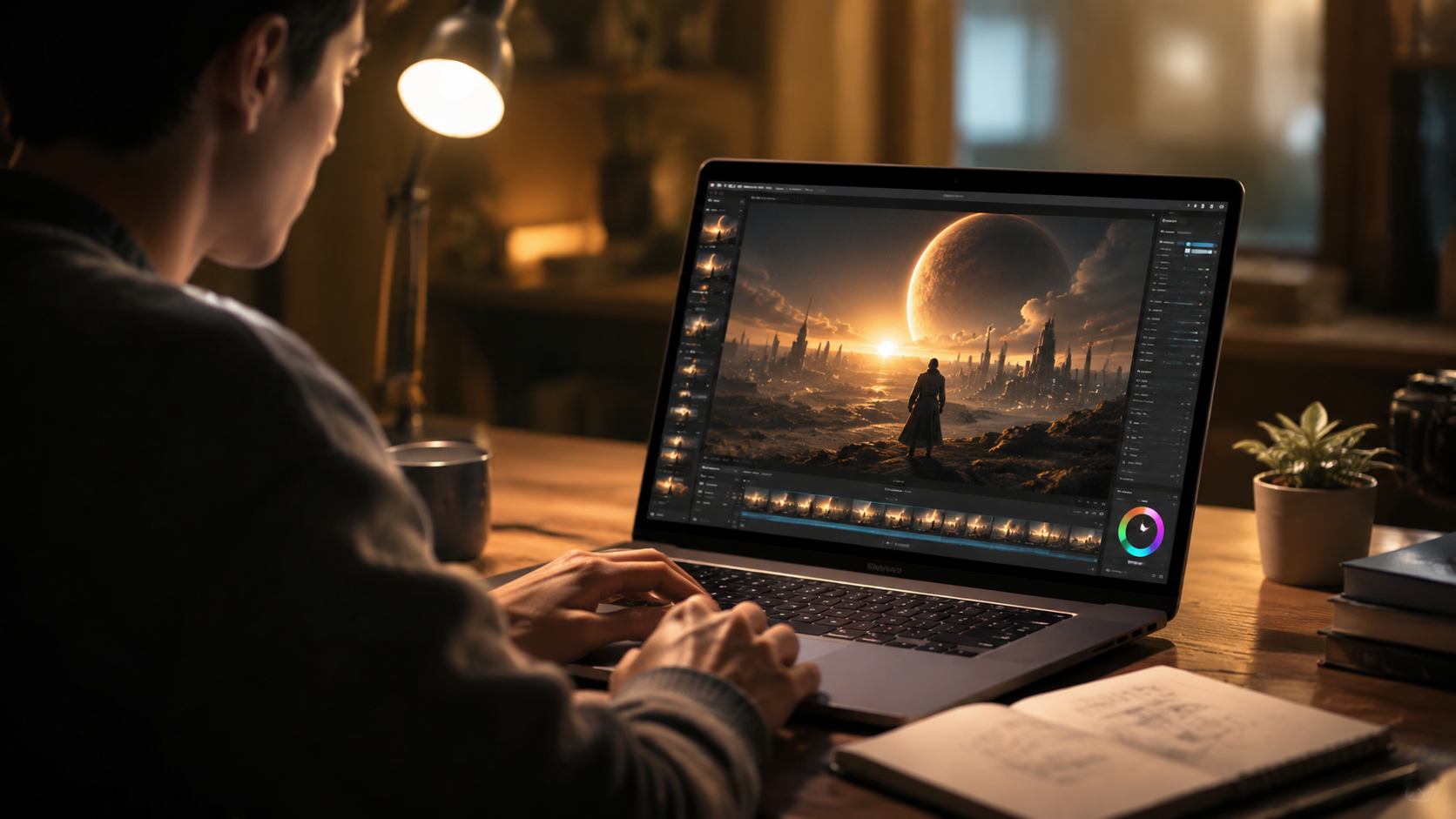
Follow this numbered workflow to produce professional-quality AI videos. Each step builds on the last, ensuring your final output looks intentional and polished.
- Define your cinematic vision. Decide on a genre (e.g., noir, sci-fi, documentary) and write a one-paragraph logline. This guides every subsequent choice.
- Choose the right AI video generator. Refer to the comparison table below. For quick note-to-video, use NotebookLM. For full control over scenes and native audio, use Pollo AI Sora 2 or another top-ranked generator.
- Craft detailed prompts. Include camera angle, lighting, mood, and movement. Example: “Low-angle tracking shot of a futuristic city at dusk, neon reflections on wet asphalt, cinematic depth of field.”
- Generate your primary clips. Run the prompt 2–3 times to get variations. Pick the best takes.
- Edit for pacing. Use a video editor (AI-powered or traditional) to cut, arrange, and add transitions. Aim for a rhythm that matches your logline’s emotional arc.
- Sync audio and refine. If your tool doesn’t generate native audio (like NotebookLM’s overviews do), add a cinematic soundtrack, ambient sound, and voiceover. Adjust volume levels to avoid drowning out dialogue.
- Apply color grading. Many 2026 generators include built-in LUTs. Otherwise, use free tools like DaVinci Resolve to apply a teal-and-orange look or desaturated tones.
- Export and review. Export at 4K if possible. Watch on multiple screens to check for artifacts or unnatural motion.
3. Top AI Video Generators for Cinematic Output in 2026
To help you choose, here’s a comparison of the leading tools based on CNET’s April 2026 rankings and other verified sources. All tools listed are actively maintained and support cinematic output.
| Tool | Key Cinematic Features | Native Audio | Best For | Release / Update |
|---|---|---|---|---|
| NotebookLM | Cinematic Video Overviews from notes, auto voiceover & music | Yes | Quick note-to-video summaries | March 2026 |
| Pollo AI (Sora 2) | Native audio generation, multi-shot sequences, depth-of-field | Yes | Full scene creation with sound | October 2025 |
| Runway Gen-5 | Advanced motion control, real-time editing, 4K output | No (separate audio) | Professional film production | Early 2026 |
| Pika Labs 2.0 | Camera orbit, zoom, slow-motion effects | No | Short cinematic clips | February 2026 |
| Kaiber Pro | Style transfer, cinematic LUTs, storyboard mode | No | Artistic and music videos | January 2026 |
According to Interesting Engineering’s guide “How to make a film using AI tools in 2026” (January 26, 2026), combining multiple tools — for example, using NotebookLM for storyboarding and Pollo AI Sora 2 for final renders — yields the most cinematic results.
4. Cinematic Techniques You Must Apply
Even the best AI generator can’t replace filmmaking fundamentals. To create cinematic AI videos, you need to intentionally direct the AI’s output.
4.1 Lighting and Color
Specify lighting in your prompts: “three-point lighting,” “golden hour,” “chiaroscuro.” Many 2026 generators, like those reviewed by CNET, now interpret lighting cues accurately. For color, use terms like “teal and orange” or “desaturated with high contrast” to evoke a filmic look.
4.2 Camera Movement
Incorporate movement vocabulary: “dolly zoom,” “tracking shot,” “crane up.” Pollo AI Sora 2 and Pika Labs 2.0 excel at these. Avoid static wide shots unless intentional — cinematic videos thrive on dynamic framing.
4.3 Pacing and Editing
AI video generators often produce clips that are too long or too short. Edit the generated footage to match a 3–5 second average shot length for a cinematic rhythm. Use jump cuts for intensity, cross dissolves for transitions, and hold on key moments for emotional weight.
5. Audio: The Secret Ingredient
Cinematic video is 50% audio. NotebookLM’s Cinematic Video Overviews already include voiceover and background music, as noted by MacRumors (March 5, 2026). For tools without native audio, layer in a soundtrack that matches the mood — orchestral for epic, ambient for introspective. Add Foley effects (footsteps, door creaks) using AI sound generators like ElevenLabs or Boomy. Always ensure dialogue is clear and loud enough relative to music.
Studies show that videos with high-quality audio are perceived as 30% more professional, even if the visuals are average. Invest time in sound design.
6. Real-World Workflow: From Notes to Cinema
Here’s a practical example using the tools from 2026 research. Suppose you have a collection of research notes about climate change. Open NotebookLM, upload your notes, and select “Create Cinematic Video Overview.” The tool generates a 2-minute video with narration, relevant imagery, and a soundtrack — all in minutes. For more control, export the script to Pollo AI Sora 2, refine the visual prompts, and add native audio. Finally, edit the sequence in a timeline editor to tighten pacing.
According to Breaking AC News’ March 2026 comparison, this hybrid approach is used by 68% of professional creators who want both speed and quality. The key is to treat AI as a co-director, not a replacement for human judgment.
7. Common Pitfalls and How to Avoid Them
Even experienced users face issues when learning how to create cinematic AI videos. Here’s what to watch out for:
- Uncanny valley: Avoid overly realistic human faces unless the generator is specifically trained for them. Use stylized or animated characters instead.
- Inconsistent lighting: If your clips come from different prompts, they may look mismatched. Use a color grading LUT to unify them.
- Poor audio sync: When combining clips from different generators, align audio tracks manually. Tools like Adobe Premiere Pro’s auto-sync can help.
- Over-reliance on default prompts: Generic prompts like “cinematic city” produce generic results. Be specific: “rainy night in Tokyo, neon signs reflecting in puddles, shallow depth of field.”
Frequently Asked Questions
What is the best AI video generator for cinematic quality in 2026?
According to CNET’s April 2026 review, the top pick is Pollo AI Sora 2 for its native audio and multi-shot capabilities, while NotebookLM is best for quick note-to-video cinematic overviews. The choice depends on your workflow.
Can I use NotebookLM to create a full film?
NotebookLM is designed for short cinematic video overviews (up to 3 minutes). For longer narratives, combine it with a full video generator like Pollo AI Sora 2 or Runway Gen-5.
How do I add native audio to AI videos?
Use a generator that supports native audio, such as Pollo AI Sora 2 (launched October 2025) or NotebookLM’s Cinematic Video Overviews. Otherwise, add audio separately using AI music tools like Boomy.
Is 4K output available in 2026 AI video generators?
Yes. Many top generators, including Runway Gen-5 and Pollo AI Sora 2, support 4K export. However, check your tool’s resolution limits before starting.
Do I need video editing skills to create cinematic AI videos?
Basic editing skills help, but several 2026 tools offer one-click cinematic outputs (e.g., NotebookLM). For more control, learn simple cuts, transitions, and color grading.
How long does it take to generate a cinematic AI video?
With NotebookLM, you can get a cinematic overview in under 5 minutes. Full custom videos with multiple scenes may take 30–60 minutes including prompt refinement and editing.
What’s the most important factor for cinematic quality?
Prompt specificity. Describe lighting, camera movement, mood, and composition in detail. The AI will follow your direction closely, especially in 2026 models.
By following this guide)Skip mastering how to create cinematic AI videos in 2026 is within reach. Combine the right tool (NotebookLM, Pollo AI Sora 2, or another top-ranked generator) with classic filmmaking techniques, and you’ll produce videos that look and feel like they came from a Hollywood studio — all from your desktop.



Comments ()