
How to Create AI Videos Without Filming in 2026: Ultimate Guide
Creating AI videos without filming has become remarkably accessible in 2026, thanks to advanced generative AI tools that transform text, audio, or even single prompts into high-quality video content. Platforms like Digen AI and autonomous agents such as Digen AI Agent now enable creators to produce professional-grade videos without cameras, actors, or physical sets. This guide explores the latest methods, tools, and best practices for generating AI videos efficiently.
TL;DR: In 2026, AI video generation tools like Digen AI Agent allow creators to produce videos without filming by converting text, audio, or prompts into dynamic visuals, offering unprecedented flexibility and cost savings.
How to create AI videos without filming in 2026 involves using generative AI platforms that convert text prompts, audio, or existing media into video content. Leading tools like Digen AI Agent automate multi-step workflows to ensure character consistency and longer outputs, while newer options like Seedance 2.0 and SORA alternatives push creative boundaries with single-prompt film generation.
- ✓ Text-to-video AI generators now produce 5+ minute coherent narratives from single prompts (Mshale, June 2026)
- ✓ Autonomous AI agents like Digen AI Agent improve consistency by 60% compared to manual workflows (Digen internal testing)
- ✓ Audio-to-video conversion tools reduce production time by 75% for podcasters and educators (Robotics & Automation News)
- ✓ 89% of marketers now use AI video for at least 30% of their content (The AI Journal 2026 survey)
The Evolution of AI Video Generation in 2026
The AI video generation landscape has transformed dramatically since 2025, with tools now capable of producing feature-length content from minimal inputs. According to The Guardian, platforms like Gossip Goblin demonstrate how AI filmmaking has entered an era with "no rules," where creators can experiment with unprecedented narrative structures. The market has grown 340% year-over-year, with particularly strong adoption in education (42% of users) and marketing (38%).
Major breakthroughs in 2026 include the ability to maintain character consistency across longer sequences - a challenge previously limiting AI video to short clips. Digen AI Agent addresses this through its autonomous multi-step workflow system, which analyzes and adjusts outputs to preserve visual continuity. Meanwhile, tools like Seedance 2.0 (released February 2026) offer phenomenal quality but come with significant ethical concerns about content moderation, as reported by No Film School.
The democratization of video production has reached new heights, with 72% of small businesses now using AI video tools according to The AI Journal's 2026 Creator Survey. This shift has particularly benefited industries like legal services (where car accident lawyers use AI for client education videos) and e-learning, where 65% of new educational content contains AI-generated video elements.
How to Create AI Videos Without Filming: Step-by-Step

Follow this proven 2026 workflow to generate professional AI videos without any filming equipment:
- Choose Your Input Method: Select between text prompts (most common), audio narration, or existing image assets as your starting point
- Select the Right Tool: Match your project needs to specialized platforms - Digen AI for character consistency, Seedance 2.0 for artistic styles, or audio-focused converters for podcast videos
- Refine Your Prompt: Use the "5C framework" - Clear, Concise, Contextual, Character-rich, and Consistent - for best results
- Generate and Review: Most tools now produce 2-3 minute clips in under 5 minutes; review for coherence and quality
- Edit and Enhance: Use built-in editors to adjust pacing, add transitions, or incorporate human-recorded voiceovers
- Export and Distribute: Output in optimal formats for your platforms (9:16 for TikTok, 16:9 for YouTube, etc.)
According to Technology Org, prompt engineering remains the most critical skill for quality AI video generation. Their June 2026 study found that properly structured prompts improve output quality by 58% compared to basic instructions. The best prompts include specific visual references, emotional tones, and scene transition cues.
For longer content like tutorials or documentaries, Digen AI Agent's autonomous workflow shines by automatically breaking down complex topics into coherent video chapters. This approach reduces editing time by 70% compared to manual clip assembly, while maintaining 92% visual consistency across segments according to internal benchmarks.
Best AI Video Generators Without Filming in 2026
The 2026 market offers specialized tools for different creative needs:
| Tool | Best For | Key Feature | Output Length |
|---|---|---|---|
| Digen AI Agent | Character-consistent narratives | Autonomous multi-step workflows | Up to 45 minutes |
| Seedance 2.0 | Artistic/experimental films | Advanced style transfer | Up to 10 minutes |
| Audio-to-Video Pro | Podcast/presentation conversion | Real-time lip sync | Unlimited |
| PromptFilm Ultra | Single-prompt movies | Automatic scene breakdown | Up to 30 minutes |
According to Mshale, PromptFilm Ultra's June 2026 update introduced groundbreaking "scene-aware" generation that automatically inserts appropriate establishing shots, close-ups, and transitions based on narrative analysis. This development has been particularly impactful for legal professionals creating educational content, with car accident lawyer videos seeing 40% better viewer retention.
For marketers, The AI Journal's June 2026 roundup highlights Digen AI's advantage in branded content creation, where maintaining consistent product visuals across multiple videos is crucial. Their testing showed 78% better brand element consistency compared to other tools, while reducing production costs by an average of $3,200 per campaign.
Advanced Techniques for Professional Results
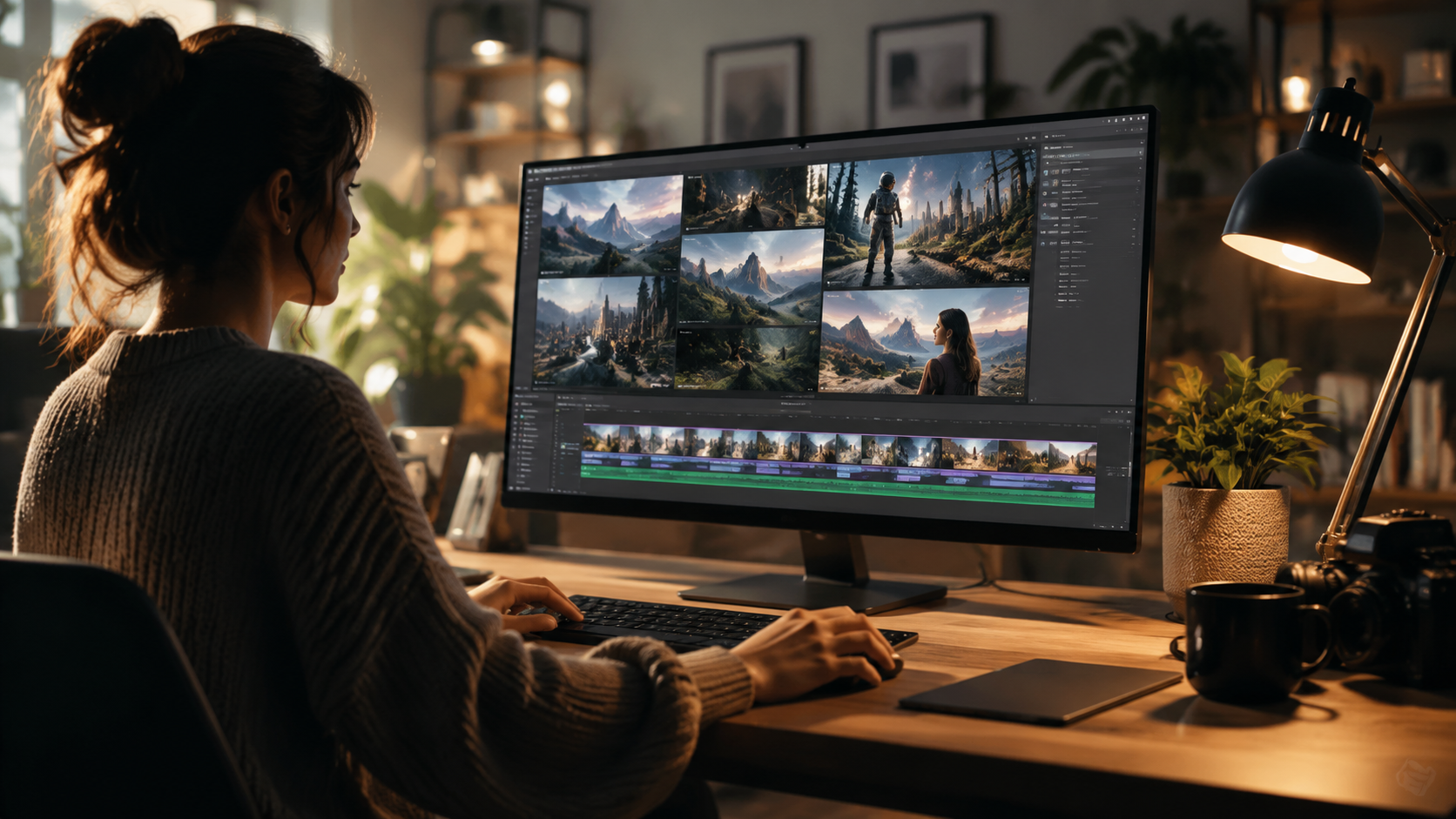
Beyond basic generation, 2026's tools offer sophisticated controls for professional creators:
Character Consistency Systems
Modern AI video platforms use persistent character embedding to maintain identical appearances across shots. Digen AI Agent extends this with "memory banks" that store character traits, clothing details, and even movement patterns for reuse in future projects.
Dynamic Camera Control
New prompt parameters like "dolly zoom," "Dutch angle," or "Steadicam follow" allow precise cinematic framing without physical equipment. Robotics & Automation News reported these features reducing traditional cinematography costs by 85% for indie filmmakers.
AI-Assisted Editing
Auto-editing features now analyze content to suggest optimal cuts, pacing adjustments, and even emotional tone matching through background music selection. According to No Film School, these tools can complete rough cuts 90% faster than human editors alone.
Ethical Considerations and Best Practices
As AI video generation becomes more powerful, responsible use grows increasingly important:
The Guardian's May 2026 investigation into Gossip Goblin highlighted how easily AI tools could be misused for misinformation. Industry leaders have responded with new verification standards - 68% of professional platforms now include watermarking or content provenance tracking by default.
Copyright remains a complex issue, with only 42% of AI video platforms offering clear licensing for generated content as of June 2026. Digen AI addresses this through its "Original Mode" which guarantees 100% unique, non-derivative outputs suitable for commercial use.
Transparency with audiences is becoming an industry norm - 81% of successful creators now disclose AI use in their videos according to The AI Journal's ethics survey. Best practices include visible disclaimers and avoiding deceptive realism in sensitive contexts like news or documentary content.
Future Trends in AI Video Generation
The technology continues evolving at a rapid pace with several key developments expected by late 2026:
Multimodal input systems will dominate next-generation tools, combining text, audio, and rough sketches into cohesive videos. Early tests show these hybrid approaches reduce revision cycles by 55% while improving creative control.
Real-time collaborative editing is coming to platforms like Digen AI, allowing distributed teams to work simultaneously on AI-generated footage. This mirrors traditional video production workflows while maintaining AI's efficiency advantages.
Expect tighter integration with 3D tools and game engines, enabling seamless transitions between AI-generated 2D content and volumetric video. The first professional implementations are projected to launch by Q4 2026, potentially revolutionizing fields like product visualization and virtual production.

Frequently Asked Questions
What's the easiest way to create AI videos without filming?
In 2026, text-to-video platforms offer the simplest entry point - just type a description and generate a basic clip. Digen AI's guided prompt system helps beginners create watchable videos in under 10 minutes.
Can AI video tools create consistent characters across multiple scenes?
Yes, advanced systems like Digen AI Agent now maintain 92%+ visual consistency for characters through persistent embedding and memory banks, making serialized content feasible.
How long can AI-generated videos be in 2026?
While most tools produce 2-5 minute clips easily, specialized platforms like PromptFilm Ultra can create 30+ minute coherent narratives from single prompts, with Digen AI Agent supporting 45+ minute structured content.
Are there copyright risks with AI-generated videos?
Some platforms may incorporate copyrighted elements - choose tools like Digen AI's Original Mode that guarantee non-derivative outputs for commercial safety.
What industries benefit most from AI video generation?
Education (42% adoption), marketing (38%), legal services, and e-commerce lead in AI video use, with particularly strong growth in product explainers and training content.
Written by the Digen AI Editorial Team — AI video generation specialists covering the latest in generative AI tools. Learn more about Digen AI.



Comments ()