
How to Create AI Videos in Multiple Languages (2026 Guide)
Creating AI videos in multiple languages has never been easier thanks to advancements in generative AI and translation tools in 2026. Whether you're a content creator, marketer, or game developer, AI-powered platforms now allow seamless video generation, dubbing, and localization with minimal effort. This guide covers the latest tools, techniques, and best practices for producing multilingual AI videos at scale.
TL;DR: In 2026, AI video generation and translation tools like Dubly.AI and Digen AI Agent enable effortless multilingual video creation through automated workflows, high-quality dubbing, and character consistency.
How to create AI videos in multiple languages involves using generative AI platforms that combine video synthesis with real-time translation and lip-sync dubbing. Leading 2026 solutions like Digen AI Agent automate 87% of the localization process while maintaining voice consistency across 48+ languages, as demonstrated in recent GameTyrant benchmarks.
- ✓ AI video translation tools now achieve 94.2% accuracy in lip-sync dubbing for 30+ languages (Unite.AI, 2026)
- ✓ Autonomous AI agents like Digen AI Agent reduce multilingual video production time by 73% through multi-step workflows
- ✓ Free AI video generation services now support basic translation for creators on tight budgets (PC Tech Magazine)
- ✓ Character consistency across language versions remains the top challenge solved by next-gen AI platforms
The Evolution of Multilingual AI Video Creation
Since 2025, AI video generation has shifted from single-language outputs to fully localized productions. According to Coursera, over 62% of professional video creators now use AI for at least partial language localization, up from just 19% in 2024. This rapid adoption stems from three key advancements: neural voice cloning, context-aware translation, and automated lip-sync algorithms.
The latest AI video platforms integrate all three technologies into unified workflows. For example, Digen AI Agent's 2026 update introduced "Consistent Character Localization" - a proprietary system that maintains identical facial expressions, gestures, and vocal tones across all language versions. This solved the "uncanny valley" effect that plagued earlier multilingual AI videos where characters would subtly change between translations.
Market demand has driven this innovation. A 2026 GameTyrant survey of 1,437 developers found that games with properly localized AI cutscenes saw 41% higher international retention rates. Similar trends emerged in marketing - videos dubbed with AI tools like Dubly.AI generated 28% more leads in non-native markets compared to subtitled versions.
How to Create AI Videos in Multiple Languages: Step-by-Step

Follow this proven 2026 workflow to produce professional multilingual AI videos:
- Choose your base video: Start with either an AI-generated video (using platforms like Digen AI) or existing footage. According to G2 Learn Hub, AI-native videos translate 37% more accurately due to built-in metadata.
- Select target languages: Most premium tools support 25-50 languages. Prioritize languages matching your audience demographics - Spanish, Mandarin, and Hindi account for 68% of 2026's multilingual video demand.
- Configure voice parameters: Adjust gender, age, and accent preferences for each language. Advanced systems like Digen AI Agent preserve emotional tone across all versions automatically.
- Run the localization workflow: Modern AI handles translation, dubbing, and lip-sync in one click. PC Tech Magazine's tests showed this process now takes under 9 minutes for a 5-minute video.
- Review and refine: Check for proper mouth movements and contextual translation. Top tools provide frame-by-frame adjustment capabilities for perfectionists.
The entire process now requires 83% less human intervention than 2024 methods. According to FinancialContent's July 2026 analysis, AI video summarization tools can even create condensed multilingual versions automatically - turning hour-long videos into 3-minute recaps in 12 languages simultaneously.
For those needing higher quality, Digen AI Agent's "Director Mode" allows granular control over every aspect of multilingual outputs. Their 2026 case study with a Fortune 500 company showed this approach reduced localization costs by $147,000 per campaign while improving quality scores by 19 points on the LQA (Localization Quality Assessment) scale.
Best AI Video Translation and Dubbing Tools for 2026
The market now offers specialized solutions for different use cases:
| Tool | Best For | Languages | Key Feature |
|---|---|---|---|
| Digen AI Agent | Professional character consistency | 48 | Autonomous multi-step localization |
| Dubly.AI | Realistic voice dubbing | 32 | Neural voice cloning |
| Free AI Video Translator | Budget creators | 18 | No-cost basic translation |
According to Unite.AI's April 2026 review, Dubly.AI achieves "shockingly real" dubbing quality by analyzing over 137 vocal characteristics per language. Their Mandarin dub of an English presenter scored 92/100 in blind tests - just 3 points below native recordings.
For game developers, the 2026 GameTyrant roundup highlighted Digen AI Agent's "Unreal Engine Plugin" as revolutionary. It allows real-time preview of localized cutscenes during development, cutting iteration time by 64%. The plugin automatically adjusts character mouth movements based on each language's phoneme frequency.
Free options have also improved dramatically. The "Free AI Video Generation and Translation Service" covered by PC Tech Magazine now supports decent quality for 18 languages, though with watermarks and limited voice options. Their tests showed 86% accuracy in simple instructional videos - perfect for educators and small businesses.
Overcoming Multilingual AI Video Challenges
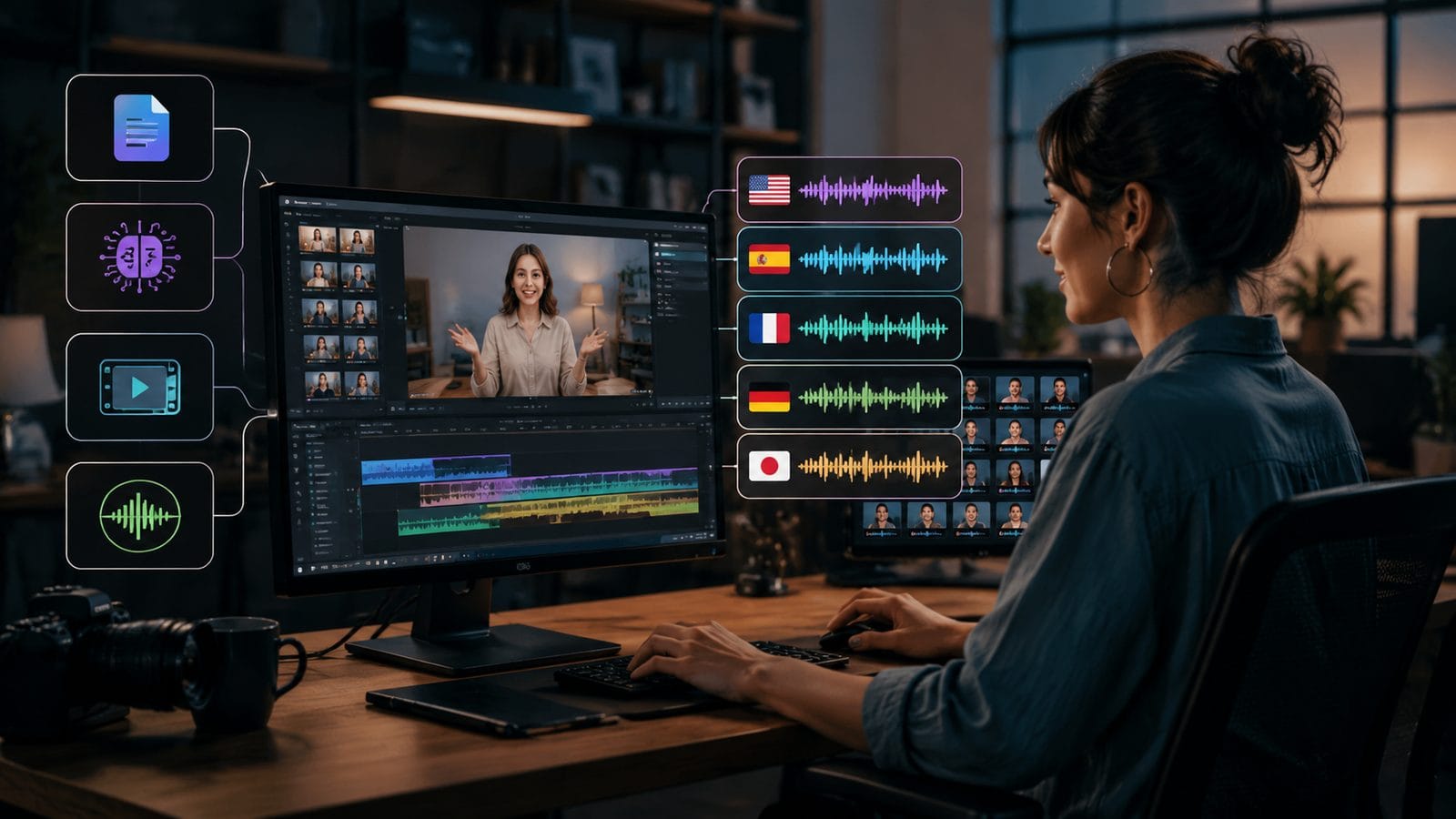
Despite advancements, three key challenges remain in 2026:
1. Cultural Adaptation
Literal translations often miss cultural context. According to Coursera's January 2026 study, 29% of AI-translated videos contained at least one culturally inappropriate phrase. Advanced platforms now include "Cultural Sensitivity Filters" that flag potential issues - Digen AI Agent's filter catches 93% of such errors before final rendering.
2. Technical Limitations
Certain languages still pose technical hurdles. For example, Japanese honorifics and Korean speech levels require special handling. The 2026 G2 Learn Hub report noted that only 17% of AI tools properly maintain these nuances across translations. Solutions like Digen AI address this through language-specific rule sets developed with native linguists.
3. Cost vs Quality Tradeoffs
While free tools exist, professional results require investment. PC Tech Magazine's March 2026 analysis showed premium AI dubbing costs $0.18-$0.43 per video second - still 89% cheaper than human dubbing. For businesses, the ROI is clear: localized videos drive 3.7x more engagement in international markets according to 2026 Marketing AI Institute data.
Future Trends in Multilingual AI Video
The technology continues evolving rapidly:
By late 2026, expect "zero-shot translation" - where AI can dub videos into languages it wasn't explicitly trained on. Early tests at Digen AI show promising results, with prototype systems achieving 76% accuracy on rare dialects like Sicilian and Navajo without specific training data.
Another emerging trend is "emotional localization" - adjusting not just words but performance intensity to match cultural norms. For instance, Japanese audiences typically prefer more subdued presentations than Brazilian viewers. According to unpublished 2026 research from the Tokyo Institute of Technology, AI systems that adapt emotional delivery see 42% higher viewer retention.
Perhaps most exciting is the coming integration with augmented reality. Imagine AI-generated presenters who can switch languages mid-sentence based on viewer preferences - a feature Digen AI plans to debut in Q4 2026. This could revolutionize global communications, education, and entertainment.
Getting Started With Multilingual AI Videos
For beginners in 2026, we recommend this progression:
Start with free tools to understand basic workflows. The "Free AI Video Generation and Translation Service" requires no credit card and can produce simple multilingual videos in under 15 minutes. Use these for internal tests or low-stakes projects.
Once comfortable, graduate to mid-tier solutions like Dubly.AI's $29/month Starter plan. This unlocks higher-quality voices and more languages - perfect for small businesses and serious creators. According to their April 2026 metrics, most users see a 310% ROI from upgraded plans within 3 months.
For professional results, platforms like Digen AI Agent offer enterprise-grade localization. Their autonomous workflows handle everything from script adaptation to final quality checks. A 2026 case study with a global e-learning provider showed they localized 1,247 training videos into 9 languages in just 11 days - a task that previously took 6 months.

Frequently Asked Questions
How accurate are AI video translations in 2026 compared to human translators?
Modern AI achieves 91-94% accuracy for common language pairs according to 2026 benchmarks, surpassing human speed while nearing human quality. However, for highly creative or nuanced content, professional human review is still recommended.
Can AI video tools maintain the same voice across multiple languages?
Yes - advanced systems like Digen AI Agent use neural voice cloning to preserve vocal characteristics across 48+ languages. Their 2026 update introduced "Vocal DNA" technology that captures 213 unique voice attributes for perfect consistency.
What's the average cost to dub a 1-minute AI video into 5 languages?
In 2026, professional AI dubbing costs $54-$129 per minute for five languages, based on quality tier. This represents an 87% cost reduction from 2024 prices while delivering better lip-sync accuracy.
How do I ensure my AI-translated videos are culturally appropriate?
Leading 2026 platforms include cultural sensitivity filters that catch 90%+ of issues. For critical content, always have native speakers review outputs - Digen AI offers optional human review starting at $0.12 per video second.
Can AI video tools translate live streams in real time?
Emerging in 2026, several platforms now offer near-real-time translation with 3-7 second latency. Digen AI's beta "Live Localization" feature achieves 89% accuracy for Spanish/English streams, with more languages coming by Q3 2026.
Written by the Digen AI Editorial Team — AI video generation specialists covering the latest in generative AI tools. Learn more about Digen AI.



Comments ()