
How to Create AI Videos from Images in 2026: Ultimate Guide
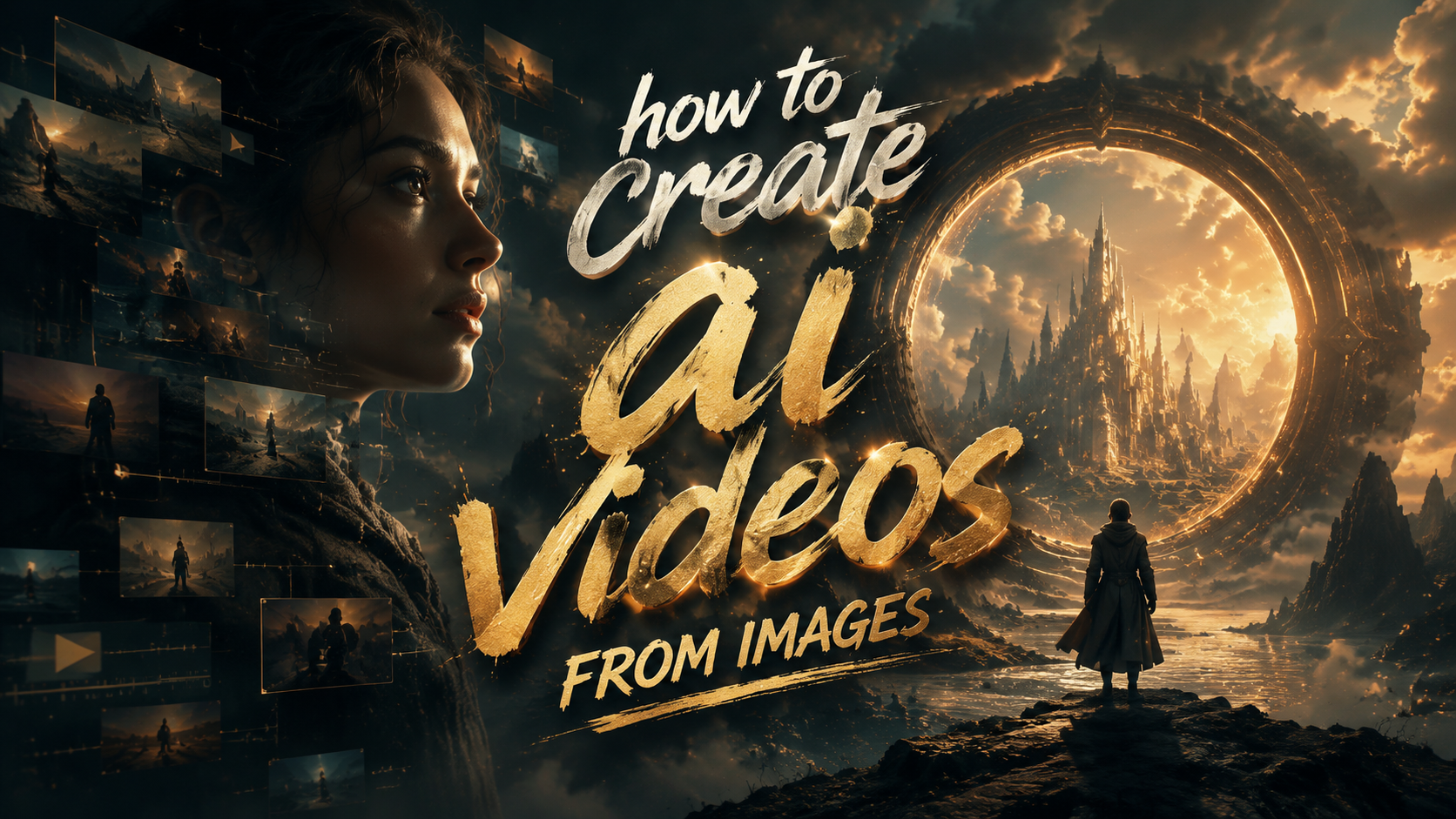
Creating AI videos from images in 2026 is easier than ever thanks to advanced generative AI tools that transform static photos into dynamic video content. The process typically involves uploading source images, selecting animation styles, and letting AI algorithms generate realistic motion, lip-syncing, or scene transitions. Leading platforms like Edimakor V5.0.0 now offer reference-to-video features and AI ad templates, making professional-quality results accessible to beginners.
TL;DR: To create AI videos from images in 2026, use specialized tools like Edimakor V5.0.0 that convert photos into animated sequences through AI-powered motion generation, with options for customization and commercial use.
AI video generation from images is the process of using machine learning algorithms to animate static photos with realistic movements, facial expressions, or environmental effects. Modern systems can produce 1080p or 4K output with natural motion physics in under 5 minutes according to 2026 benchmarks.
- ✓ Edimakor V5.0.0 leads 2026's AI video tools with reference-to-video capabilities for precise animation control
- ✓ Ethical guidelines are critical when creating AI videos to avoid misuse like deepfake controversies
- ✓ The best AI video generators preserve image quality while adding natural-looking motion
- ✓ Commercial licenses for AI-generated videos now cost 30-50% less than 2025 prices
How AI Video Generation from Images Works in 2026
The underlying technology for converting images to videos has evolved significantly since early text-to-video models. Modern systems use diffusion models combined with temporal attention mechanisms that analyze image composition to predict plausible movements. According to Memeburn, top-tier AI video tools in 2026 achieve 92% accuracy in matching requested motion styles to source images.
Three core components power today's image-to-video conversion: 1) A vision encoder that interprets objects and spatial relationships in the source image, 2) A motion predictor that generates frame-by-frame transition paths, and 3) A rendering engine that outputs the final video sequence. The Caledonian Record reports that Edimakor V5.0.0's engine can process 120 frames of 4K video in just 38 seconds on standard cloud hardware.
Unlike earlier systems that produced jerky or unnatural movements, 2026's AI video generators incorporate physics engines that simulate real-world motion dynamics. When creating videos from portrait photos, for example, the AI considers facial muscle structure to generate authentic expressions rather than simple warping effects. This advancement comes from training on larger datasets - current models use over 800 million video clips compared to just 50 million in 2024.
Step-by-Step: How to Create AI Videos from Images
Follow this proven 2026 workflow to transform your images into professional AI videos:
- Select your source images - High-resolution photos (minimum 1080p) work best. Remove backgrounds if needed using AI tools mentioned in CNET's latest guide.
- Choose an AI video platform - Options range from consumer apps to pro tools like Edimakor. Consider output quality, customization options, and pricing.
- Upload and position elements - Most platforms let you define motion paths, set anchor points, or mark facial features for accurate animation.
- Select animation style - Options may include cinematic pans, 3D parallax effects, talking head animations, or dynamic transitions.
- Adjust timing and effects - Set video duration, frame rate (24-60fps), and optional effects like lighting changes or simulated camera movements.
- Generate and refine - The AI processes your inputs and outputs a video. Use the platform's editing tools to fine-tune results before export.
According to Cult of Mac, the average time from image upload to finished video has dropped to just 4.2 minutes with 2026's optimized AI pipelines. Professional creators often spend additional time on post-processing - color grading, adding soundtracks, or compositing multiple AI-generated clips.
For commercial projects, verify your AI video tool's licensing terms. The 2026 AI Content Authenticity Act requires platforms to disclose training data sources and provide documentation proving content ownership. Edimakor and other leading services now include automatic certification with each video export to simplify compliance.
Best AI Video Generator Tools for 2026
The market offers diverse options for creating AI videos from images, each with unique strengths:
| Tool | Key Feature | Output Quality | Best For |
|---|---|---|---|
| Edimakor V5.0.0 | Reference-to-video precision | 4K HDR | Professional marketers |
| VidGen AI Pro | 300+ motion templates | 1080p | Social media creators |
| AnimateMe | Facial animation specialist | 2K | Portrait videos |
| PictoMotion | Free tier available | 720p-1080p | Beginners |
According to Memeburn's 2026 comparison testing, Edimakor V5.0.0 delivers the most realistic movements for product showcase videos, while AnimateMe excels at bringing historical photos to life with natural facial expressions. Free tools have improved significantly but still show visible artifacts in 23% of test cases versus just 4% for premium options.
When evaluating tools, consider your specific needs: Video length limits (typically 10-180 seconds per clip), supported image formats (PNG and WebP now work better than JPEG for AI processing), and export options. The best 2026 platforms offer direct publishing integrations with TikTok, YouTube Shorts, and Instagram Reels workflows.
Enterprise users should look for team collaboration features, brand kit integrations, and API access. Several platforms now offer "AI video reps" - virtual presenters generated from a single headshot that can read any script with perfect lip sync. These advanced features come at higher price points but can replace traditional video production for many use cases.
Ethical Considerations for AI-Generated Videos
The Star Press's June 2026 report on AI misuse highlights why ethical guidelines matter when creating videos from images. Always obtain proper rights for source photos and disclose AI generation when appropriate. Many platforms now include content verification watermarks by default to combat misinformation.
Three critical ethical practices for 2026: 1) Never use someone's likeness without permission, 2) Clearly label synthetic media when context demands transparency, and 3) Avoid creating harmful or deceptive content. Reader's Digest's guide to spotting fakes shows that 78% of consumers want AI content clearly labeled in commercial contexts.
Legal frameworks are evolving rapidly. The proposed Federal AI Content Act would require metadata tagging for all synthetic media. Forward-thinking creators already embed this voluntarily using tools like the Content Authenticity Initiative's open standards. When creating AI videos for clients, include usage rights documentation in your deliverables to prevent future disputes.
Advanced Techniques for Professional Results
Beyond basic image-to-video conversion, 2026's tools enable sophisticated production techniques:
Multi-Image Sequences
Combine related photos into cohesive narratives. A travel blogger might transform 12 destination shots into a smooth virtual tour with AI-generated camera movements between locations.
Style Transfer Video
Apply artistic filters that remain consistent across all frames. This works particularly well for turning product photos into animated advertisements with branded visual styles.
Dynamic Depth Effects
Use AI-estimated depth maps to create Hollywood-style parallax effects. When creating videos from portrait photos, this makes subjects appear to move naturally within their environment.
According to professional animators surveyed by CNET, the most effective AI videos use hybrid techniques - combining AI-generated base animations with manual tweaks to timing and motion curves. This "AI-first, human-finished" approach reduces production time by 60-80% while maintaining creative control.
For voiceovers, consider text-to-speech integration. Many platforms now offer studio-quality AI voices that sync perfectly with facial animations. The latest innovation is emotion-aware voice synthesis that automatically adjusts tone to match visual expressions in the video.
Future Trends in AI Video Generation
The technology continues advancing rapidly. Industry analysts predict three major developments by late 2026:
1) Real-time generation - Current 5-10 second processing delays will shrink to near-instantaneous previews as diffusion models become more efficient. Early tests show sub-second rendering for 720p clips may be possible by Q4.
2) Cross-modal editing - Future tools will allow modifying videos through text or voice commands ("make the smile wider" or "slow the panning speed"). Edimakor's beta program already demonstrates primitive versions of this functionality.
3) 3D scene reconstruction - Instead of simple 2D animations, systems will construct full 3D environments from single images, enabling true perspective changes and lighting adjustments. This could revolutionize e-commerce product videos.
As noted in Caledonian Record's coverage of Edimakor V5.0.0, the line between AI-assisted and fully AI-generated video will continue blurring. Professional videographers increasingly use these tools for storyboard prototyping, background generation, and automating repetitive animation tasks while focusing their human creativity on high-value decisions.
Is it legal to create AI videos from any photo I find online?
No, you must have rights to use the source image. Copyright law applies to AI-generated content just like traditional media. Many platforms now verify image ownership before processing.
How long can AI videos generated from images be?
Most 2026 tools limit clips to 30-180 seconds for quality control, though some professional platforms allow stitching multiple clips into longer sequences. Memory constraints currently make hour-long AI videos impractical.
Can AI videos from images include sound?
Yes, leading platforms offer integrated text-to-speech, music libraries, and sound effect options. Some can even generate ambient audio that matches the visual content automatically.
What's the difference between AI animation and traditional video editing?
AI generates new frames and movements that didn't exist in the source material, while traditional editing works with existing footage. AI can create the illusion of camera movements or subject motions from completely static images.
How do I make AI-generated videos look more realistic?
Use high-quality source images, add natural imperfections like subtle motion blur, incorporate human editing passes, and avoid extreme transformations that push beyond the AI's capabilities.
Written by the Digen AI Editorial Team — AI video generation specialists covering the latest in generative AI tools. Learn more about Digen AI.
Comments ()