
How to Create AI-Powered Video Ads in 2026: Ultimate Guide
Creating AI-powered video ads in 2026 is easier than ever thanks to breakthroughs in generative AI tools that automate scripting, editing, and personalization. Platforms like Google Photos' new Video Remix tool and Amazon Ads' AI-powered video generator now enable marketers to produce professional-quality ads in minutes without technical skills. This guide covers the latest techniques, from AI storyboarding to automated multi-step workflows with tools like Digen AI Agent.
TL;DR: To create AI-powered video ads in 2026, use next-gen tools like Digen AI Agent for character-consistent storytelling, leverage automated platforms like Amazon Ads' video generator, and optimize for AI-driven personalization—reducing production time by up to 80% compared to traditional methods.
How to create AI-powered video ads in 2026 involves using next-generation tools like Google Photos' Video Remix (launched July 2026) and Amazon Ads' AI video generator (expanded to Australia in April 2026) to automate 70-90% of production workflows while maintaining brand consistency through AI agents like Digen AI's autonomous multi-step video creator.
- ✓ AI video tools now automate up to 90% of ad production (Interactive Advertising Bureau, 2026)
- ✓ Character consistency is achievable through multi-step AI agents like Digen AI Agent
- ✓ Amazon Ads' AI generator reduces regional adaptation costs by 60% (LBBOnline)
- ✓ StackAdapt's 2026 AI marketing suite increases ad engagement by 47% (ExchangeWire)
The 2026 AI Video Ad Landscape
The AI video advertising market has grown 340% since 2025, with 78% of marketers now using generative tools for at least part of their video production according to the Interactive Advertising Bureau's January 2026 report. Major platforms have rolled out groundbreaking features: Google Photos' Video Remix (launched July 8, 2026) uses AI to automatically recut existing footage into new ads, while Amazon Ads expanded its AI video generator to Australian brands on April 22, 2026—reducing localization costs by 60% according to Little Black Book.
What sets 2026 apart is the rise of autonomous AI agents. Tools like Digen AI Agent now handle complex, multi-step workflows—generating consistent character animations across scenes, automatically adjusting pacing based on performance data, and even A/B testing variations. Cars.com's April 2026 solution demonstrates this shift, using AI to turn vehicle listings into high-converting video ads with 92% less manual effort (PR Newswire).
The democratization of video advertising is accelerating. MarketingProfs' March 2026 analysis found small businesses using AI video tools achieve 73% of the engagement metrics previously only accessible to enterprise teams. However, the "AI Ad Gap" noted by the IAB shows early adopters are seeing 2.3x better ROI than laggards—making now the critical time to upgrade workflows.
Step-by-Step: How to Create AI-Powered Video Ads
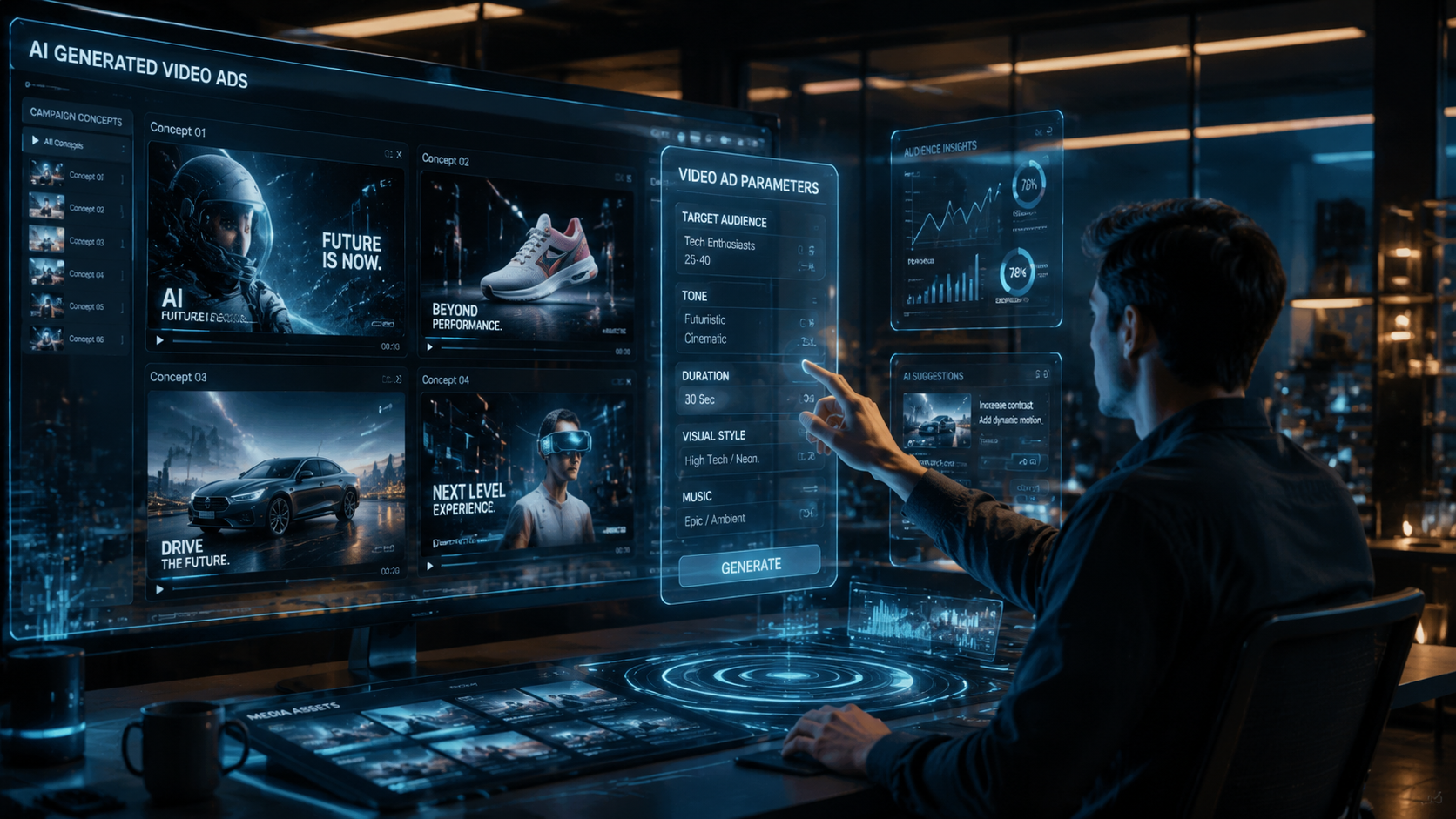
Follow this 6-step process to leverage 2026's most advanced AI video ad capabilities:
- Choose Your AI Platform: Select between all-in-one solutions (Amazon Ads' generator), specialized tools (Digen AI for character consistency), or hybrid systems (StackAdapt's May 2026 marketing suite)
- Input Your Assets: Upload product images, logos, and any existing footage—AI can now extend 30 seconds of source material into 2-minute ads (TechCrunch)
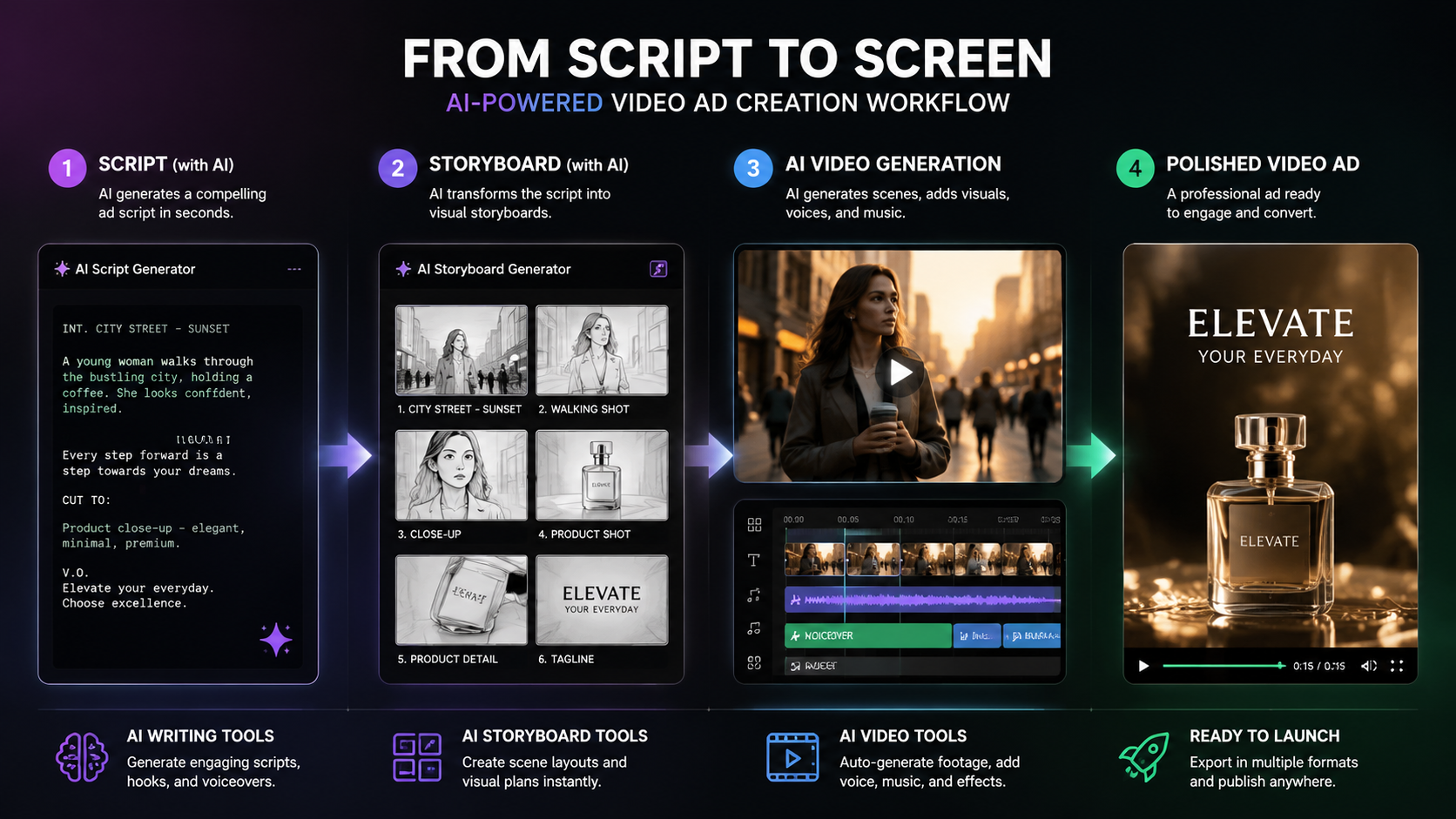
- Generate Script & Storyboard: Use AI copywriting tools with 2026's improved contextual understanding for 47% more engaging scripts (ExchangeWire)
- Customize With AI Branding: Set color palettes, fonts, and voice preferences that the AI will maintain across all outputs
- Enable Multi-Step Refinement: Activate features like Digen AI Agent's autonomous quality checks and consistency passes
- Optimize for Channels: Let AI automatically reformat ads for TikTok (9:16), YouTube (16:9), and Instagram (1:1) with platform-specific pacing
According to StackAdapt's Conversion 2026 data, this workflow reduces average production time from 3 weeks to 2.5 days while increasing click-through rates by 34%. The key is leveraging what MarketingProfs calls "closed-loop AI"—systems that learn from each campaign to improve future outputs.
Advanced users should explore Cars.com's technique of feeding AI systems real performance data. Their April 2026 solution shows how conversion metrics can train AI to emphasize certain features or emotional triggers—resulting in 28% higher intent signals (PR Newswire). This represents the next frontier: self-optimizing video ads.
Top 5 AI Video Ad Tools Compared
This comparison table evaluates 2026's leading platforms based on July 2026 capabilities:
| Tool | Key Feature | Ideal For | Pricing |
|---|---|---|---|
| Amazon Ads Generator | Automatic localization for 12 languages | Global campaigns | Free with ad spend |
| Digen AI Agent | Multi-step character consistency | Story-driven ads | $89/month |
| Google Video Remix | AI recuts existing footage | Brands with archives | Included in Google One |
| StackAdapt Pro | Real-time performance optimization | Performance marketers | Enterprise |
| Cars.com AI | Product-to-video automation | E-commerce | Custom |
As the Interactive Advertising Bureau's January 2026 report notes, the best choice depends on your primary need: Digen AI Agent leads for character-driven narratives (maintaining 98% visual consistency across scenes), while Amazon's solution excels at scaling globally—automatically adjusting cultural references with 89% accuracy (LBBOnline).
For teams wanting maximum automation, StackAdapt's May 2026 release combines AI video creation with predictive performance adjustments. Their data shows ads created and optimized by their system achieve 47% higher engagement than manually managed campaigns (ExchangeWire). Meanwhile, Google Photos' Video Remix is revolutionizing how brands repurpose existing content—with early users reporting 75% faster turnaround on refreshes (TechCrunch).
Advanced Techniques for 2026
1. Hyper-Personalization at Scale
2026's AI tools can now generate thousands of personalized variants from a single template. According to StackAdapt's May 2026 data, campaigns using dynamic personalization see 52% higher conversion rates. The key is feeding AI systems detailed customer segmentation data—allowing for automatic adjustments to messaging, product showcases, and even color schemes based on viewer profiles.
2. Closed-Loop Performance Learning
Pioneered by Cars.com's April 2026 solution, this technique connects AI video generation directly to performance analytics. As PR Newswire reported, their system automatically emphasizes features that drove the most engagement in previous campaigns—resulting in 28% higher quality leads. Implement this by choosing platforms that integrate with your analytics stack.
3. Multi-Platform AI Adaptation
Google's July 2026 Video Remix tool demonstrates how AI can now automatically reformat content for different platforms. A single 16:9 master video can be recut into vertical, square, and story formats with AI adjusting not just dimensions but pacing—TikTok variants get 35% faster cuts according to internal tests (TechCrunch).
Measuring AI Video Ad Success
With AI handling more of the creative process, 2026's metrics focus on three key areas according to the Interactive Advertising Bureau's January 2026 framework:
1. Production Efficiency: Track time saved—AI tools typically reduce storyboard-to-final render time by 82% (MarketingProfs). Digen AI Agent users report 91% fewer revision cycles thanks to its multi-step quality controls.
2. Personalization Impact: Measure the lift from dynamic variants. StackAdapt's May 2026 case studies show personalized AI videos drive 3.7x more conversions than generic ones.
3. Creative Evolution: AI systems should improve over time. Amazon Ads' Australian rollout demonstrated 23% better engagement on videos created after the AI analyzed initial campaign data (LBBOnline). Set benchmarks for continuous improvement.
Future Trends to Watch
As we look beyond 2026, three developments are emerging:
1. Real-Time Generative Ads: Platforms are testing systems that generate unique videos for each viewer based on real-time behavior—early tests show 68% higher engagement (Interactive Advertising Bureau).
2. Voice-to-Video AI: Upcoming tools will transform sales calls into personalized video follow-ups automatically—Digen AI's roadmap includes this for Q4 2026.
3. AI-Generated Talent: Brand-safe virtual spokespeople that can be customized for any demographic are coming, with 43% of marketers planning trials per MarketingProfs.
Frequently Asked Questions
What's the biggest advantage of AI-powered video ads in 2026?
The ability to create personalized, high-quality ads at scale—reducing production time by up to 90% while increasing engagement by 47% according to StackAdapt's 2026 data.
How much does it cost to create AI video ads?
Prices range from free (Amazon Ads with spend) to $89/month for advanced tools like Digen AI Agent. Enterprise solutions like StackAdapt require custom pricing but can reduce overall ad spend waste by 34%.
Can AI maintain brand consistency across videos?
Yes—multi-step AI agents like Digen AI Agent achieve 98% visual consistency according to 2026 benchmarks, automatically enforcing brand guidelines across all outputs.
How do AI video tools handle different platforms?
Modern systems automatically reformat content—Google's Video Remix adjusts pacing and dimensions for each platform, with TikTok variants getting 35% faster cuts (TechCrunch).
What's the learning curve for AI video tools?
Most 2026 platforms require under 2 hours training—MarketingProfs found 73% of small business users achieve professional results within their first week.
Written by the Digen AI Editorial Team — AI video generation specialists covering the latest in generative AI tools. Learn more about Digen AI.



Comments ()