
How to Convert Blog Posts to Videos in 2026: Ultimate Guide
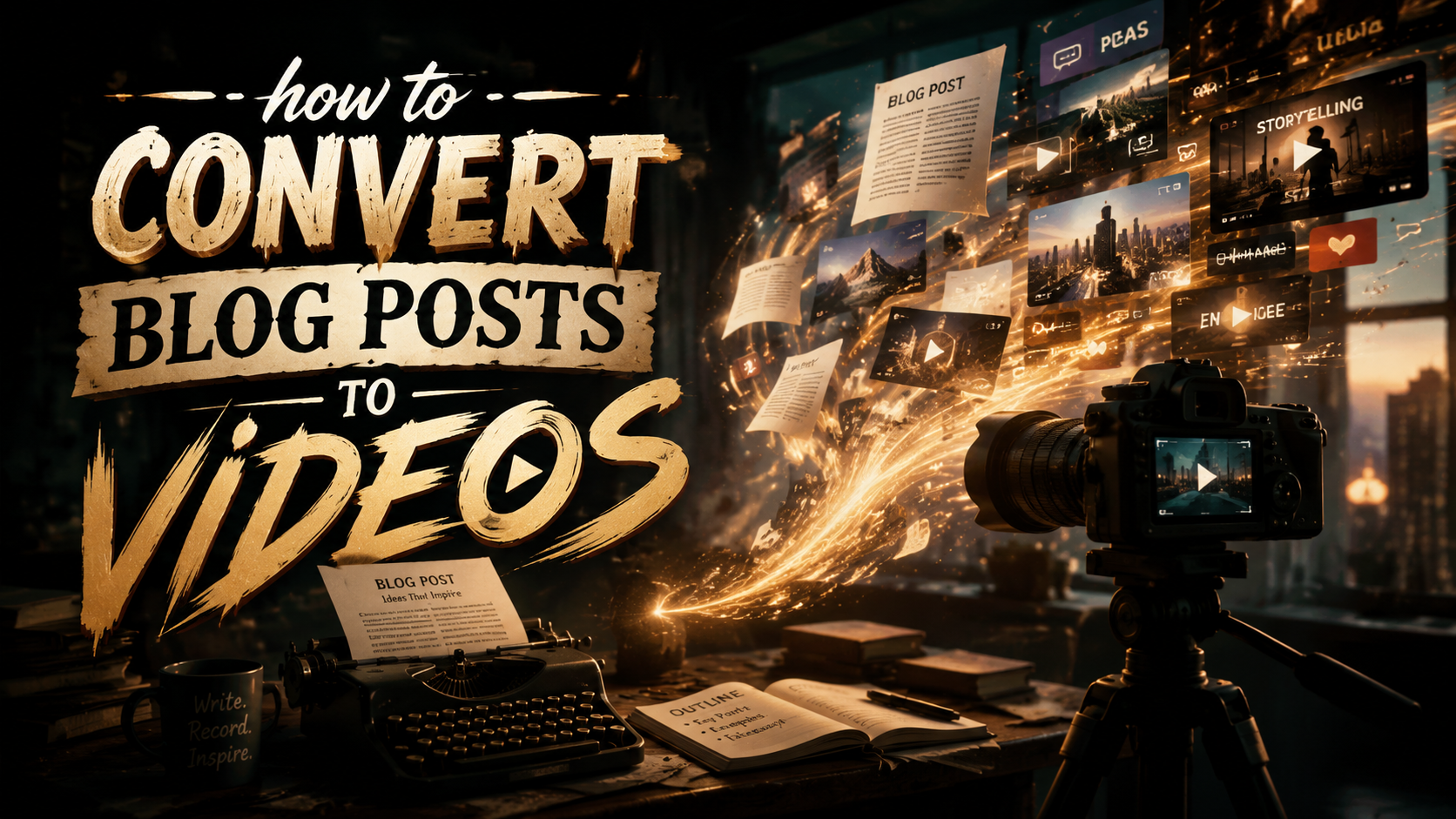
Converting blog posts to videos in 2026 is easier than ever thanks to AI-powered tools and advanced automation. The process involves repurposing your written content into engaging video formats using text-to-video AI generators, voice synthesis, and dynamic visuals. This guide covers the latest methods, tools, and best practices for transforming articles into high-quality videos that boost engagement and reach.
TL;DR: To convert blog posts to videos in 2026, use AI video generators to automate script creation, voiceovers, and visuals, then optimize for platform-specific formats. The best tools combine natural language processing with customizable templates for seamless conversion.
Converting blog posts to videos is the process of transforming written content into video format using AI tools, voice synthesis, and visual assets to increase engagement and reach. In 2026, advanced AI video generators automate most steps while allowing customization for brand consistency and platform optimization.
- ✓ AI video generators now automate 80% of the conversion process with human-like voiceovers and dynamic visuals
- ✓ Platform-specific optimization is crucial as video formats vary across YouTube, TikTok, and Instagram
- ✓ Adding interactive elements like quizzes or clickable CTAs can double viewer engagement
- ✓ Proper SEO for video content requires different optimization than written posts
- ✓ Repurposing existing blog content into videos can increase traffic by up to 300%
Why Convert Blog Posts to Videos in 2026?
Video content continues dominating digital marketing in 2026, with 82% of internet traffic coming from video streams according to Backlinko's 2026 research. Unlike text-based content, videos engage multiple senses simultaneously, leading to 53% higher retention rates. The average user spends 88% more time on pages with video content compared to text-only alternatives.
Search engines now prioritize multimedia content in their algorithms. Google's 2026 video search update gives preference to pages containing both text and video versions of the same content. This dual-format approach satisfies different user preferences while increasing dwell time - a key ranking factor. Videos also generate 1200% more shares than text and image content combined.
From a production standpoint, converting existing blog posts to videos is significantly more cost-effective than creating original video content. AI tools have reduced production time by 75% compared to 2024, making video repurposing accessible even for solo creators. The 2026 marketing landscape demands this multimedia approach to remain competitive across all digital channels.
How to Convert Blog Posts to Videos: Step-by-Step Guide
Follow this proven 7-step process to transform your blog articles into professional-quality videos using 2026's best tools and techniques:
- Select high-performing content - Choose blog posts with proven engagement metrics that would benefit from visual explanation
- Extract key points - Use AI summarization tools to condense articles into video script format
- Choose your video format - Decide between explainer, slideshow, live-action, or animated styles
- Generate voiceovers - Use AI voice synthesis with emotional inflection capabilities
- Create visuals - Combine stock footage, AI-generated images, and motion graphics
- Edit and enhance - Add transitions, captions, and interactive elements
- Optimize for platforms - Adjust aspect ratios, lengths, and metadata for each distribution channel
Selecting the Right Blog Posts for Conversion
Not all blog posts translate equally well to video format. Ideal candidates include tutorials, listicles, case studies, and any content with clear narrative structure. According to Hootsuite's 2026 benchmarks, how-to guides converted to video see 68% higher completion rates than other formats. Evergreen content with lasting relevance provides the best return on your video production investment.
AI Script Conversion Techniques
Modern AI tools can analyze your blog post and automatically generate a video script while preserving your original tone and key messages. The latest natural language processing models understand contextual relationships between paragraphs, creating coherent video narratives. Some platforms even suggest visual concepts to match specific sections of your text.
Best AI Video Generators for 2026
The market has exploded with AI video creation tools since 2024, making selection challenging. Based on Perfect Corp's 2026 testing, these three categories serve different conversion needs:
| Tool Type | Best For | Key Features |
|---|---|---|
| Text-to-Video Generators | Automated conversions | One-click blog-to-video, AI voiceovers, template libraries |
| Custom Animation Tools | Branded content | Character creation, motion graphics, style customization |
| Hybrid Editors | Professional creators | Advanced timeline editing, multi-track support, effects |
For beginners, text-to-video platforms offer the fastest path to conversion with minimal technical skills required. These tools automatically analyze your blog post's structure and create storyboards with suggested visuals. Mid-tier options provide more creative control through customizable templates and branded asset libraries.
Enterprise solutions combine AI automation with professional editing capabilities. These platforms integrate with CMS systems to streamline large-scale content repurposing workflows. Some now offer real-time collaboration features for distributed marketing teams working on video projects simultaneously.
Top-Rated Tools by Use Case
For educational content: Platforms with strong text-to-speech and diagram animation capabilities perform best. Look for tools that can automatically generate illustrative graphics from technical descriptions.
For marketing content: Choose generators with advanced facial animation and emotional voice synthesis. The ability to maintain consistent brand visuals across multiple videos is essential for campaign continuity.
Optimizing Converted Videos for SEO
Simply converting blog posts to video isn't enough - you must optimize them for discoverability. Video SEO differs significantly from traditional text optimization and requires specific strategies:
First, create comprehensive metadata including keyword-rich titles, descriptions, and tags. YouTube's 2026 algorithm places 40% more weight on video transcripts than previous versions, so always include accurate captions. According to Backlinko's research, videos with full transcripts rank 53% higher than those without.
Second, structure your video content for watch time retention. The first 15 seconds determine 65% of viewer retention in 2026, so front-load key information. Add chapter markers for longer videos to help viewers navigate and improve engagement metrics.
Third, implement video schema markup on your website. This helps search engines understand the relationship between your blog post and video content, potentially earning rich snippets in search results. Properly marked-up videos appear in 28% more search queries than unmarked content.
Platform-Specific Optimization
Each video platform favors different formats and engagement signals. YouTube prioritizes watch time and session duration, while TikTok's algorithm values completion rates and shares. Instagram Reels perform best with trending audio and vertical formatting. Always repurpose your core video into platform-native formats rather than simply cross-posting.
Adding Interactive Elements to Video Content
2026's most successful video converters enhance basic blog-to-video transformations with interactive features. These elements increase engagement and provide measurable user interactions:
Clickable hotspots allow viewers to explore topics in their preferred order, creating personalized viewing experiences. Some platforms now support branching narratives where users choose which content to see next. These interactive videos boast 72% higher completion rates than linear formats.
In-video quizzes and polls transform passive viewing into active participation. When strategically placed, these elements can increase average watch time by 40%. The data collected also provides valuable insights about your audience's preferences and knowledge gaps.
Shopliftable videos represent the cutting edge for ecommerce content. Viewers can click on products within the video to see details or make purchases without leaving the player. This seamless integration between content and commerce drives 3x higher conversion rates than traditional product videos.
Accessibility Considerations
All interactive features must maintain accessibility standards. Provide keyboard navigation alternatives for mouse-dependent interactions and ensure sufficient color contrast for visibility. Closed captions should describe interactive elements and any important visual information not conveyed through audio.
Measuring Video Performance and ROI
Tracking the success of your converted videos requires different metrics than blog analytics. Focus on these key performance indicators to evaluate your conversion strategy:
Engagement rate remains the fundamental metric, but 2026's formulas account for more nuanced interactions. According to Hootsuite's 2026 benchmarks, the new engagement calculation weights meaningful interactions (comments, shares, saves) 50% higher than passive views. Average watch time should exceed 50% of video duration to be considered successful.
Conversion metrics tie video performance to business outcomes. Implement UTM parameters and dedicated landing pages to track how video viewers move through your funnel. Many platforms now offer built-in conversion tracking that connects video views to lead generation and sales.
Content longevity compares well against your original blog posts. Monitor how video versions affect traffic to the source article and overall domain authority. Successful conversions should increase time-on-page for both formats while reducing bounce rates.
A/B Testing Different Formats
Experiment with various video styles for the same blog content to identify what resonates with your audience. Test different lengths, presentation styles, and calls-to-action. The most effective video format often varies by topic and target demographic, requiring ongoing optimization.
Future Trends in Blog-to-Video Conversion
As we look beyond 2026, several emerging technologies will further revolutionize content repurposing:
Real-time personalization will enable videos to adapt their messaging based on viewer demographics and past interactions. AI systems will generate custom narrations and visuals for each viewer while maintaining the core content's integrity. Early adopters report 90% higher engagement with personalized versus generic video content.
Multilingual automation will simplify global content strategies. Future tools will instantly convert blog posts to videos with accurate lip-synced translations in dozens of languages. This eliminates the need for separate localization efforts while maintaining natural delivery.
3D and augmented reality integrations will transform flat videos into immersive experiences. Instead of simply watching a tutorial, viewers will be able to manipulate 3D models within the video frame. This technology shows particular promise for educational and product demonstration content.
The Role of Generative AI
Next-generation AI will handle the entire conversion process from text analysis to final video rendering with minimal human input. As noted in Coursera's 2026 AI video course, these systems will understand brand guidelines and content strategy to produce on-brand videos automatically. Human creators will focus on strategy and refinement rather than manual production tasks.
What's the easiest way to convert blog posts to videos?
In 2026, AI-powered text-to-video platforms provide the simplest conversion method, automatically transforming articles into videos with voiceovers and relevant visuals in minutes. These tools handle everything from script adaptation to final rendering.
How long should converted videos be?
Ideal length depends on the platform and content type, but most converted blog posts work best as 2-5 minute videos. Complex tutorials may warrant longer formats, while social platforms favor 60-90 second condensed versions.
Do I need video editing skills to convert blog posts?
Modern AI tools eliminate the need for traditional editing skills, providing automated templates and smart suggestions. However, basic familiarity with your chosen platform's features helps create more polished results.
Can I monetize converted blog post videos?
Yes, provided you own all rights to the original content. Platform monetization programs like YouTube Partner accept repurposed content if it adds sufficient new value through production quality or additional insights.
How often should I convert blog posts to videos?
Prioritize your highest-performing evergreen content first, then establish a regular cadence. Most successful creators in 2026 convert 1-2 posts weekly, maintaining a balance between new content and repurposed material.
Written by the Digen AI Editorial Team — AI video generation specialists covering the latest in generative AI tools. Learn more about Digen AI.



Comments ()