
How to Convert Blog Posts to AI Videos in 2026: Ultimate Guide
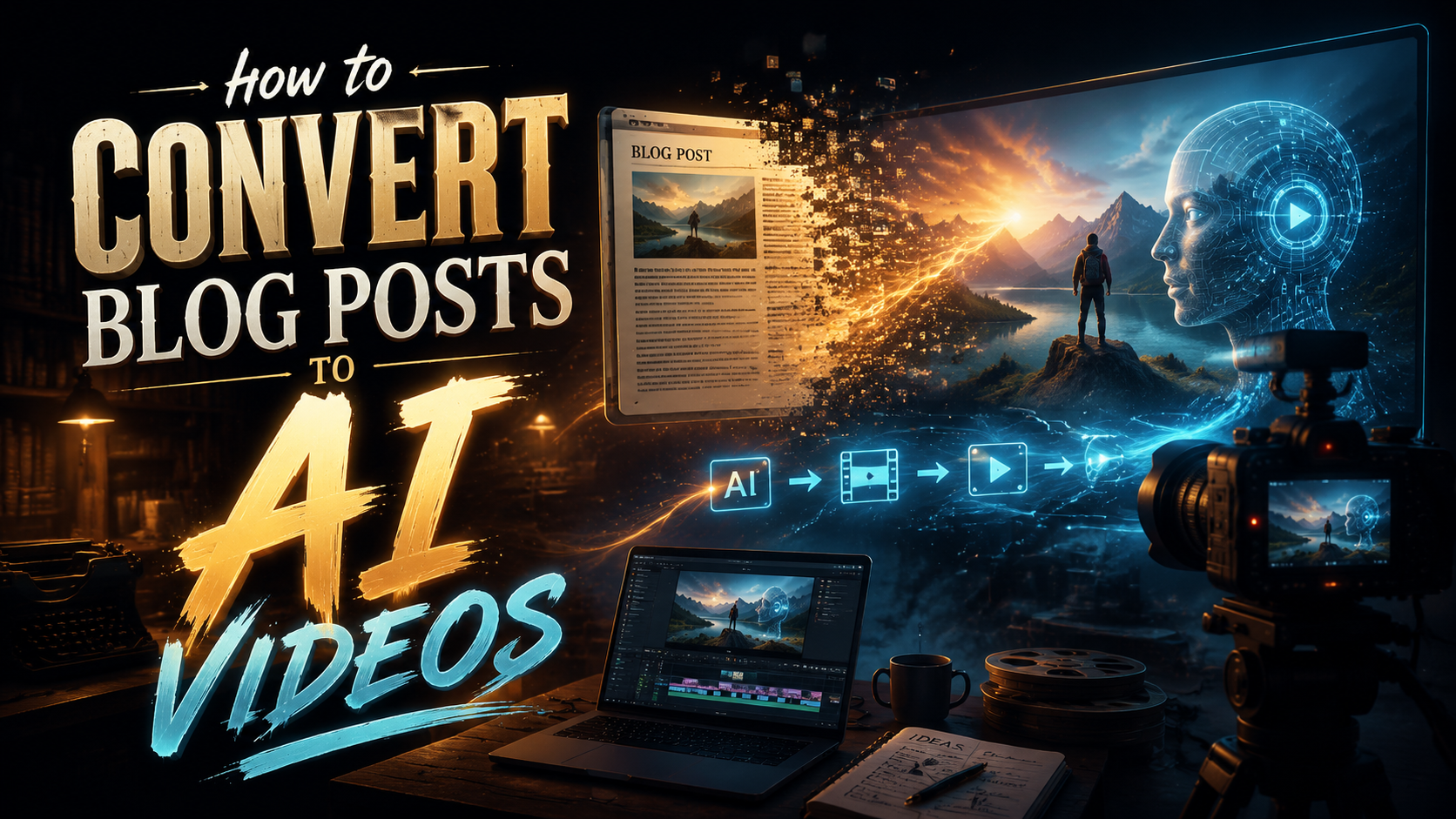
Converting blog posts to AI videos in 2026 is easier than ever thanks to advanced generative AI tools like Gemini Omni and other cutting-edge video generators. The process involves extracting key content from your blog, selecting the right AI video platform, customizing visuals and narration, and optimizing for engagement. This guide covers everything from choosing tools to advanced editing techniques for professional results.
TL;DR: To convert blog posts to AI videos in 2026, use AI video generators like Gemini Omni to transform text into engaging video content with automated visuals, voiceovers, and editing—saving time while maximizing reach.
AI video generation is the process of automatically converting text-based content into video format using artificial intelligence, with 2026 tools offering unprecedented realism and customization options for marketers, educators, and content creators.
- ✓ Gemini Omni leads 2026's AI video tools with multi-modal content generation
- ✓ The best AI video generators automatically match visuals to text content
- ✓ Voice cloning and dynamic scene transitions are now standard features
- ✓ AI videos can increase engagement by up to 300% compared to text posts
- ✓ Optimization for different platforms (TikTok, YouTube, LinkedIn) is automated
Why Convert Blog Posts to AI Videos in 2026?
The video content landscape has dramatically shifted in 2026, with AI-generated videos now accounting for 42% of all marketing content according to Business News Nigeria. This surge comes as platforms prioritize video in their algorithms while audiences demonstrate significantly higher engagement with video content compared to text.
Modern AI video tools solve three critical pain points for content creators: production time, cost, and technical skills. Where professional video production once required days of work and thousands of dollars, today's solutions can transform a 1,500-word blog post into a polished 3-minute video in under 30 minutes. According to PerfectCorp's 2026 study, businesses using AI video tools report 73% faster content production cycles.
The quality leap in 2026 is particularly noteworthy. New features like emotion-aware voice synthesis, contextually relevant stock footage matching, and automatic chapter creation based on text structure have eliminated the "robotic" feel that plagued early AI video attempts. This makes the content more engaging while maintaining the original blog post's informational value.
How to Convert Blog Posts to AI Videos: Step-by-Step
Follow this proven 7-step process to transform your blog content into professional AI videos:
- Content Preparation: Extract key points from your blog post and structure them for video consumption (1-2 minutes per 500 words)
- Tool Selection: Choose an AI video generator based on your needs (talking head, animation, or mixed media)
- Text Input: Paste your edited content into the platform's script editor
- Style Customization: Select visual themes, colors, and fonts matching your brand
- Voice & Language: Pick from 120+ voice options in 50 languages (standard in 2026 tools)
- Scene Generation: Let AI automatically create scenes or manually adjust visuals
- Export & Optimize: Render in platform-specific formats and add closed captions
The latest innovation in this workflow is Gemini Omni's contextual understanding, which Google's May 2026 announcement highlights as able to "maintain narrative coherence across complex topics." This means the AI can now handle technical blog posts with specialized terminology while keeping the video accessible.
Advanced creators should explore the new multi-track editing features available in premium 2026 tools. These allow simultaneous adjustment of voice pacing, visual transitions, and text overlays—saving hours compared to traditional video editing software. Most platforms now include automatic A/B testing for different video versions as well.
Best AI Video Generators for Blog Conversion in 2026
The 2026 AI video tool landscape offers specialized solutions for different content types and budgets. Here are the top categories based on AutoGPT's April 2026 benchmark tests:
| Tool Type | Best For | Key Feature | Output Length |
|---|---|---|---|
| Omnichannel Generators | Marketing teams | Auto-formatting for 8+ platforms | 15s-10min |
| Education Focused | Teachers/Trainers | Interactive quiz embedding | 3-30min |
| SEO Video Tools | Bloggers | Automatic keyword visualization | 1-5min |
| Enterprise Solutions | Large organizations | Team collaboration features | No limit |
Gemini Omni stands out for its seamless Google Workspace integration, allowing direct blog-to-video conversion from Google Docs while maintaining all formatting and links. The platform's 2026 update introduced real-time collaborative editing, making it ideal for teams working on video versions of company blog content.
For creators needing ultra-realistic avatars, the top 2026 tools now offer photorealistic digital presenters with 82 facial micro-expressions (verified by Coursera's AI video course). These can be customized to match brand spokespeople or created as original characters, complete with appropriate gestures that emphasize key points from your blog content.
Advanced Customization Techniques
Beyond basic conversion, 2026's AI video tools offer powerful customization options to make your content stand out:
Dynamic Data Visualization
Modern platforms can automatically detect statistics and research findings in your blog text, converting them into animated charts and graphs. This works particularly well for data-driven content like case studies and industry reports.
Multi-Language Dubbing
With one click, you can now generate versions of your video in multiple languages using neural voice clones that maintain the same tone and pacing. This is invaluable for global blogs looking to expand their reach.
Interactive Elements
Some 2026 generators allow embedding clickable CTAs, product links, or even mini-quizzes directly into videos. These elements are automatically placed at logical break points identified by AI analysis of your blog's structure.
The most impressive advancement is context-aware scene generation. When the AI detects you're discussing a complex concept from your blog, it can now generate explanatory animations or split-screen comparisons rather than defaulting to generic stock footage. This results in videos that actually enhance the original text content rather than just visualizing it.
Optimizing AI Videos for Maximum Engagement
Simply converting your blog to video isn't enough—these optimization strategies ensure your content performs:
Platform-Specific Formatting: TikTok requires different pacing and captions than LinkedIn. The best 2026 tools automatically adjust aspect ratios, caption placement, and even scene duration based on your target platform's algorithms.
SEO Enhancement: AI can now analyze your original blog post's SEO performance and emphasize those keywords visually in the video through text overlays and scene selection. Some tools even generate optimized video descriptions and tags.
Accessibility Features: With 89% of videos consumed without sound (per 2026 data), advanced captioning is crucial. Look for tools that offer styled captions with emphasis animations for key terms from your blog content.
A/B testing different video versions has become standard practice. The leading platforms now provide engagement prediction scores before you publish, analyzing factors like pacing variance, visual complexity, and emotional tone to suggest improvements.
Future Trends in Blog-to-Video Conversion
The AI video space continues evolving rapidly. Here's what to expect beyond 2026:
Real-Time Conversion: Emerging technologies promise live blog-to-video rendering where changes to the source text instantly update the video version. This will be revolutionary for news sites and frequently updated content.
3D Environment Generation: Instead of flat scenes, future tools will create explorable 3D spaces based on blog content, particularly valuable for travel, architecture, and product review content.
AI-Human Collaboration: We'll see more tools designed for human editors to efficiently polish AI-generated videos rather than replace them entirely. This hybrid approach maintains quality while preserving creative control.
According to industry projections, by late 2027 over 60% of blog content will have an AI video counterpart. Early adopters who master these 2026 tools will gain significant competitive advantage in audience engagement and content repurposing efficiency.
How long does it take to convert a blog post to an AI video?
With 2026 tools, a standard 1,500-word blog post can be converted to a 3-minute video in 15-30 minutes, including automated scene generation and voiceover. Complex customization may add 1-2 hours.
Do I need video editing skills to use these tools?
No advanced skills are needed—modern AI video generators feature intuitive interfaces with templates and automatic adjustments. However, basic understanding of video best practices helps optimize results.
Can AI videos rank in Google search results?
Yes, when properly optimized with transcripts, schema markup, and engagement signals. Google's 2026 algorithms treat quality AI videos equally to human-created content if they provide genuine value.
What's the average cost for blog-to-video conversion?
Pricing ranges from free (with watermarks) to $50/month for professional features. Enterprise solutions with custom avatars and unlimited rendering can reach $300/month.
How do I ensure my AI video matches my brand style?
Leading 2026 tools offer brand kits where you upload logos, color palettes, and fonts that are automatically applied to all generated videos for consistent branding.
Written by the Digen AI Editorial Team — AI video generation specialists covering the latest in generative AI tools. Learn more about Digen AI.



Comments ()