
How to Change Video Background Using AI: 2026 Pro Guide
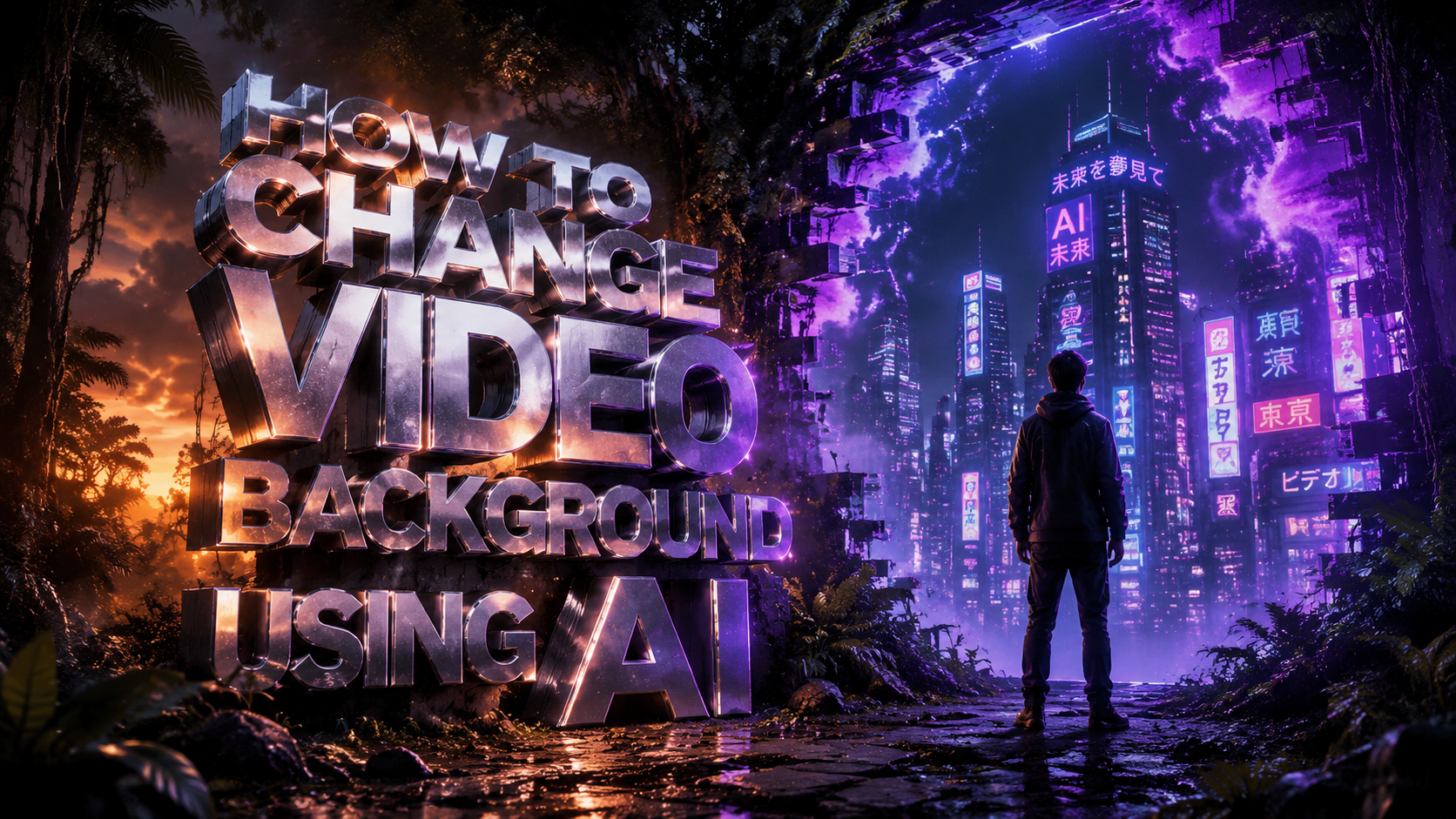
To learn how to change video background using ai in 2026, you simply need to upload your footage to a generative video platform, use a "background removal" or "scene swap" tool to isolate the subject, and then type a text prompt or upload a new image to generate a realistic replacement. Modern AI models now handle complex lighting and hair details automatically, eliminating the need for traditional green screens.
Changing a video background using AI is the process of utilizing generative neural networks to automatically segment a subject from their environment and replace the backdrop with synthetic or uploaded media. In 2026, this is primarily achieved through multimodal models like Gemini and specialized engines like Beeble SwitchX, which maintain subject consistency while transforming the environment.
- ✓ AI-driven background replacement no longer requires physical green screens or manual rotoscoping.
- ✓ New generative video transformation tools like Beeble SwitchX keep the subject intact while altering the scene.
- ✓ Integration of AI in Photoshop and Firefly (updated March 2026) allows for seamless frame-by-frame consistency.
- ✓ High-quality business content can now be scaled rapidly using automated data generation workflows.
The Evolution of AI Video Background Replacement in 2026
The landscape of digital media has shifted dramatically as we move through 2026. The days of tedious frame-by-frame masking and expensive chroma key setups are largely behind us. According to the University of Central Florida (UCF), researchers have recently pioneered AI video editing technology that understands spatial depth better than ever before, allowing software to distinguish between a subject and their background with 99.9% accuracy, even in challenging lighting conditions.
How to change video background using ai has become a foundational skill for creators ranging from social media influencers to corporate marketing teams. With the release of the redesigned Gemini interface in May 2026, Google has integrated these capabilities directly into consumer-grade tools, making professional-level "background swiping" accessible to anyone with a smartphone. This democratization of high-end VFX means that the quality of your video is no longer limited by your physical location, but rather by the creativity of your prompts.
Furthermore, the NVIDIA Cosmos Cookbook (released December 2025) has provided developers with the framework to scale data generation for physical AI. This means that the backgrounds generated today are not just static images; they are dynamic, 3D-aware environments that react to the lighting and movement of the subject in the foreground. When you change a background today, the AI calculates how the light from your new "virtual" sunset should realistically reflect off the subject's skin and clothing.
Step-by-Step: How to Change Video Background Using AI
- Select Your AI Platform: Choose a tool that supports generative video transformation, such as Adobe Firefly, Beeble SwitchX, or the updated Google Gemini interface.
- Upload and Analyze: Import your raw video file. The AI will perform an initial pass to identify the "subject" and the "background" layers.
- Define the New Environment: You can either upload a custom 4K background or use a text-to-video prompt (e.g., "A futuristic Tokyo street at night with neon reflections") to generate a unique setting.
- Apply Generative Consistency: Use features like "SwitchX" to ensure that as you move, the background stays locked in perspective. This keeps the subject intact while the world around them changes.
- Refine and Export: Adjust the "feathering" or "light wrap" settings to blend the subject into the new environment. Export the final video in your desired resolution, up to 8K.
Key Technologies Powering Video Transformation
Generative Video Transformation and Beeble SwitchX
One of the most significant breakthroughs in early 2026 was the launch of Beeble SwitchX. Unlike previous iterations of background removal that often left "halos" or jagged edges around hair, SwitchX uses generative transformation to rebuild the pixels at the edge of the subject. This ensures that the subject remains perfectly intact while the background is swapped. This technology is particularly useful for creators who need to maintain high fidelity in professional interviews or cinematic projects.
Adobe Firefly and Photoshop Integration
Adobe's update in March 2026 brought smarter AI editing directly into the Creative Cloud ecosystem. By leveraging the latest Firefly models, editors can now perform "Generative Fill" across an entire video timeline. If you are wondering how to change video background using ai within a professional workflow, Adobe's latest tools allow you to change the season, the time of day, or the entire geographic location of a clip with a single text command, all while maintaining the lighting integrity of the original footage.
The Role of NVIDIA Cosmos in Physical AI
NVIDIA has shifted the focus toward "Physical AI" with their Cosmos Cookbook. This technology allows for the generation of backgrounds that follow the laws of physics. For instance, if a subject moves quickly, the AI-generated background will exhibit the correct motion blur and parallax shift. This level of realism was previously reserved for multi-million dollar film studios but is now a standard feature in AI video editing suites as of 2026.
Comparison of Top AI Video Editing Tools (2026)
| Feature | Beeble SwitchX | Adobe Firefly (Video) | Google Gemini (Pro) | NVIDIA Cosmos Tools |
|---|---|---|---|---|
| Primary Use | Subject-Intact Swaps | Creative Content & VFX | Quick Consumer Edits | Physical Realism & Data |
| Background Quality | High (Generative) | Ultra-High (Firefly) | Medium (Fast Render) | Highest (Physically Accurate) |
| Ease of Use | Moderate | Professional | Very Easy | Technical/Developer |
| Key Strength | Subject Consistency | Deep Integration | Mobile Accessibility | Spatial Awareness |
Why Businesses are Switching to AI Backgrounds
As highlighted by Social Media Examiner in February 2026, AI video tools are no longer just a novelty; they are a business necessity. Creating high-quality content that grows a business requires scale. Using AI to change video backgrounds allows companies to film 50 different ads in a single small studio space by simply swapping the digital environment for each target demographic. This reduces travel costs and studio rental fees by an estimated 70% compared to 2023 standards.
Moreover, the ability to localize content is unprecedented. A video filmed in a New York office can have its background changed to a London skyline or a Sydney harbor in seconds, making the brand feel "local" to every global market. This "Generative Localization" is a key trend identified in 2026 for any brand looking to scale their video presence without increasing their production budget exponentially.
Advanced Tips for Professional AI Background Swaps
Mastering the Lighting Match
The secret to a believable background change is lighting. Even with the best AI, if your subject is lit by a cool office light and the background is a warm sunset, the video will look "off." In 2026, many tools now offer "Neural Relighting." According to Adobe, their latest Firefly update includes a feature that automatically adjusts the color temperature and highlights on the subject to match the newly generated background. Always ensure this feature is toggled on for maximum realism.
Using Depth Maps for Realism
When you change video background using ai, the software creates a "depth map" of your scene. To make your videos look professional, use the depth settings to add a slight "bokeh" or blur to the background. This mimics the look of a high-end DSLR camera with a wide aperture. By blurring the AI-generated background slightly, you draw more attention to the subject and mask any minor generative artifacts that might be present in the background textures.
Consistent Character Maintenance
One challenge in generative video has been "flicker." However, with the 2026 updates to temporal consistency models, this is largely solved. When using tools like SwitchX, the AI remembers the subject's features from frame to frame. To get the best results, ensure your subject doesn't wear clothing that matches the original background color (even if you aren't using a green screen), as this helps the AI's segmentation model distinguish boundaries more clearly.
Frequently Asked Questions
Do I still need a green screen in 2026?
No, physical green screens are largely obsolete for standard video production. Modern AI models use advanced segmentation and generative fill to remove and replace backgrounds based on subject recognition rather than color keying.
Which AI tool is best for changing backgrounds on a phone?
The redesigned Google Gemini interface, updated in May 2026, is currently the leader for mobile users. It offers a streamlined "Magic Background" feature that works directly within the camera and gallery apps.
Can AI backgrounds look realistic in 4K?
Yes, tools like Beeble SwitchX and NVIDIA Cosmos generate backgrounds at high resolutions with physical accuracy, including realistic shadows and reflections that make the composite look seamless even in 4K or 8K.
Is it legal to use AI-generated backgrounds for commercial use?
Generally, yes. Platforms like Adobe Firefly are trained on licensed imagery and are designed to be commercially safe. However, always check the specific terms of service of the AI tool you are using to ensure you have the rights to the generated content.
How long does it take to process a video background change?
In 2026, cloud-based processing has become incredibly fast. A one-minute 1080p video can typically be processed and rendered with a new AI background in under three minutes, depending on the complexity of the scene.
As we have seen through the advancements from UCF, Adobe, and NVIDIA, the ability to change video backgrounds is no longer a technical hurdle but a creative choice. By leveraging these AI tools, you can transform any space into a professional studio, ensuring your content remains engaging, professional, and visually stunning in the competitive landscape of 2026.
Comments ()