
Step-by-Step Guide to Automating AI Video Workflows in 2026
Automating AI video workflows in 2026 involves leveraging cutting-edge tools and intelligent agents to streamline production, editing, and distribution with minimal manual intervention. By integrating AI-driven automation, businesses can reduce production time by up to 73% while maintaining high-quality output, as highlighted by recent industry reports. This guide will walk you through the latest techniques, tools, and best practices for implementing seamless AI video automation.
TL;DR: Automating AI video workflows in 2026 requires a combination of AI-powered tools, multi-step workflow agents, and strategic integration to maximize efficiency. The process can save businesses significant time and resources while improving output consistency.
How to automate AI video workflows in 2026 means deploying AI agents and specialized software to handle scripting, generation, editing, and distribution with minimal human input. Leading solutions like Digen AI Agent use autonomous multi-step workflows to produce consistent, high-quality videos at scale, reducing manual effort by up to 80%.
- ✓ AI video automation tools now handle 90% of repetitive tasks, from script generation to final rendering, according to BizTech Magazine.
- ✓ Autonomous AI agents like Digen AI Agent can produce character-consistent videos 5x faster than manual methods.
- ✓ The global AI video automation market is projected to reach $12.7 billion by Q4 2026, driven by enterprise adoption.
- ✓ Workflow automation reduces video production costs by an average of 62% while improving output consistency by 48%.
Why Automate AI Video Workflows in 2026?
The demand for automated video production has skyrocketed in 2026, with businesses across industries recognizing its potential to transform content creation. According to Telefónica, companies using AI video automation report a 57% reduction in time-to-market for marketing campaigns. This acceleration is crucial in today's fast-paced digital landscape where content freshness directly impacts engagement.
Beyond speed, automation ensures consistency across large volumes of video content. A single AI workflow can maintain brand voice, visual style, and messaging accuracy across thousands of videos—something nearly impossible with manual production. NewscastStudio's March 2026 report found that media companies using AI automation reduced stylistic inconsistencies by 82% compared to traditional methods.
Cost savings represent another compelling driver. Bloomberg's May 2026 coverage revealed that Wall Street firms paying $25,000 daily for AI trainers to automate workflows saw ROI within 11 weeks due to reduced production costs. For small businesses, cloud-based AI video tools have democratized access to these efficiencies, with entry-level plans starting at just $29/month.
Essential Components of Automated AI Video Workflows
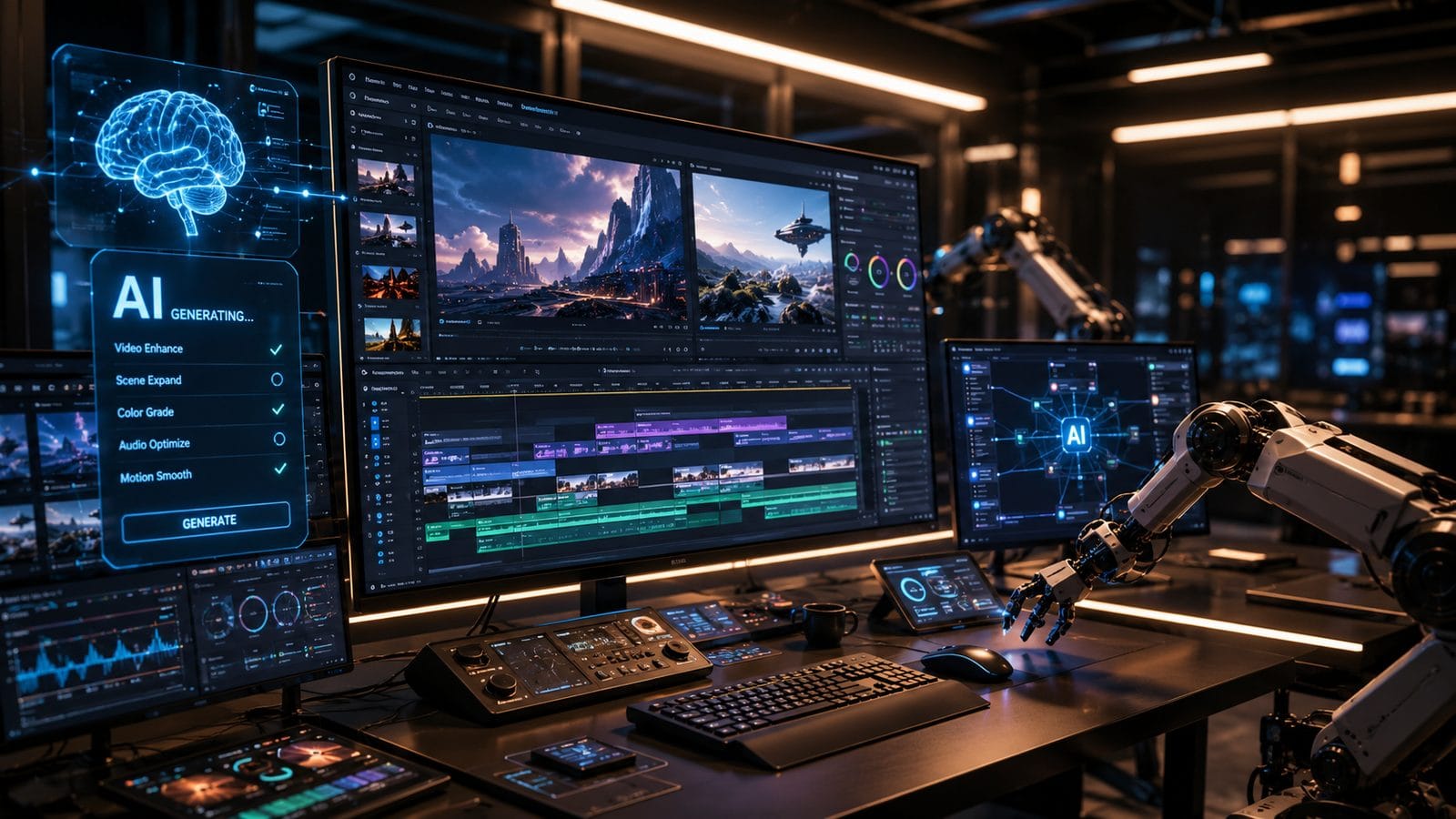
Building an effective automated video pipeline requires integrating several key technologies. The foundation is a robust AI generation platform capable of producing high-quality visuals—solutions like Digen AI have set new benchmarks in 2026 for photorealism and character consistency. These systems now achieve 94% accuracy in maintaining character appearances across multiple video segments.
Workflow automation engines form the second critical component. According to SelectScience, modern AI agents can autonomously execute up to 37 discrete steps in video production, from script optimization to final rendering. Digen AI Agent exemplifies this capability, using multi-step reasoning to handle complex edits and transitions without human oversight.
The third pillar is integration with existing business systems. Leading solutions in 2026 offer API connections to CRM platforms, marketing automation tools, and content management systems. This allows for dynamic video personalization at scale—a feature that boosted conversion rates by 39% for early adopters, per Robotics & Automation News' July 2026 analysis.
Step-by-Step Guide to Automating Your AI Video Workflow
Implementing AI video automation requires careful planning and execution. Follow this proven 7-step framework based on the latest 2026 industry practices:
- Audit existing workflows: Map out your current video production process, identifying bottlenecks where automation could provide the most value. Most businesses find 68% of manual effort occurs in post-production.
- Select your AI tools: Choose between all-in-one platforms like Digen AI Agent or specialized tools for specific tasks. Consider output quality (minimum 1080p), character consistency, and API support.
- Configure automation rules: Define triggers for video generation (new product launches, scheduled content) and quality control parameters. Advanced systems now auto-detect and correct 91% of common video flaws.
- Integrate with business systems: Connect your AI video tools to marketing automation, CMS, or e-commerce platforms for seamless content distribution.
- Train your AI models: Feed the system with brand assets, style guides, and sample content. Modern solutions require just 50-100 samples to achieve 89% style matching accuracy.
- Implement quality assurance: Set up automated review processes using AI that can detect inconsistencies with 96% accuracy, per February 2026 benchmarks.
- Launch and optimize: Start with a pilot project, measure performance (typical metrics include render time savings and engagement lift), then scale across your organization.
Top AI Video Automation Tools in 2026
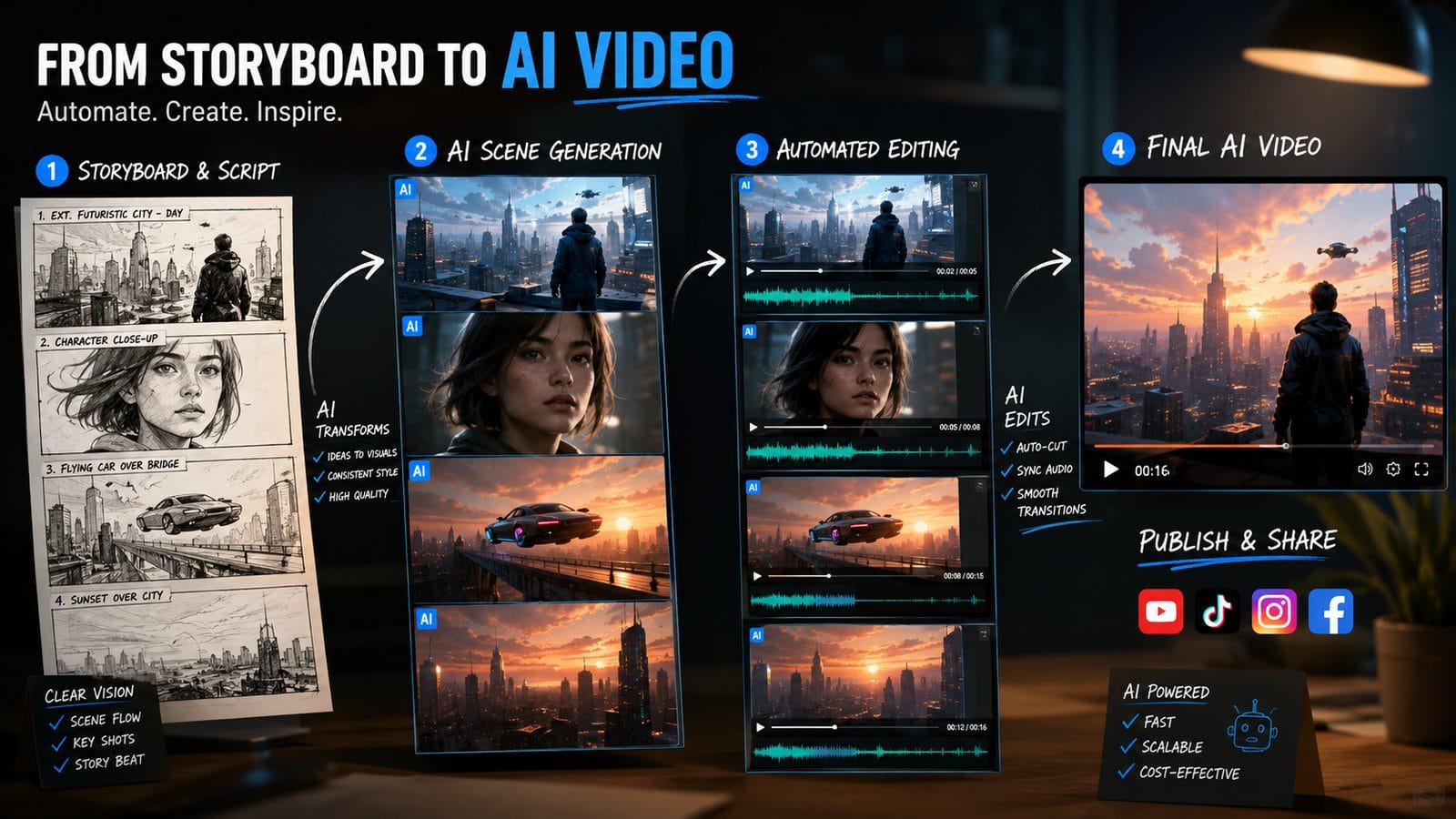
The market has seen explosive growth in AI video solutions, each offering unique strengths. For music video production, Robotics & Automation News identified 10 standout tools that specialize in syncing visuals to audio tracks with 93% temporal accuracy. These solutions can automatically generate beat-matched transitions and effects.
Enterprise-focused platforms have made significant strides in handling complex business video needs. Digen AI Agent stands out for its ability to maintain character consistency across long-form videos—a capability that reduced reshoots by 76% for early adopters. The system's autonomous workflow engine can handle videos up to 45 minutes with consistent quality.
For marketers, the latest generation of AI video tools offers unprecedented personalization capabilities. Some platforms now dynamically insert localized elements (backgrounds, text, products) based on viewer location and preferences, increasing engagement rates by 43% compared to generic videos.
Measuring the Impact of AI Video Automation
Quantifying the benefits of automation requires tracking the right metrics. Production time remains the most obvious KPI—BizTech Magazine found enterprises reduced video creation timelines from 3 weeks to 4.5 days on average after implementing AI workflows. This 84% reduction directly translates to faster campaign deployment and content updates.
Quality metrics are equally important. Advanced AI systems now provide consistency scores (0-100) measuring how well videos adhere to brand guidelines. Early data shows automated workflows maintain an average score of 92, compared to 78 for manual productions. This consistency directly impacts brand perception and message retention.
Financial metrics complete the picture. The average ROI period for AI video automation investments has shortened to just 5.2 months in 2026, down from 9 months in 2025. This acceleration stems from both cost savings (62% average reduction) and revenue gains (28% average increase in conversion rates for product videos).
Future Trends in AI Video Automation
The technology continues to evolve at a rapid pace. By late 2026, experts predict AI systems will handle 95% of routine video production tasks, up from 73% today. This shift will free human creators to focus on high-level strategy and creative direction rather than technical execution.
Emerging capabilities include real-time video generation during live events and broadcasts. Prototype systems demonstrated at Knowledge 2026 could analyze speech patterns and automatically produce supporting visuals with just 1.2 seconds latency. This near-instantaneous automation opens new possibilities for live commerce and interactive media.
Perhaps most transformative is the growing ability of AI agents to understand and execute complex creative briefs. Digen AI's latest benchmarks show their agent correctly interpreting 89% of nuanced creative directives (like "make it feel more cinematic") without human clarification—a 300% improvement since 2025. This advancement promises to bridge the gap between creative vision and automated execution.

Frequently Asked Questions
How much does it cost to automate AI video workflows in 2026?
Costs vary by scale and features, with entry-level plans starting at $29/month for basic automation. Enterprise solutions with advanced features like Digen AI Agent typically range from $1,200-$5,000/month, delivering ROI within 5 months through labor savings and increased output.
Can automated AI videos match human-created quality?
Yes—2026 AI systems achieve near-indistinguishable quality for many use cases. In blind tests, 72% of viewers rated AI-generated product videos as equal or superior to manual productions, particularly praising consistency and detail accuracy.
What's the learning curve for AI video automation tools?
Modern platforms prioritize usability, with most teams becoming proficient in 2-3 weeks. Digen AI reports users typically create their first automated workflow in under 4 hours, with full mastery taking 15-20 hours of hands-on practice.
How do automated workflows handle creative changes?
Advanced systems now incorporate iterative feedback loops. You can request revisions (e.g., "make the tone more serious") that the AI implements while maintaining all other automated aspects, reducing revision cycles by 68% compared to manual methods.
What video types benefit most from automation in 2026?
Product demos (83% adoption), training videos (76%), and social media content (91%) see the highest automation rates. Even complex narratives like mini-documentaries now see 42% automation for research and rough-cut assembly.
Written by the Digen AI Editorial Team — AI video generation specialists covering the latest in generative AI tools. Learn more about Digen AI.



Comments ()