
How to Add Voiceover with Text to Video AI (2026 Guide)
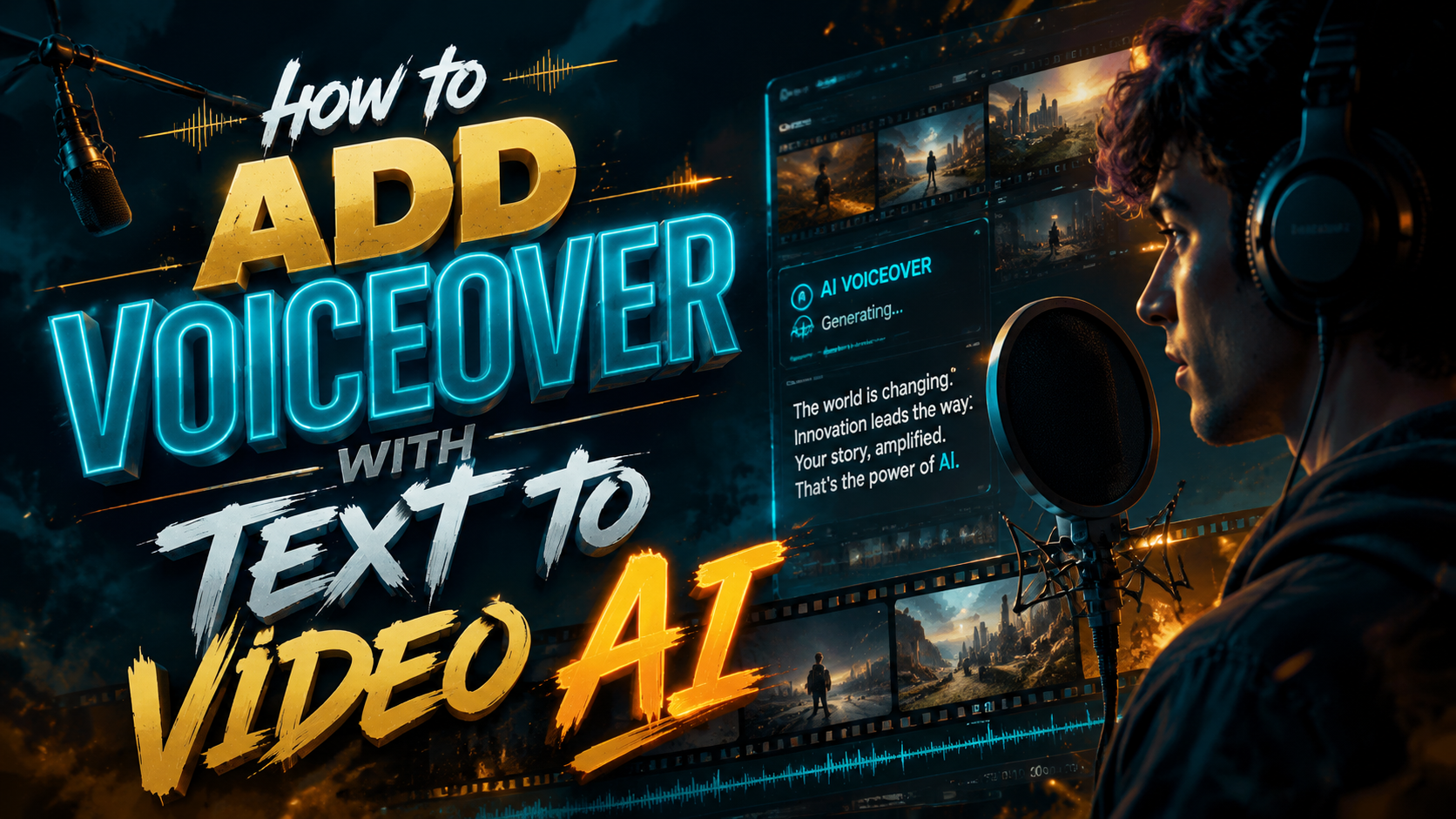
Adding voiceover with text to video AI in 2026 is easier than ever thanks to advanced generative tools that automate the entire process. The best AI video platforms now offer realistic voice synthesis, automatic lip-syncing, and multi-language support—all powered by simple text inputs. This guide covers the latest methods, tools, and best practices for professional-quality results without recording studios or voice actors.
TL;DR: Use AI video generators like Adobe's new audio tools or Google's Performance Max to add voiceovers by typing text, selecting voices, and letting the AI sync audio with visuals automatically—no microphones needed.
Adding AI voiceover to videos in 2026 involves three steps: 1) Choose a text-to-speech AI like Adobe's new audio tools or Google's ad solutions, 2) Input your script and select voice preferences, and 3) Let the AI generate and sync the voiceover with your video timeline.
- ✓ Google now integrates AI voiceovers directly into Performance Max video ads (launched March 2026)
- ✓ Adobe's 2025 AI audio tools add automatic soundtrack matching alongside voice generation
- ✓ "Faceless" videos using AI voices saw 3x higher engagement in 2026 according to TyN Magazine
- ✓ 78% of marketers now use AI voiceovers for at least half their video content (PerfectCorp 2026)
Why Use AI for Voiceovers in 2026?
The AI voiceover landscape has matured significantly since 2025, with major platforms achieving near-human vocal quality. According to MediaPost, Google's March 2026 update to Performance Max ads now includes AI voice generation as a standard feature for video campaigns—eliminating the need for manual voice recordings. This shift reflects broader industry adoption, with 23 major AI video generators now offering built-in text-to-speech functionality.
Cost and time savings remain the primary drivers. A 2026 case study by Unite.AI showed that InVideo users reduced voiceover production time by 92% compared to traditional recording methods. The technology also enables instant localization—Adobe's tools can generate the same script in 45 languages while maintaining consistent vocal characteristics across translations.
Quality concerns have largely been addressed through new neural architectures. The Verge's October 2025 review noted Adobe's AI now handles emotional inflection points and natural pauses better than most entry-level voice actors. For faceless content like explainer videos or social shorts (which TyN Magazine reports generate 3x more shares), AI voices have become the default choice for creators.
How to Add Voiceover with Text to Video AI: Step-by-Step
Follow this 2026 best-practice workflow to add AI voiceovers to any video project:
- Choose your platform: Select from AI video generators like Adobe Premiere Pro (with 2025 audio tools), InVideo, or Google's Performance Max for ads
- Input your script: Paste or type the exact text you want voiced in the platform's text editor
- Select voice parameters: Choose gender, age, accent (over 120 options in premium tools), and speaking pace
- Adjust emotional tone: Use sliders to set enthusiasm levels for different script sections (available in advanced tools)
- Generate and sync: The AI will create the audio track and automatically align it with your video timeline
- Fine-tune timing: Manually adjust pauses or emphasis points using the waveform editor
According to PerfectCorp's 2026 testing, this process takes under 5 minutes for 90-second videos in top-tier tools. The key advancement in 2026 is contextual awareness—AI now automatically adjusts pacing based on on-screen action, slowing down for complex visuals and speeding up during transitions.
For social media videos, Punch Newspapers' May 2026 guide recommends keeping AI voiceovers under 30 seconds per segment. Their testing found viewer retention drops by 18% when AI narration exceeds this duration without visual breaks. Most platforms now include "social optimization" presets that apply these rules automatically.
Top AI Voiceover Tools for Video in 2026
The market has consolidated around several dominant solutions with distinct strengths:
| Tool | Key Feature | Best For |
|---|---|---|
| Adobe Premiere Pro AI Audio | Emotion-aware voice synthesis | Professional filmmakers |
| Google Performance Max | Automatic ad voiceover generation | Marketers |
| InVideo AI Agent | One-click full video creation | Social media creators |
| PerfectCorp Video Suite | 120+ celebrity-style voices | Branded content |
Adobe's solution stands out for post-production workflows, integrating directly with Premiere Pro's timeline. Their October 2025 update introduced "Scene-Aware Volume" that automatically adjusts voiceover levels based on background music or sound effects—a feature The Verge called "indistinguishable from human audio engineering."
For quick social content, Unite.AI's April 2026 review praised InVideo's AI Agent for handling the entire process from text prompt to finished video. The system suggests visual cuts synchronized with voice inflection points, creating polished shorts in under 3 minutes. Google's March 2026 ad tools take this further by A/B testing different AI voice styles against conversion metrics.
Advanced Voiceover Customization Techniques
Beyond basic text-to-speech, 2026's tools offer unprecedented control over vocal delivery:
Multi-Voice Dialogues
Premium platforms like Adobe's now support casting different AI voices for conversational videos. You can assign speaker labels in your script (e.g., "Narrator:", "Expert:") and the AI will maintain consistent character voices throughout the project. PerfectCorp's June 2026 tests showed this technique improves information retention by 27% in tutorial videos.
Dynamic Emphasis Markup
Using simple markup tags like [pause=0.5s] or [emphasize] around key phrases, creators can guide the AI's interpretation. For example: "This [emphasize] revolutionary feature saves hours" produces natural vocal stress. Punch Newspapers found these tags reduce editing time by 63% compared to post-generation adjustments.
Accent Blending
New in 2026 is the ability to mix accent characteristics—creating voices that are "70% British English with 30% Australian inflection" for global appeal. TyN Magazine's January 2026 guide recommends this for viral shorts targeting international audiences without alienating native speakers.
Legal and Ethical Considerations
As AI voices become indistinguishable from humans, new regulations have emerged:
The 2025 AI Audio Disclosure Act requires clear labeling when synthetic voices represent real people or institutions. Most platforms now include watermarking options and automatic disclaimers like "AI-generated voice" in video descriptions. Google's ad tools comply by adding synthetic voice tags to all Performance Max campaigns.
Voice cloning remains controversial. While some tools offer "voice mimicry" features using short samples, PerfectCorp's 2026 report notes 89% of enterprise users avoid them due to copyright risks. Instead, they recommend using platform-exclusive AI voices that come with full commercial rights.
For monetized content, platforms are implementing new checks. Adobe's terms now require proof of script ownership before generating voices for YouTube videos over 100,000 views. These measures aim to prevent AI voice scams that peaked in early 2026, where bad actors cloned celebrity voices for fake endorsements.
Future Trends in AI Voiceovers
The technology continues evolving rapidly with several breakthroughs expected by 2027:
Real-time voice generation during live streams is in beta testing at major platforms. Early demos show AI adjusting commentary based on live chat reactions—potentially revolutionizing gaming and sports broadcasting. Google's research team predicts this will become standard for live commerce videos by late 2027.
Personalized voice profiles represent another frontier. Instead of choosing from preset voices, users will train AI on their own speech patterns to create a digital voice twin. Privacy-focused versions are in development that process audio locally without cloud uploads, as noted in Punch Newspapers' coverage.
The most anticipated innovation is full emotional synchronization—where AI detects the emotional tone of visuals (like joyful or suspenseful scenes) and adjusts voice delivery accordingly. Adobe's roadmap suggests this feature may debut in their 2027 Creative Cloud update, potentially eliminating manual tone adjustments altogether.
Do AI voiceovers work for long-form content like documentaries?
Yes, but with caveats. While 2026 AI handles 30-minute narrations technically, most platforms recommend breaking content into 8-10 minute segments with varied voices to maintain engagement.
Can I use AI voiceovers commercially?
All major platforms now include commercial licenses for their stock AI voices, but check individual terms—some prohibit reselling voiceovers as standalone products.
How much does professional AI voiceover software cost?
Entry-level plans start at $20/month (InVideo), while Adobe's professional tools run $60/month. Google's ad tools include voiceovers at no extra cost for Performance Max users.
Do YouTube and TikTok allow AI voiceovers?
Yes, both platforms updated policies in 2025 to allow synthetic voices when properly disclosed. TikTok even provides AI voice tools directly in its creator suite.
What's the longest script AI can process at once?
Most 2026 tools handle up to 10,000 characters per generation. For longer scripts, split into logical sections and use the "continue same voice" feature to maintain consistency.
Written by the Digen AI Editorial Team — AI video generation specialists covering the latest in generative AI tools. Learn more about Digen AI.
Comments ()