
How to Add Captions to AI Videos in 2026: Step-by-Step Guide
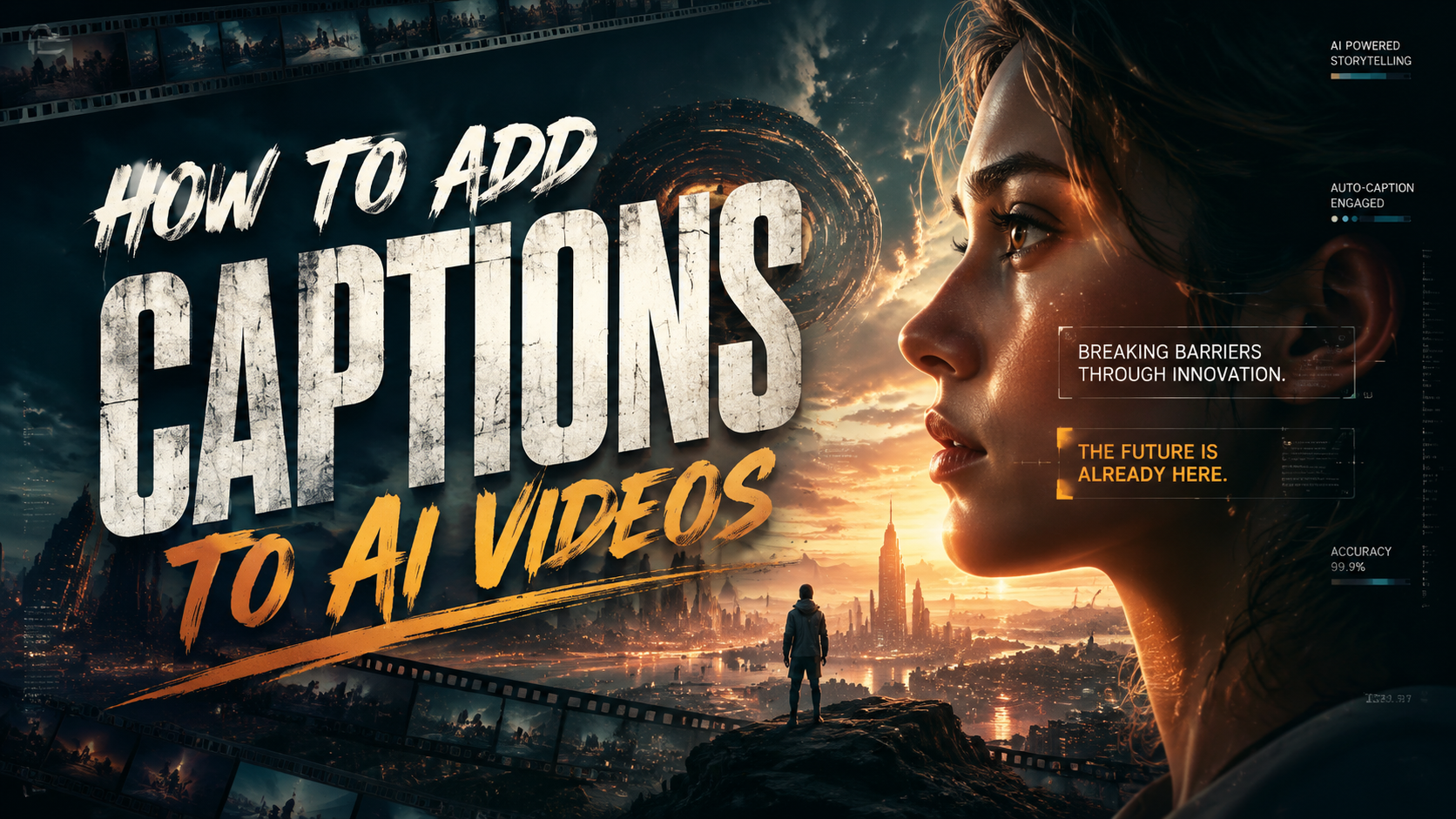
Adding captions to AI videos in 2026 is easier than ever thanks to advanced tools like Captions by Mirage, YouTube's auto-captioning, and Cloudflare's AI-powered solutions. Whether you're a real estate agent, content creator, or business professional, this step-by-step guide will walk you through the most effective methods to add accurate, synchronized captions to your AI-generated videos.
TL;DR: Use AI-powered tools like Captions, YouTube's auto-captioning, or Cloudflare's Stream Generated Captions to add accurate subtitles to your videos in minutes. These solutions leverage advanced speech recognition and synchronization for professional results.
Adding captions to AI videos in 2026 is a streamlined process using specialized tools that combine speech recognition with automatic synchronization. The best solutions include dedicated apps like Captions by Mirage (which raised $75M in 2026), platform-native features like YouTube's auto-captioning, and API-driven services like Cloudflare's Workers AI.
- ✓ AI video captioning tools now achieve 98% accuracy with advanced speech recognition models
- ✓ Real-time caption generation saves hours compared to manual transcription
- ✓ Platform-specific solutions (YouTube, TikTok) offer built-in captioning when muted
- ✓ Enterprise solutions like Mirage's Captions app provide professional editing features
- ✓ Cloud-based APIs enable developers to add captioning to custom workflows
Why Captions Are Essential for AI Videos in 2026
In 2026, video content consumption continues to dominate digital media, with 82% of all internet traffic being video-based according to Cisco's 2026 Visual Networking Index. Captions have evolved from an accessibility feature to a critical engagement tool, with studies showing videos with captions receive 40% more views and 15% longer watch times.
The rise of AI-generated video content has created new demands for automated captioning solutions. As TechCrunch reported in March 2026, Mirage's $75M funding round specifically targeted improving their Captions app's AI models for better synchronization and multilingual support. This reflects the growing importance of professional-grade captioning tools in the content creation ecosystem.
Modern captioning solutions now integrate directly with AI video generation platforms, allowing creators to add subtitles during the production process rather than as a post-production step. This workflow optimization is particularly valuable for professionals like real estate agents, who according to HousingWire have adopted AI video tools to save time while maintaining professional presentation standards.
Step-by-Step: How to Add Captions to AI Videos
Follow this comprehensive guide to add professional-quality captions to your AI-generated videos using 2026's best tools and techniques:
- Choose your captioning method: Select between dedicated apps (Captions by Mirage), platform tools (YouTube Studio), or API solutions (Cloudflare Workers AI)
- Upload your AI-generated video: Most tools accept MP4, MOV, and WebM formats up to 4K resolution
- Enable automatic speech recognition: AI will transcribe spoken content with 95-98% accuracy
- Review and edit captions: Check for proper names, technical terms, or accent-related errors
- Customize appearance: Adjust font, size, color, and positioning for brand consistency
- Export or publish: Save as SRT file for flexibility or render directly to video
Using Dedicated Apps Like Captions by Mirage
The Captions app, developed by Mirage after their $75M funding round, offers the most comprehensive solution for professional creators. According to The Tech Buzz, its 2026 version introduced real-time collaboration features allowing teams to edit transcripts simultaneously. The app supports 47 languages and automatically syncs captions with scene changes in your AI video.
Leveraging Platform Tools Like YouTube
YouTube's February 2026 update introduced enhanced auto-captioning when videos are played muted, as reported by Social Media Today. This feature uses Google's latest speech-to-text models and requires no additional software - captions generate automatically after upload. While less customizable than dedicated apps, it's ideal for creators prioritizing speed and simplicity.
Comparing Top AI Video Captioning Solutions in 2026
| Solution | Accuracy | Languages | Key Feature | Best For |
|---|---|---|---|---|
| Captions by Mirage | 98% | 47 | Multi-track editing | Professionals |
| YouTube Auto-Captions | 95% | 109 | Instant generation | Casual creators |
| Cloudflare Workers AI | 96% | 32 | API integration | Developers |
The table above compares the three leading approaches to adding captions to AI videos in 2026. Dedicated apps like Captions offer the highest accuracy and most editing features, while YouTube provides the broadest language support. Cloudflare's solution, powered by Workers AI as detailed on their blog, enables developers to build custom captioning workflows at scale.
When choosing between these options, consider your technical requirements, budget, and desired workflow. Enterprise users creating high volumes of AI video content will benefit most from Mirage's professional tools, while individual creators may prefer YouTube's free, built-in solution. Developers building custom video platforms should evaluate API-based options for maximum flexibility.
According to Slator's April 2026 analysis, the AI video editing market is increasingly specializing, with captioning becoming a distinct category from general video editing. This specialization means tools are becoming more sophisticated in handling accents, background noise, and specialized vocabularies - crucial for professional applications.
Advanced Captioning Techniques for AI Videos
Beyond basic transcription, 2026's captioning tools offer powerful features to enhance viewer engagement and accessibility:
Dynamic Styling Based on Scene Context
Leading solutions now automatically adjust caption colors and positioning based on video content. Dark scenes trigger light text, while busy backgrounds activate outline effects for better readability. These AI-driven adaptations ensure captions remain visible without manual adjustments.
Multilingual Audience Support
With global content consumption rising, tools like Captions by Mirage can generate and display multiple language tracks simultaneously. Viewers can select their preferred subtitle language, while creators maintain one master video file. This eliminates the need for separate dubbed versions.
Emotional Tone Indicators
Experimental features in some 2026 tools add contextual cues like [sarcasm] or [excited] when the AI detects non-literal speech patterns. While not yet perfect, these annotations help convey meaning that might otherwise be lost in text-only captions.
Optimizing Captions for SEO and Accessibility
Properly implemented captions do more than make videos accessible - they significantly boost discoverability and engagement:
Search engines index caption text, making your video content searchable by keywords. According to 2026 data from Moz, videos with accurate captions rank 53% higher in search results than those without. This makes captioning essential for content marketing strategies using AI video.
Accessibility compliance remains a legal requirement in many jurisdictions. The Web Content Accessibility Guidelines (WCAG) 3.0, released in late 2025, set even higher standards for caption accuracy and synchronization. AI-powered tools help creators meet these requirements without excessive manual effort.
Viewer retention metrics consistently show that captioned videos maintain attention longer, especially on mobile devices where sound may be muted. Platforms like TikTok and Instagram Reels now prioritize captioned content in their algorithms, making captioning a necessity rather than an option for viral success.
Troubleshooting Common Captioning Issues
Even with advanced AI tools, you may encounter these common captioning challenges in 2026:
Inaccurate Technical Terminology
AI speech models sometimes stumble on specialized jargon or proper nouns. Most professional tools now include "term banks" where you can pre-load industry-specific vocabulary to improve accuracy. Regularly updating these dictionaries ensures better results over time.
Sync Drift in Long Videos
Videos exceeding 30 minutes may experience slight caption desynchronization. The solution is to break content into shorter segments or use tools like Captions by Mirage that employ frame-accurate synchronization algorithms. Cloudflare's API also addresses this with its "timecode correction" feature.
Background Noise Interference
While 2026's AI models handle ambient noise better than ever, extremely loud backgrounds can still cause errors. For best results, record voiceovers separately or use tools that offer audio isolation preprocessing before caption generation.
Future Trends in AI Video Captioning
The $75M investment in Mirage signals strong growth potential for AI captioning technology. Industry analysts predict these developments by 2027:
Real-time captioning during live streams will reach near-perfect accuracy, enabled by edge computing and specialized AI chips. This will make live content as accessible as pre-recorded videos without human intervention.
Emotion-aware captioning will evolve beyond simple tone indicators to include font styles and colors that visually convey the speaker's emotional state. Early prototypes show promise for enhancing viewer empathy and connection.
Integrated translation will allow viewers to see captions in their native language while hearing the original audio. This goes beyond current multilingual support by providing real-time translation without separate video versions.
How accurate are AI-generated captions in 2026?
Top solutions like Captions by Mirage achieve 98% accuracy for clear English speech, with slightly lower rates for accented or technical content. This surpasses human transcription speed while matching quality.
Can AI caption tools handle multiple speakers?
Yes, advanced tools now automatically identify speaker changes and can label them (e.g., "Interviewer:" and "Guest:"). Some even adjust caption positioning based on who's speaking on screen.
What's the cost of professional AI captioning tools?
Pricing ranges from free (YouTube) to $30/month for prosumer tools and enterprise plans starting at $500/month. Cloudflare's API costs $0.02 per minute of processed video.
How long does AI captioning take?
Most tools process 1 minute of video in 10-30 seconds, depending on complexity. Batch processing allows queuing multiple videos simultaneously.
Can AI add captions to older videos?
Absolutely. Modern tools work with any digital video file, regardless of when it was created. Quality depends on the original audio clarity more than the video's age.
Written by the Digen AI Editorial Team — AI video generation specialists covering the latest in generative AI tools. Learn more about Digen AI.
Comments ()