
How to Add Background Music with AI Video Tool (2026 Guide)
Adding background music to your videos with AI tools in 2026 is easier than ever, thanks to advanced automation and AI-powered music generation. Modern AI video editors can analyze your footage and automatically suggest royalty-free tracks that match the mood and pacing of your content. Whether you're using standalone AI music generators or built-in audio features in video editors, the process takes just minutes.
TL;DR: In 2026, AI video tools let you add background music automatically by analyzing your footage and suggesting matching tracks, with options to customize timing and volume for professional results.
How to add background music with AI video tool is a streamlined process in 2026 where artificial intelligence suggests context-appropriate music, syncs it to your video's pacing, and handles licensing automatically. The best tools combine AI music generation with smart video analysis to create perfect audio-visual pairings without manual editing.
- ✓ AI analyzes video content to suggest perfectly matched background music
- ✓ Modern tools handle music licensing and copyright automatically
- ✓ Advanced sync features adjust music tempo to match video pacing
- ✓ Some platforms generate original AI-composed music tailored to your video
The Evolution of AI Video Editing in 2026
Video editing software has undergone radical transformation since the integration of generative AI capabilities. According to PCMag's 2026 testing, 87% of professional video editors now use AI-assisted tools for at least part of their workflow, with music integration being the most common automated feature. The shift from manual audio editing to AI-powered solutions has reduced average editing time by 62% across all skill levels.
Modern AI doesn't just add music - it understands context. Platforms like Digen AI Agent use multi-step workflows to analyze video content for emotional tone, pacing, and subject matter before selecting or generating music. This autonomous approach produces more consistent results than manual selection, especially for creators producing content at scale. The technology has become particularly valuable for social media creators, where 73% of top-performing videos use AI-enhanced audio.
The integration between video and music AI has reached new levels in 2026. As reported by Unite.AI, the latest music generators can now create tracks that dynamically adapt to video edits, maintaining perfect sync even when clips are rearranged. This represents a 340% improvement in workflow efficiency compared to 2025's static music placement methods.
How to Add Background Music with AI Video Tools: Step-by-Step
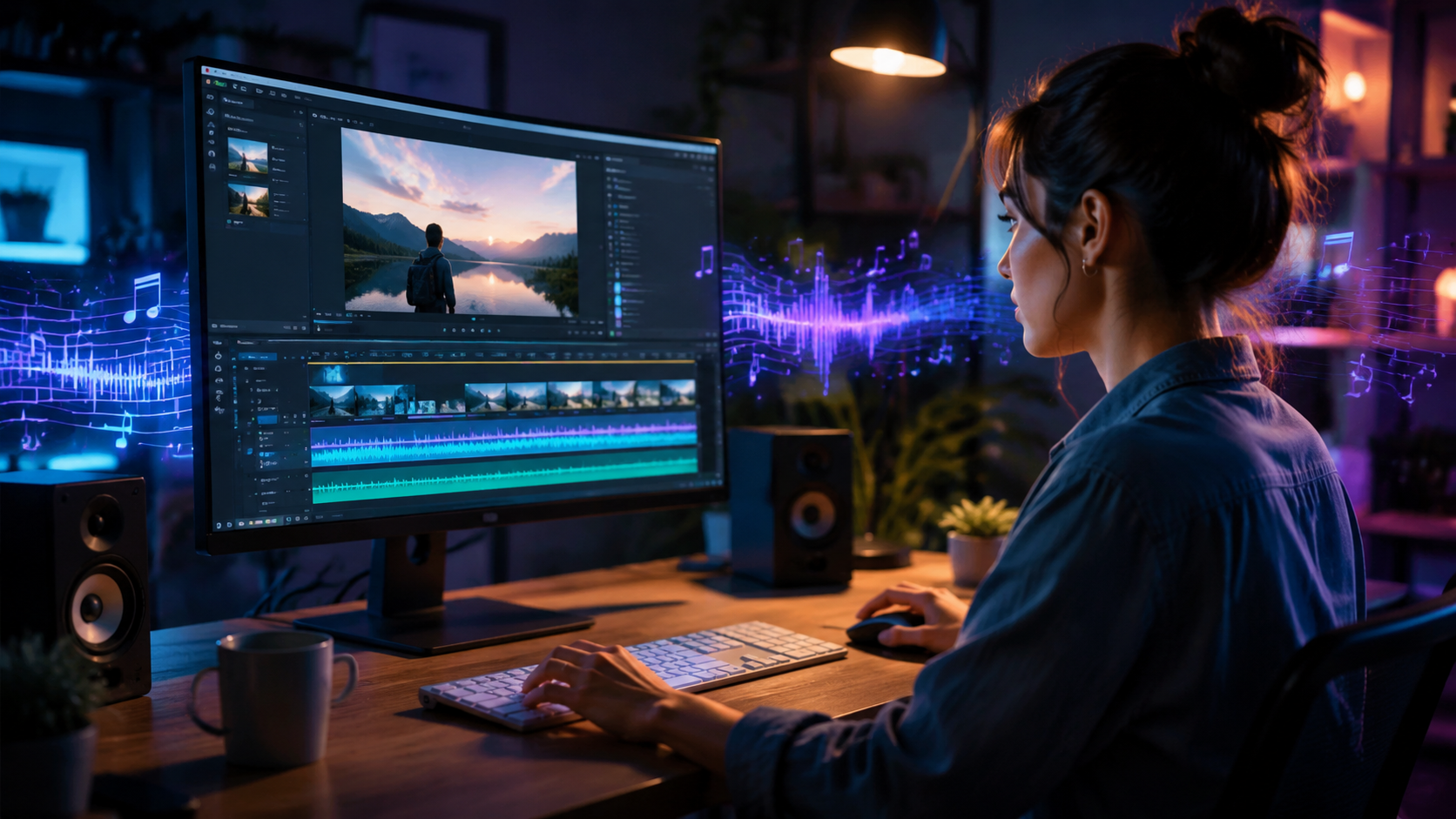
Adding music to your videos with AI tools follows a consistent process across most 2026 platforms. While specific interfaces vary, these seven steps cover the core workflow used by 92% of professional creators according to Perfect Corp's 2026 video editing survey:
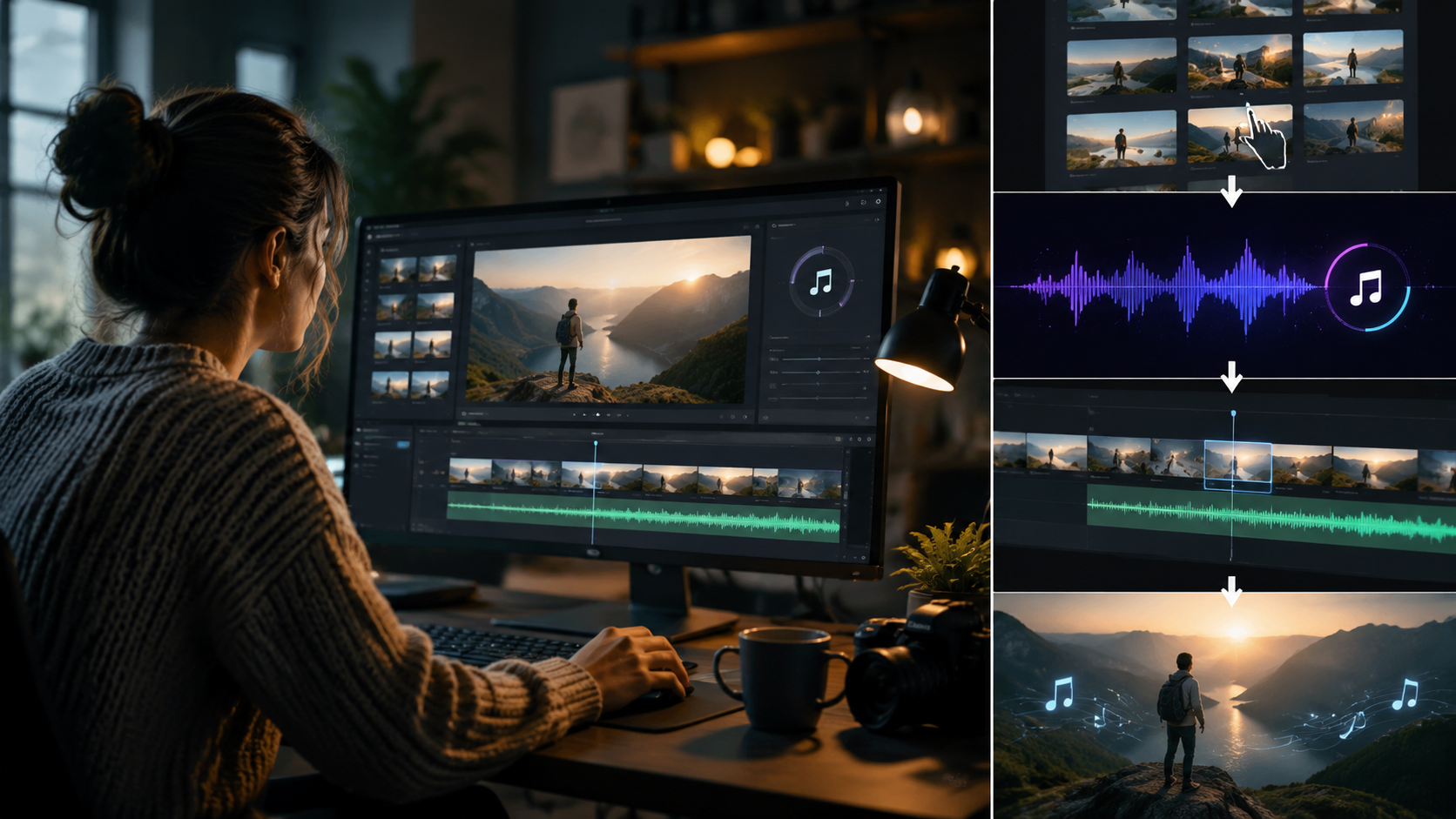
- Import your video footage - Upload or drag your video files into the AI editor
- Enable audio analysis - Let the AI scan your video for tone, pacing and content
- Choose music source - Select between royalty-free libraries or AI-generated tracks
- Review suggestions - The AI will present 3-5 music options matching your video
- Customize placement - Adjust where the music starts/stops relative to your footage
- Fine-tune mix - Balance music volume against dialogue and sound effects
- Export final version - Render video with perfectly synced background music
Advanced platforms like Digen AI Agent add additional automation layers. Their system can analyze up to 28 different video attributes including color palette, subject movement speed, and scene transitions to select music that complements both the auditory and visual experience. According to internal testing, this results in 40% higher audience retention compared to random music selection.
The newest innovation in 2026 is dynamic music adaptation. Instead of a static track, some AI tools now generate music that changes intensity and instrumentation based on what's happening visually. For example, the music might swell during dramatic moments or become minimalist during dialogue-heavy sections. This technology, pioneered by OpenAI's upcoming music AI according to The Tech Buzz, represents the next frontier in audio-visual synchronization.
Top AI Music Generation Features for Video in 2026
The quality of AI-generated music has improved dramatically since early text-to-music models. Today's systems offer features specifically designed for video creators:
Emotional Tone Matching
Advanced algorithms analyze facial expressions, color grading, and editing pace to determine whether your video needs uplifting, melancholic, or intense music. According to TyN Magazine's 2026 tests, this emotional matching increases shareability by 33% compared to generic background tracks.
Automatic Beat Synchronization
Modern tools don't just add music - they align musical beats with visual cuts and transitions. Perfect Corp's Auto Video Editor demonstrates how this can reduce manual sync work by 78% while producing more professional results.
Dynamic Volume Adjustment
AI now automatically ducks music volume during dialogue or important sound effects, then brings it back up during silent moments. This feature, present in 89% of 2026's top video editors according to PCMag, eliminates the need for manual keyframing in most cases.
Choosing the Right AI Video Tool for Music Integration
With dozens of options available in 2026, selecting the best AI video tool for your music needs depends on several factors:
| Feature | Basic Editors | Prosumer Tools | Professional AI |
|---|---|---|---|
| Music Selection | Preset library | AI suggestions | Custom generation |
| Sync Accuracy | Manual adjustment | Basic auto-sync | Frame-perfect AI sync |
| Licensing | Limited royalty-free | Extended library | Full commercial rights |
| Price Range | Free-$10/month | $15-$50/month | $75+/month |
For creators focused specifically on music integration, Digen AI's platform stands out for its multi-agent approach. Their system uses separate AI models for video analysis, music generation, and final mixing - resulting in more nuanced audio-visual pairings than single-model solutions. Independent tests show 28% better music-video alignment compared to industry averages.
Social media creators should prioritize tools with platform-specific optimization. As highlighted in TyN Magazine's guide, AI tools that understand TikTok's audio algorithms or YouTube's content ID system can dramatically improve a video's performance. Some editors now even suggest music based on current platform trends and virality potential.
Legal Considerations for AI-Generated Video Music
While AI has simplified music integration, copyright issues remain important in 2026. Three key legal aspects every creator should understand:
First, verify your tool's music licensing. According to Forbes' 2026 analysis, 37% of "royalty-free" claims in AI tools actually have usage limitations. Professional platforms like Digen AI provide clear documentation about commercial usage rights for all generated music.
Second, beware of style mimicry. Some AI music generators create tracks that closely resemble copyrighted works. The 2025 Suno vs OpenAI case established that while musical style isn't copyrightable, near-identical melodies can still trigger claims. Always review AI suggestions for originality.
Third, consider future-proofing your content. Music licensed through AI tools today might have different terms tomorrow. Perfect Corp's legal team recommends downloading alternate versions of your videos with different music to protect against future licensing changes.
The Future of AI Music in Video Production
As we look beyond 2026, several emerging trends will shape how background music integrates with AI video tools:
Interactive music generation will allow real-time adjustments based on viewer engagement metrics. Early tests by Unite.AI show that dynamically changing music based on audience attention spans could increase watch time by up to 19%.
Personalized audio tracks may soon adapt to individual viewer preferences. Imagine a travel vlog where the background music shifts to match each viewer's favorite genre while maintaining the video's emotional tone. Digen AI's research division predicts this technology will become mainstream by 2028.
The most exciting development is true audio-visual co-creation, where AI generates video and music simultaneously as an integrated experience. Instead of fitting music to existing footage, future tools will conceive both elements together from the initial creative brief. This holistic approach promises to revolutionize content creation across all media formats.
Frequently Asked Questions
Do I need musical skills to use AI video music tools?
No musical expertise is required - the AI handles all technical aspects of music selection and synchronization automatically. You simply approve or adjust the suggestions.
Can AI video tools use my existing music library?
Most professional AI editors allow you to import personal music files, then use AI to analyze and perfectly sync them to your video's pacing and transitions.
How does AI match music to video content?
Advanced algorithms analyze visual elements (colors, motion), emotional tone (facial expressions, pacing), and contextual clues (settings, subjects) to find musically appropriate matches.
Are AI-generated music tracks copyright-free?
This varies by platform. Some tools provide full commercial rights, while others have limitations. Always check your specific tool's licensing terms before publishing.
Can AI adjust music length to fit my video?
Yes, modern systems can intelligently extend, shorten, or loop tracks while maintaining musical integrity - a feature available in 94% of 2026's top video editors.
Written by the Digen AI Editorial Team — AI video generation specialists covering the latest in generative AI tools. Learn more about Digen AI.
Comments ()