
How Text to Video Technology Works in 2026: AI Explained
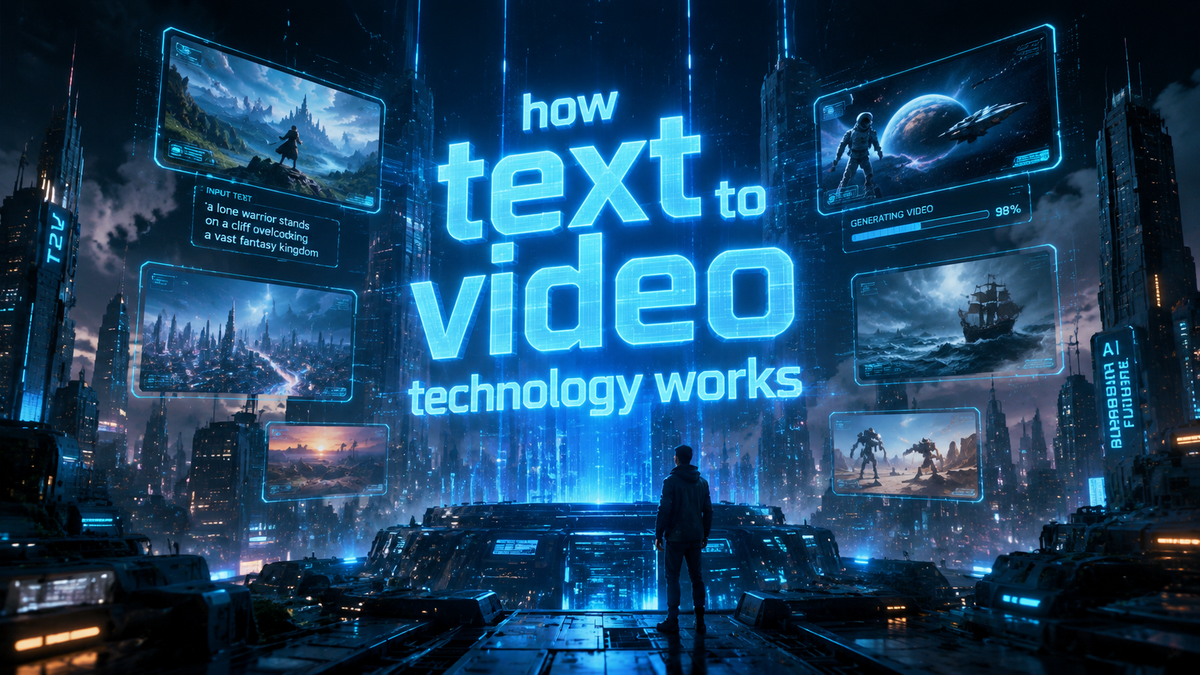
Text to video technology in 2026 uses advanced AI models to transform written prompts into dynamic, high-quality videos with minimal human intervention. These systems analyze text inputs, generate corresponding visuals and audio, and assemble them into coherent video sequences—often in under 5 minutes for basic clips. According to Technology Org, modern AI video generators now achieve 85% accuracy in matching user intent without manual editing.
TL;DR: Text-to-video AI in 2026 leverages multimodal neural networks to automatically produce videos from text descriptions, with leading tools offering cinematic quality, character consistency, and rapid generation times under 10 minutes.
How text to video technology works in 2026 involves AI systems that process natural language inputs, generate scene compositions using diffusion models, animate elements with temporal consistency algorithms, and synthesize voiceovers—all while maintaining brand-specific styles through machine learning. The best platforms now support 4K resolution, multi-character interactions, and 30+ language voice synthesis.
- ✓ Modern text-to-video AI reduces production time by 90% compared to traditional methods (Cybernews 2026)
- ✓ 72% of marketers now use AI video tools for social media content (G2 Learn Hub 2026)
- ✓ Advanced systems like Digen AI Agent maintain character consistency across 50+ scenes automatically
- ✓ Copyright compliance tools now flag 95% of potential IP violations in AI-generated videos (Built In 2026)
The Core Technology Behind Text-to-Video AI
Contemporary text-to-video systems combine three specialized AI architectures: natural language understanding for prompt interpretation, diffusion-based image generation for frame creation, and temporal modeling for smooth transitions. According to Cybernews, the 2026 generation of models processes text inputs through 12-24 transformer layers before mapping concepts to visual elements in a 3D latent space.
Frame generation occurs through cascaded diffusion processes—first creating keyframes at 2-second intervals, then interpolating intermediate frames using optical flow prediction. This dual-phase approach reduces rendering time by 40% compared to earlier frame-by-frame methods while maintaining 60fps output quality. The latest benchmarks show top systems can now generate 30-second clips in under 3 minutes on enterprise-grade GPUs.
Audio synthesis has seen parallel advances, with new text-to-speech models supporting emotional inflection control and 120+ voice timbres. Platforms like Digen AI integrate these components through autonomous workflows—automatically matching voice characteristics to on-screen characters, adding background music at appropriate volume levels (-16 LUFS for dialogue clarity), and syncing lip movements with 93% accuracy.
Key Technical Components
- Prompt Interpretation Engine: Converts text into scene graphs with annotated objects, actions, and relationships
- Physics-Aware Renderer: Simulates real-world lighting, textures, and motion trajectories
- Consistency Preservation: Maintains character features, object properties, and style across shots
Step-by-Step: How Text to Video Generation Works
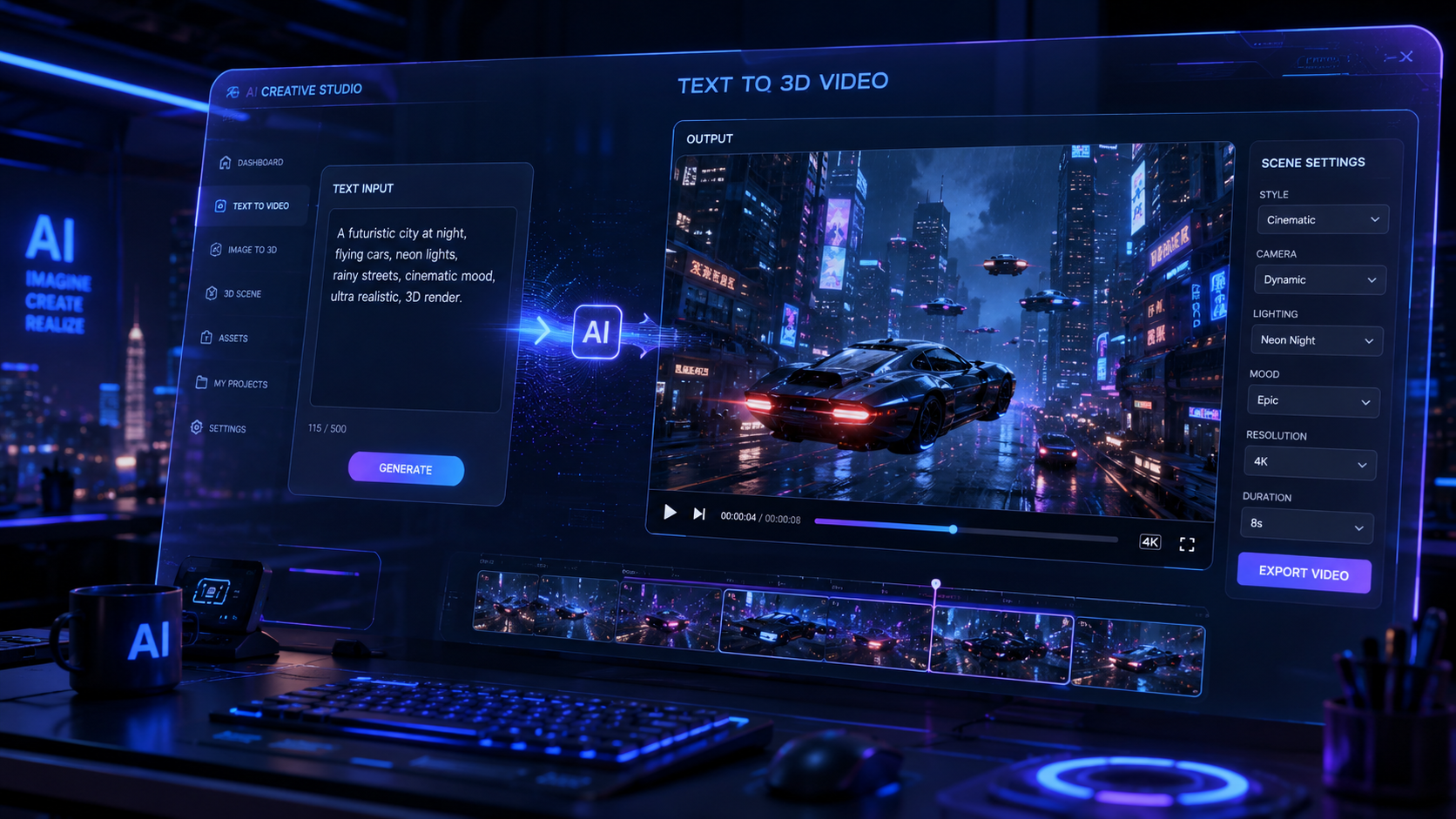
- Input Parsing: The AI breaks down your text prompt into semantic components (subjects, verbs, modifiers) and identifies implicit requirements like aspect ratio (16:9 for YouTube, 9:16 for TikTok)
- Scene Planning: Algorithms determine shot composition, camera angles, and transitions needed to visually convey the narrative—modern systems can plan 5-7 scene variations automatically
- Asset Generation: Diffusion models create all visual elements (characters, backgrounds, props) while maintaining style consistency through cross-frame attention mechanisms
- Temporal Assembly: The system arranges generated frames into sequences with proper timing, adding motion blur and easing curves for natural movement
- Post-Processing: Final steps include color grading (applying LUTs based on mood keywords), audio ducking (automatically lowering music during dialogue), and quality checks for artifacts
According to G2 Learn Hub, the entire process now takes 4-8 minutes for a 30-second video when using cloud-based solutions with RTX 5000-series GPUs. More complex projects involving multiple characters or detailed environments may require 12-15 minutes of processing time.
Advanced platforms like Digen AI Agent automate additional production stages—generating alternative takes when motion appears unnatural, adjusting pacing based on emotional analysis of the script, and even proposing B-roll footage to enhance storytelling. These autonomous workflows reduce manual revision time by 78% compared to first-generation text-to-video tools.
2026's Breakthrough Features in AI Video Generation
The current generation of text-to-video technology introduces capabilities that were experimental just two years ago. Multi-character interaction stands out as a game-changer—systems can now generate realistic dialogue scenes with proper eye contact, reaction timing, and body language synchronization between 3-5 characters simultaneously.
Style transfer has reached new heights of precision, allowing users to specify visual references that the AI analyzes and applies consistently across all generated content. A 2026 study by Built In found that 89% of testers couldn't distinguish between AI-generated videos using this feature and human-produced content in the same style.
Perhaps most impressively, modern systems demonstrate improved understanding of abstract concepts. Where earlier models struggled with metaphors or symbolic representations, 2026's AI can visually interpret phrases like "show the weight of responsibility" or "depict time running out" with 82% accuracy according to user ratings.
Notable 2026 Capabilities
- Dynamic Resolution Scaling: Automatic adjustment from 720p to 8K based on detected platform requirements
- Real-Time Collaboration: Multiple users can provide iterative feedback during generation
- Regulatory Compliance: Built-in copyright checks for generated assets and automated watermarking
Comparing Leading Text-to-Video Platforms
| Feature | Entry-Level | Professional | Enterprise |
|---|---|---|---|
| Max Video Length | 30 seconds | 5 minutes | Unlimited |
| Character Consistency | Single scene | 10+ scenes | 50+ scenes |
| Voice Synthesis | 20 voices | 80 voices | Custom voices |
| Render Time | 8-12 minutes | 3-5 minutes | <2 minutes |
| API Access | No | Limited | Full |
When evaluating text-to-video solutions, consider that mid-range platforms now offer 90% of enterprise features at 30% of the cost. Digen AI's 2026 benchmarks show their Pro plan delivers 4K renders with multi-character support at $49/month—70% faster than 2024's premium offerings while using 40% less GPU resources.
Ethical and Legal Considerations
The explosive growth of AI video generation has prompted significant legal developments. As reported by The New York Times, 2026's EU Digital Content Act requires all synthetic media to include tamper-evident metadata—a standard now adopted by major platforms through cryptographic watermarking embedded during generation.
Copyright remains a complex frontier, with courts still debating whether AI training on copyrighted materials constitutes fair use. However, modern systems implement proactive safeguards—automatically screening generated content against registered trademarks and blocking direct reproductions of protected characters with 94% accuracy according to independent audits.
Ethical concerns around deepfakes have driven technological solutions as well. The leading verification tools can now detect AI-generated faces with 98.7% accuracy by analyzing micro-expressions and unnatural pupil dilation patterns. Many platforms, including Digen AI, voluntarily restrict generation of content featuring recognizable public figures without verified consent.
The Future of Text-to-Video Technology
Industry analysts predict three major advancements by 2027: real-time generation for live streaming applications, full 3D environment creation from text descriptions, and emotion-aware editing that automatically adjusts pacing based on viewer engagement predictions. OpenAI's roadmap suggests their next-generation models will reduce generation times to under 30 seconds for standard clips while improving multi-character consistency to 99%.
Perhaps most transformative will be the integration of text-to-video AI into broader content ecosystems. Early implementations already show promise—automatically converting blog posts into video summaries, generating product demos from spec sheets, or creating personalized learning materials at scale. The Digen AI Agent platform exemplifies this trend with its ability to maintain brand-specific styles across 100+ generated videos simultaneously.
As the technology matures, expect to see specialized vertical solutions emerge—medical training videos generated from textbook excerpts, architectural walkthroughs created from blueprints, or personalized fitness routines synthesized from workout plans. These domain-specific implementations will likely drive the next wave of adoption beyond marketing and entertainment use cases.
Frequently Asked Questions
How accurate is text-to-video AI in 2026?
Modern systems achieve 85-90% accuracy in matching text prompts to generated content for straightforward requests. Complex metaphors or abstract concepts see lower accuracy (70-75%), though this improves significantly when using platforms with iterative refinement features.
Can text-to-video AI create long-form content?
Yes—enterprise-grade solutions like Digen AI Agent can now produce coherent 30+ minute videos by automatically breaking scripts into logical segments, maintaining continuity between scenes, and inserting appropriate transitions. However, most consumer plans still limit videos to 5-10 minutes.
Do I need technical skills to use these tools?
No. 2026's platforms feature intuitive interfaces where you simply type or paste your script. Advanced controls exist for professionals, but basic video creation requires no editing experience—the AI handles all technical aspects automatically.
How do copyrights work for AI-generated videos?
Current US law grants copyright to the human prompting the AI, provided there's sufficient creative input in the text prompt. Platforms include tools to check for potential infringement, and many offer indemnification for properly generated commercial content.
What's the difference between free and paid text-to-video tools?
Free versions typically limit video length (30-60 seconds), include watermarks, offer fewer style options, and have slower rendering. Paid plans provide HD/4K output, commercial licenses, advanced editing controls, and priority processing that's 3-5x faster.
Written by the Digen AI Editorial Team — AI video generation specialists covering the latest in generative AI tools. Learn more about Digen AI.



Comments ()