
HeyGen vs Synthesia for Corporate Video: 2026 Comparison
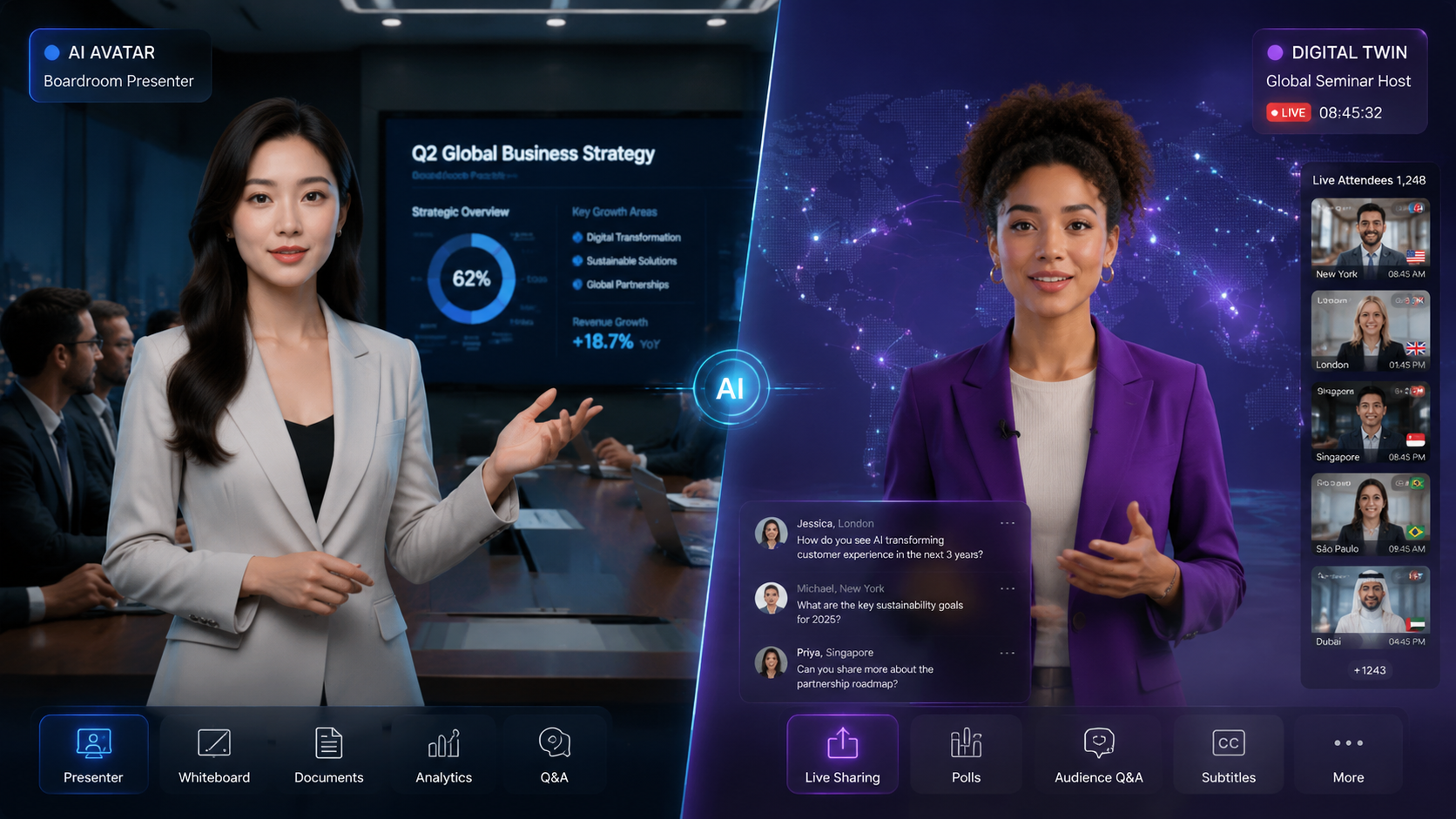
Choosing between HeyGen vs Synthesia for corporate video in 2026 depends on whether your organization prioritizes hyper-realistic personal branding or enterprise-grade training scalability. While HeyGen leads in "scary real" personal avatar cloning and "vibe-coding" for individual creators, Synthesia remains the gold standard for large-scale corporate deployments, offering a more robust infrastructure for multilingual internal communications. Ultimately, the choice hinges on your specific use case: high-fidelity marketing content versus consistent, scalable educational modules.
HeyGen vs Synthesia for corporate video is a comparison of creative flexibility versus enterprise stability. HeyGen is the premier choice for high-end avatar realism and individual persona cloning, while Synthesia is the industry leader for structured corporate training, offering superior workflow integrations and a massive library of diverse, pre-built avatars for global teams.
- ✓ HeyGen provides industry-leading "Instant Avatar" technology that allows users to clone themselves with near-perfect fidelity.
- ✓ Synthesia offers a more comprehensive enterprise ecosystem, including advanced security features and collaborative editing for large departments.
- ✓ Both platforms now support real-time translation and lip-syncing in over 100 languages as of April 2026.
- ✓ Pricing structures have shifted toward usage-based models, with Synthesia focusing on seat-based enterprise licenses and HeyGen on credit-based creative tiers.
The Evolution of AI Video in 2026
As we navigate the second quarter of 2026, the landscape of corporate communication has shifted entirely toward "AI-first" video production. According to Exploding Topics, the demand for AI video generators has surged as companies look to reduce production costs by up to 80%. No longer are these tools seen as experimental; they are now core components of the modern tech stack. The primary battleground for 2026 is no longer just "can it talk?" but rather "how much does it feel like a human?"
The concept of "vibe-coding" has emerged as a major trend this year. As reported by Business Insider, professionals such as startup lawyers are now vibe-coding AI versions of themselves to handle initial client consultations and internal briefings. This shift emphasizes the need for platforms that can capture not just the likeness of a person, but their unique mannerisms and professional energy. This is where the competition between HeyGen and Synthesia becomes most intense, as each platform approaches the "uncanny valley" from different philosophical angles.
HeyGen vs Synthesia for Corporate Video: Key Feature Comparison

To understand which platform fits your 2026 strategy, we must look at the technical specifications and user experience. While both tools utilize deep learning for video synthesis, their feature sets have diverged to serve different market segments. HeyGen has doubled down on the "creator-pro" market, whereas Synthesia has solidified its grip on the Fortune 500 training departments.
| Feature | HeyGen (2026) | Synthesia (2026) |
|---|---|---|
| Avatar Realism | Industry-leading "Scary Real" Clones | High-quality, Professional Studio Avatars |
| Primary Use Case | Marketing, Personal Branding, Vlogs | L&D, Onboarding, Corporate Training |
| Language Support | 140+ Languages with Voice Cloning | 150+ Languages with Localized Accents |
| Enterprise Security | Standard SOC2, SSO available | Advanced SOC2 Type II, Enterprise-grade Security |
| API & Integration | Flexible, Creator-focused API | Deep LMS and CMS Integrations |
Directing the Workflow: How to Implement AI Video
If you are looking to integrate these tools into your corporate workflow, the process has become significantly more streamlined in 2026. Whether you choose HeyGen or Synthesia, the following steps represent the standard operating procedure for modern video production:
- Script Finalization: Input your text or use the integrated AI writing assistants (often powered by GPT-5 or equivalent models) to optimize for spoken delivery.
- Avatar Selection or Cloning: Choose a pre-built professional avatar from the library or record a 2-minute snippet of yourself to create a high-fidelity digital twin.
- Scene Orchestration: Add brand assets, screen recordings, or dynamic backgrounds. In 2026, both platforms allow for 3D environment placement.
- Multilingual Translation: Select the target languages. The platforms now automatically adjust lip-syncing and cultural nuances for global audiences.
- Review and Export: Use collaborative "comment-at-timestamp" features to get stakeholder approval before rendering in 4K resolution.
HeyGen: The King of Personal Branding and Realism
HeyGen has consistently pushed the boundaries of what is possible in terms of visual fidelity. In a recent review by Unite.AI, the platform's ability to "clone myself into a scary real AI avatar" was highlighted as its standout feature. For corporate executives who need to be in ten places at once, HeyGen provides a digital double that is virtually indistinguishable from the real person. This makes it the preferred choice for high-stakes marketing videos and personalized sales outreach.
The platform’s 2026 updates have introduced "Emotional Layering," allowing users to specify the tone of the avatar—ranging from "authoritative" for board presentations to "empathetic" for HR announcements. According to European Business Magazine, which tested 12 tools in early 2026, HeyGen remains the top-rated tool for visual quality, particularly for users who want to leverage their own likeness rather than using a generic stock actor.
HeyGen vs Synthesia for Corporate Video: The Creative Edge
When comparing HeyGen vs Synthesia for corporate video in creative contexts, HeyGen often wins on flexibility. Its interface is designed for rapid iteration and experimentation. The "vibe-coding" capabilities mentioned by Business Insider are more easily achieved in HeyGen, where the barrier to entry for creating a high-quality personal clone is lower than ever. For a marketing team producing daily social content, the speed and realism of HeyGen are unmatched.
Synthesia: The Enterprise Powerhouse for Scale
While HeyGen wins on individual realism, Synthesia dominates the organizational landscape. G2 Learn Hub recently ranked Synthesia as a top choice for 2026 due to its stability and enterprise-grade features. For a company with 10,000 employees needing to localize training in 40 different countries, Synthesia’s infrastructure is built to handle that volume without a hitch. Its avatars are designed to be "professional and neutral," making them perfect for diverse corporate environments.
Synthesia’s strength lies in its ecosystem. It integrates directly with Learning Management Systems (LMS) like Cornerstone and Workday, allowing L&D professionals to update video content as easily as they would update a PowerPoint slide. According to G2 Learn Hub, the "hands-on review" winner for large-scale corporate utility remains Synthesia, primarily due to its collaborative features that allow multiple departments to work on a single video project simultaneously.
HeyGen vs Synthesia for Corporate Video: The Training Standard
In the context of HeyGen vs Synthesia for corporate video training, Synthesia’s "Video Assistant" feature is a game-changer for 2026. This feature automatically converts existing PDFs and documentation into fully produced video scripts and storyboards. This level of automation is why major corporations continue to favor Synthesia for their internal knowledge bases. It isn't just about making a video; it's about managing a global library of video assets.
Pricing and ROI in 2026
The cost of these platforms has evolved. In 2026, both have moved away from simple monthly subscriptions toward more complex, value-based pricing. HeyGen typically operates on a credit system, where high-fidelity clones and 4K renders cost more "credits." This is ideal for agencies and creators who have fluctuating production needs. Synthesia, conversely, focuses on annual contracts for enterprises, providing unlimited seats but capping the total video output or "minutes" generated.
The Return on Investment (ROI) for both is staggering. Exploding Topics notes that companies using AI video generators in 2026 report a 65% increase in employee engagement with training materials compared to text-based manuals. Whether you choose the artistic realism of HeyGen or the systematic efficiency of Synthesia, the cost-to-value ratio far exceeds traditional video production methods involving cameras, lights, and editing suites.
Choosing the Right Platform for Your Team
The decision between HeyGen vs Synthesia for corporate video ultimately comes down to your primary "Why." If your goal is to empower your CEO or sales leaders with digital twins that can deliver personalized messages at scale, HeyGen is the superior choice. Its focus on the "human" element of AI makes it the leader in personalized communication.
However, if your goal is to modernize your company’s entire training library, ensure global compliance, and maintain a consistent brand voice across thousands of videos, Synthesia is the more logical investment. Its platform is a "video factory" designed for reliability and scale, whereas HeyGen is a "video studio" designed for high-end craft and individual expression.
Is HeyGen better than Synthesia for personal cloning?
Yes, as of 2026, HeyGen is widely considered the leader in personal avatar cloning. Its "Instant Avatar" technology captures subtle facial movements and "vibe" more accurately than Synthesia’s current offerings, making it ideal for those who want a digital twin.
Which platform is safer for large enterprise data?
Synthesia generally offers more robust enterprise security features, including SOC2 Type II compliance and advanced SSO integrations. While HeyGen is secure, Synthesia’s infrastructure is specifically built to meet the rigorous standards of Fortune 500 legal and IT departments.
Can I use my own voice on both platforms?
Yes, both HeyGen and Synthesia support voice cloning in 2026. You can upload a recording of your voice, and the AI will generate speech that matches your unique cadence and accent across multiple languages.
Which is better for multilingual translation?
It is a tie. Both platforms offer exceptional real-time translation and lip-syncing in over 140 languages. Synthesia has a slight edge in regional accent variations, while HeyGen excels at maintaining the emotional tone of the original speaker during translation.
Do I need professional video editing skills to use these tools?
No, both tools are designed for non-video professionals. If you can use PowerPoint or Canva, you can create professional-grade corporate videos on either HeyGen or Synthesia using their drag-and-drop interfaces and AI-assisted script editors.



Comments ()