
HeyGen vs D-ID for Talking Heads (2026): Which AI is Best?
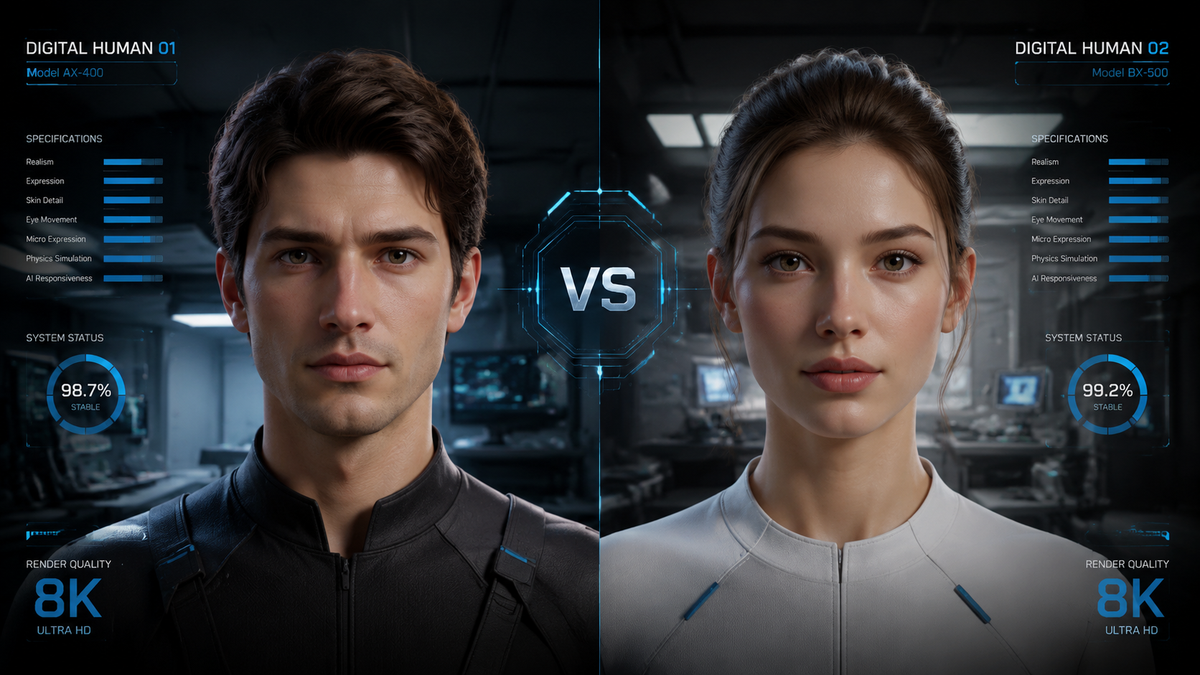
Choosing between HeyGen vs D-ID for talking heads in 2026 depends entirely on whether you prioritize hyper-realistic video quality or high-speed, scalable animation. HeyGen is currently the industry leader for creating "scary real" AI clones that mimic human micro-expressions, while D-ID remains the preferred choice for developers and businesses requiring rapid, API-driven avatar generation for real-time interactions.
HeyGen is the premier choice for high-fidelity video production, offering industry-leading avatar cloning and 4K resolution. D-ID is the superior option for real-time conversational AI and cost-effective, high-volume avatar creation. While HeyGen focuses on professional marketing aesthetics, D-ID excels in interactive digital human integration and developer flexibility.
- ✓ HeyGen provides the most realistic lip-syncing and body language for professional brand spokespeople.
- ✓ D-ID offers superior API integration for real-time, interactive AI agents and customer service bots.
- ✓ According to recent 2026 industry reviews from Unite.AI, HeyGen’s latest cloning technology creates indistinguishable digital twins.
- ✓ D-ID remains more accessible for quick, static-image-to-video transformations at a lower price point.
- ✓ Both platforms now support multi-language translation with voice cloning as a standard 2026 feature.
The Evolution of AI Talking Heads in 2026
As of 2026, the landscape of generative video has shifted from experimental novelties to essential business tools. The comparison of heygen vs d-id for talking heads is no longer just about who can make a face move, but about who can provide the most seamless, "uncanny valley"-free experience. According to Social Media Examiner, high-quality AI video content is now a primary driver for business growth, allowing companies to scale personalized messaging without the overhead of traditional film crews.
The technology has matured significantly. In 2026, we see integrated features like emotional depth control, where users can dictate the "mood" of the talking head, and instant translation that preserves the original speaker's vocal timbre. This evolution has forced both HeyGen and D-ID to specialize: one in the art of cinematic realism and the other in the utility of interactive digital humans.
Step-by-Step: How to Create a Professional Talking Head
- Select Your Base: Choose between a pre-made professional avatar, a static photo (best for D-ID), or a high-definition video clone of yourself (best for HeyGen).
- Input Your Script: Upload a text script or provide an audio recording. In 2026, both platforms allow for AI-generated scripts based on simple prompts.
- Configure Voice and Emotion: Select a voice skin that matches your brand's tone. Adjust the "Expression Intensity" slider to ensure the avatar's movements match the script's sentiment.
- Generate and Review: Process the video. HeyGen typically takes longer due to the complexity of its rendering, while D-ID offers near-instant results for quick iterations.
- Export and Integrate: Download the 4K file or use an embeddable link for your website or LMS (Learning Management System).
Comparing Features: HeyGen vs D-ID for Talking Heads

When evaluating heygen vs d-id for talking heads, the technical specifications often dictate the use case. HeyGen has invested heavily in "Instant Avatars," which allow users to create a digital twin with just two minutes of footage. As noted by Unite.AI in their 2026 review, these clones have reached a level of realism where micro-expressions and natural blinking are virtually indistinguishable from live-action video.
D-ID, conversely, has maintained its dominance in the "Creative Reality" space. Their platform is optimized for turning any static image—be it a historical figure, a piece of art, or a corporate headshot—into a speaking entity. This makes D-ID incredibly popular for educational purposes and "talking photos" that don't require the full-body movement that HeyGen provides.
| Feature | HeyGen (2026) | D-ID (2026) |
|---|---|---|
| Visual Quality | Ultra-HD 4K / Hyper-Realistic | HD / Stylized & Photo-based |
| Avatar Types | Video-based Clones & Studio Avatars | Static Image Animation & AI Portraits |
| Processing Speed | Moderate (High Complexity) | Fast (Optimized for Real-time) |
| API Capabilities | Standard Video API | Advanced Streaming API for Live Bots |
| Pricing Model | Credit-based (Premium Tier) | Subscription & Pay-as-you-go |
HeyGen's Dominance in Marketing and Personal Branding
For creators and marketers, HeyGen is often the "gold standard." The platform's ability to create a "digital twin" is its standout feature in 2026. According to AutoGPT.net, HeyGen's updated 2026 engine supports full-body gestures, allowing the talking head to point at graphics or move their hands naturally while speaking. This level of immersion is critical for YouTube creators and corporate trainers who need to maintain viewer engagement over long durations.
The "Video Translate" feature in HeyGen has also become a benchmark. It doesn't just dub the audio; it re-syncs the lips of the avatar to match the new language's phonemes perfectly. For a global business, this means one video can be localized into 40+ languages with the click of a button, maintaining the same level of professional polish across all markets.
Key Benefits of HeyGen for Talking Heads
- Seamless Lip-Sync: Uses advanced neural networks to ensure mouth movements are fluid and natural.
- Custom Outfits: In 2026, HeyGen introduced AI-generated clothing, allowing you to change your avatar's attire without re-filming.
- Studio-Grade Backgrounds: Offers a wide array of 3D environments that interact with the avatar's lighting.
D-ID’s Edge in Interactivity and Scalability
While HeyGen wins on aesthetics, D-ID wins on utility. D-ID’s "Agents" platform is the primary reason why it remains a top contender in the heygen vs d-id for talking heads debate. As highlighted by G2 Learn Hub, D-ID’s streaming API allows for sub-second latency, making it the go-to choice for companies building AI customer service representatives that can actually "talk back" to users in real-time.
D-ID is also significantly more flexible when it comes to the "source" of the face. You can upload a sketch, a 3D render, or a mid-journey generated face, and D-ID will animate it with remarkable efficiency. This makes it a favorite for developers who are building apps or games where thousands of unique talking heads need to be generated on the fly without the high cost of premium video rendering.
Why Developers Choose D-ID
The developer experience on D-ID is widely considered superior for large-scale deployments. Their documentation and robust API support allow for easy integration into existing tech stacks. For a company looking to add a "face" to their LLM-powered chatbot, D-ID provides the most cost-effective and technically sound bridge between text-based AI and visual AI.
Pricing and ROI: Which Investment Makes Sense?
In 2026, both platforms have moved toward a credit-based system, but the value proposition differs. HeyGen is positioned as a high-end production tool. Its pricing reflects the compute power required to generate 4K, high-fidelity video. For a marketing department, the ROI is found in the hundreds of hours saved on video production and the ability to produce "personalized" sales videos at scale.
D-ID offers a more tiered approach, with entry-level plans that are very accessible for small businesses and hobbyists. According to The AI Journal, D-ID’s cost-per-minute for basic photo animation is roughly 30% lower than HeyGen’s premium video clones. If your goal is to create short, snappy social media clips or interactive bots, D-ID offers a faster path to profitability.
Industry Statistics for 2026
According to research by PerfectCorp, businesses using AI talking heads in 2026 have seen a 45% increase in training completion rates compared to text-based manuals. Furthermore, Social Media Examiner reports that AI-generated video content now accounts for nearly 25% of all corporate internal communications, with HeyGen and D-ID holding a combined 60% of the market share for avatar-based generation.
Conclusion: The Verdict for 2026
The winner of the heygen vs d-id for talking heads comparison depends on your specific goals. If you are a content creator, a professional speaker, or a high-end brand, HeyGen’s superior realism and "Digital Twin" technology make it the clear choice. The visual fidelity it offers is simply unmatched for one-to-many communication where trust and authority are paramount.
However, if you are a developer, a customer success manager, or a budget-conscious creator, D-ID is the better option. Its ability to animate any image and its industry-leading real-time API make it the most versatile tool for the next generation of interactive AI. Both platforms are excellent, but they serve different masters in the rapidly expanding 2026 AI ecosystem.
Is HeyGen better than D-ID for YouTube videos?
Yes, HeyGen is generally better for YouTube because it offers 4K resolution and more natural body language. Its "Instant Avatar" feature allows creators to maintain a consistent, high-quality persona without needing to film every episode manually.
Can D-ID create real-time talking AI bots?
Yes, D-ID is a leader in real-time interactivity. Its streaming API allows developers to connect talking heads to LLMs like GPT-5, enabling live, face-to-face conversations with minimal lag.
Which platform is more affordable in 2026?
D-ID is typically more affordable for basic users and those animating static photos. HeyGen is a premium service that carries a higher price tag but delivers significantly higher visual quality and realistic movement.
Do I need professional equipment to use HeyGen?
No, in 2026 you only need a standard smartphone camera to record your initial "seed" footage. HeyGen’s AI handles the lighting, background, and stabilization to ensure the final talking head looks like it was shot in a professional studio.
Can I use my own voice on both platforms?
Yes, both HeyGen and D-ID support custom voice cloning. You can upload a sample of your voice, and the AI will generate a vocal skin that matches your unique tone, pitch, and accent across multiple languages.



Comments ()