
HeyGen vs D-ID for AI Video: 2026 Comparison & Review
When comparing heygen vs d-id for ai video in 2026, the choice depends on whether you prioritize hyper-realistic personal cloning or interactive real-time AI agents. HeyGen is currently the industry leader for high-fidelity "scary real" avatar cloning and seamless video translation, while D-ID has pivoted strongly toward "Visual AI Agents" that facilitate two-way, real-time human-to-AI interaction. Both platforms offer 4K output and sophisticated API integrations, making them the top contenders for enterprise-grade synthetic media.
HeyGen is an AI video generation platform specializing in high-fidelity video cloning and automated content localization, whereas D-ID is a visual AI interface platform focused on creating interactive, real-time digital humans. For 2026, HeyGen excels in marketing and social media content production, while D-ID leads in customer service and real-time conversational interfaces.
- ✓ HeyGen offers the most realistic "Instant Avatar" cloning tech, achieving near-perfect lip-sync and body language.
- ✓ D-ID’s 2026 update introduced "Visual AI Agents," allowing for real-time video chat and interactive customer support.
- ✓ Both platforms support over 100 languages with advanced emotional inflection and localized accent control.
- ✓ HeyGen’s 2026 workflow is optimized for business growth, integrating directly with CRM and social media management tools.
The Evolution of AI Video: HeyGen vs D-ID for AI Video in 2026
The landscape of synthetic media has shifted dramatically over the last twelve months. In early 2026, we are no longer looking at "uncanny valley" puppets; we are looking at digital twins that are indistinguishable from real humans. The debate over heygen vs d-id for ai video has evolved from basic lip-syncing capabilities to complex ecosystem integrations. According to Social Media Examiner, high-quality AI video is now a primary driver for business growth, allowing small teams to produce professional-grade video content that was previously only possible with high-end production studios.
HeyGen has maintained its reputation by focusing on the "Creator Economy" and corporate training sectors. Their 2026 feature set includes "Avatar 3.0," which incorporates micro-expressions and involuntary movements like blinking and shoulder shrugging that feel entirely natural. On the other hand, D-ID has leaned into the "Interface" aspect of AI. As reported by Forbes in March 2026, D-ID’s new Visual AI Agents represent a shift toward a new AI interface where the video isn't just something you watch, but something you talk to. This makes the choice between the two platforms a matter of "Broadcast" (HeyGen) vs. "Interaction" (D-ID).
How to Choose and Set Up Your AI Video Workflow
If you are deciding which platform to integrate into your 2026 marketing strategy, follow these steps to ensure you select the right tool for your specific needs:
- Identify Your Primary Goal: Determine if you need one-way video content (ads, training, social media) or two-way interaction (customer support, virtual receptionists).
- Capture Your Baseline Data: For HeyGen, record a 2-minute high-definition clip of yourself to create a "Scary Real" clone. For D-ID, prepare a high-resolution headshot or 3D model.
- Select Your Voice Profile: Both platforms allow for voice cloning. Upload a clean audio sample to ensure your digital twin sounds exactly like you.
- Integrate with Your Tech Stack: Use Zapier or native APIs to connect your video generator to your CMS or CRM for automated video personalized at scale.
- Test and Iterate: Run A/B tests on engagement rates between HeyGen’s high-fidelity avatars and D-ID’s interactive agents to see what resonates with your audience.
Feature Comparison: 2026 Technical Capabilities
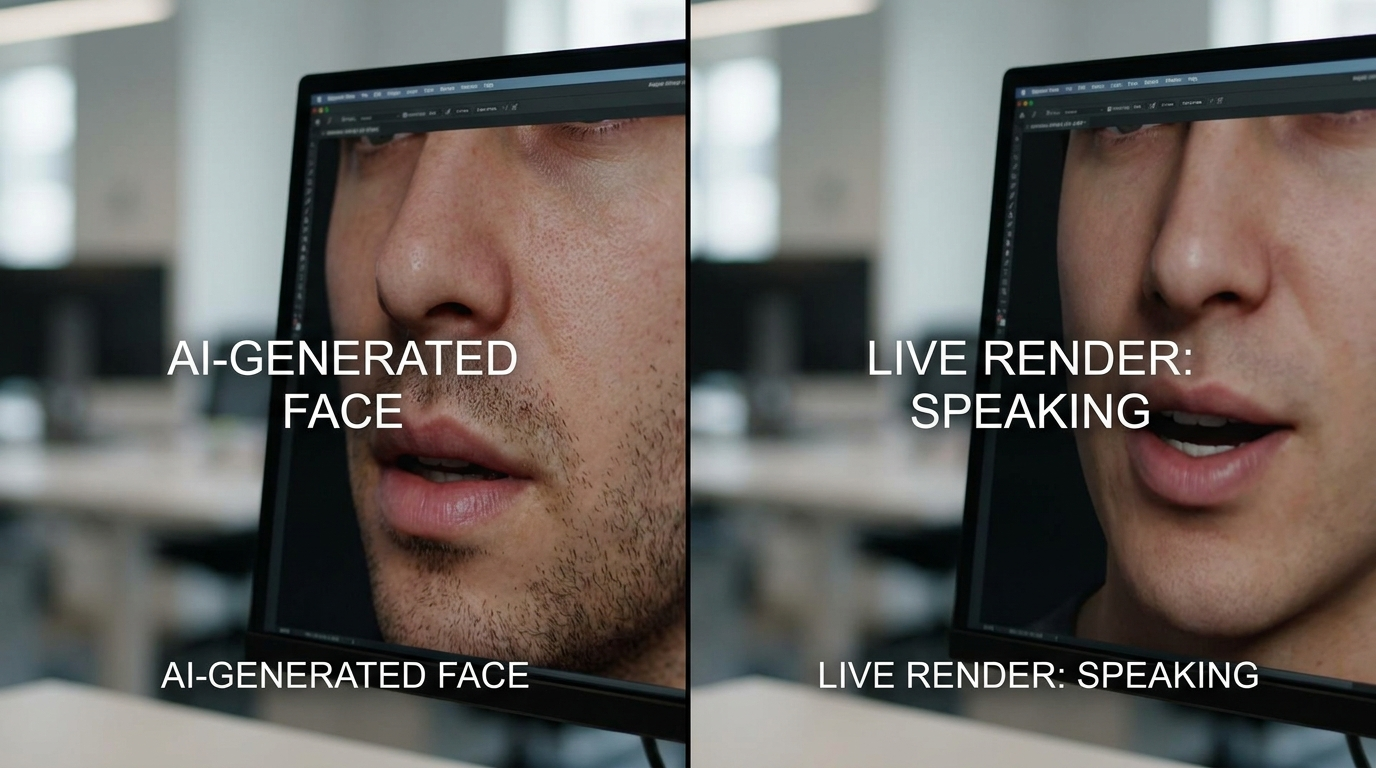
To truly understand the heygen vs d-id for ai video landscape, we must look at the technical specifications that define these platforms in 2026. HeyGen has doubled down on its "Video Translate" feature, which now supports real-time lip-syncing in over 40 languages while maintaining the original speaker's tone. Unite.AI recently noted in a review that cloning oneself on HeyGen has reached a level of realism that is "scary real," making it the gold standard for personalized outreach.
D-ID, however, has focused on latency. Their 2026 Visual AI Agents operate with sub-200ms latency, making them viable for live video calls. While HeyGen focuses on the quality of the pre-rendered video, D-ID focuses on the speed and responsiveness of the live avatar. This makes D-ID the preferred choice for developers building apps that require a "face" for LLMs like GPT-5 or Claude 4. The following table highlights the key differences between the two platforms based on current 2026 data.
| Feature | HeyGen (2026) | D-ID (2026) |
|---|---|---|
| Primary Use Case | Marketing, Training, Social Media | Interactive Agents, Live Support |
| Avatar Realism | Industry-Leading (Hyper-Realistic) | High (Optimized for Interaction) |
| Real-Time Capability | Limited (Beta Interactive) | Full Real-Time Visual Agents |
| Video Translation | Advanced (Tone & Lip-Sync) | Standard Translation Features |
| API Focus | Content Automation & Scalability | Real-Time Conversational UX |
HeyGen Deep Dive: The King of Content Creation
In 2026, HeyGen is widely considered the most powerful tool for "asynchronous" video. This means any video where the viewer is not interacting with the speaker in real-time. According to autogpt.net, HeyGen's 2026 suite includes an AI Script Writer that is context-aware, meaning it can pull data from your website to draft scripts that are perfectly aligned with your brand voice. The platform's ability to create "Instant Avatars" from a smartphone video has democratized high-end video production for small business owners.
One of the standout features of HeyGen in 2026 is its "Team Collaboration" workspace. Large enterprises can now maintain a library of "Digital Brand Ambassadors"—cloned versions of their actual employees—to ensure consistent messaging across global markets. G2 Learning Hub listed HeyGen as one of the "7 Best AI Video Generators for 2026," specifically praising its ability to handle complex emotional nuances in voiceovers, which prevents the "robotic" feel that plagued earlier AI video tools.
HeyGen’s Integration and Scalability
For businesses looking to scale, the heygen vs d-id for ai video debate often ends with HeyGen’s robust API. In 2026, HeyGen allows for the mass-personalization of videos. Imagine sending 5,000 prospects a video where the avatar says their name, mentions their specific company, and references a recent industry event. This level of personalization has seen conversion rates increase by up to 300% compared to traditional email marketing, as noted in recent studies on AI consumer surplus by Jakob Nielsen.
D-ID Deep Dive: The Future of Interactive AI
D-ID has carved out a unique niche in the 2026 market by moving beyond static video generation. Their "Visual AI Agents" are the cornerstone of what they call the "Natural User Interface" (NUI). Instead of typing into a chatbot, users in 2026 are increasingly interacting with D-ID powered avatars on retail websites, banking apps, and healthcare portals. As Forbes highlighted, this signals a shift where the AI is no longer just a tool, but a digital presence that can perceive and respond to human emotion in real-time.
The D-ID Creative Reality Studio has also seen significant upgrades. In 2026, it supports "Streaming IPv6," allowing for seamless integration into high-bandwidth environments like VR and AR. While HeyGen focuses on the "look" of the video, D-ID focuses on the "experience" of the interaction. This makes D-ID indispensable for companies looking to reduce overhead in customer service while maintaining a "human touch."
D-ID’s Technological Edge in 2026
The core advantage of D-ID in the heygen vs d-id for ai video comparison is its low-latency animation engine. D-ID’s proprietary "Live Portrait" technology can take a single photo and animate it in real-time based on a live audio stream. This is significantly different from HeyGen’s approach, which typically requires pre-rendering. For developers, D-ID offers a more flexible SDK that can be embedded into mobile apps, providing a face for AI assistants that feels responsive and alive.
Pricing and ROI: Which Platform Offers Better Value?
Choosing between heygen vs d-id for ai video also requires a careful look at the return on investment. In 2026, both platforms have moved toward credit-based pricing models, but their structures reflect their different use cases. HeyGen’s pricing is tiered toward video minutes produced, making it ideal for content creators who need to output a high volume of social media clips or training modules. Their "Pro" and "Enterprise" tiers offer significant discounts for bulk rendering.
D-ID’s pricing in 2026 is more focused on "Session Minutes" and API calls. Since their primary value is interaction, they charge based on how long a user interacts with a Visual AI Agent. For a company running a 24/7 virtual concierge, D-ID’s enterprise plans provide a cost-effective alternative to a full-time human staff. According to G2 Learning Hub, users find that while HeyGen may have a higher entry price for its top-tier avatars, the quality of the output often justifies the cost for high-stakes marketing campaigns.
Enterprise Security and Ethical AI
As we navigate 2026, security is a major factor in the heygen vs d-id for ai video choice. Both companies have implemented rigorous "Proof of Life" checks to prevent the creation of deepfakes without consent. HeyGen requires a specific video consent statement for every avatar created, while D-ID uses advanced watermarking and blockchain-based verification to ensure the authenticity of its Visual Agents. This commitment to ethical AI is crucial for enterprise clients who must adhere to the 2026 Global AI Governance standards.
Which is better for YouTube content, HeyGen or D-ID?
HeyGen is generally better for YouTube content in 2026 due to its superior avatar realism and 4K rendering capabilities. Its "Instant Avatar" feature allows creators to clone themselves with high fidelity, making it perfect for "faceless" channels or creators looking to scale their production without being on camera every day.
Can I use D-ID for real-time customer service?
Yes, D-ID is specifically designed for real-time interaction through its Visual AI Agents. In 2026, D-ID offers the lowest latency in the industry, allowing for smooth, conversational video interfaces that can be integrated into websites and mobile applications for customer support.
Does HeyGen support video translation?
HeyGen is a leader in AI video translation as of 2026. Its platform can translate a video into over 40 languages, not only changing the audio but also adjusting the lip-sync of the speaker to match the new language perfectly while maintaining the original voice's tone and emotion.
Which platform is easier for beginners to use?
HeyGen offers a more user-friendly, "drag-and-drop" interface that is ideal for beginners and marketing professionals. D-ID, while also offering a creative studio, is more heavily geared toward developers and enterprises who want to use its API and SDK for building custom interactive applications.
Are the AI avatars in 2026 indistinguishable from real humans?
In 2026, top-tier platforms like HeyGen have reached a level of realism often described as "scary real." While experts might still find tiny tells, the average viewer can no longer distinguish between a high-quality HeyGen "Instant Avatar" and a real human recorded on video, especially in social media and mobile contexts.



Comments ()