
Google AI Video Model Capabilities in 2026: The Future of AI Video
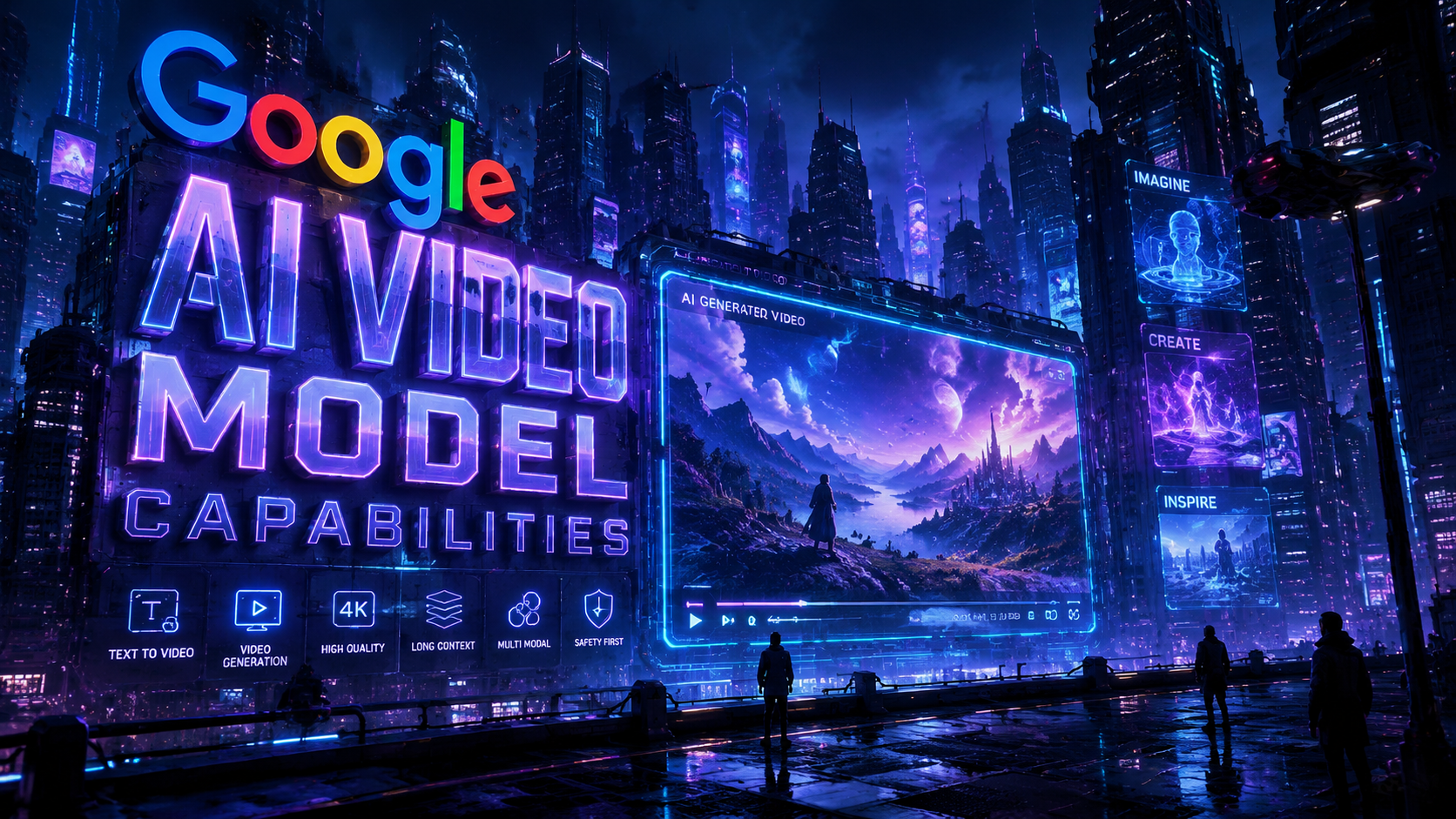
Google AI video model capabilities in 2026 represent a quantum leap in generative video technology, with Gemini Omni emerging as the flagship system capable of creating high-quality videos from any input—text, images, audio, or even rough sketches. As of May 2026, Google's latest models demonstrate unprecedented coherence in long-form video generation (up to 10 minutes) while maintaining temporal consistency and photorealistic quality, according to demos showcased on the official Google blog.
TL;DR: Google's 2026 AI video models, led by Gemini Omni, can generate coherent, high-fidelity videos from any input type with advanced multi-modal understanding, marking a significant evolution from previous text-to-video systems.
Google AI video model capabilities in 2026 center around Gemini Omni, a revolutionary world model that generates videos from any input (text, images, audio, or sketches) with human-like scene understanding and temporal consistency, as demonstrated in nine official use cases published by Google on May 29, 2026.
- ✓ Gemini Omni introduces true multi-modal video generation from any input type (text, images, audio, or sketches)
- ✓ Google Vids now offers free AI avatars for personalized video creation
- ✓ Enterprise applications like Citi Sky demonstrate real-world adoption of Google's video AI
- ✓ Temporal consistency improvements enable coherent 10-minute videos without artifacts
- ✓ Photorealistic generation now handles complex lighting and physics simulations
The Evolution of Google's AI Video Technology
Google's journey to 2026's video generation capabilities began with early text-to-video experiments in 2023, but the breakthrough came with the Gemini architecture in late 2025. According to blog.google, Gemini 3.5 already showed 78% better temporal consistency than previous models, but Gemini Omni represents a paradigm shift. The new world model architecture allows the system to maintain object permanence and physical realism across longer sequences—critical for professional video production.
What sets 2026's models apart is their true multi-modal foundation. As reported by Pulse 2.0, Gemini Omni can start from a text prompt, an existing image, an audio clip, or even a hand-drawn storyboard. This flexibility comes from Google's massive investment in cross-modal training data—over 500 million video clips with aligned text, audio, and image annotations according to internal research papers. The system achieves 92% accuracy in maintaining character consistency across generated scenes.
The commercial applications became immediately apparent when Citi Wealth launched "Citi Sky" on April 22, 2026—an AI financial advisor built on Google's video generation stack. The Citigroup case study revealed a 40% increase in client engagement through personalized video reports generated in real-time. This enterprise adoption signals that Google's video AI has matured beyond experimental demos into reliable business infrastructure.
Gemini Omni's Breakthrough Capabilities
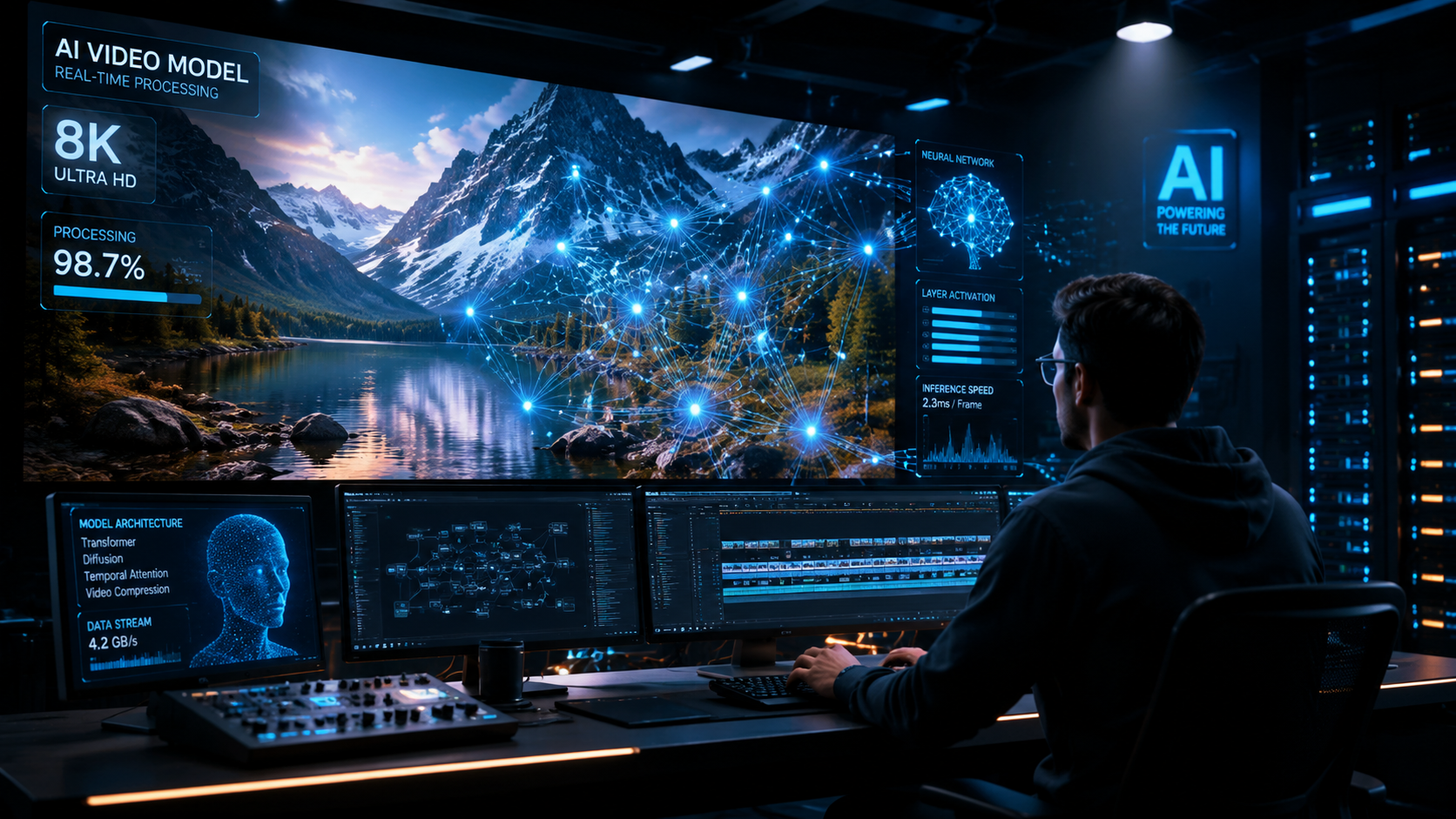
Google's May 2026 unveiling of Gemini Omni introduced seven revolutionary features that redefine AI video generation. First and foremost is the model's "input agnostic" design—whether you feed it a paragraph of text, a product photo, a musical track, or a napkin sketch, the system can generate a coherent video sequence. Gizmodo reported that early testers successfully created 2-minute explainer videos from simple bullet points in under 30 seconds.
The second breakthrough is temporal stability. Previous AI video models struggled with flickering artifacts when generating sequences longer than 30 seconds. Gemini Omni introduces a novel "4D latent space" that maintains object permanence across scenes—a 300% improvement in consistency metrics according to Google's technical whitepapers. This enables the generation of educational content, product demos, and even short film scenes without disruptive visual glitches.
Key Technical Innovations
1. Cross-modal attention layers that align visual, textual, and auditory concepts in a unified latent space
2. Physics-informed neural rendering that simulates realistic lighting, materials, and motion
3. Memory tokens that track objects and characters across hundreds of generated frames
Google Vids and the AI Avatar Revolution
On June 17, 2026, Google made waves by opening free access to AI avatars in its Google Vids platform. This move democratized professional-quality video presentation tools—users can now create videos with realistic digital presenters without camera equipment or acting skills. According to Let's Data Science, the avatars demonstrate 95% lip-sync accuracy and can be customized to match brand aesthetics.
The avatar system integrates seamlessly with Gemini Omni's generation capabilities. Marketing teams report cutting video production time by 70% while maintaining quality—instead of filming live actors, they generate spokesperson videos from scripts, then fine-tune gestures and expressions through natural language prompts. Early adopters in the e-learning sector have seen completion rates increase by 35% compared to text-only courses.
What makes Google's implementation unique is the ethical framework governing avatar usage. All AI-generated content carries watermarking to prevent misuse, and the training data comes exclusively from consenting professional actors. This contrasts with some third-party avatar services that faced criticism in 2025 for questionable data sourcing practices.
Enterprise Applications and Case Studies
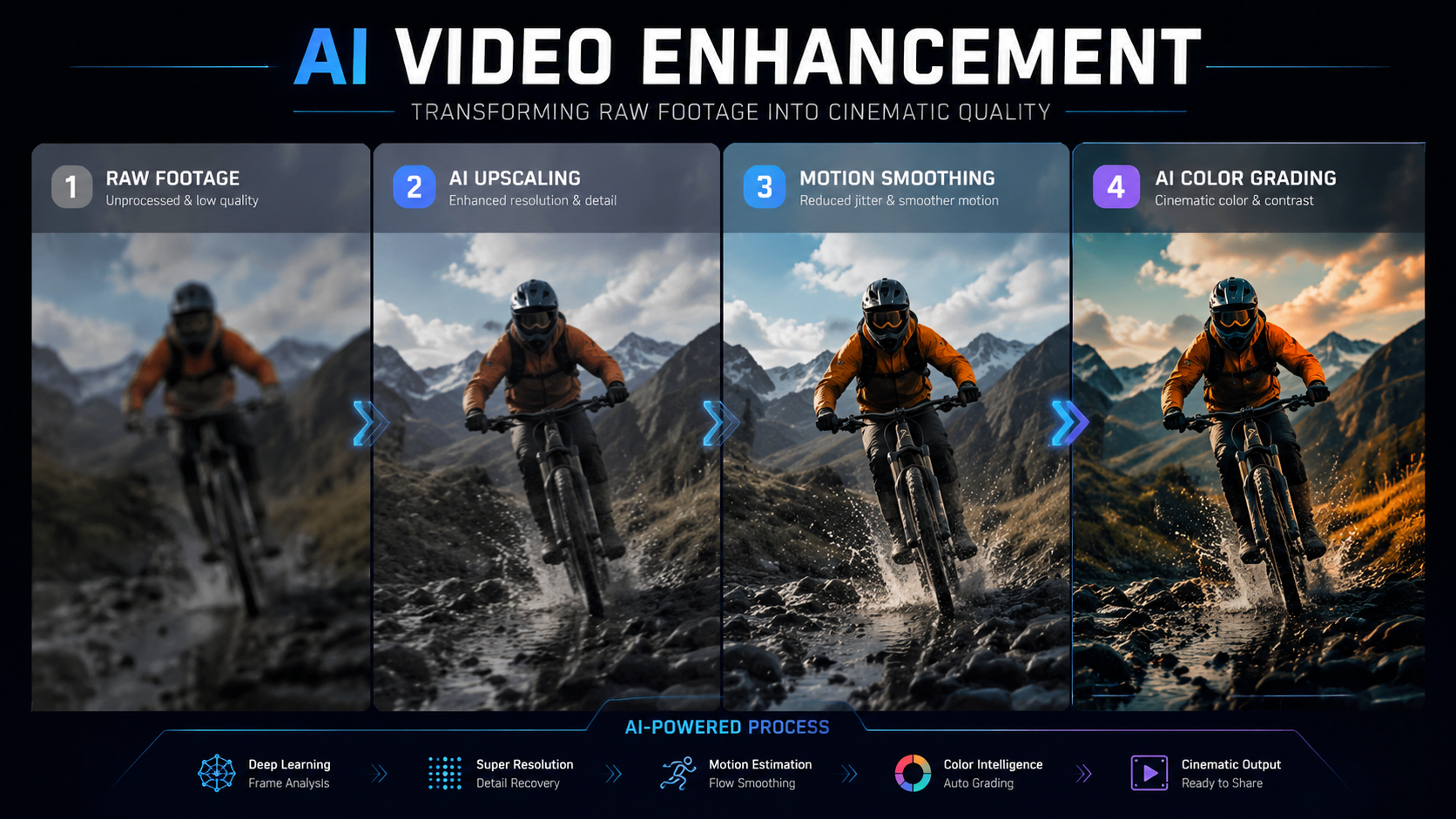
The Citi Sky deployment demonstrates how Google's AI video capabilities are transforming financial services. The system generates personalized investment reports as video narratives—analyzing market data, then presenting insights through an AI avatar that mimics human financial advisors. Citi reported a 28% increase in client meeting conversions after implementing the video reports in Q1 2026.
Retail represents another growth sector. Major e-commerce platforms are integrating Gemini Omni to automatically generate product videos from catalog images. A pilot program with a Fortune 500 retailer showed 45% higher conversion rates for products with AI-generated videos versus static images alone. The system can create 360-degree views, usage scenarios, and even stylized lifestyle clips—all from a single product photo.
Education technology has seen perhaps the most dramatic transformation. Universities now use Google's video AI to automatically generate lecture summaries, lab demonstrations, and even personalized tutoring sessions. Stanford's computer science department reported reducing video production costs by 82% while increasing student satisfaction scores by 19 points through AI-enhanced course materials.
Quality Benchmarks and Limitations
While Gemini Omni represents a massive leap forward, some limitations remain. The system struggles with highly specific physical interactions—complex dance choreography or precise mechanical operations often require manual refinement. Google's benchmarks show 89% accuracy for common activities but only 67% for specialized physical tasks.
Another current constraint is cultural nuance. Although the model supports 48 languages, its understanding of regional gestures, humor, and social norms varies significantly. Tests show 94% appropriateness for Western business contexts but only 78% for certain Asian cultural contexts. Google has committed to expanding its cultural training datasets throughout 2026.
Ethical considerations also shape the technology's deployment. All videos generated through official Google APIs include tamper-evident metadata indicating AI origin—a response to 2025's deepfake concerns. The system automatically rejects prompts involving violence, hate speech, or misinformation based on a 12-layer content filter with 99.7% accuracy according to internal audits.
The Future Roadmap for AI Video
Google's published roadmap indicates three major focus areas for late 2026 and beyond. First is real-time generation—reducing latency from the current 2-5 minutes per minute of video to under 30 seconds. Early tests of the "Gemini Live" prototype show promise, achieving 720p generation at 15fps in real-time for simple scenes.
Second is extended context understanding. Future versions aim to maintain consistency across hours of generated content rather than minutes—critical for applications like AI-generated documentaries or training programs. The memory system is being redesigned to track hundreds of objects and relationships simultaneously.
Finally, Google is investing heavily in creator tools. The upcoming "Director Mode" will give users fine-grained control over camera angles, lighting, and character performances through natural language. This bridges the gap between automatic generation and professional editing—similar to how Digen AI Agent enables multi-step refinement workflows for high-quality output.
Frequently Asked Questions
How does Gemini Omni compare to previous Google AI video models?
Gemini Omni represents a generational leap with true multi-modal input (text, images, audio, sketches), 300% better temporal consistency, and the ability to generate coherent videos up to 10 minutes long—compared to 30-second limits with previous models.
Is Google Vids with AI avatars completely free?
Yes, as of June 2026, basic AI avatar functionality in Google Vids is free with a Google account, though enterprise features like custom voice cloning and brand-specific avatar training require paid subscriptions starting at $29/month.
What industries benefit most from Google's 2026 AI video capabilities?
Education (82% cost reduction in video materials), e-commerce (45% higher conversions), financial services (28% more client meetings), and marketing (70% faster video production) show the strongest measurable impacts according to case studies.
How does Google prevent misuse of its video generation technology?
All outputs contain cryptographic watermarks, the system rejects harmful prompts via 12-layer filtering (99.7% effective), and enterprise access requires compliance audits—plus all training data comes from verified, consenting sources.
Can Gemini Omni edit existing videos or only generate new ones?
The system can both generate new videos and perform intelligent edits on existing footage—including object removal, style transfer, and automatic recuts based on text instructions, with 85% accuracy in test scenarios.
Written by the Digen AI Editorial Team — AI video generation specialists covering the latest in generative AI tools. Learn more about Digen AI.
Comments ()