
Generative AI Video Tools for Filmmakers: 2026 Guide
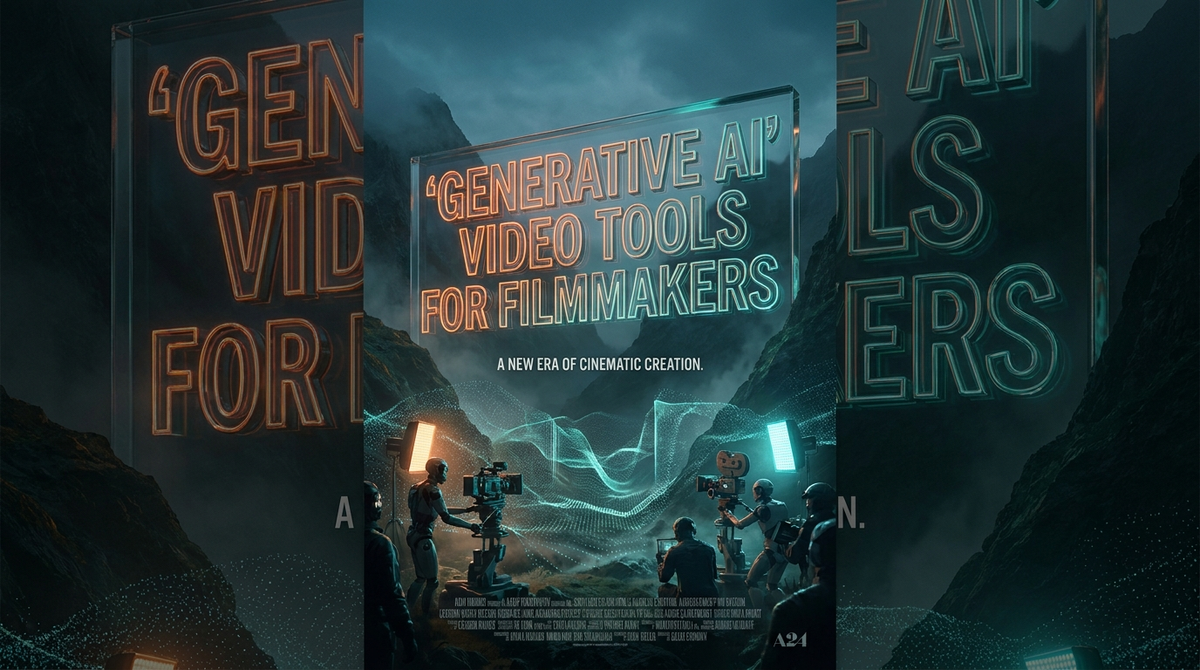
Generative AI video tools for filmmakers have evolved from experimental curiosities into industry-standard production assets that automate visual effects, generate photorealistic environments, and streamline post-production workflows. In 2026, the primary generative ai video tools for filmmakers focus on high-fidelity consistency, allowing creators to maintain character and lighting stability across multiple shots for professional-grade cinema. By integrating these tools, filmmakers can significantly reduce the overhead of traditional rendering and physical set construction while expanding their creative scope.
Generative AI video tools for filmmakers are advanced software platforms that utilize neural networks to synthesize, edit, and enhance cinematic footage. These tools allow for text-to-video generation, AI-driven rotoscoping, and real-time environment creation, enabling studios like Amazon MGM and Netflix to produce high-end content with increased efficiency and reduced physical production costs.
- ✓ Major studios like Amazon MGM and Netflix are now funding AI-native film projects and hiring dedicated AI Video Managers.
- ✓ Modern AI tools have effectively solved the "uncanny valley" problem, offering photorealistic human movement and lighting.
- ✓ Integration with established creative suites, such as Adobe’s Sundance-featured tools, has made AI a standard part of the editing pipeline.
- ✓ Generative AI is democratizing storytelling globally, specifically empowering emerging filmmakers in regions like Africa.
The Evolution of Generative AI Video Tools for Filmmakers in 2026
As we move through 2026, the landscape of cinema has been fundamentally altered by the maturity of generative technologies. What was once a niche interest for tech-savvy creators has become a cornerstone of the global film industry. According to McKinsey & Company, AI is currently reinventing film and TV production by optimizing everything from pre-visualization to final color grading. This shift is not merely about cost-cutting; it is about expanding the boundaries of what can be visualized on screen without the constraints of physical physics or location scouting.
The current year has seen a massive surge in institutional support for these technologies. In May 2026, Amazon MGM Studios launched its "GenAI Creators Fund," greenlighting three major series for Prime Video that are produced primarily using generative workflows. This move signals a transition from "AI as a tool" to "AI as a medium." Filmmakers are no longer just using these tools for background cleanup; they are using them to build entire narrative worlds that were previously unfilmable due to budget or technical limitations.
Step-by-Step: Implementing AI into Your Production Workflow
- Pre-Visualization: Use text-to-video generators to create "moving storyboards" that establish pacing and lighting before a single camera is rented.
- Environment Synthesis: Replace traditional green screens with AI-generated 3D environments that react to camera movement in real-time.
- Post-Production Enhancement: Apply AI-driven rotoscoping and object removal to clean up frames in seconds rather than hours.
- Character Consistency: Utilize "seed-locking" features in modern generative tools to ensure characters look identical across different shots and scenes.
- Localization: Use AI to automatically sync lip movements to dubbed audio for international distribution, a technique now perfected by global streaming platforms.
Major Industry Shifts: Netflix, Amazon, and Adobe
The professionalization of AI in film is best evidenced by the hiring trends of the world’s largest distributors. Netflix recently made headlines by offering salaries up to $545,000 for an AI Video Manager. This role is designed to bridge the gap between engineering and creative direction, ensuring that the latest generative models are optimized for the high-stakes environment of prestige television and feature films. This high-level investment proves that generative AI video tools for filmmakers are no longer optional "extras" but core components of the modern studio infrastructure.
Adobe has also played a pivotal role in this transition. During the 2026 Sundance Film Festival, Adobe showcased how their latest generative integrations have expanded creative expression. By embedding AI directly into non-linear editing systems, filmmakers can now generate b-roll, extend frames, and adjust facial expressions without leaving their timeline. This seamless integration ensures that the technology serves the story, rather than the story being dictated by the limitations of the software.
Comparing Top Generative AI Video Tools for Filmmakers
| Tool Category | Key Features (2026 Standards) | Primary Use Case | Target Audience |
|---|---|---|---|
| Studio-Grade Generators | Temporal consistency, 8K resolution, Seed-locking | Feature films and high-end series | Major Studios (Amazon, Netflix) |
| Plugin-Based AI | Direct NLE integration, AI rotoscoping, Frame extension | Post-production and VFX | Editors and Colorists |
| Mobile-First GenAI | Low latency, stylized filters, instant social sharing | Social media and indie shorts | Content Creators and Indie Filmmakers |
| Global Storytelling Tools | Dialect-specific lip-sync, cultural asset libraries | International co-productions | Documentarians and Global Creators |
Global Impact and the End of the Uncanny Valley
One of the most significant technological breakthroughs of early 2026 came from the East. New AI video tools released in China have reportedly "closed the uncanny valley for good," according to reports from Fast Company. These models utilize advanced physics-informed neural networks that accurately simulate the way light interacts with human skin and how muscles move under the surface. For filmmakers, this means that digital doubles and de-aging processes are now virtually indistinguishable from reality, even in extreme close-ups.
Beyond the technical achievements, generative AI is fostering a more inclusive filmmaking environment. Google’s 2026 initiatives have focused heavily on empowering African storytellers. By providing access to high-end generative ai video tools for filmmakers, creators in regions with limited production infrastructure can now compete on a global stage. These tools allow a filmmaker in Lagos or Nairobi to render cinematic vistas and complex visual effects that would have previously required a Hollywood-sized budget, effectively democratizing the "look" of prestige cinema.
The Role of the AI Video Manager in Modern Sets
The emergence of the AI Video Manager as a high-paying executive role highlights a shift in how films are staffed. This position is responsible for overseeing the "latent space" of a production—managing the custom-trained models that define a film's specific visual language. In 2026, a film's "look" is often defined by a proprietary LoRA (Low-Rank Adaptation) or a fine-tuned model trained on the director's previous work or concept art. This ensures that the AI-generated elements feel cohesive with the practical footage.
Furthermore, these managers handle the ethical and legal frameworks of AI usage. With the rise of the GenAI Creators' Fund at Amazon MGM, there is a heightened focus on ensuring that all training data is cleared and that the AI is used to augment human labor rather than replace it. This hybrid approach—where the AI handles the repetitive, data-heavy tasks of rendering and rotoscoping—allows the director and cinematographer to focus on the emotional core of the scene.
Future-Proofing Your Career with AI Video Tools
For independent filmmakers, the barrier to entry has never been lower, but the requirement for technical literacy has never been higher. To stay relevant in 2026, creators must master the art of "prompt cinematography"—the ability to describe camera angles, lighting temperatures, and lens types in a way that generative models understand. Mastering these generative ai video tools for filmmakers is now as essential as knowing how to light a three-point interview or edit a jump cut.
The democratization of these tools means that the "middle class" of filmmaking is returning. While the previous decade saw a divide between ultra-low-budget indie films and massive blockbusters, generative AI allows mid-budget films to achieve blockbuster visuals. Filmmakers can now use AI to populate crowd scenes, create period-accurate cityscapes, or generate complex creature effects that were once the exclusive domain of top-tier VFX houses. This shift is encouraging a new wave of genre filmmaking that prioritizes imaginative storytelling over raw financial resources.
What are the best generative AI video tools for filmmakers in 2026?
The best tools currently include studio-integrated models from Adobe and specialized high-fidelity generators used by Amazon MGM and Netflix. These tools focus on temporal consistency and 8K output, ensuring that AI-generated footage can be seamlessly intercut with 35mm or digital sensor footage.
How is Netflix using AI in filmmaking?
Netflix is utilizing AI for a variety of tasks, including predictive editing, automated localization, and high-end visual effects. They have recently invested in high-level talent, such as AI Video Managers, to oversee the integration of these technologies into their original programming.
Can AI video tools create realistic human characters?
Yes, as of 2026, new models have effectively bridged the "uncanny valley." These tools use physics-based rendering and advanced neural textures to create digital humans that are indistinguishable from real actors, even in high-definition cinematic contexts.
Is generative AI replacing film crews?
Rather than replacing crews, AI is shifting roles. While manual tasks like rotoscoping are being automated, new roles like AI Video Managers and Prompt Cinematographers are emerging. The focus is on augmenting human creativity and reducing the time spent on technical drudgery.
Are there AI tools specifically for indie filmmakers?
Absolutely. Many generative AI video tools for filmmakers are available via cloud-based subscriptions, allowing indie creators to access powerful VFX and environment-generation capabilities without the need for expensive local hardware or massive post-production teams.



Comments ()