
Gemini Omni AI Model 2026: Next-Gen Multimodal Intelligence
Gemini Omni is Google’s next-generation multimodal AI model that can process and generate any combination of text, image, audio, and video—often described as an “anything-to-anything” system that blurs the line between traditional content types. Unveiled in May 2026 alongside Gemini 3.5, this model marks a leap beyond single‑modality or even multi‑input models, enabling seamless conversion across formats: text to video, audio to image, image to text, and more.
Gemini Omni is Google’s new any‑to‑any AI model that takes in text, images, audio, and video and can output any of those modalities—for example, turning a handful of photos and a voice memo into a short film. It represents a paradigm shift from separate models for each type of media to a single unified intelligence.
- ✓ Gemini Omni processes and generates text, images, audio, and video in any combination.
- ✓ Demonstrations include converting a series of images plus narration into a coherent video clip.
- ✓ The model was publicly demoed in May 2026, alongside Gemini 3.5, in nine official demos from Google.
- ✓ Early analysts highlight enterprise use cases in content production, accessibility, and real‑time multimodal communication.
- ✓ Gemini Omni is part of Google’s broader push to keep pace with competitors in the generative AI space, as reported by CNBC.
What Is the Gemini Omni AI Model?
Simply put, Gemini Omni is an “any‑to‑any” AI model: it accepts inputs from multiple modalities (text, image, audio, video) and can produce outputs in any of those modalities, often recombining them in creative ways. For instance, a user could provide a few images, a written prompt, and a voice recording, and Gemini Omni might generate a complete video sequence with synchronized audio.
According to The Verge (May 23, 2026), the model is “wild” because it breaks down the traditional walls between content types. Where earlier models required separate engines for text generation, image synthesis, and video creation, Gemini Omni fuses all of these capabilities into a single neural architecture. This unification allows the model to learn cross‑modal relationships more deeply—for example, understanding how a spoken phrase should influence the visual style of an image or how a video’s lighting should shift based on a textual description.
How It Differs from Earlier Gemini Versions
Prior to Omni, models like Gemini Pro and Gemini Ultra were multimodal in the sense that they could accept multiple input types, but they typically output only text (or occasionally images). Gemini Omni turns the table: any input modality can yield any output modality. As TechCrunch reported on May 19, 2026, the model “turns images, audio, and text into video—and that’s just the start.” The result is a more fluid, almost human‑like ability to communicate across media.
Key Features and Capabilities
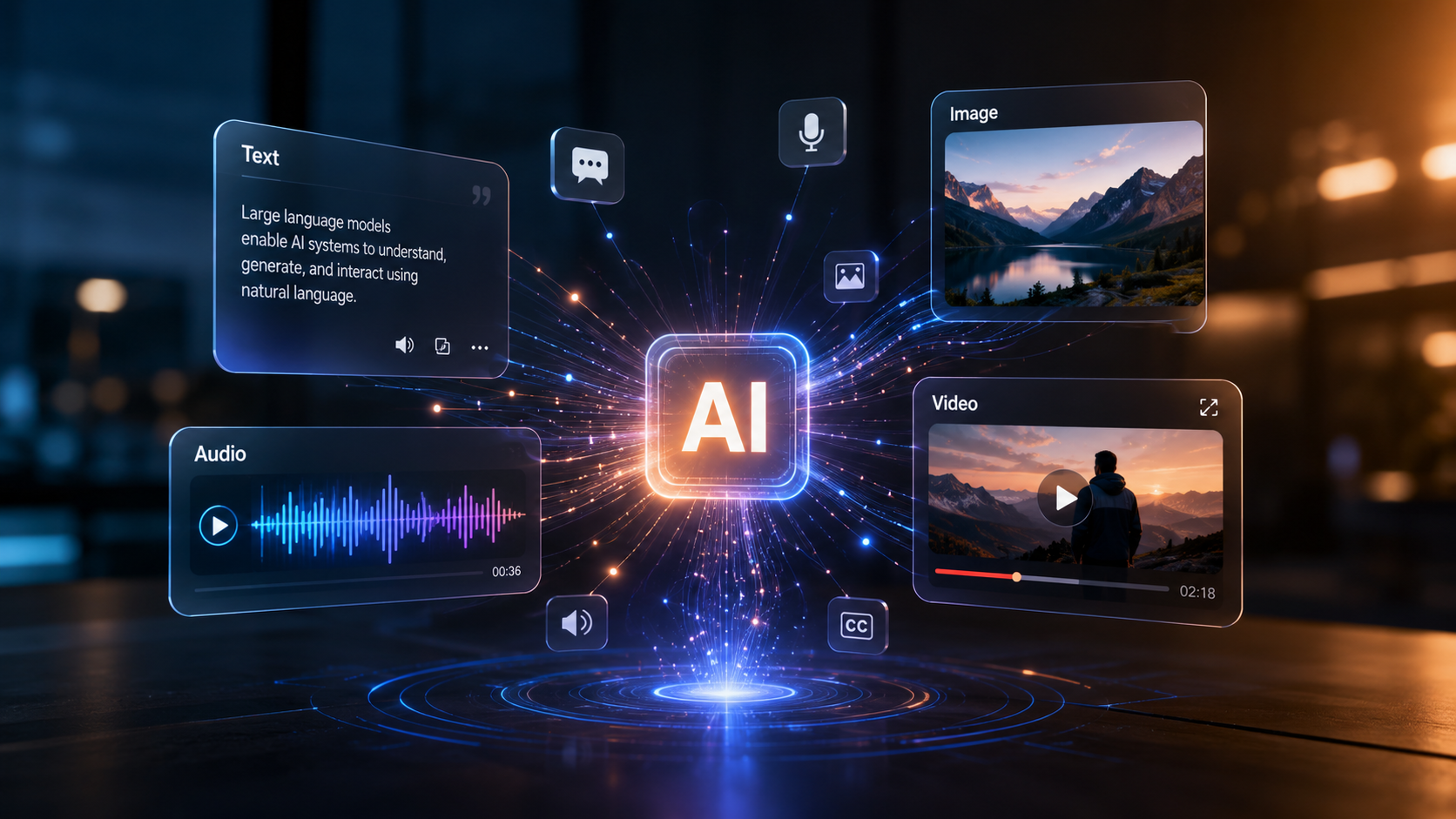
Google published nine official demos of Gemini Omni (and Gemini 3.5) on its blog on May 29, 2026. These demonstrations showcase a range of capabilities that had previously required separate specialized models.
1. Text‑to‑Video Synthesis
Given a paragraph description, Gemini Omni can generate a short video clip with coherent scene transitions, motion, and even ambient audio. The model does not simply stitch together static frames—it reasons about narrative flow, object interactions, and temporal continuity.
2. Image + Audio → Video
One of the most striking demos involved a set of still photographs and a voice narration. Gemini Omni produced a video that animated the photographs, matched the narration’s cadence, and added subtle effects like panning and zooming to create a cinematic feel.
3. Multimodal Understanding
Beyond generation, the model excels at understanding content across modalities. For example, it can analyze a video and produce a textual summary, generate a descriptive audio track for visually impaired users, or identify objects in an image and create a soundscape that reflects the scene.
4. Real‑Time Interaction
Early reports from 9to5Google (May 11, 2026) suggest that some demos included near‑real‑time processing. While full production latency is still being optimized, the model’s ability to process multiple streams simultaneously points toward applications in live streaming, assistive technology, and interactive creative tools.
How Gemini Omni Works Under the Hood
While Google has not released exhaustive technical details, the architecture builds on the transformer‑based foundation of earlier Gemini models, but extends it with a novel “cross‑modal attention” mechanism. Instead of having separate encoders for each modality that are later fused, Gemini Omni trains a unified encoder that projects all input types into a shared latent space. This shared representation allows the model to learn correlations across modalities—such as the way a specific word tone typically aligns with a particular visual hue—and then decode into any output modality.
According to VentureBeat’s analysis (May 19, 2026), enterprises should note that the model requires significantly more compute during training, but Google has optimized inference using its TPU v6 chips. The result is a model that can run on cloud infrastructure with reasonable cost for commercial workloads, though on‑device deployment remains a challenge due to the large parameter count.
Training Data and Safety Measures
Gemini Omni was trained on a massive dataset of multimodal pairs—videos with captions, images with alt text, podcasts with transcripts, etc. Google has emphasized safety reviews and red‑teaming to prevent misuse, such as generating misleading deepfakes. The model includes guardrails that require explicit user consent for certain generation types (e.g., depicting real people) and watermarking for synthesized content.
Enterprise Implications
VentureBeat’s piece specifically focused on what the Gemini Omni AI model means for businesses. The ability to transform any content into any other format could revolutionize workflows in marketing, education, accessibility, and entertainment.
Content Production at Scale
A marketing team could upload a set of product images, a brand script, and a background music track, and Gemini Omni would produce a complete promotional video—potentially in multiple languages by varying the audio. This reduces the need for specialized video editing and voice‑over talent, though human oversight is still recommended for quality control.
Accessibility and Inclusion
Organizations can use the model to automatically generate audio descriptions for images (text→audio), caption videos (audio→text), or create tactile‑audio guides for users with different abilities. The any‑to‑any nature means a single model can serve diverse user needs without relying on multiple disjoint tools.
Real‑Time Customer Service
Imagine a support chatbot that can not only text but also generate a short video tutorial on the fly based on a customer’s spoken problem. With Gemini Omni, such interactions move from hypothetical to feasible, albeit with latency considerations.
Comparison: Gemini Omni vs. Previous Multimodal Approaches
To appreciate the leap, it helps to compare Gemini Omni with earlier models and conventional pipelines. The table below summarizes key differences.
| Feature | Gemini Omni (2026) | Earlier Multimodal Models |
|---|---|---|
| Input modalities | Text, image, audio, video (any) | Usually text + image only |
| Output modalities | Text, image, audio, video (any) | Primarily text, sometimes image |
| Cross‑modal generation | Yes (e.g., image+audio → video) | No (generates within one modality) |
| Real‑time capability | Near‑real‑time for short outputs | Typically batch processing |
| Enterprise readiness | Cloud API expected in H2 2026 | General‑purpose APIs available |
| Safety guardrails | Built‑in watermarking & consent | Varies; often added as separate layer |
Getting Started with Gemini Omni
As of June 2026, Google has not released a public API for Gemini Omni. However, the company has invited select enterprise partners to trial the model via Google Cloud’s Vertex AI platform. Based on the demos blogged by Google on May 29, 2026, developers can expect the following steps to integrate the model once it becomes available:
- Provision a Vertex AI workbench – Enable the Gemini Omni model (likely via a gated preview request).
- Prepare your data – Upload multimodal inputs (images, audio files, text prompts, video clips) in supported formats.
- Define the desired output – Specify which modality you want the model to generate and any constraints (e.g., video length, resolution, style).
- Invoke the model – Use the Vertex AI API with a simple inference call. The model returns the generated content as a binary stream (video, audio, or image) along with metadata.
- Review and refine – Since the model is creative, plan for human‑in‑the‑loop review, especially for customer‑facing content.
Frequently Asked Questions
What is the Gemini Omni AI model?
Gemini Omni is a unified multimodal AI from Google that accepts and generates text, images, audio, and video in any combination—an “anything‑to‑anything” model.
When was Gemini Omni announced?
Google showcased the model in early May 2026, with detailed demos published on the Google blog on May 29, 2026.
How does Gemini Omni differ from Gemini 3.5?
Gemini 3.5 is a text‑focused large language model with some multimodal input capabilities. Gemini Omni is a separate model specialized for any‑to‑any generation, including video output.
Can I use Gemini Omni today?
As of mid‑2026, the model is in limited preview for enterprise partners via Google Cloud’s Vertex AI. Public API availability is expected later in the year.
What are the main use cases for Gemini Omni?
Content creation (text to video, image to audio), accessibility (automatic captioning and audio descriptions), interactive media, and real‑time multimodal customer support.
Is Gemini Omni safe to use?
Google has incorporated safety measures such as watermarking of AI‑generated content and consent requirements for depicting real individuals. However, as with any generative model, outputs should be reviewed before public use.
Will Gemini Omni replace individual AI image or video models?
For many tasks, yes—it can handle multiple modalities within one system. However, specialized models may still outperform it on specific tasks (e.g., high‑resolution video editing), and Gemini Omni is not yet available on‑device.
The Gemini Omni AI model represents a significant milestone in artificial intelligence, enabling machines to communicate across the same rich variety of media humans use. As Google refines the model and expands access, businesses and creators should prepare for a new wave of multimodal applications that were previously the stuff of science fiction.



Comments ()