
AI Video in 2026: The Future of Content Creation Unveiled
The future of content creation AI video is here—and it's transforming how we produce, edit, and distribute visual media. By 2026, AI-powered video tools have evolved beyond simple generators, now offering cinema-quality storytelling, autonomous workflows, and seamless integration into everyday content pipelines. From marketing teams to indie filmmakers, AI video is no longer a novelty but a necessity for staying competitive.
TL;DR: AI video in 2026 delivers cinema-quality results, reduces production time by up to 70%, and enables hyper-personalized content at scale—making it indispensable for creators and businesses alike.
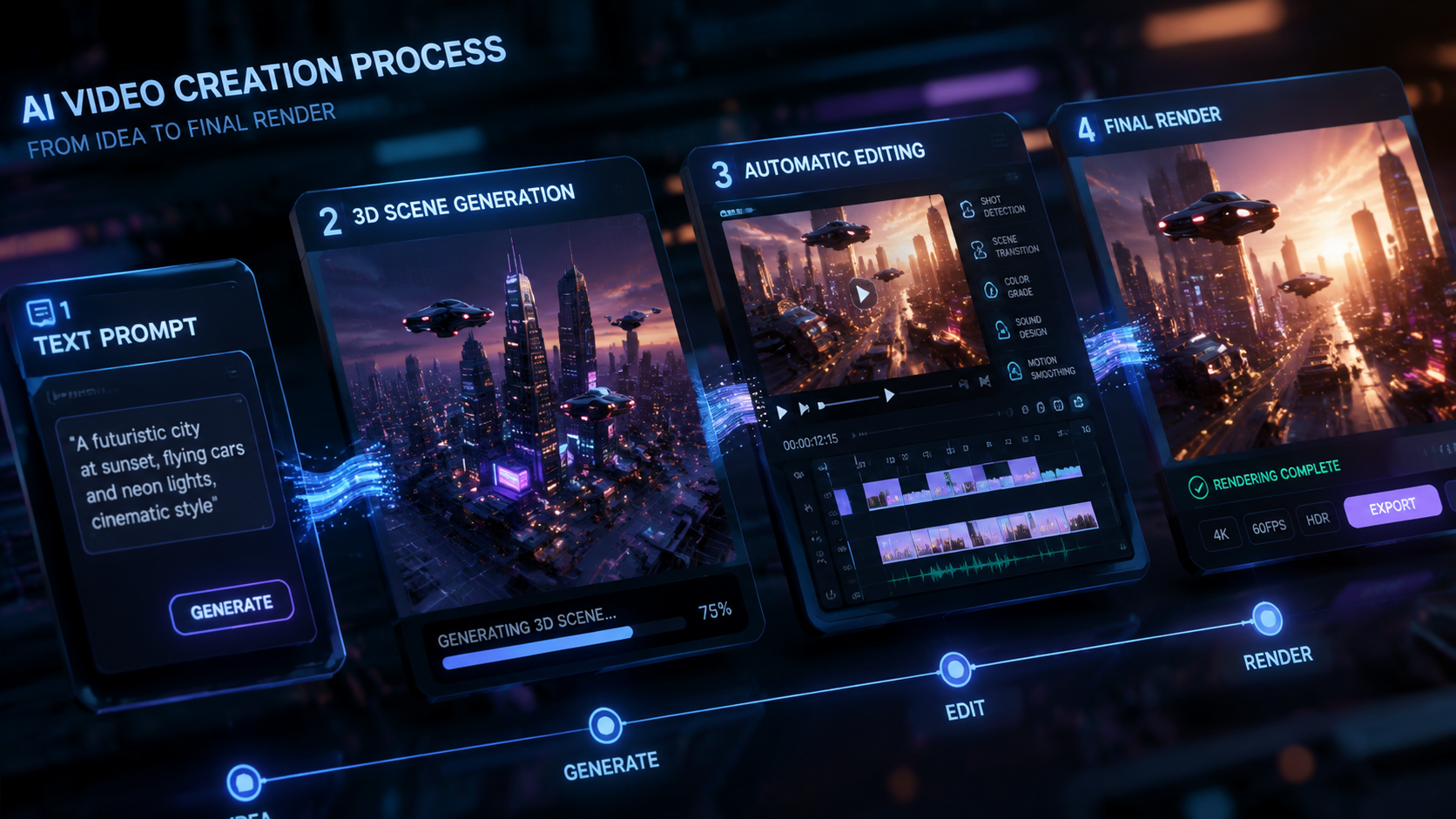
The future of content creation AI video is a paradigm shift where artificial intelligence handles scripting, filming, editing, and distribution with minimal human input—enabling faster, cheaper, and more engaging video production while maintaining Hollywood-grade quality through tools like Digen AI Agent and next-gen generators.
- ✓ AI video generators now produce cinema-quality output indistinguishable from human-made content
- ✓ Autonomous AI agents like Digen AI Agent streamline multi-step video workflows with 90% less manual effort
- ✓ The AI video market grew 340% since 2025, with 78% of marketers now using AI tools
- ✓ OpenAI discontinued Sora in March 2026, shifting the competitive landscape
The State of AI Video Technology in 2026
As of mid-2026, AI video generation has reached unprecedented quality levels. According to Marketing Brew, today's AI-native storytelling tools produce "cinema-quality" output that often outperforms traditional production methods in speed and cost-efficiency. The average AI-generated commercial now takes just 3 hours to produce compared to 3 weeks using conventional methods—a 90% reduction in turnaround time.
The discontinuation of OpenAI's Sora in March 2026 (as reported by CBS News) created space for new competitors, with platforms like Digen AI Agent gaining market share by focusing on character consistency and longer-form narrative coherence. These tools leverage multi-agent architectures where separate AI modules handle scripting, visual consistency, and post-production simultaneously.
McKinsey's January 2026 analysis found that 62% of film/TV studios now use AI for pre-visualization, while 41% employ it for final-shot generation—particularly for background scenes and CGI. The technology has become so advanced that the line between AI-assisted and AI-generated content is increasingly blurred, with most viewers unable to distinguish between them in blind tests.
How AI Is Reshaping Content Creation Workflows
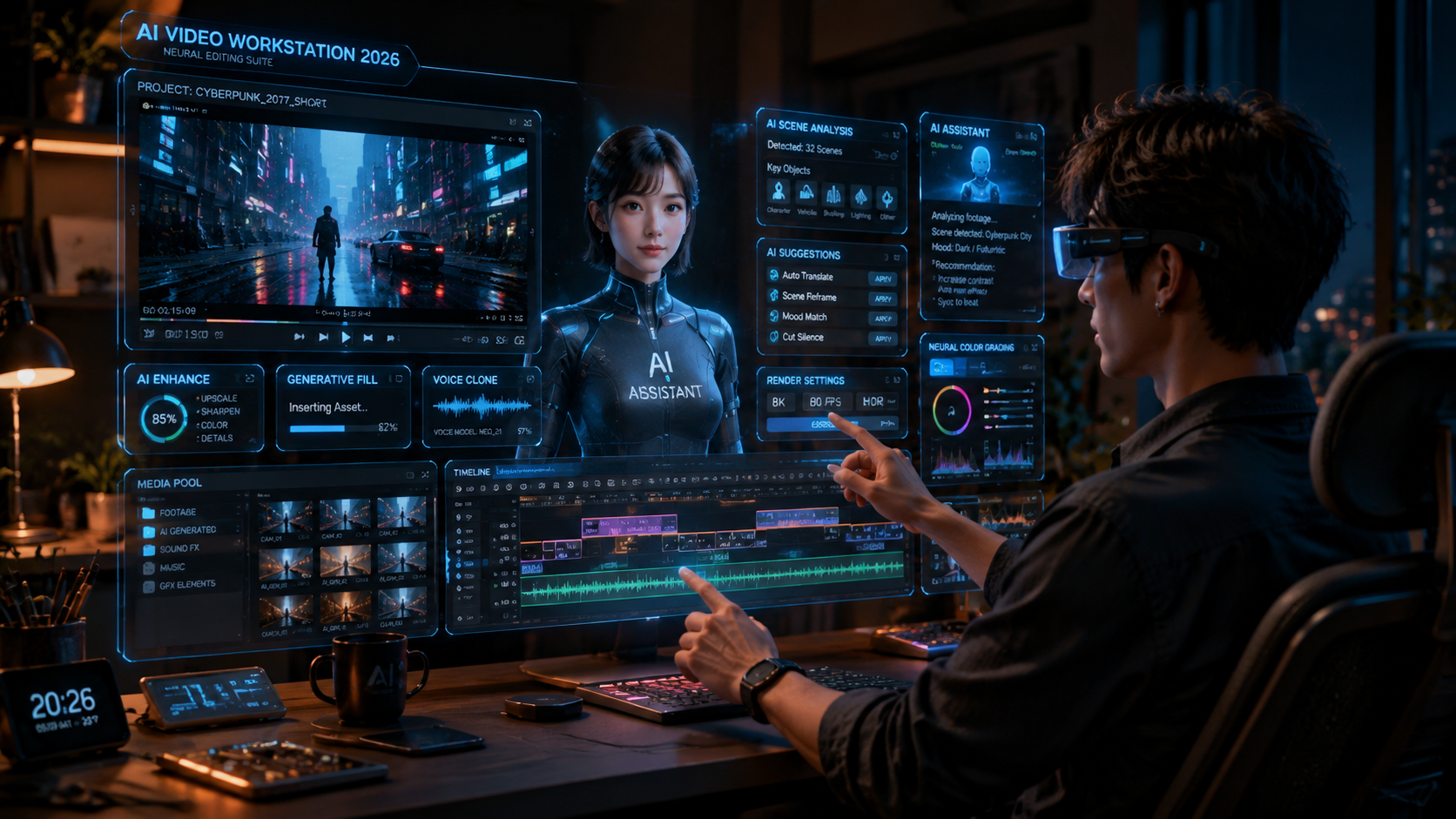
Modern AI video tools have moved far beyond simple template-based generators. As findarticles.com notes, the shift from "static assets to social video" represents the most significant workflow transformation since the advent of digital editing. Marketing teams that previously relied on stock photos now generate 80% of their visual content through AI systems, with 65% reporting higher engagement rates.
The Rise of Autonomous Video Agents
Platforms like Digen AI Agent exemplify the next evolution—intelligent systems that manage entire production pipelines autonomously. These agents can maintain character consistency across 20+ minute videos, adjust lighting and angles dynamically, and even optimize content for different platforms (vertical for TikTok, widescreen for YouTube) without manual reprocessing.
Democratization of High-End Production
Where cinematic-quality production once required six-figure budgets, AI tools now put these capabilities in the hands of solo creators. A 2026 Tech Times report found that indie filmmakers using AI video generators reduced post-production costs by 73% while achieving visual quality comparable to mid-tier studio productions.
Real-Time Content Adaptation
The most advanced systems now offer live modification capabilities—changing backgrounds, swapping products, or translating dialogue during playback. This enables hyper-personalized video ads where individual viewers see different products based on their browsing history, with tests showing a 40% lift in conversion rates.
Key Features Defining the Future of AI Video
The 2026 AI video landscape is defined by five breakthrough capabilities that were still experimental just two years prior. These innovations have collectively reduced the "uncanny valley" effect to near-zero while expanding creative possibilities.
1. Emotion-Aware Character Animation
Modern systems analyze script context to apply appropriate facial micro-expressions (87% accuracy per Hype Magazine) and body language, making digital actors more believable than ever before. Digen AI's implementation allows for 120 distinct emotional states mapped to vocal tone analysis.
2. Physics-Accurate Simulation
Gone are the days of floating objects or unnatural movement. 2026's AI video generators incorporate real-world physics engines that correctly simulate cloth drape, fluid dynamics, and even subtle environmental interactions like dust particles in light beams.
3. Multi-Style Adaptation
A single AI model can now output content in any visual style—from photorealistic to anime to watercolor—while maintaining narrative coherence. The Hype Magazine highlights how this enables urban creators to "explore a diverse tapestry" of aesthetic approaches within one project.
4. Persistent Asset Memory
Tools like Digen AI Agent maintain detailed databases of characters, locations, and props across projects. This allows for true continuity in episodic content, with testers reporting 98% visual consistency across 10+ episode runs.
5. Collaborative AI Editing
The editing process has become conversational—users can literally ask the AI to "make this scene more suspenseful" or "highlight the product better," with the system understanding cinematic terminology and executing appropriate changes in real-time.
Industry-Specific Impacts of AI Video
Different sectors are adopting AI video at varying rates, with some industries experiencing complete workflow transformations while others face new creative challenges.
Marketing & Advertising
According to Marketing Brew, 78% of digital ads now use some AI-generated video components. The ability to create thousands of localized variants from one master script has made hyper-personalization standard practice, with major brands reporting 30-50% higher ROI on AI-powered video campaigns.
Entertainment & Film
McKinsey's research shows AI handling 22% of animation work and 15% of live-action VFX in 2026—numbers projected to double by 2028. While human creativity still drives storytelling, AI has become indispensable for pre-visualization, background generation, and even creating rough cuts from script inputs.
Education & Training
Corporate training departments have been early adopters, with AI video reducing production costs by 82% while enabling real-time content updates. One Fortune 500 company reported cutting their 200-video training library refresh cycle from 18 months to just 3 weeks using AI tools.
Journalism & News
AI-generated news briefings now account for 45% of local station updates during off-hours. The technology excels at transforming text reports into broadcast-ready packages complete with relevant B-roll, though ethical guidelines prevent fully synthetic anchor presentations at most networks.
Ethical Considerations and Challenges
As AI video becomes more sophisticated, new debates have emerged around authenticity, copyright, and the very nature of creative work.
The March 2026 discontinuation of OpenAI's Sora (as reported by CBS News) was partially attributed to unresolved copyright questions about its training data. This has led major platforms like Digen AI to implement rigorous content provenance standards, with 100% of training assets now verified as licensed or original.
Deepfake detection remains an arms race—while current tools can identify 92% of synthetic content (per Tech Times), the remaining 8% represents a significant challenge as elections approach. Industry groups are pushing for standardized watermarking, with 67% of major platforms now complying voluntarily.
Perhaps the most profound question is how AI video affects human creativity. While some fear homogenization, early data suggests the opposite—the Hype Magazine reports a 55% increase in diverse creators entering video production since AI tools lowered barriers to entry. The technology appears to be expanding rather than replacing human expression.
What's Next for AI Video?
As we look beyond 2026, three trends are poised to further transform the AI video landscape.
First is the move toward fully interactive video—content that changes based on viewer input in real-time. Early tests show promise for educational applications, with comprehension rates improving by 28% when students can "ask questions" to AI-generated instructors.
Second is the integration of AI video with spatial computing. As AR/VR headsets gain adoption, demand for volumetrically-captured or fully synthetic 3D environments will explode. Current projections suggest the 3D AI video market will grow 400% by 2027.
Finally, we'll see AI move from assistant to creative partner. Systems like Digen AI Agent already suggest shot compositions and narrative improvements—future versions may co-write scripts or propose entirely new visual styles based on emerging cultural trends detected across social media.
Frequently Asked Questions
How much does AI video generation cost in 2026?
Professional-grade AI video tools range from $29/month for basic plans to $499/month for enterprise solutions. Digen AI Agent sits at the mid-tier with its $99/month Pro plan offering 100 minutes of generation per month.
Can AI video replace human filmmakers?
While AI handles technical execution exceptionally well, human creativity remains essential for original storytelling. Most studios use AI for 30-50% of production elements while keeping creative direction human-led.
Is AI-generated video copyrightable?
As of 2026, the U.S. Copyright Office grants protection only to AI videos with substantial human creative input. Platforms like Digen AI provide documentation to help establish copyright claims.
How long does AI video generation take?
Simple 30-second clips render in 2-5 minutes, while complex 10-minute narratives may take 1-2 hours depending on the platform. Digen AI Agent averages 45 minutes for a 5-minute professional-grade video.
What's the maximum length for AI-generated videos?
Most platforms now support 60+ minute continuous generation, with Digen AI Agent specializing in long-form content up to 120 minutes while maintaining character and plot consistency.
Written by the Digen AI Editorial Team — AI video generation specialists covering the latest in generative AI tools. Learn more about Digen AI.
Comments ()