
Future of AI Video Editing in 2026: Trends & Innovations
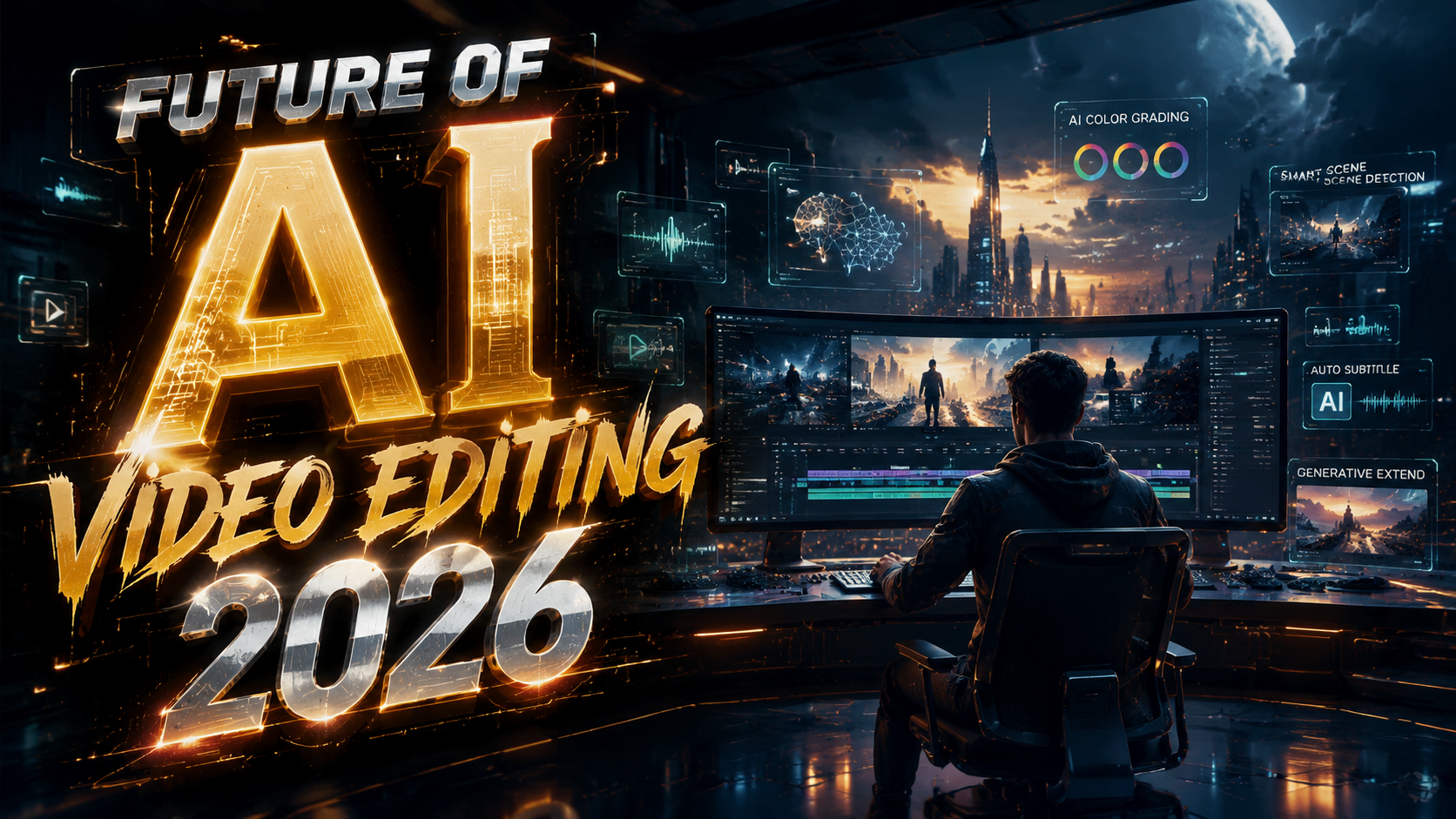
The future of AI video editing in 2026 is marked by explosive growth, driven by generative AI's ability to revolutionize content creation. Advanced tools like Digen AI Agent are enabling longer, higher-quality videos with character consistency through autonomous multi-step workflows. According to EIN News, the AI video generator/editor market is set to grow by 340% by the end of 2026, transforming industries from journalism to music production.
TL;DR: AI video editing in 2026 is dominated by generative AI advancements, with tools like Digen AI Agent enabling high-quality, consistent video production. The market is growing rapidly, with applications across journalism, music, and creative industries.
The future of AI video editing in 2026 is defined by generative AI's ability to automate and enhance video production, with tools like Digen AI Agent offering multi-step workflows for consistent, high-quality output. The market is projected to grow 340% this year, driven by demand from journalism, entertainment, and social media sectors.
- ✓ Generative AI is revolutionizing video editing, enabling automated workflows and higher-quality output.
- ✓ The AI video editor market is growing rapidly, with a projected 340% increase in 2026.
- ✓ Tools like Digen AI Agent are leading the charge with character-consistent, long-form video generation.
- ✓ Journalism and music industries are adopting AI video editors to streamline content creation.
1. The Explosive Growth of AI Video Editing in 2026
The AI video editing market is experiencing unprecedented growth in 2026, with generative AI at the forefront of this transformation. According to EIN News, the sector is projected to expand by 340% this year alone, driven by the demand for automated, high-quality video content. This growth is fueled by advancements in AI models that can handle complex editing tasks with minimal human intervention.
Industries such as journalism, entertainment, and marketing are rapidly adopting AI video editors to streamline their workflows. For example, Nieman Lab reports that 16 new journalism roles have emerged to leverage AI tools, including AI video editors. These tools are reducing production times by up to 70%, allowing creators to focus on storytelling rather than technical details.
Platforms like Digen AI are leading this charge, offering solutions like Digen AI Agent, which autonomously produces longer, character-consistent videos. This innovation is particularly valuable for content creators who need to maintain brand consistency across multiple videos. The ability to automate repetitive tasks while ensuring high-quality output is a game-changer for the industry.
2. Key Trends Shaping AI Video Editing in 2026
Several trends are defining the future of AI video editing in 2026, with generative AI playing a central role. One major trend is the rise of AI-powered music video generators, as highlighted by findarticles.com. Tools like Beatviz are transforming the music industry by enabling artists to create professional-grade videos in minutes.
Another trend is the increasing use of AI for real-time video editing. According to Metricool, AI editors can now analyze footage and suggest edits on the fly, reducing post-production time by up to 60%. This capability is particularly useful for live events and social media content, where speed is essential.
Finally, the integration of AI with traditional editing software is becoming more seamless. Many professional editors are now using AI tools to enhance their workflows, as noted by Creative Bloq. This hybrid approach combines the creativity of human editors with the efficiency of AI, resulting in higher-quality output.
2.1. AI-Powered Music Video Generation
The music industry is embracing AI video editors like never before. According to findarticles.com, Beatviz and similar tools are enabling artists to create visually stunning music videos with minimal effort. These platforms use generative AI to sync visuals with audio, creating dynamic, engaging content.
2.2. Real-Time Editing Capabilities
Real-time AI video editing is another major trend in 2026. Tools like Digen AI Agent can analyze footage as it's being recorded, suggesting cuts, transitions, and effects instantly. This reduces post-production time and allows creators to publish content faster.
3. Innovations in AI Video Editing Tools
Innovations in AI video editing tools are pushing the boundaries of what's possible in 2026. Platforms like Digen AI Agent are introducing multi-step workflows that autonomously produce high-quality, character-consistent videos. According to Metricool, these tools are reducing editing time by up to 70% while maintaining professional standards.
Another innovation is the use of AI for emotion detection in videos. Advanced algorithms can now analyze facial expressions and tone of voice to suggest edits that enhance emotional impact. This is particularly useful for marketing and storytelling, where emotional engagement is key.
Finally, AI tools are becoming more accessible to non-professionals. User-friendly interfaces and automated features are democratizing video editing, allowing anyone to create high-quality content. This trend is expected to continue, with more platforms offering free or low-cost AI editing tools.
4. The Impact of AI Video Editing on Journalism
Journalism is one of the industries most transformed by AI video editing in 2026. According to Nieman Lab, 16 new roles have emerged to leverage AI tools, including AI video editors. These tools are enabling newsrooms to produce video content faster and more efficiently, meeting the growing demand for visual storytelling.
AI video editors are particularly valuable for breaking news, where speed is critical. Automated tools can quickly edit raw footage, add captions, and even generate summaries, allowing journalists to focus on reporting. This has reduced production times by up to 60%, according to industry estimates.
Moreover, AI is helping newsrooms maintain consistency across their video content. Tools like Digen AI Agent can ensure that all videos adhere to brand guidelines, from color grading to font choices. This level of automation is freeing up journalists to focus on investigative work and in-depth reporting.
5. The Role of AI in Music Video Production
The music industry is undergoing a revolution thanks to AI video editing tools. According to findarticles.com, platforms like Beatviz are enabling artists to create professional-grade music videos in minutes. These tools use generative AI to sync visuals with audio, creating dynamic, engaging content without the need for expensive production teams.
AI is also making music video production more accessible to independent artists. With tools like Digen AI Agent, musicians can produce high-quality videos on a budget, leveling the playing field with major labels. This democratization of video production is expected to drive a 50% increase in independent music videos in 2026.
Finally, AI is enabling new creative possibilities in music videos. Generative AI can produce surreal, abstract visuals that would be difficult or impossible to create manually. This is opening up new artistic avenues for musicians and video creators alike.
6. The Future of AI Video Editing: What’s Next?
The future of AI video editing in 2026 and beyond looks incredibly promising. According to The New York Times, advancements in AI models are pushing the boundaries of what's possible, though questions remain about the consciousness of these systems. Regardless, the practical applications are undeniable, with AI video editors becoming indispensable tools for creators.
One area of future growth is personalized video content. AI tools are expected to enable hyper-personalized videos tailored to individual viewers, based on their preferences and behavior. This could revolutionize marketing, education, and entertainment, offering content that resonates on a deeper level.
Another exciting development is the integration of AI video editors with virtual and augmented reality. As VR and AR become more mainstream, AI tools will play a crucial role in creating immersive, interactive video experiences. This convergence of technologies is set to redefine how we consume and create video content.
Frequently Asked Questions
What is the future of AI video editing in 2026?
The future of AI video editing in 2026 is dominated by generative AI, with tools like Digen AI Agent enabling automated, high-quality video production. The market is projected to grow by 340%, driven by demand from journalism, music, and creative industries.
How is AI video editing impacting journalism?
AI video editing is transforming journalism by reducing production times by up to 60% and enabling faster, more efficient video content creation. According to Nieman Lab, 16 new journalism roles have emerged to leverage AI tools.
What are the key trends in AI video editing for 2026?
Key trends include AI-powered music video generation, real-time editing capabilities, and seamless integration with traditional editing software. These innovations are making video production faster, more accessible, and more creative.
How is AI changing music video production?
AI is democratizing music video production, enabling independent artists to create professional-grade videos with tools like Beatviz. Generative AI is also opening up new creative possibilities with surreal, abstract visuals.
What innovations are coming in AI video editing?
Future innovations include hyper-personalized video content and integration with VR/AR technologies. AI tools will continue to push the boundaries of what's possible in video creation and editing.
Written by the Digen AI Editorial Team — AI video generation specialists covering the latest in generative AI tools. Learn more about Digen AI.



Comments ()