
Fliki vs Luma Dream Machine Review: Best AI Video in 2026
In this 2026 fliki vs luma dream machine review, we compare two of the most powerful AI video generation tools currently dominating the landscape. While Fliki excels as an all-in-one text-to-video creator designed for content marketers and social media managers, Luma Dream Machine focuses on cinematic realism and high-fidelity physics for professional-grade visual effects. Choosing between them depends on whether you prioritize rapid multi-channel distribution or high-end artistic cinematography for your 2026 digital strategy.
Fliki is an AI-powered video creation suite that automates the production of social media content using realistic voiceovers and stock media, whereas Luma Dream Machine is a high-performance generative model specializing in creating photorealistic, physics-accurate video clips from text or image prompts. The primary difference lies in Fliki's efficiency for marketing versus Luma's cinematic quality.
- ✓ Fliki offers a superior workflow for social media creators needing voiceover synchronization and automated subtitles.
- ✓ Luma Dream Machine leads the industry in 2026 for realistic human movement and complex environmental physics.
- ✓ According to recent industry benchmarks, Fliki can reduce video production time by up to 80% for informational content.
- ✓ Luma Dream Machine is the preferred choice for high-budget trailers, conceptual art, and immersive storytelling.
How to Choose the Right AI Video Tool for Your Workflow
Navigating the AI video landscape in 2026 requires understanding your specific output goals. If your objective is to maintain a consistent presence on platforms like TikTok, Instagram, and YouTube Shorts, you need a tool that handles the "heavy lifting" of editing. On the other hand, if you are building a brand aesthetic that requires unique, never-before-seen visuals that rival Hollywood CGI, your focus should shift toward generative physics models.
To help you decide, follow these steps to evaluate your needs:
- Identify your content type: Determine if you need "talking head" style videos, educational slideshows, or cinematic b-roll.
- Evaluate your assets: Check if you have existing scripts and voiceovers, or if you need the AI to generate them from scratch.
- Assess your technical skill: Decide if you prefer a drag-and-drop editor (Fliki) or a prompt-engineering interface (Luma).
- Define your budget: Compare the cost-per-minute of generation versus the cost of a flat monthly subscription.
Fliki vs Luma Dream Machine Review: Feature Comparison
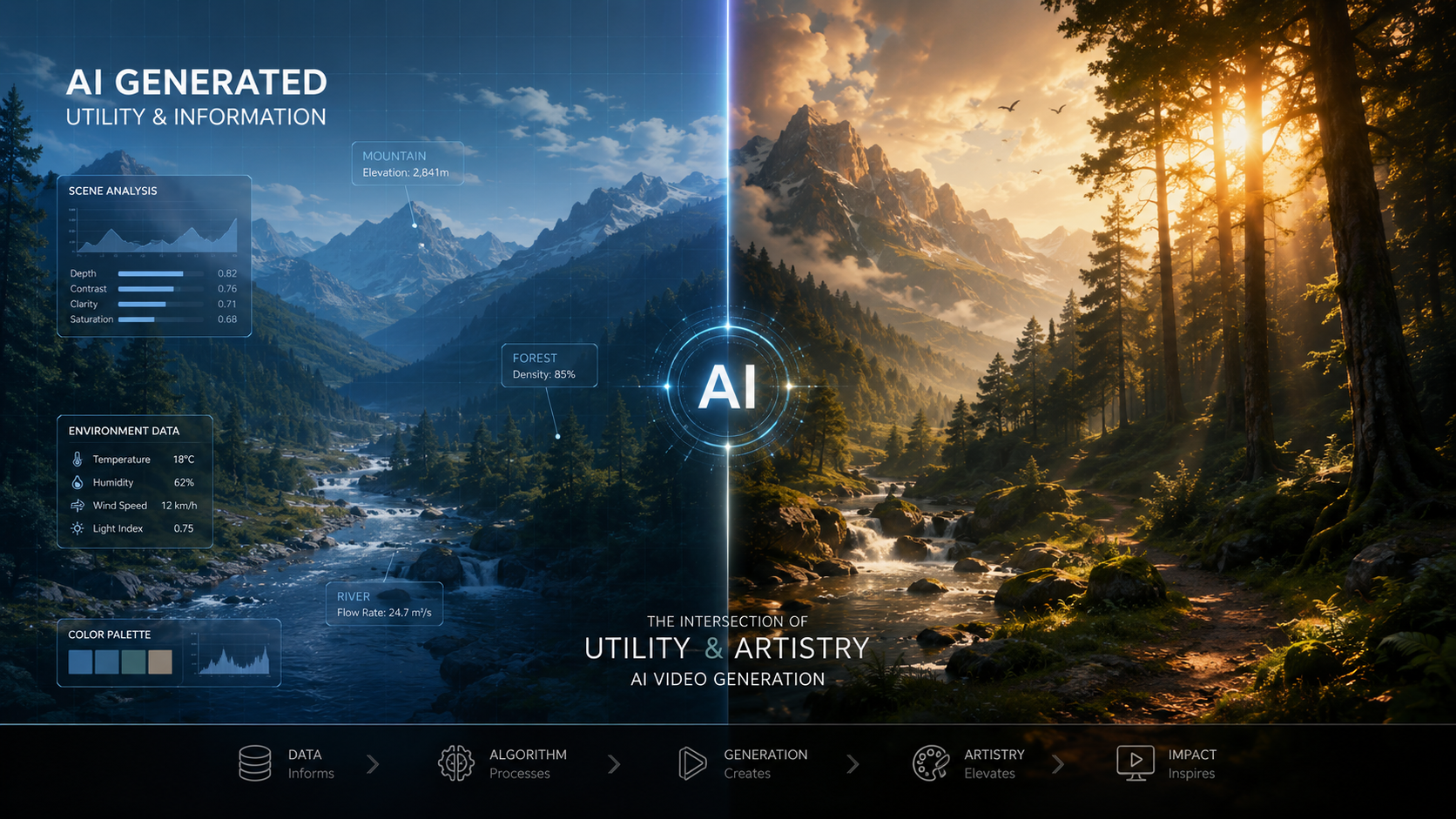
When conducting a fliki vs luma dream machine review, it becomes clear that these tools serve two different segments of the market. Fliki has evolved in 2026 to include "Brainstorm to Video," a feature that takes a single idea and generates a script, selects media, adds a voiceover, and formats the video for various aspect ratios. It is essentially a video production studio in a browser.
Luma Dream Machine, conversely, has focused its 2026 updates on "Temporal Consistency 2.0." This allows users to generate longer sequences where characters and environments remain perfectly stable across multiple shots. While Fliki uses a library of millions of stock assets combined with AI avatars, Luma generates every pixel from scratch, allowing for total creative freedom at the cost of more intensive prompting.
| Feature | Fliki (2026 Version) | Luma Dream Machine |
|---|---|---|
| Primary Use Case | Social Media & Marketing | Cinematic & Creative Video |
| Voiceover Integration | Built-in (2000+ Voices) | External Upload Only |
| Physics Engine | Standard Transitions | Advanced Fluid & Light Physics |
| Editing Interface | Timeline & Scene Based | Prompt & Seed Based |
| Output Speed | Seconds (Stock-based) | Minutes (Generative-based) |
The Evolution of AI Video Production in 2026
According to a 2025 report by Tom's Guide, testers who spent over 200 hours evaluating these systems found that the "best" generator is no longer defined by resolution alone, but by "usability and workflow integration." In 2026, this has become the standard. Fliki has integrated deeply with CMS platforms, allowing users to turn a blog post into a video with a single click. This level of automation is why it remains a favorite for businesses that need to scale content without hiring a full production team.
Fliki: The King of Efficiency
Fliki’s standout feature in 2026 is its "AI Voice Cloning" which has reached a point of indistinguishable realism. Users can clone their own voice and have it narrate daily news updates or educational content. Because Fliki connects to massive libraries of licensed footage, you don't have to worry about the "uncanny valley" effect often found in purely generative videos. It is the pragmatic choice for those who value speed and copyright safety.
Luma Dream Machine: The Artist’s Canvas
Luma Dream Machine has carved out its niche by solving the "motion blur" and "warping" issues that plagued early AI video. In 2026, its ability to render realistic textures—such as the way light hits water or how fabric folds during movement—is unmatched. Professional filmmakers use Luma to create storyboards that look like finished films. If you are looking to create a viral masterpiece that looks like it cost $100,000 to produce, Luma is the tool you reach for.
Detailed Fliki vs Luma Dream Machine Review of Pricing and Accessibility
In the current 2026 market, pricing models have shifted toward "compute points." Fliki offers a tiered subscription that is very accessible for freelancers, starting with a robust free tier that allows for basic watermarked exports. Their pro plans focus on high-speed rendering and access to premium "Ultra-Realistic" voices. For most small business owners, the Fliki pricing structure provides the most predictable ROI.
Luma Dream Machine operates on a more intensive compute model. Because generating high-fidelity physics is computationally expensive, their pricing is often higher per minute of video. However, for agencies working on high-ticket advertisements, the cost is negligible compared to the price of a live-action shoot. Studies show that using generative AI like Luma can save production companies up to 90% on location and equipment costs.
Integration and Export Options
A critical part of any fliki vs luma dream machine review is how the video leaves the platform. Fliki provides direct integration with YouTube, TikTok, and Instagram, allowing for one-click publishing. It also exports subtitles in SRT format, which is vital for SEO. Luma Dream Machine focuses on high-bitrate ProRes exports, intended for further editing in software like Adobe Premiere or DaVinci Resolve, catering to a more technical audience.
Performance Benchmarks and Visual Quality
When we look at the raw performance, Luma Dream Machine typically takes longer to generate a clip—often 2 to 5 minutes for a 10-second high-quality sequence. This is because the AI is calculating light bounces and physical collisions in real-time. Fliki, because it primarily assembles and modifies existing media, can produce a 60-second video in under a minute. This makes Fliki the clear winner for "breaking news" style content.
However, the visual "wow factor" belongs to Luma. In 2026, Luma's "Dream v4" engine can handle complex prompts like "a glass of water shattering in slow motion on a marble floor in a cyberpunk city," with every shard of glass reflecting the neon lights accurately. Fliki would struggle to find stock footage that specific, whereas Luma creates it from the ether.
Is Fliki better than Luma Dream Machine for YouTube?
For most YouTubers, Fliki is better because it includes built-in voiceovers, background music, and automated subtitles. It is designed to build a full story, whereas Luma is designed to create individual, high-quality visual clips.
Can I use Luma Dream Machine for free in 2026?
Luma Dream Machine typically offers a limited number of free generations per month to new users, but high-resolution and commercial-use rights generally require a paid subscription due to high server costs.
Which tool has better AI voices?
Fliki is the clear winner for audio, featuring over 2,000 voices in 75+ languages. Luma Dream Machine focuses exclusively on video generation and does not currently offer a native text-to-speech engine.
Does Fliki support 4K video?
Yes, as of 2026, Fliki supports 4K exports on its premium plans, utilizing high-definition stock libraries and AI upscaling to ensure content looks professional on large screens.
Which tool is easier for beginners?
Fliki is significantly easier for beginners because of its "Script-to-Video" workflow. You only need to provide text, and the AI handles the visual selection, making it much more intuitive than Luma's prompt-based system.
Conclusion: The Verdict for 2026
Our fliki vs luma dream machine review concludes that these tools are partners rather than direct rivals. The modern content creator should ideally use both. Use Fliki to handle the bulk of your informational content, voiceovers, and social media scaling. Use Luma Dream Machine to create stunning, unique "hero" shots that give your videos a high-end, cinematic edge that stock footage simply cannot match.
As AI continues to evolve, the gap between "amateur" and "professional" video is closing. By leveraging Fliki’s efficiency and Luma’s visual power, you can stay ahead of the curve in 2026, producing content that is both high in volume and high in quality. Whether you are a solo creator or a marketing agency, these two platforms represent the pinnacle of AI video technology today.



Comments ()