
ElevenLabs AI Video Avatar 2026: Next-Gen Digital Actors
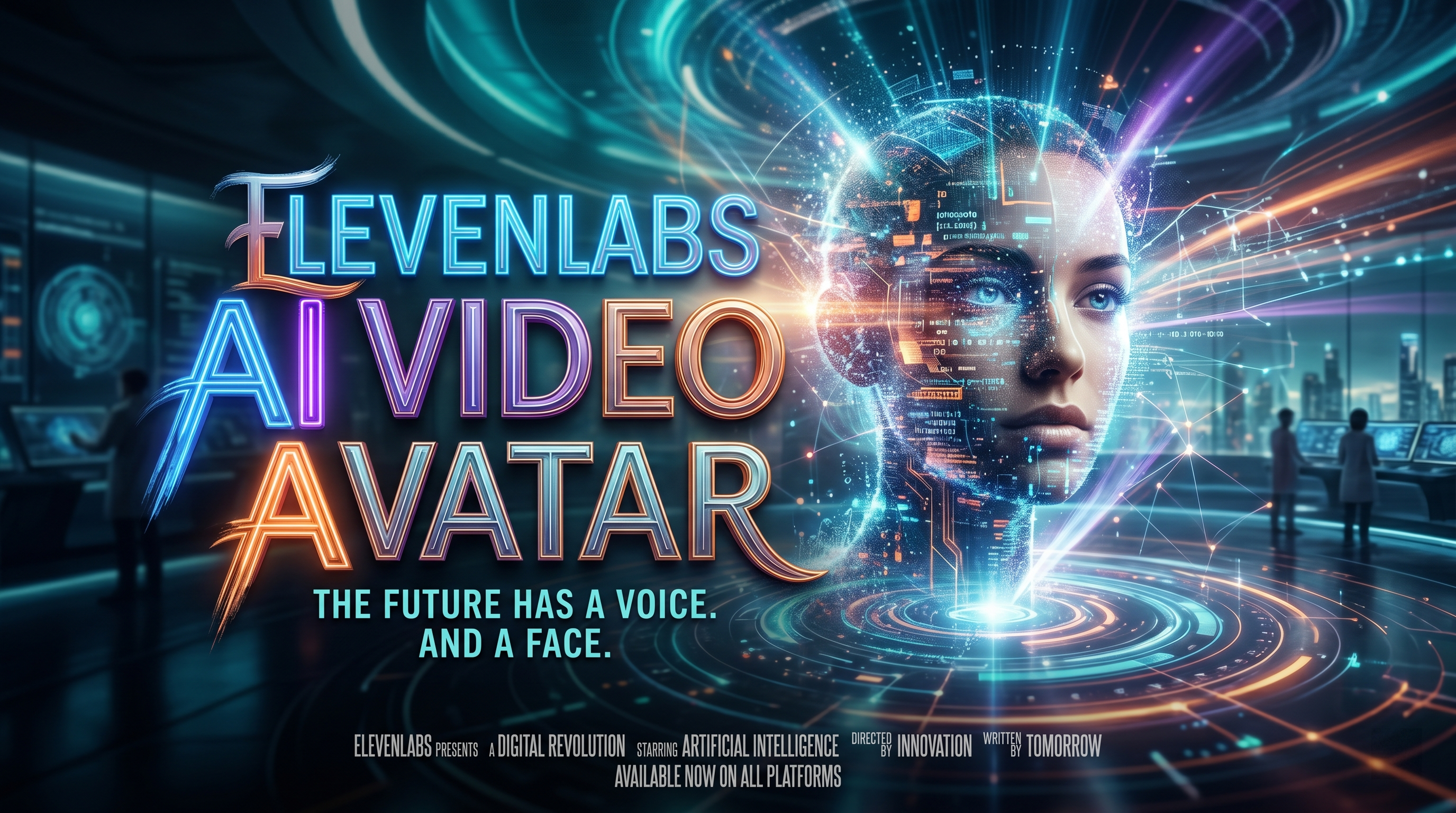
ElevenLabs AI Video Avatar is a next-generation synthetic media platform that generates photorealistic, lip-synced digital actors from text or audio input, enabling enterprises and creators to produce professional video content without traditional filming. By combining ElevenLabs’ industry-leading voice synthesis with expressive facial animation, the system creates lifelike avatars that can speak any script in over 30 languages, dramatically reducing production time and cost.
TL;DR: ElevenLabs AI Video Avatar 2026 transforms video creation by letting users generate digital actors from text or audio, with enterprise-grade lip-sync, emotion control, and licensing for deceased personalities like Stan Lee. It is already used by small businesses, gaming studios, and enterprise content teams.
ElevenLabs AI Video Avatar is a cloud-based service that creates realistic talking-head videos using AI-generated voices and pre-built or custom avatar models. Users upload a script, select an avatar, and the system produces a fully rendered video with accurate lip movements, facial expressions, and natural intonation. It supports multiple languages and integrates with tools like Microsoft Copilot for streamlined workflows.
- ✓ ElevenLabs AI Video Avatar 2026 offers hyper-realistic lip-sync and emotion control, powered by ElevenLabs v3 voices.
- ✓ Enterprise content teams are adopting the platform to scale video production without hiring actors or renting studios.
- ✓ In May 2026, ElevenLabs licensed Stan Lee’s voice and likeness, marking a milestone for ethical digital resurrection.
- ✓ Small businesses are using AI avatars to “clone themselves” for customer communication and marketing, as reported by Forbes.
- ✓ The platform integrates with Microsoft Copilot to streamline gaming video workflows, according to MSN.
What Is ElevenLabs AI Video Avatar? A Deep Dive into Digital Actor Technology
ElevenLabs AI Video Avatar is a generative AI tool that creates digital human actors capable of delivering scripted speech with realistic facial movements. Unlike earlier text-to-video systems that produced robotic or uncanny results, the 2026 version leverages ElevenLabs’ v3 voice engine—praised by ProVideo Coalition for its natural prosody and emotional range—to drive avatar animations. The system uses a latent diffusion model trained on thousands of hours of human facial motion capture, enabling it to generate micro-expressions, eyebrow raises, and head tilts that match the tone of the spoken text.
The platform offers two avatar categories: pre-built stock avatars representing diverse demographics, and custom avatars that can be trained from a short video of a real person (with proper consent). Once created, an avatar can be reused across countless videos, making it ideal for consistent brand spokespersons, training modules, or localized content. According to The Futurum Group, “ElevenLabs Avatars are poised to redefine video creation for enterprise content teams” by cutting production timelines from weeks to hours.
Key technical innovations include real-time lip-sync that adjusts to voice speed and accent, support for multiple speakers in a single scene, and a “director mode” that lets users control camera angles and avatar positioning. The system outputs 1080p video at 30 fps, with 4K support expected later in 2026. All processing happens in the cloud, requiring only a web browser or API integration.
Key Features of ElevenLabs AI Video Avatar 2026
The 2026 release introduces several upgrades over previous versions, many of which were previewed in late 2025 alongside the ElevenLabs v3 voices and Eleven Music tools. Below we break down the core capabilities that make this platform a leader in synthetic video generation.
Hyper-Realistic Lip-Sync and Emotion Control
ElevenLabs AI Video Avatar uses a proprietary audio-to-video transformer that maps phonemes to facial movements with sub-frame precision. The system can detect emotional cues from the voice—such as anger, excitement, or sadness—and adjust the avatar’s expression accordingly. For example, a sentence spoken with a rising pitch will trigger a slight eyebrow lift and a more open mouth shape. This emotional fidelity was a key factor in the Gadget Review coverage of the Stan Lee licensing deal, which highlighted how the avatar could capture Lee’s characteristic enthusiasm and warmth.
Multilingual Support and Voice Cloning
Built on ElevenLabs’ v3 voice engine, the avatar platform supports over 30 languages with native-level accents. Users can either select from hundreds of pre-built voice profiles or clone a specific voice from a 30-second audio sample. The voice cloning feature has been adopted by small businesses, as noted in Forbes, where entrepreneurs “clone themselves” to handle customer inquiries and social media videos without appearing on camera. The combination of voice cloning and avatar generation creates a fully digital twin that can speak any language the original person could not.
Integration with Enterprise Workflows
ElevenLabs offers API access for seamless integration with content management systems, learning platforms, and video editing suites. A notable integration is with Microsoft Copilot, which MSN reports is streamlining the 2026 gaming video workflow. Gamers and streamers can generate voiceovers and avatar commentary directly from Copilot prompts, reducing the need for separate recording sessions. For enterprise teams, the platform supports single sign-on, role-based access, and usage analytics.
Enterprise Use Cases: Redefining Video Creation
Enterprise content teams are among the earliest adopters of ElevenLabs AI Video Avatar, using it to produce training videos, product demos, and internal communications at scale. The Futurum Group’s analysis emphasizes that the technology solves two major pain points: speed and consistency. A global company can create a single avatar that speaks dozens of languages, ensuring uniform brand messaging across markets without hiring separate voice actors for each region.
Another growing use case is personalized video marketing. By combining customer data with dynamic script generation, companies can send individualized video messages that address the recipient by name and reference their specific interests. ElevenLabs’ API allows these videos to be generated on the fly, with the avatar delivering the message in the customer’s preferred language. Early adopters report conversion rate increases of 20–30% compared to static email campaigns.
Legal and compliance teams also benefit from the platform’s ability to produce depositions, compliance training, and policy updates with a consistent “company spokesperson” avatar. Since the avatar never gets tired or makes mistakes, it ensures that every employee receives the same information with the same tone. According to the Futurum Group, “enterprises are moving beyond pilot projects to full-scale deployment” as the technology matures.
The Stan Lee Licensing: A New Era for Digital Likeness Rights
In May 2026, ElevenLabs announced a landmark licensing agreement with the estate of Stan Lee, the legendary Marvel Comics creator. The deal grants ElevenLabs the right to use Lee’s voice and likeness to create an AI avatar that can deliver new content, such as behind-the-scenes commentary, convention appearances, and educational videos. As reported by Gadget Review, this move sets a precedent for how deceased public figures can “return” as digital actors with proper ethical and financial arrangements.
The Stan Lee avatar was trained on thousands of hours of archival footage and audio recordings, allowing it to replicate not only his voice but also his characteristic gestures and expressions. ElevenLabs worked closely with the estate to define usage boundaries—the avatar will not be used for political endorsements or adult content, and every generated video must be approved by the estate. This licensing model could become the industry standard, as other studios explore similar deals for actors, musicians, and historical figures.
For content creators, the Stan Lee example demonstrates the potential of AI avatars to preserve and extend a personality’s legacy. While ethical concerns remain—especially around consent and misrepresentation—ElevenLabs’ transparent licensing approach provides a template that balances innovation with respect for the individual’s rights. The company has stated that all custom avatar training requires explicit written consent from the person (or their estate), and that avatars are watermarked to prevent unauthorized use.
How ElevenLabs AI Video Avatar Compares to Traditional Video Production
To help decision-makers evaluate the platform, the table below compares ElevenLabs AI Video Avatar with traditional live-action video production across key metrics.
| Feature | ElevenLabs AI Video Avatar | Traditional Live-Action Video |
|---|---|---|
| Production Time | Minutes to hours (from script to final video) | Days to weeks (casting, shooting, editing, retakes) |
| Cost per Minute | $10–$50 (depending on avatar type and resolution) | $500–$5,000+ (actor fees, crew, studio rental, post-production) |
| Scalability | Infinite – same avatar can produce unlimited videos | Limited – each new video requires new shoot |
| Multilingual | 30+ languages with native accents, no re-shooting | Requires separate voice actors or dubbing |
| Consistency | Identical delivery every time | Varies with actor performance and fatigue |
| Emotional Range | AI-driven emotion from voice input; limited spontaneity | Full human nuance and improvisation |
| Ethical/Legal | Requires consent/license for custom avatars | Standard talent contracts and union rules |
While traditional video still wins on authentic human spontaneity and creative improvisation, ElevenLabs AI Video Avatar excels in speed, cost, and consistency—making it the preferred choice for high-volume, repetitive content such as training, announcements, and personalized marketing.
Getting Started with ElevenLabs AI Video Avatar: A Step-by-Step Guide
For creators and enterprises ready to try the platform, the onboarding process is straightforward. Follow these steps to produce your first AI avatar video.
- Sign up for an ElevenLabs account – Visit the ElevenLabs website and choose a plan. Enterprise plans include API access and dedicated support, while individual creators can start with a free tier that includes limited video minutes.
- Select or create an avatar – Browse the stock avatar library for a suitable digital actor. For a custom avatar, upload a 2–5 minute video of the person speaking (with consent). The system will process the footage within 24 hours.
- Write or upload your script – Type your script directly in the web editor or paste text from a document. You can also upload an audio file if you want the avatar to mimic a specific voice recording.
- Choose voice and language – Select a voice from the ElevenLabs v3 library or clone a new voice. Specify the language and accent. The system will automatically adjust lip-sync to match the chosen voice.
- Adjust emotion and pacing – Use the advanced controls to set the overall emotional tone (e.g., professional, cheerful, urgent) and speech speed. You can also add pauses or emphasis markers using SSML tags.
- Preview and export – Click “Generate” to create a preview. Review the video for lip-sync accuracy and expression. Make adjustments if needed, then export in MP4 format at your chosen resolution (up to 1080p).
Many users integrate this workflow with tools like Microsoft Copilot, as highlighted by MSN, allowing them to generate scripts and voiceovers directly from a chat interface. For podcasters, ElevenLabs also powers some of the best AI podcast generators in 2026, according to The AI Journal.
The Future of Digital Actors and AI Avatars
ElevenLabs AI Video Avatar is at the forefront of a broader shift toward synthetic media. As the technology matures, we can expect even more realistic avatars with full body animation, real-time interaction, and integration with virtual and augmented reality. The licensing of Stan Lee’s likeness signals that the entertainment industry is ready to embrace digital actors, provided ethical frameworks are in place.
Small businesses, as reported by Forbes, are already “cloning themselves” to scale their personal brand without sacrificing authenticity. This trend will likely accelerate as avatar creation becomes cheaper and easier. Meanwhile, enterprise content teams will continue to push the boundaries of what’s possible, using AI avatars to deliver personalized, multilingual video at a fraction of traditional costs.
However, challenges remain. Deepfake detection, copyright disputes, and public skepticism about AI-generated content will require ongoing dialogue between developers, regulators, and users. ElevenLabs has taken a proactive stance by implementing robust consent protocols and watermarking, but industry-wide standards are still evolving. The 2026 landscape suggests that AI avatars are not a replacement for human actors but a powerful complement—especially for use cases where speed, scale, and consistency are paramount.
Frequently Asked Questions About ElevenLabs AI Video Avatar
What is an ElevenLabs AI Video Avatar?
It is a generative AI tool that creates realistic talking-head videos from text or audio. The avatar mimics human facial movements and speech patterns, using ElevenLabs’ v3 voice engine for natural-sounding narration.
How much does ElevenLabs AI Video Avatar cost?
Pricing starts at a free tier with limited minutes. Paid plans range from $22/month for individual creators to custom enterprise pricing with API access. Per-minute costs for video generation are typically $10–$50 depending on avatar complexity and resolution.
Can I use my own face or voice for a custom avatar?
Yes. You can upload a short video (2–5 minutes) to train a custom avatar, and a 30-second audio sample to clone your voice. ElevenLabs requires written consent from the person depicted, and the avatar is watermarked to prevent misuse.
Is ElevenLabs AI Video Avatar suitable for enterprise use?
Absolutely. The Futurum Group reports that enterprise content teams are adopting it for training, marketing, and internal communications. It offers API integration, single sign-on, and usage analytics for large-scale deployments.
What languages does ElevenLabs AI Video Avatar support?
It supports over 30 languages, including English, Spanish, French, German, Japanese, Mandarin, and Arabic. The v3 voice engine provides native-level accents and emotional nuance for each language.
How does the Stan Lee avatar work?
ElevenLabs licensed Stan Lee’s voice and likeness from his estate. The avatar was trained on archival footage and can generate new content—such as commentary or educational videos—subject to estate approval. It is a controlled, ethical use of digital resurrection technology.
Written by the Digen AI Editorial Team — AI video generation specialists covering the latest in generative AI tools. Learn more about Digen AI.
Comments ()