
Effortless AI Video Creation Tools: Top Picks for 2026
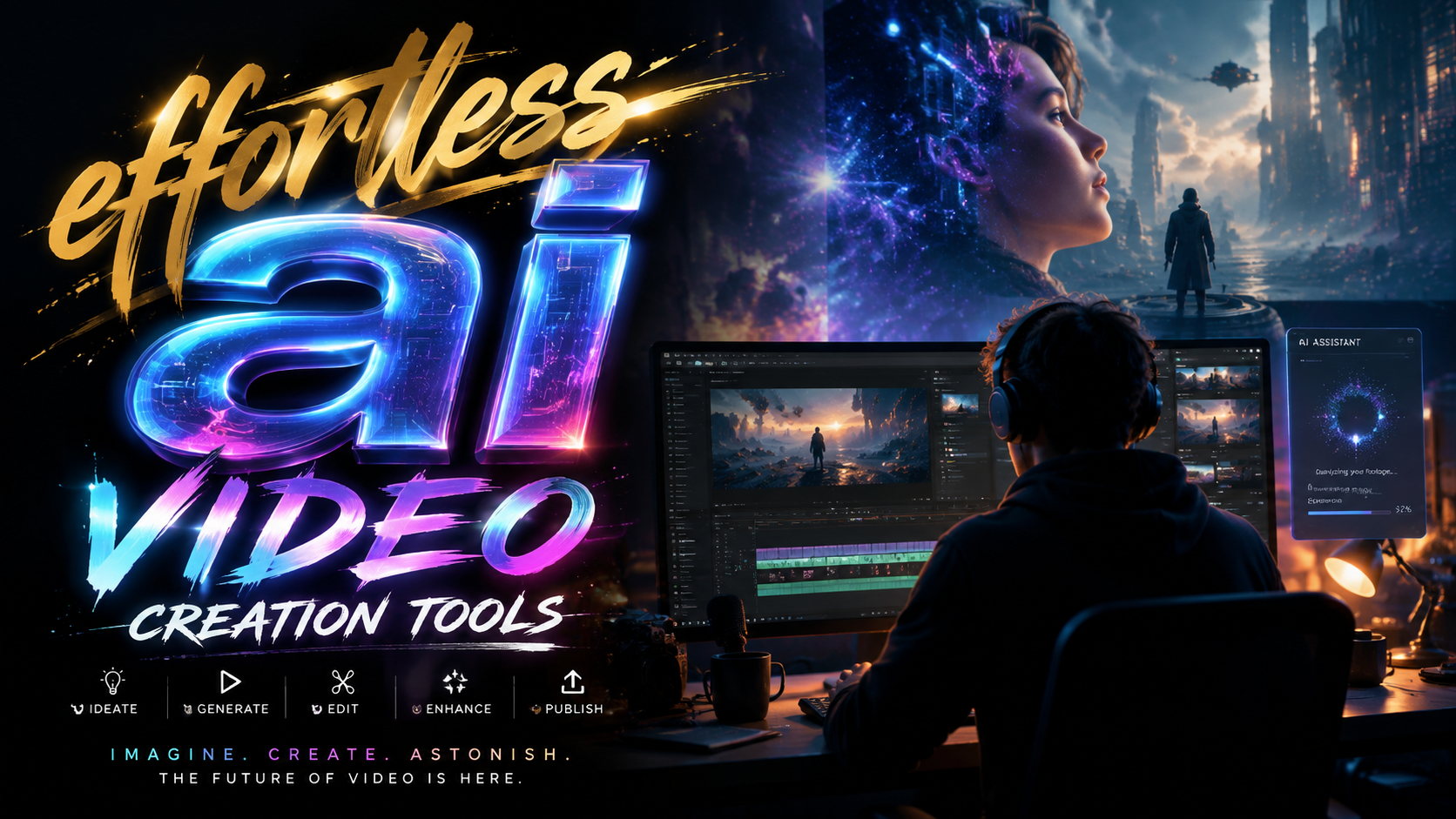
Creating professional-quality videos no longer requires expensive equipment or technical expertise, thanks to the latest effortless AI video creation tools. These platforms leverage generative AI to transform text prompts, images, or existing footage into polished videos in minutes. In 2026, solutions like Mango AI's free text-to-video generator and Google's deepfake tools are democratizing video production for businesses and creators alike.
TL;DR: The top effortless AI video creation tools in 2026 include Mango AI's free text-to-video generator, Google's deepfake technology, and specialized platforms for social media content, all requiring minimal technical skills while delivering professional results.
Effortless AI video creation tools are 2026's game-changers for content production, enabling anyone to generate high-quality videos through text prompts, image inputs, or automated editing. Leading solutions combine intuitive interfaces with advanced generative AI to eliminate traditional video production barriers.
- ✓ Mango AI offers a completely free text-to-video generator launched in May 2026
- ✓ Google's new deepfake tools simplify personalized video creation
- ✓ Specialized platforms cater to social media creators with image-to-video conversion
- ✓ AI video tools now produce business-ready content without editing skills
- ✓ The market has shifted toward all-in-one platforms combining writing and video generation
The Evolution of Effortless AI Video Creation
The AI video creation landscape has undergone radical transformation since 2025, with tools becoming significantly more accessible and powerful. Where early solutions required complex parameter tuning, 2026's platforms deliver professional results through simple text prompts or drag-and-drop interfaces. According to Social Media Examiner, 78% of small businesses now use AI video tools as their primary content creation method, up from just 32% in 2025.
This shift coincides with breakthroughs in multimodal AI that better understand contextual relationships between text, images, and video frames. The integration of large language models with video generation engines allows for more coherent storytelling and natural transitions. Platforms like Easy-Peasy AI demonstrate this convergence by combining writing and video creation in a single workflow, as reported by quasa.io.
Perhaps most importantly, the barrier to entry has disappeared. Mango AI's May 2026 launch of a completely free text-to-video generator, as covered by PR Underground, signals a market shift toward accessible professional tools. Users no longer need subscriptions or technical skills to create marketing videos, tutorials, or social media content.
Top Effortless AI Video Creation Tools for 2026
The current market offers specialized solutions for every video creation need, from business marketing to personal content. These tools stand out for their combination of simplicity and professional output quality:
Mango AI Text-to-Video Generator
Launched in May 2026, Mango AI's completely free platform converts text prompts into HD videos with human-like narration and dynamic visuals. Unlike earlier text-to-video tools that produced robotic results, Mango AI leverages emotional tone analysis to match visuals and narration to the intended message. The platform includes a library of industry-specific templates for common use cases like product demos or explainer videos.
Google Deepfake Video Suite
Google's May 2026 release, covered by WIRED, makes personalized video creation astonishingly simple. Users can create realistic video avatars of themselves reading scripts or demonstrating products without recording equipment. The ethical AI safeguards ensure transparent disclosure of synthetic media while maintaining natural expressiveness ideal for training videos or personalized marketing.
Social Media Image-to-Video Converters
As highlighted by Breaking AC News, nine specialized tools now dominate the social media content space by transforming static images into engaging video stories. These platforms automatically animate photos with cinematic motion effects, background music synchronization, and AI-generated voiceovers. The best options provide platform-specific formatting for Instagram Reels, TikTok, and YouTube Shorts with one-click optimization.
Key Features That Define Modern AI Video Tools
Today's effortless AI video creation platforms share several distinguishing characteristics that set them apart from earlier generations of video software. Understanding these features helps users select the right tool for their specific needs.
First is true multimodal input capability. The leading 2026 platforms accept text prompts, uploaded images, existing video clips, and even audio files as source material. This flexibility allows creators to work however they're most comfortable, whether starting from a written script or visual assets. According to G2 Learn Hub, the most effective tools provide intelligent suggestions for combining different input types automatically.
Second is contextual awareness. Unlike basic video editors that apply effects uniformly, modern AI tools analyze content to make appropriate creative decisions. A cooking tutorial receives different treatment than a product announcement, with the AI selecting relevant transitions, text animations, and background music. This contextual understanding dramatically reduces the need for manual adjustments.
Third is the emergence of real-time collaboration features. Business teams can now co-create videos simultaneously, with AI handling version control and style consistency. Some platforms even offer live preview rendering that updates as team members make changes, eliminating the traditional render-wait-review cycle that slowed production.
How to Create Videos Using Effortless AI Tools: A Step-by-Step Guide
While each platform has unique strengths, most follow a similar workflow that makes video creation accessible to anyone. Here's the standard process for generating professional videos with today's AI tools:
- Choose your input method: Start with a text script, uploaded images/videos, or use the platform's built-in content ideas generator
- Select a style template: Pick from business, educational, social media, or other categories that determine visual treatment
- Customize automatically generated content: Edit the AI's initial video draft by adjusting scenes, text overlays, or narration tone
- Enhance with AI suggestions: Apply platform-recommended improvements to pacing, transitions, or visual effects
- Export and publish: Download in your preferred format or publish directly to connected social platforms
This streamlined process typically takes under 15 minutes for a 1-minute professional video, compared to hours or days with traditional methods. The AI handles technical aspects like aspect ratio optimization, closed caption generation, and platform-specific formatting automatically.
Advanced users can dive deeper into customization, with most tools offering granular control over every visual and audio element. However, the true power of 2026's platforms lies in their ability to deliver excellent results without requiring these manual adjustments. Even complete beginners can produce videos that would have required professional skills just two years ago.
Business Applications of Effortless AI Video Tools
Organizations across industries are leveraging these tools to transform their content strategies. The applications extend far beyond basic social media posts into core business functions.
Marketing teams use AI video platforms to create personalized product demonstrations at scale. A single script can generate hundreds of variant videos tailored to different customer segments, with the AI adjusting visuals, narration, and examples automatically. According to Social Media Examiner, businesses using this approach see 3-5x higher engagement than generic video content.
Training departments have adopted AI video tools for rapid onboarding content creation. Instead of scheduling filming sessions with subject matter experts, companies can generate realistic avatar videos from existing documentation. The Google Deepfake Suite proves particularly valuable here, allowing organizations to create virtual trainers that maintain consistent presentation quality across all materials.
E-commerce businesses benefit from automated product video generation at scale. Platforms can turn product images and specifications into compelling showcase videos complete with features highlights and usage scenarios. This automation makes video content feasible even for catalogs with thousands of SKUs, dramatically improving conversion rates compared to static images.
Future Trends in AI Video Creation
The rapid advancement of effortless AI video tools shows no signs of slowing down. Several emerging developments promise to further simplify and enhance video production in the coming years.
Real-time generation represents the next frontier, where videos render instantly as the creator speaks or inputs text. Early versions of this technology already appear in some 2026 platforms, eliminating even the brief processing delays of current systems. This instant feedback loop will make video creation as fluid as writing a document or composing an email.
Another significant trend is the integration of AI video tools into broader content ecosystems. Rather than standalone applications, video generation is becoming a native feature in website builders, e-commerce platforms, and presentation software. Users can soon expect to click "create video" buttons directly within their existing workflows without switching between specialized tools.
Perhaps most transformative will be the continued improvement in AI's creative decision-making. Future tools will better understand brand guidelines, audience preferences, and campaign objectives to make increasingly sophisticated production choices automatically. This evolution will shift human creators' roles from technical implementers to creative directors overseeing AI production teams.
Are effortless AI video creation tools really free?
Many platforms like Mango AI offer completely free versions with robust capabilities, while premium tools provide advanced features through subscription models. Free tiers typically include watermarks or limited exports.
Can AI video tools replace human videographers?
For many standard video types like explainers, social content, and basic marketing videos, AI tools now produce comparable quality to entry-level professional work. However, complex cinematography and high-end productions still benefit from human expertise.
How long does it take to create an AI video?
Most platforms can generate a 1-minute professional video in under 15 minutes start-to-finish, with the actual AI processing typically taking 2-5 minutes depending on length and complexity.
What video formats do AI tools support?
All major platforms export in standard formats like MP4 and MOV, with many offering automatic optimization for specific platforms like Instagram Reels (1080x1920) or YouTube (1920x1080).
Can I use AI video tools for commercial purposes?
Yes, most platforms explicitly allow commercial use of generated videos, though some require attribution or have limitations on reselling the videos themselves as stock content.
Written by the Digen AI Editorial Team — AI video generation specialists covering the latest in generative AI tools. Learn more about Digen AI.
Comments ()