
Create Realistic AI Videos From Text: 2026 Ultimate Guide
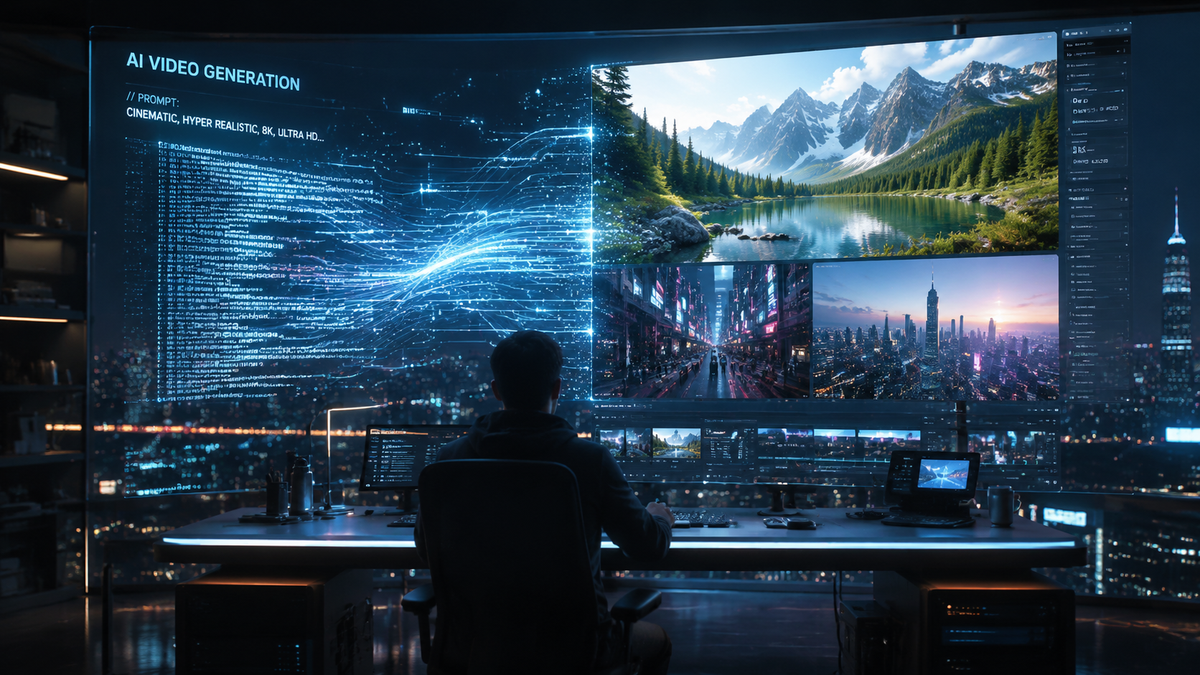
To create realistic AI videos from text, you must use a generative video platform that leverages diffusion models or transformer-based architectures to interpret natural language prompts into high-fidelity cinematic frames. As of 2026, the process involves selecting a specialized tool like OpenAI’s Sora or Seedance, inputting a descriptive prompt that details lighting, camera movement, and character actions, and then refining the output through iterative prompting or built-in editing tools. This technology has evolved to a point where AI-generated content is often indistinguishable from traditional cinematography.
Creating realistic AI videos from text is the process of using artificial intelligence models to transform written descriptions into high-definition video files. In 2026, this is achieved through advanced "text-to-video" engines that synthesize physics-compliant motion, realistic lighting, and complex character interactions based solely on a user's textual instructions or "prompts."
- ✓ Leading tools like Sora and Seedance now offer "ultra-realistic" outputs that rival Hollywood studio quality.
- ✓ Modern AI video generators support extended durations and complex physics simulations.
- ✓ Integration with social media platforms like TikTok and YouTube has made AI video creation accessible to mobile users.
- ✓ Ethical considerations and digital watermarking are now standard to differentiate AI content from reality.
How to Create Realistic AI Videos From Text: A Step-by-Step Guide
The landscape of content creation has shifted dramatically. While video production once required expensive cameras and editing suites, you can now produce high-quality visual stories from your desktop or smartphone. Following the latest updates from early 2026, the workflow for generating professional-grade video has been streamlined for both creators and enterprises.
- Select Your AI Video Platform: Choose a tool based on your needs. For cinematic realism, OpenAI’s Sora or the recently launched Seedance are top-tier choices. For social media content, use integrated apps like the OpenAI Video Generator app released in late 2025.
- Draft a Descriptive Prompt: Write a detailed paragraph describing the scene. Include the subject, the setting, the lighting (e.g., "golden hour" or "neon noir"), and the specific camera movement (e.g., "slow tracking shot").
- Configure Technical Settings: Set your aspect ratio (9:16 for TikTok/Reels, 16:9 for YouTube), resolution (now standard at 4K for most 2026 tools), and duration.
- Generate and Iterate: Hit generate and wait for the model to render. If the motion isn't perfect, use "seed" editing to adjust specific elements without changing the entire scene.
- Post-Production and Upscaling: Use built-in AI tools to refine textures or add spatial audio tracks to match the visual movements.
The Evolution of Text-to-Video in 2026

The year 2026 marks a turning point in digital media. According to a recent report by the Wall Street Journal, OpenAI’s launch of a dedicated video generator app in September 2025 fundamentally changed how users interact with platforms like TikTok and YouTube, moving from manual filming to prompt-based creation. This shift has democratized high-end production, allowing individuals to compete with major studios in terms of visual fidelity.
Sora and the Standard of Realism
OpenAI’s Sora continues to lead the market in creating video from text. As of February 2026, Sora has integrated advanced physics engines that prevent the "uncanny valley" effect previously seen in earlier models. It can now maintain character consistency across multiple shots, a feature that was once the primary hurdle for AI filmmakers. This allows for the creation of short films where the protagonist looks identical in every scene, regardless of lighting or angle.
Seedance and the Hollywood Response
A significant development in 2026 is the rise of Seedance. As reported by the BBC in February 2026, Hollywood studios have begun taking aim at this "ultra-realistic" tool. Seedance specializes in cinematic textures and complex human emotions, leading to a surge in AI-assisted feature films. The tool’s ability to simulate cloth physics and realistic skin micro-expressions has made it a favorite for independent creators looking to achieve a "big-budget" look on a shoestring budget.
Comparing the Top AI Video Generators of 2026
When you want to create realistic AI videos from text, choosing the right software is essential. Different models prioritize different aspects of video production, such as motion fluidity, prompt adherence, or rendering speed. Below is a comparison of the leading tools currently dominating the market according to 2026 industry benchmarks.
| Platform | Best For | Max Resolution | Key Feature |
|---|---|---|---|
| OpenAI Sora | Cinematic Storytelling | 4K / 8K Upscaled | Complex Physics Simulation |
| Seedance | Professional Filmmaking | 4K | Ultra-realistic Textures |
| OpenAI Mobile App | Social Media / TikTok | 1080p / 4K | Instant Rendering & Sharing |
| G2 Top Picks (Various) | Marketing & Ads | Various | Template-based Generation |
The Impact of Ultra-Realistic AI on Media Consumption
As AI videos become indistinguishable from reality, the way we consume media is changing. NewsForKids.net noted in late 2025 that the question "Is seeing believing?" has become a central theme in modern education. With AI videos looking "extremely real," the focus has shifted from the quality of the image to the authenticity of the source. This has led to the mandatory implementation of C2PA metadata in all major AI video tools to ensure viewers can identify synthetic media.
Distortion in Social Media Feeds
However, the technology is not without its challenges. The New York Times reported in February 2026 that AI-generated videos are significantly distorting YouTube feeds, particularly for younger audiences. Because it is so easy to create realistic AI videos from text, the volume of content has exploded, making it difficult for human-created content to compete with the sheer output of algorithmic generation. This has forced platforms to rethink how they rank and recommend "real" versus "synthetic" videos.
The Role of Prompt Engineering
To create realistic AI videos from text that truly stand out, users have moved beyond simple descriptions. In 2026, "Cinematic Prompting" is a recognized skill. This involves using technical photography terms—such as "anamorphic lens flare," "depth of field," and "subsurface scattering"—to guide the AI. The more technical the prompt, the more the AI understands how to simulate the specific properties of light and glass, resulting in a more professional aesthetic.
Advanced Techniques to Create Realistic AI Videos From Text
Achieving true realism requires more than just a basic prompt. You must understand how the AI interprets spatial relationships and temporal consistency. In the 2026 version of these tools, users can now provide "motion brushes" to specify which parts of a still image should move, or "camera controllers" to dictate the exact path of the virtual lens.
Consistency and Character Continuity
One of the biggest breakthroughs in 2026 is the "Character Lock" feature. When you create realistic AI videos from text, you can now upload a reference image of a person, and the AI will use that person as the protagonist in every generated clip. This has revolutionized the creation of web series and recurring social media characters, as it removes the randomness that previously plagued AI video production.
Environmental Physics and Lighting
Modern models now include "Global Illumination" settings. According to G2 Learning Hub, the best AI video generators of 2026 allow users to toggle environmental factors like wind speed, rain intensity, and light temperature. This level of control ensures that if you prompt for a "stormy night," the characters' clothes will react realistically to the wind and the puddles will reflect the lightning accurately.
Future Outlook: What’s Next for AI Video?
As we move through 2026, the boundary between "text-to-video" and "text-to-world" is blurring. We are seeing the emergence of interactive AI videos where the viewer can change the prompt in real-time to alter the ending of a story. The hardware requirements for these tasks are also decreasing, with more "on-device" processing becoming available for high-end smartphones, reducing the reliance on massive server farms for simple video generations.
Frequently Asked Questions
What is the best tool to create realistic AI videos from text in 2026?
Currently, OpenAI's Sora and Seedance are considered the industry leaders for high-fidelity, realistic video generation. Sora is praised for its physics and consistency, while Seedance is favored by studios for its ultra-realistic textures and cinematic quality.
How long does it take to generate an AI video?
In 2026, a 60-second high-definition video typically takes between 2 to 5 minutes to render, depending on the complexity of the scene and the server load. Mobile versions optimized for social media can often produce shorter clips in under 30 seconds.
Are AI-generated videos legal to use for commercial purposes?
Most platforms now offer commercial licensing tiers. However, due to recent legal challenges from Hollywood studios, it is important to ensure your chosen tool has the rights to its training data and provides a clear commercial usage agreement.
Can I put myself in an AI-generated video?
Yes, most 2026 AI video tools include "Image-to-Video" or "Face-Swap" features. By providing a reference photo of yourself, the AI can map your likeness onto a generated character while maintaining the realistic motion and lighting of the scene.
How can I tell if a video was made by AI?
Look for digital watermarks or C2PA metadata tags. While the visuals are extremely realistic, most reputable platforms now embed invisible signals or visible labels to comply with transparency regulations established in late 2025.



Comments ()