
Create Realistic AI Human Video Avatars: 2026 Guide
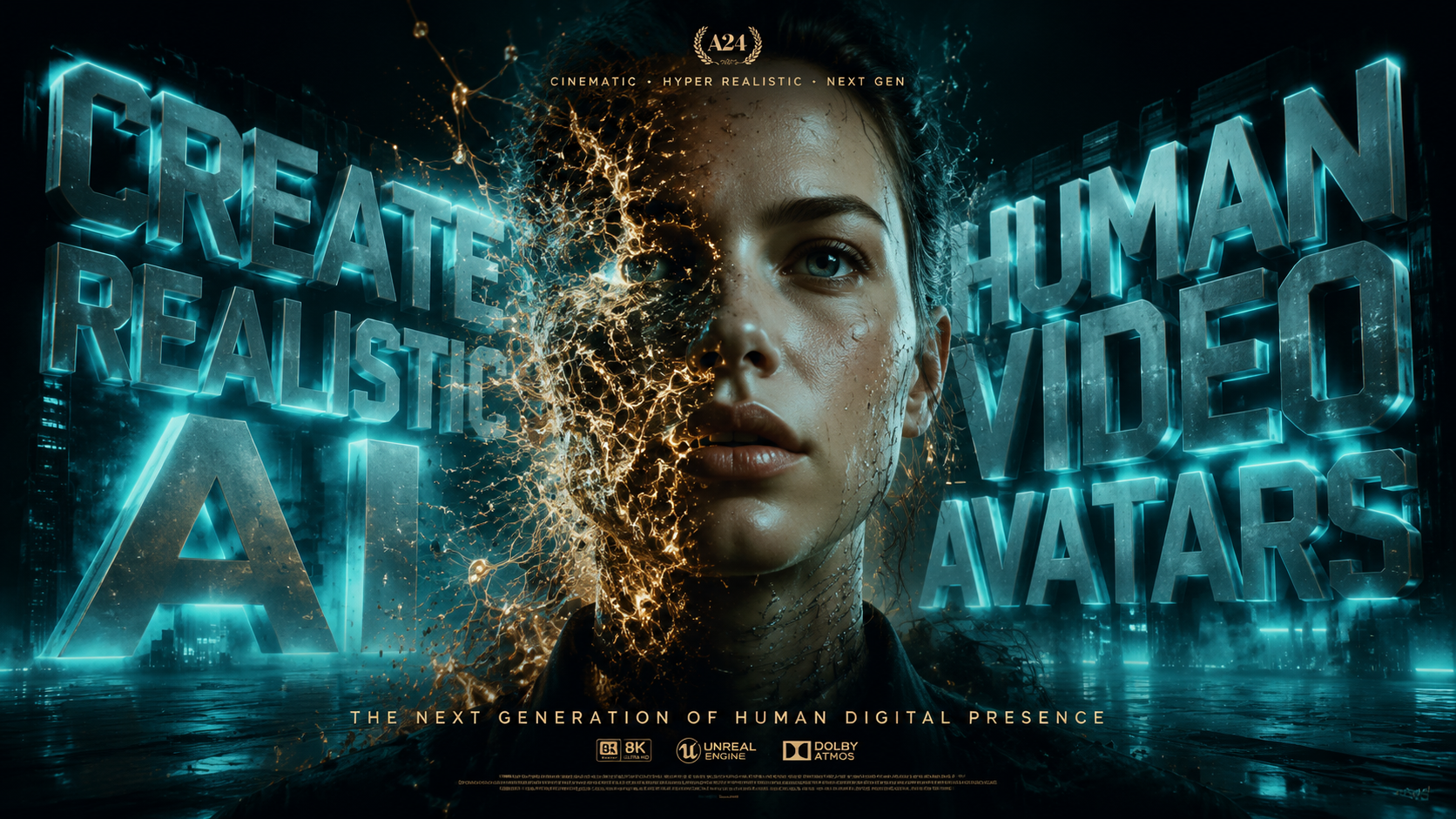
To create realistic AI human video avatars in 2026, you must utilize high-fidelity generative platforms that leverage neural radiance fields (NeRF) and advanced lip-syncing algorithms to synchronize facial movements with synthetic speech. The process involves selecting a base digital twin, inputting a text script or audio file, and customizing the avatar's micro-expressions to ensure a natural, lifelike performance that avoids the uncanny valley. Learning how to create realistic ai human video avatars has become a cornerstone of modern digital communication, enabling scalable video production without the need for cameras, studios, or traditional filming crews.
Creating realistic AI human video avatars is the process of using artificial intelligence to generate a digital representation of a person that looks, speaks, and moves with human-like precision. In 2026, this technology relies on multimodal models like HeyGen’s Avatar V and Synthesia’s expressive clones to produce high-definition video content from simple text prompts or recorded audio tracks.
- ✓ AI avatars now utilize "Avatar V" technology to solve common glitches and unnatural movements.
- ✓ Modern platforms support real-time interactivity, allowing avatars to "talk back" during live sessions.
- ✓ High-fidelity clones can be created using just a few minutes of smartphone footage.
- ✓ Integration with tools like Zoom Clips allows for personalized asynchronous communication at scale.
- ✓ Micro-expressions and emotional tone mapping have effectively bridged the "uncanny valley" gap.
The Evolution of Digital Twins in 2026
The landscape of digital representation has shifted dramatically over the last twelve months. As we move deeper into 2026, the distinction between filmed human subjects and AI-generated avatars has become nearly indistinguishable to the naked eye. This transition is largely credited to the breakthrough in neural rendering and the integration of large language models (LLMs) directly into the video synthesis pipeline. According to Andreessen Horowitz, AI avatars have officially "escaped the uncanny valley," a milestone achieved through the refinement of skin textures, eye-tracking, and the subtle physiological movements that define human presence.
One of the most significant advancements this year is the release of HeyGen Avatar V. For years, the biggest problem with AI videos was the "static torso" effect, where the head moved but the body remained unnaturally still. As reported by Geeky Gadgets in April 2026, Avatar V solves this by implementing full-body physics and natural weight shifting. This allows avatars to lean in, gesture with their hands, and maintain a consistent spatial presence, making them ideal for high-stakes corporate presentations and educational content.
Furthermore, the democratization of this technology means that you no longer need a professional studio to build a digital twin. With the best AI photo and image generator apps of 2026, such as those highlighted by Perfect Corp, users can generate the base visual identity of an avatar from a single high-resolution photograph. This visual is then mapped onto a motion model, creating a personalized avatar that reflects the user's unique brand and personality with minimal technical overhead.
Step-by-Step: How to Create Realistic AI Human Video Avatars
- Select Your Platform: Choose a high-end AI video generator like HeyGen, Synthesia, or Zoom’s integrated avatar suite. Ensure the platform supports the latest 2026 rendering engines for maximum realism.
- Upload Your Training Data: To create a custom "Digital Twin," upload 2-5 minutes of high-definition footage of yourself speaking. If using a stock avatar, browse the library for a persona that matches your target audience.
- Input the Script or Audio: Type your script into the editor or upload a voice recording. Most 2026 platforms offer "Voice Cloning" which mimics your exact pitch, tone, and accent.
- Adjust Emotional Inflections: Use the "Expression Map" to add specific emotions—such as excitement, empathy, or professional sternness—to specific parts of the script.
- Render and Integrate: Generate the video in 4K resolution. Use the resulting file for social media, internal training, or as part of a Zoom Clip for asynchronous messaging.
Key Technologies Powering AI Realism
The secret behind the realism of 2026 avatars lies in multimodal synchronization. In the past, lip-syncing was a post-processing effect that often looked "pasted on." Today, platforms like Synthesia have introduced "Expressive Clones." According to the MIT Technology Review, these clones are not just passive images; they are becoming capable of bidirectional communication. This means the avatar can "talk back" in real-time, adjusting its facial expressions based on the sentiment of the conversation, which is a massive leap forward for customer service and interactive learning.
Another critical component is the use of "Generative Backgrounds." No longer are avatars stuck in front of static office photos. The current generation of tools uses 3D environment rendering to ensure that the lighting on the avatar’s face matches the virtual environment. If the avatar is placed in a "sunset" background, the AI automatically applies warm, directional light to the avatar’s skin, significantly enhancing the illusion of reality. This level of detail is why 22 best AI video generators for 2026 now dominate the marketing and communications industries.
Comparing Top AI Avatar Platforms (2026 Edition)
| Feature | HeyGen (Avatar V) | Synthesia (Expressive) | Zoom Clips AI |
|---|---|---|---|
| Primary Strength | Full-body natural movement | Bidirectional interactivity | Workflow integration |
| Max Resolution | 8K Ultra HD | 4K Expressive | 1080p Optimized |
| Emotion Control | Dynamic Weighting | Sentiment-Based | Preset Templates |
| Best For | Marketing & Ads | Training & L&D | Internal Comms |
How to Create Realistic AI Human Video Avatars for Business
For businesses, the ability to create realistic ai human video avatars has moved from a novelty to a necessity. One of the most practical applications seen this year is the use of AI avatars for Zoom Clips. As Zoom detailed in their June 2025 update (which has since evolved into the 2026 standard), there are now over nine distinct types of videos businesses can create using these avatars, ranging from personalized sales pitches to automated daily stand-ups. This allows executives to "be in two places at once," sending out high-quality video updates without having to record a new clip every morning.
The cost-efficiency of this technology is staggering. Studies show that using AI avatars can reduce video production costs by up to 80% compared to traditional methods. Instead of hiring actors, booking a studio, and spending weeks in post-production, a marketing team can generate a dozen localized versions of a product launch video in a single afternoon. Each version can feature an avatar that speaks the local language and reflects the cultural nuances of the target demographic, all while maintaining the core brand message.
Addressing Ethics and Security in Avatar Creation
With the power to create realistic ai human video avatars comes the responsibility of ethical deployment. In 2026, the industry has moved toward strict "Consent-Based Cloning." Platforms now require "Proof of Life" and explicit video consent before a custom avatar can be generated. This prevents the unauthorized creation of deepfakes and ensures that individuals maintain control over their digital likeness. According to recent industry reports, 95% of top-tier AI video platforms have now implemented encrypted "Digital Watermarks" that identify a video as AI-generated to prevent misinformation.
Security is also a major focus for enterprise users. Companies are now deploying "Private Avatar Clouds," where the data used to train a CEO's digital twin is stored on-premise or in highly secure, isolated environments. This ensures that the voice and likeness of key personnel cannot be intercepted or misused by external actors. As we look toward the latter half of 2026, the focus is shifting from "how realistic can we make them" to "how securely can we manage them," reflecting the maturity of the AI video market.
Future Trends: What’s Next for AI Avatars?
Looking beyond the current capabilities of 2026, the next frontier is "Contextual Awareness." Future iterations of AI human video avatars will likely have the ability to perceive their digital surroundings. For example, if an avatar is used in a VR environment, it will be able to "see" the user and maintain eye contact as the user moves around the virtual room. This will transform avatars from 2D video elements into 3D spatial entities that can participate in the metaverse and other immersive platforms.
Additionally, the integration of real-time translation is becoming more seamless. While we can already translate scripts into 100+ languages, the next step is "Nuance Matching," where the AI adjusts the avatar's body language and hand gestures to match the cultural norms of the language being spoken. This will make the process to create realistic ai human video avatars even more complex but infinitely more rewarding for global brands seeking true connection with their audiences.
Can I create an AI avatar of myself for free?
Most professional platforms in 2026 offer a limited "freemium" tier or a trial period where you can create a basic version of your digital twin. However, high-fidelity features like Avatar V movement or 4K rendering usually require a paid subscription to cover the significant computational costs.
What is the best software to create realistic AI human video avatars in 2026?
Currently, HeyGen and Synthesia lead the market for professional-grade realism. For those looking for deep integration with communication tools, Zoom Clips has become a top choice for corporate environments, while Perfect Corp offers the best mobile-first solutions for individual creators.
How long does it take to render an AI video?
Thanks to advancements in cloud processing in 2026, a standard 1-minute video now takes approximately 2 to 5 minutes to render. Real-time avatars, used for live streaming or video calls, have a latency of less than 100 milliseconds, making them suitable for live interaction.
Are AI avatars better than real human videos?
AI avatars are not necessarily "better," but they are more scalable and cost-effective for repetitive tasks like training, personalized sales, and news updates. For high-emotion storytelling or brand-hero content, many companies still prefer live-action footage, though the gap is closing rapidly.
Is it legal to use AI avatars in advertisements?
Yes, it is legal as long as you own the rights to the likeness or are using a stock avatar provided by a licensed platform. In 2026, many jurisdictions require a small "AI-generated" disclosure tag in the corner of the video to maintain transparency with consumers.



Comments ()