
How to Create Marketing Videos with AI 2026: Complete Guide

To create marketing videos with AI 2026, businesses must leverage generative platforms that transform text prompts or product URLs into high-fidelity video assets. This process involves using AI for scriptwriting, synthetic voiceovers, and automated scene assembly to produce professional content in minutes rather than weeks. By integrating these tools, brands can scale their visibility across social media platforms while maintaining the high production standards required to engage modern audiences.
AI video creation in 2026 is the process of using generative artificial intelligence to automate the production of marketing content from minimal inputs like URLs or text. It utilizes sophisticated neural networks to generate lifelike visuals and audio, enabling small businesses and large enterprises to produce high-volume, personalized video campaigns with minimal manual editing or technical expertise.
- ✓ AI video generators now allow for "URL to Video" transformations, instantly turning product links into advertisements.
- ✓ Authenticity is critical, as 83% of consumers can currently identify AI-generated video content.
- ✓ Small businesses are using AI video to bridge the visibility gap against larger competitors with bigger budgets.
- ✓ Success in 2026 requires balancing automated speed with human-centric brand trust to avoid alienating audiences.
The Evolution of How to Create Marketing Videos with AI 2026
As we move through 2026, the landscape of digital marketing has been fundamentally reshaped by the rapid maturation of generative video technologies. According to ContentGrip, the transformations seen this year represent a shift from experimental AI tools to integrated marketing ecosystems. No longer is AI just a novelty used for background effects; it is now the primary engine for content production, allowing marketers to keep pace with the hyper-accelerated cycle of social media trends.
The primary driver of this change is the democratization of high-end production values. In previous years, creating a cinematic-quality marketing video required a crew, a studio, and a significant budget. Today, the ability to create marketing videos with AI 2026 means that a single marketing manager can oversee the production of dozens of localized, niche-targeted videos in a single afternoon. This shift is particularly impactful for small businesses, which USA Today reports are using AI video marketing to generate unprecedented levels of visibility in crowded digital marketplaces.
Step-by-Step Guide to AI Video Production
- Define Your Objective and Input: Start with a clear goal, such as a product launch or a brand awareness campaign. You can now use "URL to Video" platforms to pull data directly from your website.
- Generate the Script and Storyboard: Use LLM-integrated tools to draft a script tailored to your target demographic's tone and preferences.
- Select AI Avatars or B-Roll: Choose between hyper-realistic digital humans or let the AI curate relevant stock footage and generated imagery based on your script.
- Customize Branding and Voice: Apply your brand colors, logos, and select a synthetic voice that matches your brand identity.
- Review for Authenticity: Because consumers are increasingly sensitive to "uncanny valley" effects, a human must review the final output to ensure it feels genuine and trustworthy.
- Distribute and Iterate: Export the video in multiple formats (9:16 for TikTok/Reels, 16:9 for YouTube) and use performance data to refine your next AI prompt.
The Rise of URL-to-Video Platforms
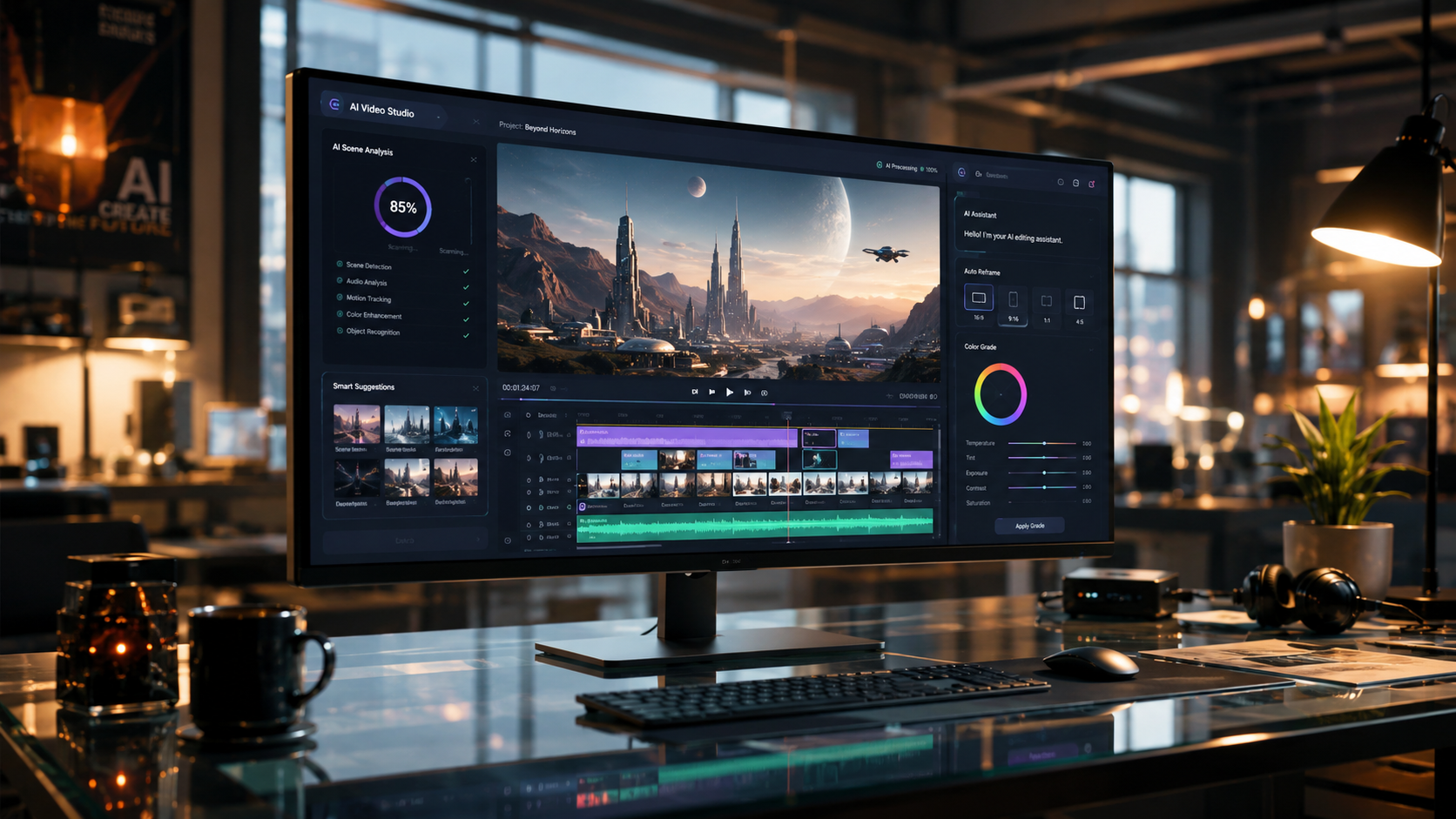
One of the most significant breakthroughs this year is the launch of specialized platforms that turn product links into fully realized marketing videos. As reported by 24-7 Press Release Newswire, the "URL To Video" movement allows e-commerce brands to simply paste a product link into an AI platform, which then scrapes the images, descriptions, and pricing to build a professional ad. This eliminates the manual labor of asset gathering and ensures that video content is always synchronized with current website data.
This technology is changing social media marketing by allowing for "just-in-time" content. When a product goes on sale or a new item is added to an inventory, an AI-generated video can be live on Instagram or TikTok within minutes. This level of agility was impossible before 2026, marking a new era where the speed of content creation matches the speed of consumer interest.
Comparing AI Video Capabilities in 2026
| Feature | Standard AI Video (2024-25) | Advanced AI Video (2026) |
|---|---|---|
| Input Type | Text Prompts Only | URLs, Real-time Data, Live Feeds |
| Visual Quality | Often stylized or "dreamy" | Hyper-realistic, indistinguishable from film |
| Processing Speed | Minutes to Hours | Seconds to Real-time |
| Personalization | Static Templates | Dynamic, user-specific rendering |
| Consumer Trust | High skepticism | Balanced with "Human-in-the-loop" editing |
Balancing Efficiency with Brand Trust
While the technical ability to create marketing videos with AI 2026 has reached its peak, a new challenge has emerged: consumer skepticism. A critical report from Business Wire via Animoto highlights a growing trend where 83% of consumers say they can spot AI-generated videos. More alarmingly for marketers, 36% of those surveyed stated that the use of AI in videos can actually lower their trust in a brand if it feels deceptive or impersonal.
To combat this, successful marketers in 2026 are using a "hybrid" approach. This involves using AI for the heavy lifting—such as background generation, color grading, and initial drafting—while ensuring that the "soul" of the video remains human. This might include using real customer testimonials alongside AI-generated visuals or ensuring that the script reflects authentic brand values rather than generic AI-generated platitudes. Transparency is becoming a key marketing pillar; brands that disclose their use of AI while focusing on high-value storytelling are seeing better engagement than those trying to "trick" the audience.
Strategies to Maintain Authenticity
- Human-in-the-Loop: Always have a human creative director review and "tweak" AI outputs to add emotional nuance.
- Hybrid Footage: Mix 20% real-world footage (like a quick smartphone clip of a real employee) with 80% AI-generated environments.
- Personality-Driven Scripts: Avoid the "default" AI voice; customize the tone to include brand-specific jargon and humor that a machine wouldn't naturally produce.
How AI Video Generators Are Changing Social Media Marketing
According to PC Tech Magazine, AI video generators are not just making videos faster; they are changing the very strategy of social media. In 2026, the trend is "Hyper-Niche Targeting." Instead of creating one video for a broad audience, marketers are using AI to create 500 variations of the same video, each tailored to a specific micro-segment of their audience based on location, interests, or past purchasing behavior.
This transformation is visible in how platforms like TikTok and Instagram operate. The algorithms now favor high-frequency posters, and AI is the only way for small to mid-sized brands to maintain that level of output. THISDAYLIVE notes that AI video generation is transforming marketing by allowing for "reactive content"—videos that are generated in response to a viral trend or a news event while that event is still trending, rather than days later.
The Role of Small Businesses in 2026
Small businesses have perhaps gained the most from this technological surge. Historically, video was a barrier to entry due to cost. Now, as USA Today points out, AI video marketing is the primary tool for small businesses to generate visibility. By using AI to handle the technical aspects of video production, local shops and service providers can compete on a global stage, appearing just as professional as Fortune 500 companies.
Future-Proofing Your AI Video Strategy
To stay ahead when you create marketing videos with AI 2026, you must look beyond the tools and focus on the data. The most successful brands are those that integrate their Customer Relationship Management (CRM) systems directly with their AI video platforms. This allows for the generation of personalized video messages for customers—such as a video "thank you" that mentions the customer by name and shows the specific product they just bought.
Furthermore, as AI models continue to evolve, the focus is shifting toward "Interactive AI Videos." These are videos where the viewer can ask the AI presenter a question in real-time, and the video will generate a response on the fly. Preparing for this level of interactivity requires a robust content database and a willingness to experiment with emerging APIs that link generative video with conversational AI.
Frequently Asked Questions
Is it expensive to create marketing videos with AI in 2026?
No, the cost has significantly decreased compared to previous years. Most platforms offer subscription models that range from $20 to $100 per month, making it accessible for businesses of all sizes to produce professional-grade content.
Can AI videos be used for paid advertising on social media?
Yes, AI-generated videos are highly effective for paid ads on platforms like Meta, TikTok, and YouTube. However, most platforms now require a "synthetic media" label to maintain transparency with viewers.
What is "URL to Video" technology?
It is a feature where an AI platform scans a website link to automatically extract product images and details, then compiles them into a structured marketing video with music, voiceover, and transitions.
Will consumers trust my brand if I use AI-generated videos?
Trust depends on transparency and quality. While 36% of consumers may feel a loss of trust if AI is used poorly, brands that use AI to enhance storytelling rather than replace human connection generally see positive results.
Do I need technical skills to use these AI video tools?
Minimal technical skills are required. Most 2026 AI video tools are designed with "no-code" interfaces, allowing users to create content through simple text prompts or drag-and-drop actions.
Conclusion: The New Standard for Marketing
In 2026, the question is no longer whether you should use AI in your marketing, but how effectively you can integrate it into your workflow. The ability to create marketing videos with AI 2026 has leveled the playing field, allowing for a surge in creativity and visibility across the digital landscape. By focusing on the "URL to Video" capabilities and maintaining a strong "human-in-the-loop" philosophy, brands can navigate the challenges of consumer trust while reaping the rewards of unprecedented production efficiency.
As suggested by the latest reports from THISDAYLIVE and PC Tech Magazine, the transformation is total. Marketing is now faster, more personalized, and more data-driven than ever before. For those willing to embrace these tools, the potential for brand growth in 2026 is limitless.



Comments ()