
How to Create Animated Videos with AI 2026: Ultimate Guide
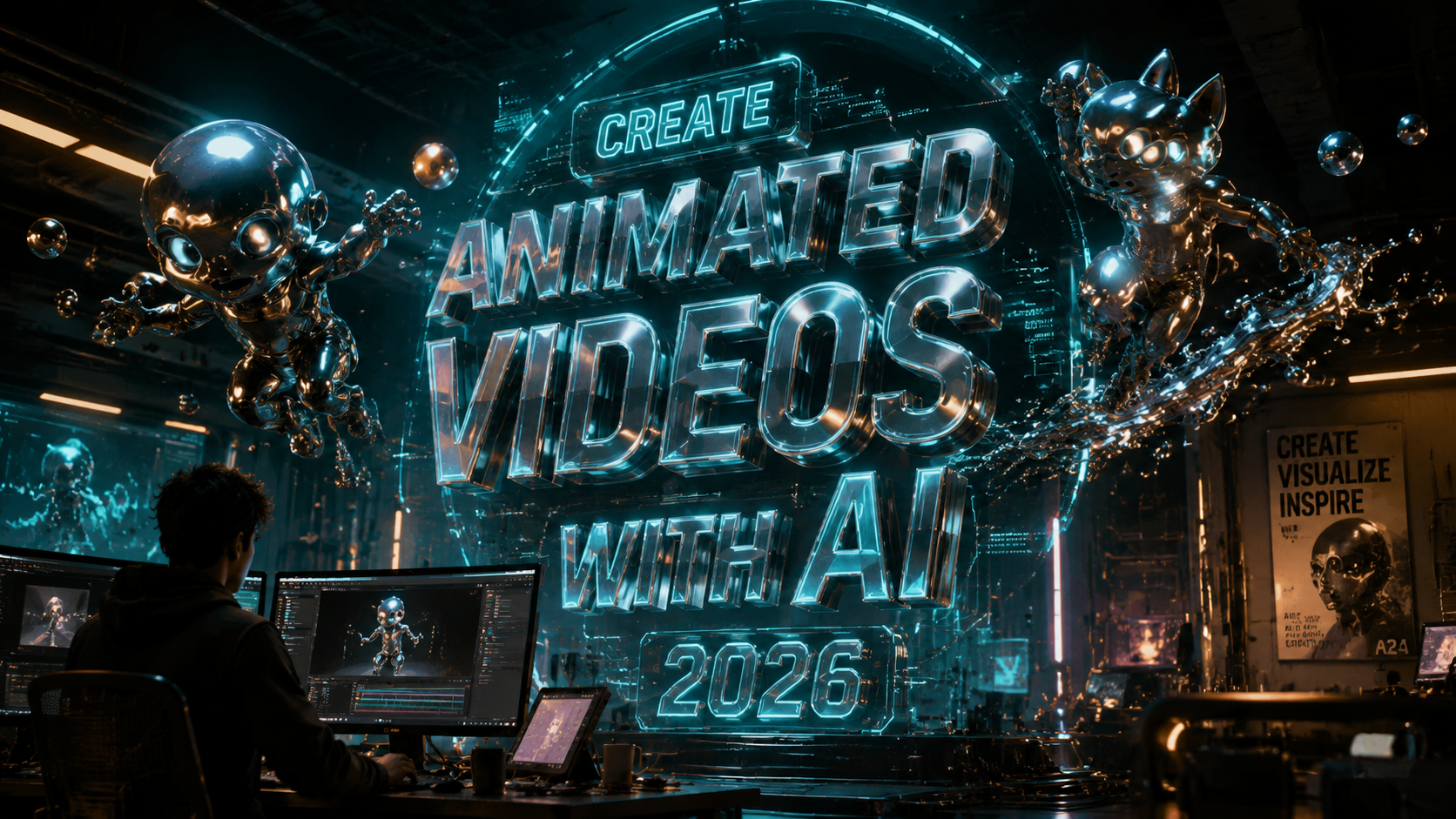
To create animated videos with AI 2026, you must leverage generative video models that transform text prompts or static images into high-fidelity motion sequences. By utilizing modern platforms like those featured in the 2026 CNET rankings, creators can now automate character rigging, voice-over synchronization, and background environmental effects with a single click. This process has evolved from simple frame interpolation to sophisticated "GenAI" pipelines that allow for professional-grade storytelling on platforms like Prime Video.
Creating animated videos with AI in 2026 is the process of using multimodal generative artificial intelligence to automate the production of visual sequences, character movements, and audio. By inputting scripts or sketches into AI video generators, users can produce high-definition animations in minutes, significantly reducing the traditional costs and technical barriers associated with manual keyframing and rendering.
- ✓ AI video generation has transitioned from experimental tools to studio-grade production suites used by Amazon MGM Studios.
- ✓ One-click templates are the primary entry point for beginners, allowing for instant style transfers and scene generation.
- ✓ Quality control is essential to avoid "AI slop," particularly in the sensitive market of children’s media.
- ✓ Hybrid workflows involving human oversight and AI automation are currently the gold standard for professional content.
The Evolution of AI Animation in 2026
The landscape of digital content creation has undergone a seismic shift this year. As of May 2026, the barrier between professional studios and independent creators has almost entirely vanished. According to Variety, Amazon MGM Studios has officially embraced this technology by greenlighting three original series for Prime Video under their new "GenAI Creators’ Fund." This move validates the use of generative tools for high-stakes, long-form entertainment, moving beyond the short-form social media clips that dominated previous years.
However, with great power comes the need for critical discernment. While the ability to create animated videos with AI 2026 is more accessible than ever, the market is currently grappling with "AI slop"—low-quality, mass-produced content that lacks narrative depth. Reports from Undark Magazine and The 74 have highlighted how this influx of automated content is specifically infiltrating children's media, leading to calls for better curation and ethical production standards. For creators, the goal in 2026 is no longer just to produce motion, but to produce meaning.
How to Create Animated Videos with AI 2026: A Step-by-Step Guide
- Conceptualize and Script: Use a Large Language Model (LLM) to draft your storyboard and dialogue. Ensure your prompts include specific art styles (e.g., 3D render, claymation, or traditional 2D) to guide the AI's aesthetic output.
- Select Your AI Video Engine: Choose a platform based on your technical skill level. Beginners should look for "one-click" template solutions, while advanced users might prefer node-based editors that allow for granular control over physics and lighting.
- Generate Assets: Input your character descriptions and environment prompts. In 2026, most top-tier tools allow you to upload a "reference image" to maintain character consistency across different scenes—a major technological hurdle that was only recently solved.
- Animate and Sync: Apply motion prompts or use "pose-to-video" features where the AI mimics your own movements via webcam. Use integrated AI audio tools to generate voice-overs that automatically sync with the character's lip movements.
- Refine and Upscale: Use temporal consistency filters to ensure there is no "flickering" between frames. Finally, export the video in 4K or 8K resolution using AI upscaling plugins.
Comparison of Leading AI Animation Platforms (2026 Rankings)
Choosing the right tool is critical for your workflow. Based on the 2026 reviews from Cybernews and CNET, the market is divided between ease of use and professional depth. Below is a comparison of the top-performing categories in the current market.
| Feature Category | Beginner-Friendly Suites | Professional GenAI Tools | Open-Source Models |
|---|---|---|---|
| Learning Curve | Low (One-click templates) | Moderate to High | High (Requires local GPU) |
| Customization | Preset-based | Full Parameter Control | Code-level Scripting |
| Consistency | High (Locked assets) | High (Seed tracking) | Variable |
| Primary Use Case | Social Media / Marketing | Film & Series Production | Experimental / Research |
Top Features to Look for When You Create Animated Videos with AI 2026
One-Click Templates and Beginner Accessibility
For those just starting out, the "Power of One-Click Templates" has become the defining feature of 2026. As noted by findarticles.com, these templates allow users to bypass the complex prompt engineering that was required in previous years. You can now select a "Vibe" or "Genre," and the AI automatically adjusts lighting, frame rate, and camera angles to match. This democratization of animation means that small business owners and educators can produce high-quality instructional content without hiring an animation house.
Temporal Consistency and Character Rigging
One of the biggest breakthroughs in 2026 is the perfection of temporal consistency. In the past, AI-generated videos suffered from "hallucinations" where backgrounds would shift or characters would grow extra limbs between frames. Modern engines now use spatial-temporal attention mechanisms that "remember" what happened in the previous frame. This allows for smooth, cinematic movement that is indistinguishable from traditional 3D animation. Professional suites now include virtual "rigs," allowing creators to move AI characters like digital puppets.
The Impact of AI on the Animation Industry
The industry is currently at a crossroads. On one hand, the "GenAI Creators’ Fund" by Amazon MGM Studios shows that major players are willing to invest millions into AI-driven pipelines. This is creating new roles for "AI Directors" and "Prompt Architects" who oversee the generative process. According to CNET, the best AI video generators of 2026 are those that allow for "Human-in-the-loop" workflows, where the AI does the heavy lifting of rendering, but the human maintains creative control over the emotional beats of the story.
On the other hand, the rise of "AI slop" has created a demand for authenticity. The 74 reports that parents are becoming increasingly alarmed by the flood of low-quality, algorithmically generated children's videos on platforms like YouTube and TikTok. This has led to a "Quality First" movement among reputable creators who use AI to enhance their artistry rather than replace it. The key to success in 2026 is using these tools to execute complex visions that were previously too expensive or time-consuming to realize manually.
Best Practices for High-Quality AI Animation
Avoiding the "Slop" Trap
To ensure your content stands out, avoid over-reliance on purely automated outputs. "AI slop" is characterized by nonsensical backgrounds and lack of narrative logic. To combat this, always review your AI-generated sequences frame-by-frame. Incorporate original sketches or voice recordings to give the AI a unique "soul" to work with. Experts suggest that the most successful videos in 2026 are those where AI handles 70% of the labor, while human editors provide the remaining 30% of creative direction and polish.
Ethical Considerations and Disclosure
With the infiltration of AI content into children's media, transparency has become a legal and ethical requirement in many jurisdictions. When you create animated videos with AI 2026, it is best practice to include a disclosure in the metadata or credits. This builds trust with your audience and ensures compliance with new platform policies designed to distinguish between human-led and fully autonomous content. According to recent studies, audiences are more likely to engage with AI content when the creator is transparent about the tools used.
Frequently Asked Questions
What is the best AI video generator for beginners in 2026?
According to recent industry reviews, the best tools for beginners are those that offer one-click templates and intuitive drag-and-drop interfaces. These platforms allow users to generate professional-looking animations without needing to master complex prompt engineering or video editing software.
Can AI create full-length animated movies?
Yes, as of 2026, major studios like Amazon MGM Studios are already greenlighting series and feature-length projects created with generative AI. While the AI handles the visual generation, professional teams are still required for scriptwriting, pacing, and emotional resonance.
How do I maintain character consistency in AI animation?
Modern AI tools in 2026 use "Actor Reference" features where you can upload a set of images of a character. The AI then maps these features onto every frame it generates, ensuring the character looks the same throughout the entire video regardless of the camera angle.
Is AI-generated content safe for children?
There is significant concern regarding "AI slop" in children's media, as reported by Undark Magazine. Parents and creators should be cautious, as some automated content can be nonsensical or include inappropriate glitches; therefore, human oversight is essential for any content intended for younger audiences.
Do I need an expensive computer to create animated videos with AI 2026?
No, most leading AI animation platforms in 2026 are cloud-based. This means the heavy processing and rendering happen on the provider's servers, allowing you to create high-definition animations on a standard laptop or even a mobile device with a stable internet connection.
Conclusion: The Future of Creativity
The ability to create animated videos with AI 2026 represents a monumental shift in how we tell stories. While the technology has brought challenges, such as the rise of low-quality "slop," it has also opened doors for creators who previously lacked the resources to animate their ideas. By following the latest rankings from sources like CNET and Cybernews, and staying mindful of the ethical implications highlighted by The 74, you can harness these tools to produce world-class content that resonates with audiences globally. The future of animation is no longer just about the frames you draw, but the visions you can describe and refine through the power of artificial intelligence.



Comments ()