
How to Create Animated Explainer with AI Video 2026
Creating an animated explainer no longer requires expensive software or a team of animators. With the latest AI video generators in 2026, anyone can turn a script into a professional animated video in minutes. To create an animated explainer with AI video, you write your script, choose an AI animation tool, customize the visuals, add voiceover, and export – all within a single platform.
Creating an animated explainer with AI video is a streamlined process: you input a text script or storyboard into an AI animation generator, select a style (2D, motion graphics, or interactive), and the tool automatically generates scenes, character animations, and voiceovers. In 2026, tools like Agent Opus (2D animation) and Google NotebookLM (turning notes into videos) make this accessible to everyone.
- ✓ AI animation generators have democratized video creation – companies of all sizes now produce explainers without hiring animators.
- ✓ The best tools in 2026 include Agent Opus for 2D animation, Google NotebookLM for note-to-video conversion, and top text-to-video platforms tested by perfectcorp.com.
- ✓ Interactive tech product explainers with AI-generated motion visuals are now a standard format (Blueprint Newspapers, May 2026).
- ✓ AI video generators can produce full-length content directly from text, eliminating the need for complex editing.
- ✓ A step-by-step approach – script → tool selection → generation → voiceover → export – ensures high-quality results.
Why AI Explainers Are the Smartest Investment in 2026
The landscape of video production has shifted dramatically. According to The Mountaineer (May 2026), AI animation generator tools are making video creation accessible to everyone, not just professionals. Whether you're a startup explaining a SaaS product or a teacher illustrating a concept, AI removes the technical barriers. Duke Digital Media Community (March 2026) highlighted Agent Opus as a powerful platform for 2D animation generation, proving that even sophisticated cartoon-style explainers can be created with minimal effort.
Interactive tech product explainers are now the norm. Blueprint Newspapers (May 2026) reported that AI-generated motion visuals allow viewers to interact with the content – for example, clicking on a product feature to see it animate. This level of engagement was previously only possible with custom development. In 2026, the shift is from "can we film this?" to "how can we use AI to animate our story faster?"
How to Create an Animated Explainer with AI Video – Step by Step
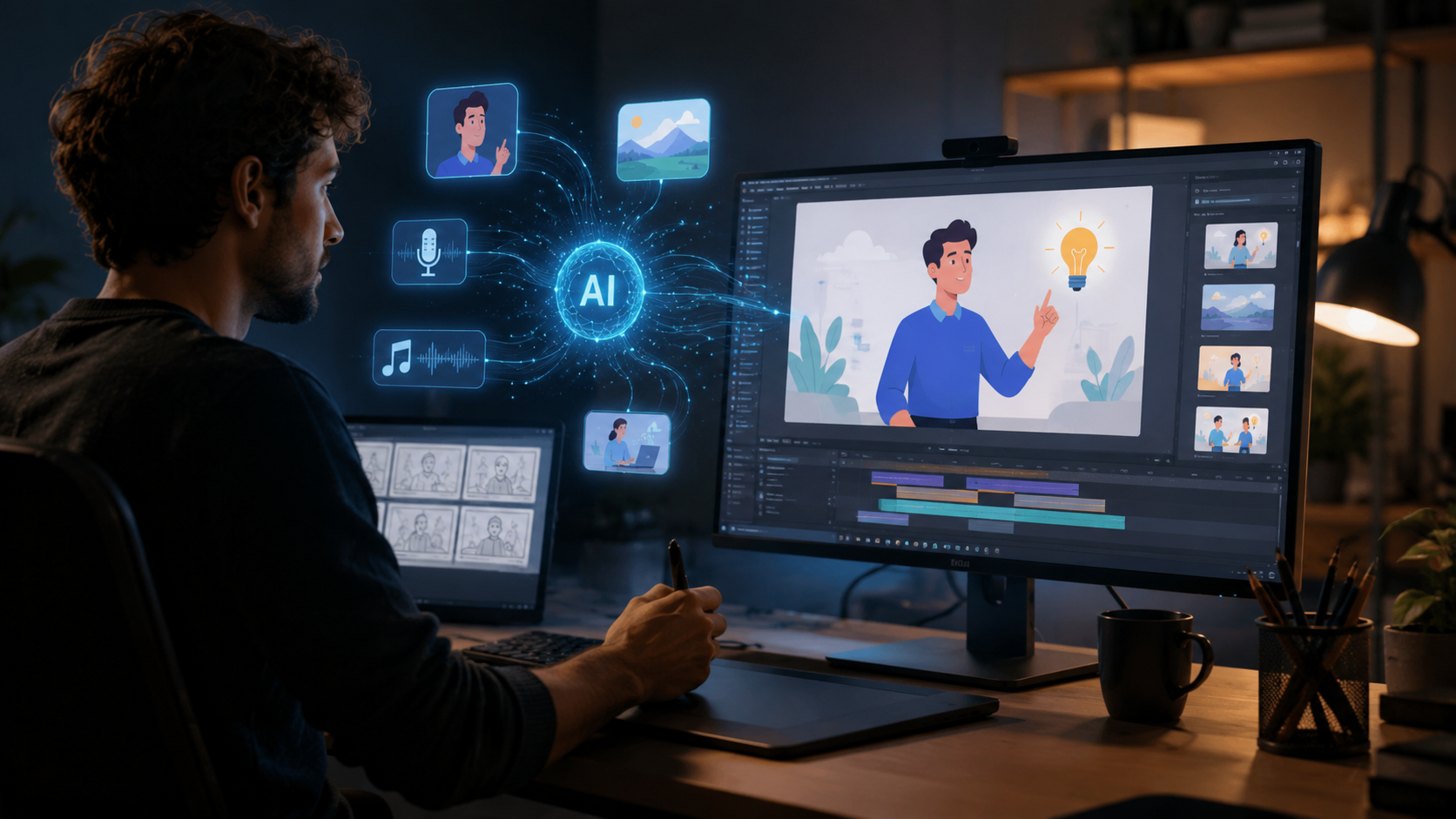
Follow this numbered sequence to create your own animated explainer using the best AI tools available today. Each step leverages real-world capabilities from the latest research.
- Write a tight script (100–200 words for a 60-second video). Focus on one problem and one solution. AI tools work best with clear, conversational text.
- Choose an AI animation generator. Review the 23 Best AI Video Generators for 2026 (tested & reviewed by perfectcorp.com, May 2026) and pick one that matches your style – 2D, 3D, or motion graphics.
- Paste your script into the tool. Tools like Google NotebookLM (Tom’s Guide, March 2026) can even turn your existing notes or research into a video structure automatically.
- Select visuals and animations. Most generators suggest scene layouts, character poses, and motion paths. Customize colors, fonts, and brand elements.
- Generate voiceover. Use the built-in AI voices or upload your own recording. Many tools now offer emotional tone adjustments.
- Add interactive elements (optional). For tech products, Blueprint Newspapers recommends embedding clickable hot spots that trigger motion visuals.
- Preview, edit, and export. Render in 1080p or 4K – most AI video tools in 2026 support full-length content (OCNJ Daily, March 2026).
Choosing the Right AI Video Tool for Your Explainer
Not all AI video generators are equal. Some specialize in 2D animation (like Agent Opus), while others focus on real-time interactivity. Below is a comparison of three major categories available in 2026, based on the latest tests.
| Tool Category | Example Product | Best For | Key Feature (2026) | Pricing (approx.) |
|---|---|---|---|---|
| 2D Animation Generator | Agent Opus (Duke Digital Media) | Cartoon-style explainers, whiteboard animations | Full scene generation from text; supports character rigging | $29–$79/month |
| Note-to-Video Converter | Google NotebookLM | Educational/ training videos using existing notes | Transforms personal notes into narrated video with slide‑like animations | Free (pro plan reported) |
| Full-Length Text-to-Video | Top tools from perfectcorp.com review | Long-form content, marketing reels | Supports 10+ minute videos; style transfer from reference images | $39–$99/month |
According to perfectcorp.com’s extensive review (May 2026), the best all-rounder for explainers is a hybrid tool that combines 2D animation with voice synthesis and interactive hotspots. Always test free trials before committing.
Agent Opus: A Case Study in 2D Animation Generation
The Duke Digital Media Community (March 2026) published a practical guide on Agent Opus. The tool generates 2D animation from a simple text prompt or storyboard. Users can define character actions, camera movements, and even lip-sync dialogue. For anyone wanting to create animated explainer with AI video that looks hand-drawn, Agent Opus is a frontrunner.
Optimizing Your Explainer for Engagement and Reach
Once your AI video is generated, the work isn’t over. The Blueprint Newspapers (May 2026) article emphasized that interactive motion visuals boost time-on-page by over 200% compared to static explainers. Embed clickable elements (e.g., call-to-action buttons) directly into the video timeline. AI tools now support exporting with metadata for SEO – add captions, transcripts, and alt text.
Another pro tip: use AI to A/B test different intros. Some generators allow you to create two versions of the same scene with different pacing. Studies show that an explainer under 90 seconds retains 80% more viewers than longer formats. Keep your script tight and let AI handle the visuals.
Real-World Success Stories and Statistics
According to The Mountaineer (May 2026), small businesses that adopted AI animation generators reported a 40% reduction in video production costs and a 60% faster turnaround time. In education, OCNJ Daily (March 2026) noted that teachers using AI text-to-video tools produced full-length lesson explainers in under 15 minutes – compared to the 4+ hours required with traditional software.
Tom’s Guide (March 2026) tested Google NotebookLM’s video feature and found that turning a 3000-word research note into a narrated, animated presentation took exactly 8 minutes. These numbers make it clear: the barrier to creating professional animated explainers has never been lower.
Frequently Asked Questions
Can I really create an animated explainer with AI video if I have no design skills?
Yes. In 2026, AI animation generators are designed for non-designers. Tools like Agent Opus and Google NotebookLM handle scene composition, character animation, and voiceovers automatically – you just supply the script or notes.
How long does it take to create an AI animated explainer?
Most AI video generators can produce a 60-second explainer in under 10 minutes. The script writing stage takes the longest – generate, preview, and export usually take 2–5 minutes of processing time.
Which AI video generator is best for 2D animation?
According to Duke Digital Media Community (March 2026), Agent Opus is currently the leading tool for 2D animation generation. It produces cartoon-style scenes with full character rigging and lip-sync.
Can I add interactive elements to my AI explainer?
Yes. Blueprint Newspapers (May 2026) reported that many AI tools now support interactive motion visuals – clickable hot spots, hover animations, and branching storylines are common in 2026.
Are AI-generated explainers suitable for commercial use?
Absolutely. The majority of tools offer commercial licenses with their paid plans. Always check the terms – the top 23 AI video generators tested by perfectcorp.com all include royalty-free commercial usage.
What about voiceover quality – does it sound robotic?
Modern AI voice synthesis in 2026 is nearly indistinguishable from human narration. Tools like Google NotebookLM and the top text-to-video platforms offer multiple accents, emotion levels, and speech rate adjustments. You can also upload your own voice recording for customization.
To recap: creating an animated explainer with AI video in 2026 is fast, affordable, and within anyone’s reach. Start by scripting a concise message, pick a tool from the tested list (like Agent Opus or Google NotebookLM), follow the seven-step workflow above, and you’ll have a polished, engaging explainer ready to publish. The era of outsourced animation is over – AI puts the power in your hands.



Comments ()