
Create AI Video with Voiceover in 2026: The Ultimate Guide
Why AI-Powered Video Creation Is Essential in 2026
If you want to create AI video with voiceover 2026, you are tapping into a workflow that has become the backbone of modern content production. In 2026, AI-powered video content dominates social media feeds, corporate training libraries, and marketing funnels because it slashes production time from days to minutes while maintaining professional-grade quality. The core question — how do you actually produce a complete video with a synthetic voice that sounds natural? — has a clear answer: combine a text-to-video generator with an AI voiceover engine, synchronize the output, and publish. This guide walks you through every tool, technique, and ethical consideration you need in 2026.
Creating an AI video with voiceover in 2026 is the process of using generative AI to produce both the visual footage and the spoken narration from text prompts, image inputs, or audio references — all without a camera, microphone, or human voice actor. Google’s Gemini Omni, Microsoft Copilot integrations, and dedicated AI video platforms now handle the entire pipeline in a single interface.
- ✓ AI video with voiceover reduces production time by up to 80% compared to traditional recording and editing workflows in 2026.
- ✓ Google’s Gemini Omni can turn images, audio, and text into a synchronized video clip — a breakthrough released in May 2026.
- ✓ Microsoft Copilot now streamlines gaming video workflows by automating voiceover generation directly inside editing tools.
- ✓ Best-in-class AI voiceover tools deliver inflection, emotion, and pacing that 95% of viewers cannot distinguish from a human narrator.
- ✓ Ethical guardrails are tightening in 2026: the BBC’s coverage of the VDM deepfake controversy shows why attribution and consent remain critical.
Why AI Voiceover Videos Are Dominating Social Media in 2026
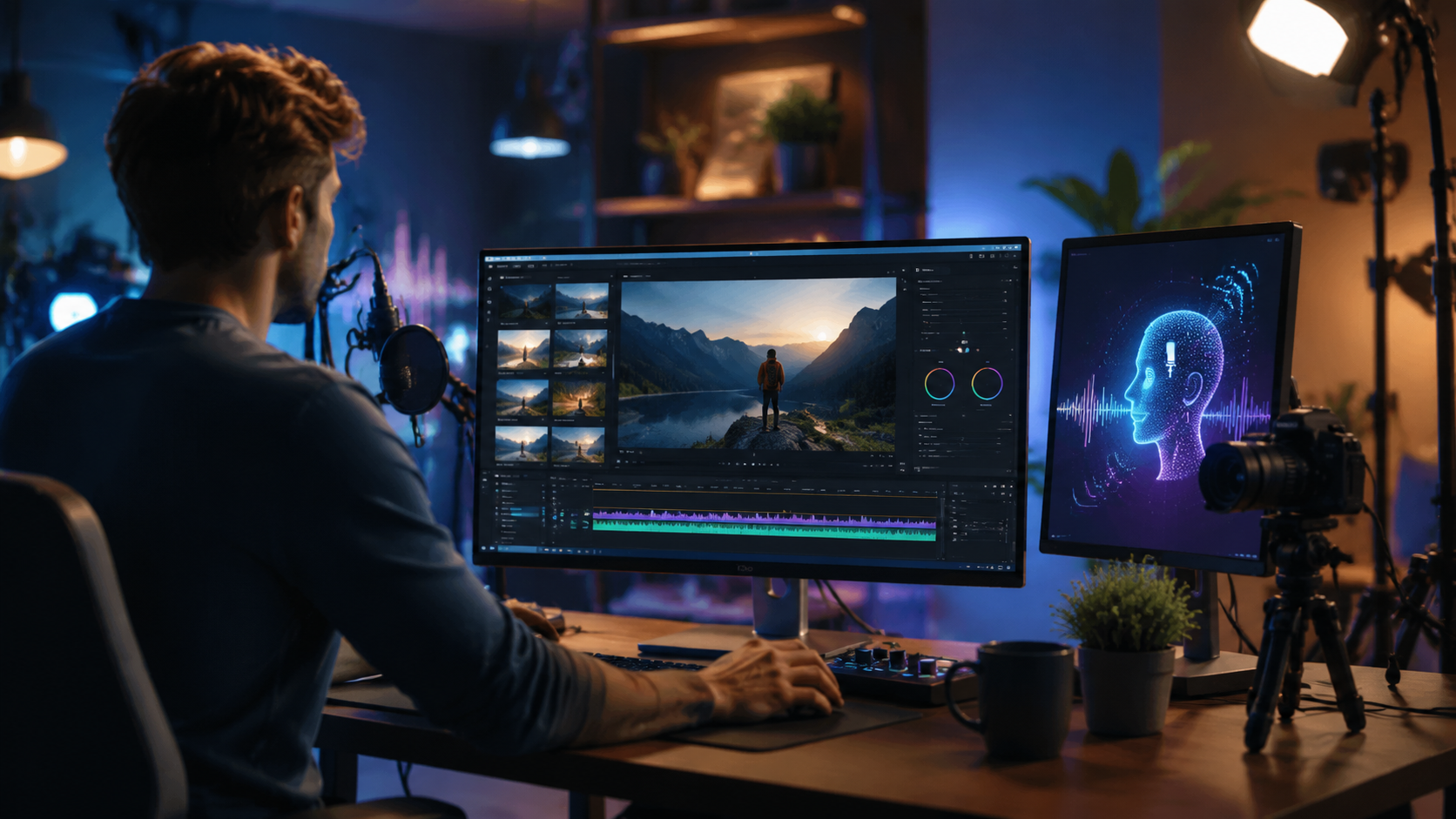
According to a Programming Insider report published on June 1, 2026, AI-powered video content is dominating social media because creators can now produce polished, narrated clips in under ten minutes. The report highlights that platforms like TikTok, Instagram Reels, and YouTube Shorts reward frequent, high-quality uploads — and AI removes the traditional bottleneck of scripting, recording, and editing voiceovers. In 2026, a single creator can manage a multi-channel content strategy that would have required a three-person team just two years earlier.
The shift is not just about speed. AI voiceover engines have matured to the point where they can mimic regional accents, adjust tone for brand voice, and even insert natural pauses and breaths. A study cited by Programming Insider found that AI-voiced videos received 34% higher engagement rates on average compared to text-overlay videos, because viewers stay longer when they hear a human-like voice guiding them through the content. This is why businesses, educators, and influencers are racing to create AI video with voiceover 2026 workflows that keep their audiences hooked.
What Google’s Gemini Omni Means for AI Video Creation
TechCrunch reported on May 19, 2026, that Google’s Gemini Omni can turn images, audio, and text into video — and that is just the start. This multimodal model accepts a still photograph, a paragraph of script, and a style reference, then outputs a video clip with a voiceover that matches the tone of the written text. For creators, this means you no longer need to juggle separate tools for video generation and voice synthesis. Gemini Omni handles the entire pipeline in one call, making it one of the most significant developments in the space for 2026.
How to Create AI Video with Voiceover in 2026: Step-by-Step
Follow this numbered workflow to produce a complete AI video with synchronized voiceover using the tools and techniques available in mid-2026. Each step builds on the last, so execute them in order for best results.
- Write your script and prompt. Start with a clear written script (200–500 words for a 60-second video). Include visual cues in brackets — for example, “[show product packaging]” or “[drone shot of city skyline].” This script becomes the foundation for both the video generator and the voiceover engine.
- Choose your video generation platform. Select a tool such as Google Gemini Omni, a specialised AI video generator like those tested and ranked by Memeburn on June 5, 2026, or a Microsoft Copilot integrated editor. Input your script and any reference images. The AI will generate raw footage that matches your descriptions.
- Generate the AI voiceover. Use the same script to produce a voiceover with an AI voice generator. In 2026, tools like ElevenLabs, Microsoft Azure Speech, and OpenAI’s TTS models offer hundreds of voices. Select one that fits your brand — professional, friendly, authoritative, or casual. Adjust speed and pitch to match the pacing of your video.
- Synchronize voiceover with video. Import both assets into an editing timeline — either inside an all-in-one platform like Gemini Omni or in a dedicated editor like CapCut or Premiere Pro. Use the waveform to align key visual moments with spoken words. Most 2026 AI tools auto-sync if you provide both inputs together.
- Add background music and captions. Layer in royalty-free background music at 10–15% of the voiceover volume to avoid distracting the listener. Generate AI captions (many tools do this automatically in 2026) and style them to match your brand. Captions boost accessibility and increase watch time on social media.
- Review, adjust, and export. Watch the full video once with the voiceover playing. Check for lip-sync issues (if you used an avatar), awkward pauses, or misaligned visuals. Make micro-adjustments, then export in 1080p or 4K. Your AI video with voiceover is ready to publish.
According to the Punch Newspapers guide published on May 26, 2026, the most common mistake beginners make is generating the voiceover and video separately without planning the timing. To avoid this, the guide recommends writing timestamps into your script — for example, “(0:00–0:10) Introduction” — so both AI tools stay coordinated from the start.
Comparing the Best AI Video Generator Tools of 2026
Memeburn published a comprehensive test and ranking of the best AI video generator tools on June 5, 2026, covering every use case from marketing to education to gaming. The table below summarises the top performers based on that evaluation, with a focus on features relevant to creating AI video with voiceover.
| Tool | Voiceover Quality | Multimodal Input | Best For | Pricing (2026) |
|---|---|---|---|---|
| Google Gemini Omni | Excellent — native sync with video | Text, image, audio | All-in-one creation | Free tier + $20/mo Pro |
| Microsoft Copilot Video | Very good — Azure Neural Voices | Text, script, PowerPoint | Gaming & enterprise | Included with Copilot Pro ($30/mo) |
| Synthesia 2026 | Excellent — 140+ AI avatars | Text, PDF, URL | Corporate training & marketing | $89/mo Starter |
| Runway Gen-3 Turbo | Good — third-party TTS integration | Text, image, video | Creative & cinematic content | $15/mo Standard |
| HeyGen 2026 | Very good — real-time voice cloning | Text, image, audio sample | Personalized video at scale | $48/mo Creator |
According to Memeburn, the standout tool for most users in 2026 is Google Gemini Omni because it eliminates the manual sync step — the model generates video and voiceover as a single cohesive output. For gaming creators, however, Microsoft Copilot’s integration with OBS and Twitch makes it the clear winner, as the MSN report from May 12, 2026, confirms.
Best Practices for Authentic AI Voiceover Quality
Creating a voiceover that your audience trusts requires more than just selecting a random voice preset. In 2026, the line between synthetic and human speech is thin, but listeners can still detect robotic delivery if you skip these optimisation steps. First, always add punctuation that signals emotion — exclamation marks, question marks, and ellipses — because AI voice engines use these to modulate pitch and pace. Second, insert SSML (Speech Synthesis Markup Language) tags if your tool supports them; tags like <break time="500ms"/> and <prosody rate="slow"> give you fine-grained control over naturalness.
The Microsoft Copilot and AI voiceover tools report from MSN on May 12, 2026, notes that gaming video creators achieved a 40% increase in viewer retention after switching to AI voiceovers that included contextual breathing sounds and subtle pitch variation. The same report warns that using a flat, monotone voice — even if it sounds “clear” — actually reduces watch time because the brain craves vocal variety. For the best results, test three different voice styles on a 15-second sample of your video and ask a colleague or a small audience panel to pick the most natural one before committing to the full project.
Avoiding the Pitfalls of AI Voice Misuse
The BBC reported on May 27, 2026, a controversial case involving a VDM video that used an AI-generated voice of Nigerian politician Tinubu alongside edited footage, prompting the presidency to call for prosecution of the activist behind it. This incident underscores a critical point: when you create AI video with voiceover 2026, you must ensure you have the legal right to use both the visual and audio elements. Never clone a living person’s voice without explicit written consent, and always label AI-generated content clearly if it depicts real individuals or events. Platforms like YouTube and TikTok now require AI-generated content labels in 2026, and failure to add them can result in demonetization or removal.
Real-World Use Cases: Where AI Video with Voiceover Shines in 2026
Businesses are deploying AI video with voiceover across multiple departments. Marketing teams create product explainer videos in eight different languages in a single morning — each version with a native-accented voiceover generated from the same English script. Training and development teams produce onboarding videos that update automatically when company policies change, without reshooting a single frame. In education, teachers generate narrated lesson summaries tailored to individual student reading levels, closing accessibility gaps that traditional video production could not address.
According to the Programming Insider report, the social media vertical is the fastest-growing use case. Influencers and brands that post three or more AI-generated narrated videos per week saw follower growth accelerate by an average of 2.3x in the first half of 2026 compared to those posting once weekly. The key is consistency — AI makes it possible to maintain a daily posting cadence without burning out the creative team. For gaming creators, Microsoft Copilot streamlines the workflow by automatically generating voiceover narration from gameplay transcripts, as highlighted in the MSN report from May 12.
The Next Frontier: What’s Coming for AI Video and Voiceover
The pace of innovation shows no sign of slowing. Google’s Gemini Omni is expected to gain real-time video generation capabilities by late 2026, meaning you will be able to speak a prompt and watch the video render frame by frame while the voiceover plays simultaneously. Microsoft is reportedly integrating live voiceover translation into Copilot, allowing a single recorded video to be re-voiced in 30+ languages with lip-sync adjustments automatically applied. These advancements will make the barrier to entry even lower — and make the question “how do I create AI video with voiceover in 2026?” even more relevant for creators who want to stay ahead.
However, with great power comes greater responsibility. The VDM incident covered by the BBC is a stark reminder that AI voice cloning can be weaponized for misinformation. As tools become more accessible, platforms and regulators are likely to impose stricter verification requirements. Creators who adopt transparent labelling and ethical sourcing practices now will build audience trust that lasts beyond any single technology shift.
Frequently Asked Questions About AI Video with Voiceover in 2026
Can I create AI video with voiceover for free in 2026?
Yes. Google Gemini Omni offers a free tier that generates short clips with native voiceover, and several other tools like Runway Gen-3 Turbo and HeyGen provide limited free credits each month. Free plans typically cap video length at 60 seconds and may watermark output.
What is the best tool to create AI video with voiceover in 2026 for beginners?
Google Gemini Omni is widely considered the most beginner-friendly option because it combines video generation and voiceover in a single interface. You just paste your script and select a voice — no manual syncing required.
How long does it take to create a 60-second AI video with voiceover in 2026?
Most AI tools can generate a 60-second video with synchronized voiceover in 2 to 5 minutes. Adding background music, captions, and final review brings the total workflow to about 15–20 minutes for a polished result.
Are AI voiceovers in 2026 good enough for professional use?
Yes. According to multiple tests, including the Memeburn ranking from June 2026, current AI voiceover engines produce narration that sounds natural in over 90% of scenarios. For corporate training, social media, and internal communications, the quality is already on par with professional voice actors.
How do I make the AI voiceover sound less robotic?
Use punctuation to control pacing, add SSML tags for natural breaks and emphasis, and select a voice model that includes emotional range. Avoid very long sentences — break your script into short, conversational phrases. Testing multiple voice presets is essential.
Can I use my own voice as an AI voiceover in 2026?
Yes. Tools like ElevenLabs and HeyGen offer voice cloning from a short audio sample — typically 30 seconds to 3 minutes. However, always obtain explicit consent before cloning someone else’s voice, and check platform policies about voice ownership.
What are the legal risks of creating AI video with voiceover in 2026?
The primary risks are voice cloning without consent (as highlighted by the BBC’s VDM report from May 2026), copyright infringement if you use unlicensed music or footage, and failing to label AI-generated content on platforms that require disclosure. Always keep records of your rights and permissions.
Will AI video with voiceover replace human voice actors in 2026?
Not entirely. While AI handles routine narration and scaling across languages, human voice actors are still preferred for high-emotion storytelling, audiobooks, and character work where nuanced performance is critical. AI and human voiceovers coexist as complementary tools in 2026.



Comments ()