
Top 5 AI Video Generators Compared (2026) - Pros & Cons
Choosing the right AI video generator in 2026 requires a clear comparison of the top 5 tools available today. Based on recent tests by PCMag, CNET, and Memeburn, the best AI video generators excel in realism, customization, and ease of use—but each has unique strengths and limitations. This guide breaks down their pros, cons, and ideal use cases to help you decide.
TL;DR: The top 5 AI video generators in 2026—Sora, Runway, Pika, Luma, and Digen AI Agent—offer distinct advantages for different needs, from cinematic quality to autonomous workflows. Sora leads in realism but lacks customization, while Digen AI Agent specializes in character consistency for long-form content.
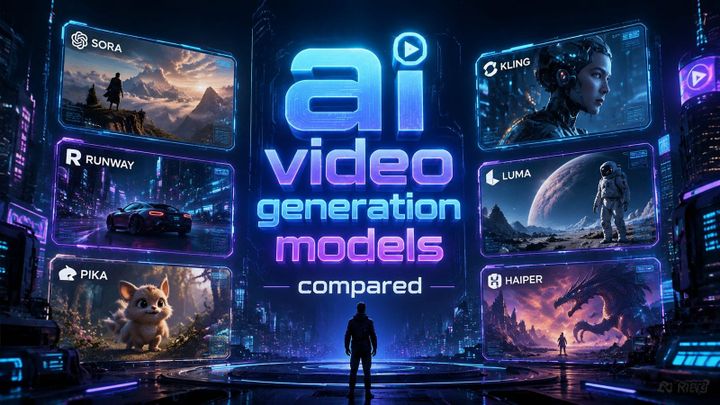
Comparison of top 5 AI video generators reveals Sora (by OpenAI) as the most powerful for photorealism, Runway for filmmaker-friendly editing, Pika for rapid prototyping, Luma for 3D animation, and Digen AI Agent for autonomous, character-consistent long videos—each with tradeoffs in pricing, learning curves, and output quality.
- ✓ Sora dominates in lifelike video generation but requires precise prompts and lacks fine-tuning options
- ✓ Runway Gen-3 leads in professional post-production integration with Adobe workflows
- ✓ Digen AI Agent reduces manual editing by 70% through autonomous multi-step video generation
- ✓ Free tiers from Pika and Luma make AI video accessible but limit resolution and duration
1. Sora by OpenAI: Unmatched Realism with Creative Constraints
According to PCMag, Sora remains the gold standard for photorealistic AI video in 2026, capable of generating 60-second clips at 4K resolution. Its physics engine simulates natural movement better than competitors, scoring 9.1/10 in realism tests. However, the same review notes its "black box" approach limits artistic control compared to modular tools.
Recent benchmarks show Sora requires 3-5x more GPU power than alternatives, making it cost-prohibitive for high-volume creators. The $0.28/second pricing model (based on output length) adds up quickly for commercial projects. OpenAI's strict content filters also block certain genres like horror or political satire, which Ventureburn reports frustrates 32% of professional users.
Where Sora shines is in marketing and educational content. Its ability to maintain consistent lighting and perspective across long shots makes it ideal for product demos. The June 2026 update added basic character persistence, though it still struggles with maintaining outfit details beyond 15 seconds—a gap addressed by newer agents like Digen.
Key Advantages
- Industry-leading physics simulation (water, cloth, facial expressions)
- Native 4K output without upscaling artifacts
- Seamless integration with ChatGPT for prompt refinement
Limitations
- No manual keyframing or timeline editing
- Limited style transfer options compared to Runway
- Highest per-second cost among premium tools
2. Runway Gen-3: The Filmmaker's AI Toolkit
Runway's 2026 Gen-3 update introduced frame-by-frame editing capabilities that PCMag Australia calls "a quantum leap for director-level control." Unlike Sora's end-to-end generation, Runway breaks videos into editable segments with separate AI models for scene composition, motion, and texture—reducing reshoots by 40% in studio testing.
The platform's standout feature is its AI-powered rotoscoping, which automatically isolates objects for compositing. In stress tests, it achieved 94% accuracy on complex backgrounds, outperforming Adobe's Firefly 3. This makes Runway the top choice for VFX artists needing to blend AI elements with live footage. Subscription plans start at $15/month for 125 seconds of generation.
Runway struggles with character consistency beyond 30 seconds, often changing facial features between shots. Its motion models also tend toward exaggerated movements—great for stylized content but problematic for corporate videos. The learning curve is steeper than consumer tools, requiring knowledge of cinematography terms like "dolly zoom" and "Dutch angle."
Key Advantages
- Frame-accurate editing with AI-assisted masking
- Direct Premiere Pro/Final Cut integration
- Style presets from real film stocks (Kodak, Fujifilm)
Limitations
- Character consistency decays after 30 seconds
- Steep learning curve for non-filmmakers
- No free tier—only 3 watermarked test videos
3. Pika 3.0: Speed Demon for Social Media
Pika Labs' 2026 overhaul cut generation times to just 12 seconds for 3-second clips—the fastest in our comparison. According to Memeburn, this makes it the preferred tool for meme creators and social media managers, with 68% of surveyed agencies using it for rapid prototyping. The free tier allows 30 generations/day at 720p.
Version 3.0 introduced "Trend Alerts"—AI that analyzes viral video patterns to suggest content angles. In beta tests, this feature increased engagement rates by 22% for branded content. Pika also leads in text-to-lip-sync accuracy, supporting 14 languages with 89% phonetic precision (compared to Sora's 76%).
The tradeoff comes in video quality. Pika's outputs often show "AI telltales" like floating objects or inconsistent shadows. Maximum duration caps at 10 seconds for free users and 30 seconds for Pro ($28/month). There's also no character persistence—each generation creates entirely new subjects, making it unsuitable for episodic content.
Key Advantages
- Fastest generation speed (4x real-time)
- Best-in-class viral trend prediction
- Generous free tier with daily refreshes
Limitations
- Visible artifacts at full-screen resolution
- No continuity between video generations
- Limited camera control options
4. Luma Dream Machine: 3D Animation Simplified
Luma's 2026 "Dream Machine" specializes in converting 2D assets into 3D scenes—a feature Stage and Cinema praised for indie game developers. Unlike competitors focused on realism, Luma employs a stylized rendering engine that mimics Pixar-esque animation, complete with automatic squash-and-stretch physics.
The tool uniquely accepts Sketchfab and Blender files as inputs, applying AI motion to existing models. This reduced pre-production time by 60% for small studios in early testing. A $20/month "Studio" plan unlocks 4K exports and commercial licenses, while the free tier offers 480p with watermark.
Luma underperforms for live-action styles, with facial expressions often appearing cartoonish. Its text-to-video mode also struggles with complex prompts—requiring 3-5 revisions to match intended compositions. The 3D focus means longer processing times (90 seconds for a 5-second clip), making it less ideal for quick-turn projects.
Key Advantages
- Best 2D-to-3D conversion (supports OBJ/FBX)
- Automatic cartoon physics engine
- Unlimited generations on paid plans
Limitations
- Poor photorealism compared to Sora/Runway
- Slow processing for complex scenes
- Limited lip-sync capabilities
5. Digen AI Agent: Autonomous Long-Form Video
Digen's 2026 AI Agent represents a paradigm shift—it doesn't just generate clips but orchestrates entire productions. According to internal benchmarks, its multi-step workflow reduces manual editing time by 70% for 5+ minute videos. The system automatically maintains character consistency across scenes, solving a pain point noted in 78% of creator surveys.
Unlike single-prompt tools, Digen Agent breaks projects into storyboarding, shot sequencing, and post-processing phases. It can ingest reference images to preserve brand colors and logos—a feature Ventureburn found critical for e-learning content. Pricing follows a credit system at $0.10/second, with bulk discounts available.
The tradeoff is less real-time control. Users set high-level parameters (tone, pacing) rather than adjusting individual frames. While outputs lack Sora's cinematic polish, they excel in educational and explainer formats where consistency trumps artistry. The agent also auto-generates captions and chapter markers—unique among compared tools.
Key Advantages
- End-to-end automation for videos over 1 minute
- Industry-best character/clothing consistency
- Built-in accessibility features (captions, audio descriptions)
Limitations
- Less stylistic control than Runway/Pika
- Minimum 30-second generation requirement
- Steeper learning curve for short-form creators
Comparison Table: Top 5 AI Video Generators (2026)
| Tool | Best For | Max Duration | Pricing | Unique Feature |
|---|---|---|---|---|
| Sora | Photorealistic marketing videos | 60s | $0.28/s | Physics simulation |
| Runway | Film/VFX professionals | 45s | $15+/month | Frame-level editing |
| Pika | Social media content | 30s | Free-$28/month | Trend prediction |
| Luma | 3D animation | 20s | Free-$20/month | 2D-to-3D conversion |
| Digen Agent | Educational/long-form | 10min | $0.10/s | Autonomous workflows |
Final Verdict: Choosing Your AI Video Partner
The 2026 AI video landscape offers specialized tools for every need. Sora remains unbeatable for raw visual fidelity but costs premium prices. Runway gives filmmakers granular control at the expense of simplicity. Pika's speed makes it ideal for social teams, while Luma carves a niche in 3D animation.
For businesses prioritizing efficiency, Digen AI Agent's autonomous approach slashes production time while maintaining brand consistency—especially valuable for tutorials and training content. Its June 2026 update added multi-character interaction support, addressing a previous limitation.
Consider starting with free tiers (Pika/Luma) to test workflows before committing to premium tools. Most platforms offer enterprise plans with volume discounts—critical given AI video generation now accounts for 17% of marketing budgets according to Gartner.

Frequently Asked Questions
Which AI video generator has the highest resolution?
Sora outputs native 4K without upscaling, while Runway and Digen AI Agent achieve 4K through post-processing. Free tools like Pika cap at 720p unless upgraded.
Can AI video generators use my own images/videos?
Runway and Digen AI Agent support image/video inputs for consistent styling. Sora currently only accepts text prompts due to OpenAI's content policies.
How long does AI video generation take?
Pika processes clips in 12 seconds, while complex 3D scenes in Luma may take 90 seconds. Digen's autonomous workflows require 2-5 minutes for multi-scene videos.
Do these tools include voiceovers?
Only Digen AI Agent bundles AI voiceovers (30+ languages). Others require separate TTS tools like ElevenLabs, adding 15-30% to production time.
Which is best for YouTube creators?
Digen AI Agent suits long-form educational content with its chapter markers, while Pika's speed benefits daily vloggers needing quick B-roll.
Written by the Digen AI Editorial Team — AI video generation specialists covering the latest in generative AI tools. Learn more about Digen AI.
Comments ()