
Best Cinematic Photo Animation AI Tools for 2026
Cinematic photo animation AI refers to the use of advanced generative artificial intelligence models to transform static images into dynamic, high-definition videos featuring realistic motion, lighting effects, and depth. In 2026, the best tools for this task include Mango AI, Google’s Veo 3, and specialized platforms that leverage motion reference technology to create fluid, professional-grade visual storytelling from a single photograph.
Cinematic photo animation AI is a technology that utilizes deep learning architectures, such as diffusion models and motion transfer, to animate still images with cinematic quality. By analyzing pixel depth and temporal consistency, these AI tools generate realistic movements, environmental effects, and camera pans, effectively turning a static portrait or landscape into a high-production-value video clip.
- ✓ Mango AI and Google Veo 3 are the leading platforms for cinematic photo animation in 2026.
- ✓ New "Custom Motion Reference" features allow users to dictate specific movement patterns for animated photos.
- ✓ AI-generated content has reached a milestone with the release of the first full-length AI sci-fi films in theaters.
- ✓ Real-time rendering and temporal consistency are now standard in high-end image-to-video generators.
- ✓ Many top-tier tools now offer free entry-level tiers for creators to experiment with cinematic motion.
The Evolution of Cinematic Photo Animation AI in 2026
The landscape of digital media has undergone a seismic shift as we move through 2026. The ability to take a flat, two-dimensional image and breathe life into it with cinematic flair is no longer a niche skill reserved for visual effects studios. Today, cinematic photo animation AI has become an accessible utility for content creators, marketers, and filmmakers alike. These tools have moved beyond simple "wiggle" effects or basic zoom-ins, now offering complex physics simulations that allow hair to flow in the wind, light to refract through glass, and characters to perform choreographed movements with uncanny realism.
According to reports from Programming Insider (May 2025), the way we create videos from images has fundamentally changed due to the integration of temporal consistency algorithms. These algorithms ensure that as an image animates, the details remain stable across every frame, preventing the "flickering" artifacts that plagued earlier AI video models. This technological leap has paved the way for AI-generated content to move from social media feeds to the silver screen, marking a new era of hybrid human-AI creativity.
One of the most significant milestones of this year was documented by RADII in late April 2026, noting that China’s first fully AI-generated sci-fi film has officially hit mainstream cinemas. This achievement highlights the professional grade that cinematic photo animation AI has reached. It is no longer just about "animating a photo"; it is about generating high-fidelity cinematic sequences that can stand alongside traditional cinematography. The democratization of these tools means that a solo creator with a smartphone now possesses the power of a 2010-era VFX house.
How to Create Cinematic Photo Animations: A Step-by-Step Guide
- Select Your Source Image: Choose a high-resolution photo with clear subjects and distinct foreground/background elements. High-contrast images often yield the most dramatic cinematic results.
- Upload to a Generative Engine: Use a platform like Mango AI or Google Photos Veo 3. Navigate to the "Image to Video" or "Create" tab to begin the process.
- Define Motion Parameters: Use text prompts or "Motion Reference" files to describe the desired movement. For example, "slow cinematic pan with lens flare" or "gentle breeze moving the trees."
- Adjust Consistency Settings: Set the temporal stability to high to ensure the AI maintains the integrity of the original image's details throughout the animation.
- Render and Refine: Generate a preview, and if the motion is too aggressive, adjust the "motion strength" slider before the final high-definition export.
Leading Tools for Cinematic Photo Animation AI
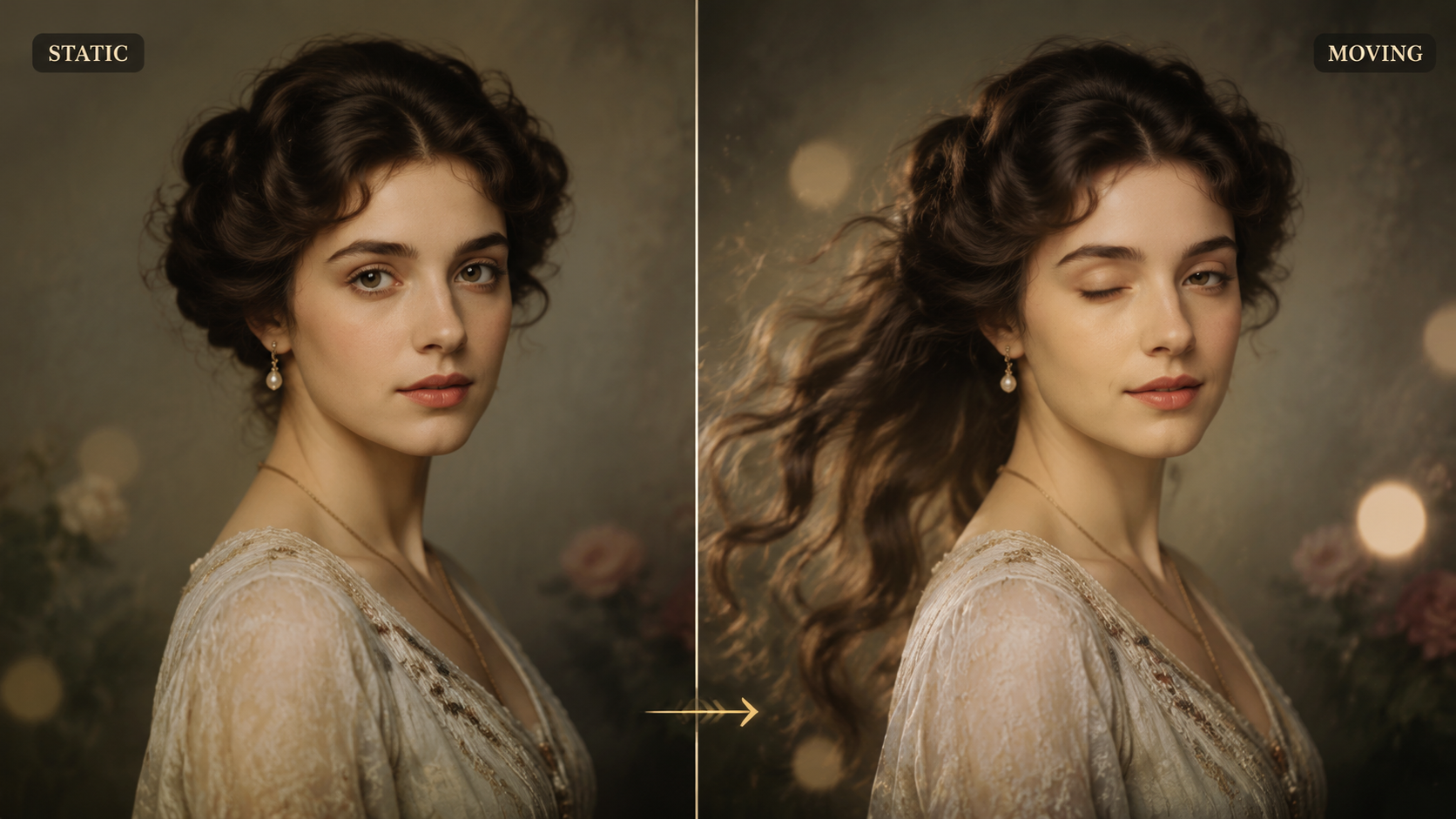
As of mid-2026, several key players dominate the market, each offering unique features tailored to different creative needs. Mango AI has recently made headlines with its May 2026 launch of a dedicated AI Image to Video Generator. This tool is specifically designed for cinematic photo animation, focusing on high-dynamic-range (HDR) output and fluid camera movements that mimic expensive dolly and crane shots used in Hollywood productions.
Furthermore, openPR.com reports that Mango AI has introduced an "AI Dance Generator" that utilizes custom motion references. While the name suggests a focus on dance, the underlying technology allows users to apply specific skeletal movements to any static portrait, creating a level of control over cinematic character animation that was previously impossible without expensive motion-capture suits. This level of granular control is what separates the 2026 tools from their predecessors.
Google Veo 3: Integration and Accessibility
Google has also remained a titan in this space. Following the successful rollout of Veo 3 in late 2025, the tool is now fully integrated into the Google Photos "Create" tab. This integration allows billions of users to transform their personal memories into cinematic shorts with a single tap. Veo 3’s strength lies in its deep integration with Google’s Gemini ecosystem, allowing for complex natural language prompts to dictate the mood and style of the animation.
| Feature | Mango AI (2026) | Google Veo 3 | Tycoonstory Top Picks |
|---|---|---|---|
| Primary Strength | Custom Motion Reference | Ecosystem Integration | Free/Accessibility Focus |
| Max Resolution | 4K Cinematic | 1080p / 4K Upscale | Varies (up to 2K) |
| Ease of Use | Professional Grade | One-Tap Simple | High (Web-based) |
| Best For | Commercials & Film | Personal Memories | Social Media Content |
The Role of Motion Reference in Cinematic Photo Animation AI
The introduction of motion reference technology has been a game-changer for 2026. In previous years, animating a photo was largely a "black box" process—you uploaded an image, provided a prompt, and hoped the AI moved the right parts. With the latest updates from Mango AI, users can now upload a "reference video" alongside their photo. The AI extracts the motion path from the video and applies it to the static photo, ensuring the resulting cinematic photo animation AI output follows a specific, human-directed path.
This technology is particularly useful for brand storytelling. A company can take a static product shot and apply the elegant, sweeping motion of a luxury car commercial to it. According to Tycoonstory Media, these "top generators" are becoming essential for small businesses that need high-end video content but lack the budget for full-scale video shoots. The ability to animate photos online for free or at a low cost has leveled the playing field for digital marketing.
Furthermore, the precision of these tools has improved to the point where they can handle complex textures like liquid, smoke, and fire. A photo of a campfire can now be animated so that the flames flicker with realistic heat distortion, while the smoke drifts according to simulated wind patterns. This level of environmental realism is a hallmark of the 2026 generation of AI tools.
Cinematic Quality and the "Uncanny Valley"
One of the biggest hurdles for cinematic photo animation AI has always been the "uncanny valley"—the point where an animation looks almost human but is just "off" enough to be unsettling. In 2026, the industry has largely overcome this through improved facial geometry mapping. When a portrait is animated, the AI now understands the underlying muscular structure of the human face, ensuring that smiles, blinks, and head tilts look natural rather than distorted.
Studies and reviews featured in Programming Insider suggest that the latest diffusion-based models have reduced "morphing" errors by over 85% compared to 2024 models. This means that when a person in a photo turns their head, the AI correctly "inpaints" the parts of the face that weren't visible in the original photo, such as the ear or the side of the neck, with perfect anatomical accuracy. This is crucial for creators using AI to produce narrative films or high-end advertisements where viewer immersion is paramount.
The cinematic quality is further enhanced by "AI-native lighting." Instead of just moving pixels, these tools recalculate how light would hit the subject as they move. If an animated character moves closer to a virtual light source in the photo, their skin highlights brighten, and shadows deepen accordingly. This dynamic lighting is what gives the "cinematic" feel that distinguishes professional tools from basic animation apps.
Future Trends: Beyond 2026
As we look toward the latter half of 2026 and into 2027, the trend is moving toward real-time interactivity. We are seeing the first glimpses of "live" cinematic photo animation AI, where a user can manipulate a photo in a 3D space and see the animation happen instantly, rather than waiting for a render. This will likely integrate with augmented reality (AR) glasses, allowing static photos in the physical world to come to life when viewed through a lens.
Another emerging trend is the "Infinite Zoom" and "Outpainting Animation." While these existed in rudimentary forms previously, the 2026 versions allow for seamless transitions where the AI generates an entire world around a single photo, animating the expansion in a way that feels like a continuous, cinematic drone shot. This capability is already being utilized in the AI-generated sci-fi films mentioned by RADII, where a single concept art piece can be expanded into a 30-second sweeping cinematic sequence.
Ethical considerations also continue to evolve. Leading platforms are now implementing "deepfake protection" and mandatory watermarking for AI-animated content. This ensures that while the technology for cinematic photo animation AI becomes more powerful, it remains a tool for creativity rather than deception. The focus remains on empowering artists to expand their visual language and bring static moments of the past into the vibrant, moving present.
What is the best AI tool for cinematic photo animation in 2026?
Mango AI and Google Veo 3 are currently the top-rated tools. Mango AI is preferred for professional and custom motion control, while Google Veo 3 offers the best ease of use for general consumers through the Google Photos app.
Can I animate a photo for free?
Yes, several platforms listed by Tycoonstory Media in 2026 offer free tiers. These typically allow for a limited number of high-definition exports per month, making cinematic photo animation accessible to hobbyists.
How does "Motion Reference" work in AI video generators?
Motion Reference allows you to upload a video that acts as a blueprint for the movement. The AI analyzes the motion in the video and applies it to your static photo, ensuring the animation follows a specific path or choreography.
Is AI-generated cinematic video good enough for movies?
Yes, as of 2026, the first AI-generated sci-fi films have been released in cinemas. The quality of cinematic photo animation AI has reached a point where it can be used for professional film production and visual effects.
What is the difference between an AI GIF and cinematic animation?
Traditional GIFs are often low-resolution and use simple loops. Cinematic photo animation AI uses advanced physics and lighting models to create high-definition, non-looping video sequences that look like they were filmed with a professional camera.
Comments ()